


How much can a landlord charge for late rent in 2026? The answer ranges from $0 before a legal grace period expires to 5% in states such as Maryland. New York caps many residential late fees at $50 or 5% of monthly rent, whichever is less. Texas can allow 10% or 12% under its statutory safe-harbor rules. There is no single nationwide late-fee ceiling, as noted by the editorial team at Baltimore Chronicle.
For a renter facing a charge today, the fastest test has 3 parts. Check the lease, identify the state and local rule, then confirm when the fee became legally chargeable. A fee written into a lease can still be unlawful if it exceeds a statutory cap.
Key takeaways
- Late-rent charges depend mainly on state law, local rules, the lease, and any mandatory grace period.
- A $2,000 monthly rent can produce very different legal fees in New York, Maryland, and Texas.
- Before paying a disputed charge, compare the lease language with the current 2026 rule for the property’s location.
How much can a landlord charge for late rent under state caps?
There is no federal law setting one universal late rent fee limit for every private residential lease. State statutes create sharply different systems. Some establish percentage caps, others impose dollar limits, and some focus on whether a charge is reasonable.
New York provides one of the clearest examples. The New York Attorney General states that rent becomes late only after more than 5 days. The maximum late fee is $50 or 5% of monthly rent, whichever amount is lower.
Maryland uses a different formula. A residential lease cannot impose a late-payment penalty exceeding 5% of unpaid rent for that rental period. The rule appears in Maryland Real Property § 8-208.
The lease is the starting document, not the final authority. State and local law can override a fee clause that demands too much.
Texas illustrates why renters should avoid applying another state’s rule. Its law treats fees up to 12% of rent as reasonable for properties with 4 or fewer units. The safe-harbor figure is 10% for buildings containing more than 4 units. Rent must remain unpaid for 2 full days after its original due date before the statutory conditions are met.
“$50 or 5% of your monthly rent, whichever is less.”
New York State Office of the Attorney General, tenant guidance.
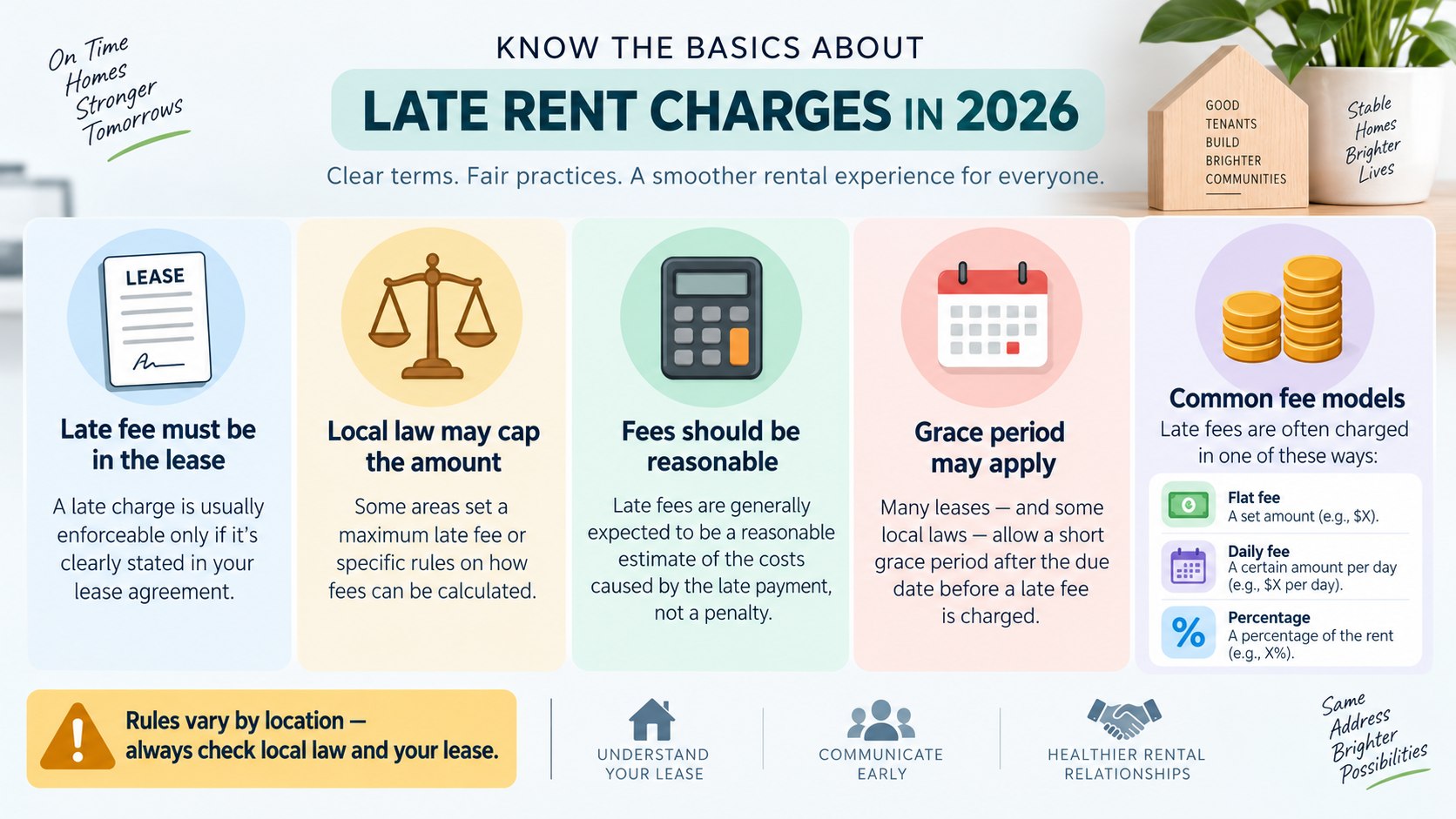
Price breakdown
A useful comparison starts with the same monthly rent. Assume the tenant owes $2,000 for one month. The examples below show why a percentage written in one lease cannot automatically be applied nationwide.
| Line item | Typical 2026 cost or statutory example |
|---|---|
| Fee before a required legal trigger | $0 where the law does not yet permit charging it |
| New York maximum on $2,000 rent | $50 |
| Maryland 5% maximum on $2,000 unpaid rent | $100 |
| Texas safe harbor, building over 4 units | Up to $200, or 10% |
| Texas safe harbor, property with 4 or fewer units | Up to $240, or 12% |
| Returned-payment or other separate charge | Depends on applicable law and lease terms |
These figures are examples, not a national price schedule. A New York landlord cannot turn a $50 statutory maximum into $100 merely because another state permits a higher percentage. Maryland’s 5% rule would produce $75 on $1,500 of unpaid rent and $125 on $2,500.
Texas also requires more care than multiplying rent by 10% or 12%. Its statute can permit a higher fee when certain damages and collection costs justify it. That makes the written lease and factual circumstances important in a dispute.
Different rules may also govern weekly rentals, subsidized units, mobile-home communities, or regulated housing. Cities can add protections beyond statewide rules. A tenant should therefore check the city and county as well as the state.
For comparison with other move-in costs, Baltimore Chronicle’s guide to security deposit limits in 2026 explains why deposits and late charges should not be treated as the same fee.
A landlord should also separate late fees from rent increases. The rules governing rent increases and notice periods address a different part of the landlord-tenant relationship.
What drives the price
State law
State law has the greatest effect on the maximum landlord late fee. A percentage allowed in Texas could exceed the legal ceiling for the same monthly rent in New York. Maryland follows another formula.
The monthly rent
Percentage-based caps rise with the unpaid amount. At a 5% ceiling, $1,200 of late rent produces a $60 maximum. The same percentage on $3,000 produces $150.
A percentage cap does not mean every landlord automatically deserves that percentage. The lease and statutory conditions still matter.
The grace period or statutory trigger
A charge may be too early even when its amount looks legal. New York generally does not treat residential rent as late until more than 5 days after it is due. Texas requires unpaid rent to remain outstanding for 2 full days after the original due date under its late-fee statute.
Property size and housing type
Texas demonstrates how the building itself can change the calculation. Its 12% safe harbor applies to dwellings in structures with no more than 4 units. The figure falls to 10% for larger structures.
Local ordinances
City and county protections can affect rental disputes even when statewide law seems straightforward. Local rules may regulate notices, licensing, eviction procedures, or particular housing programs. Baltimore renters can also review the Chronicle’s 2026 Baltimore renting guide for broader lease and housing costs.
How to check whether a late fee is legal
A tenant does not need to begin with a courtroom argument. Start with documents and dates. The following sequence usually exposes the most common problems with a disputed late rent charge.
- Find the rent due date in the signed lease.
- Locate the clause describing late fees and their calculation.
- Record the date and amount of the payment.
- Check the 2026 state statute for any cap or waiting period.
- Check city or county rules that may provide additional protections.
- Compare the actual charge with the lawful formula.
- Keep payment confirmations, notices, emails, and account screenshots.
A lease clause saying “$100 after the first day” should not be accepted automatically. In a jurisdiction requiring a longer grace period, timing can make the charge defective. A percentage above a statutory ceiling presents another problem.
Documentation matters when the payment date is disputed. Bank records can show when money left an account. A rental portal receipt can establish when an electronic payment was submitted. Certified mail records may matter when payment was sent physically.
Tenants should also distinguish rent from added charges. Utilities, parking fees, returned-payment charges, court costs, and late penalties can follow different rules. Combining everything into one unexplained balance makes a bill harder to evaluate.
Landlords benefit from the same discipline. A clear ledger showing rent, fees, dates, and payments is stronger than a balance containing unexplained additions. Homeowners becoming landlords can review this 2026 guide to renting out a house for related lease and compliance issues.
Ways to save in 2026
Late fees are usually easier to prevent than to recover. Renters facing uneven income can reduce avoidable charges through several practical steps.
- Schedule payment several business days before the contractual due date.
- Keep enough checking-account balance to prevent an ACH payment from failing.
- Use payment reminders before both the due date and any grace-period deadline.
- Ask for a written payment arrangement before rent becomes overdue.
- Review rental-assistance options through local housing agencies when income drops.
- Save electronic receipts immediately after submitting rent.
- Challenge an incorrect fee in writing rather than ignoring the account balance.
Automatic payments can help, but they need monitoring. An expired card or insufficient balance can turn an automatic system into an unsuccessful payment. The renter should keep the confirmation generated after every transaction.
A written request can also save money when a tenant has a strong payment history. Some landlords voluntarily waive a first late fee. That is a business decision rather than a universal legal entitlement.
Renters should avoid paying an obviously questionable fee without keeping records. Payment may resolve the immediate balance while making the underlying dispute harder to reconstruct later. Receipts and written correspondence preserve the timeline.
The most useful document in a late-fee dispute is often a simple timeline showing the due date, payment date, fee date, and lease clause.
Financial trouble should be addressed before an eviction case develops. A late fee may be relatively small compared with filing costs, missed work, moving expenses, or the cost of replacing housing.
When paying more makes sense
Not every higher late fee is automatically unlawful. The relevant question is whether the charge fits the lease and the governing law. Several situations deserve closer examination.
- A state expressly permits a higher percentage than neighboring states.
- A statute allows documented costs beyond a standard safe-harbor amount.
- The property type falls under a separate statutory framework.
- A separate lawful charge applies to a failed payment rather than late rent itself.
Texas is a useful example. Its statute creates 10% and 12% benchmarks for reasonableness, depending on property size. It also contains provisions concerning fees above those percentages when qualifying damages support the amount.
This does not create permission for arbitrary penalties. A landlord still needs to satisfy the statutory requirements, including written lease notice. The charge must also meet the governing reasonableness standard.
Tenants comparing late fee laws by state should therefore avoid rules of thumb such as “anything under $100 is legal.” A $50 fee can be premature. A larger fee can sometimes be lawful in another jurisdiction.
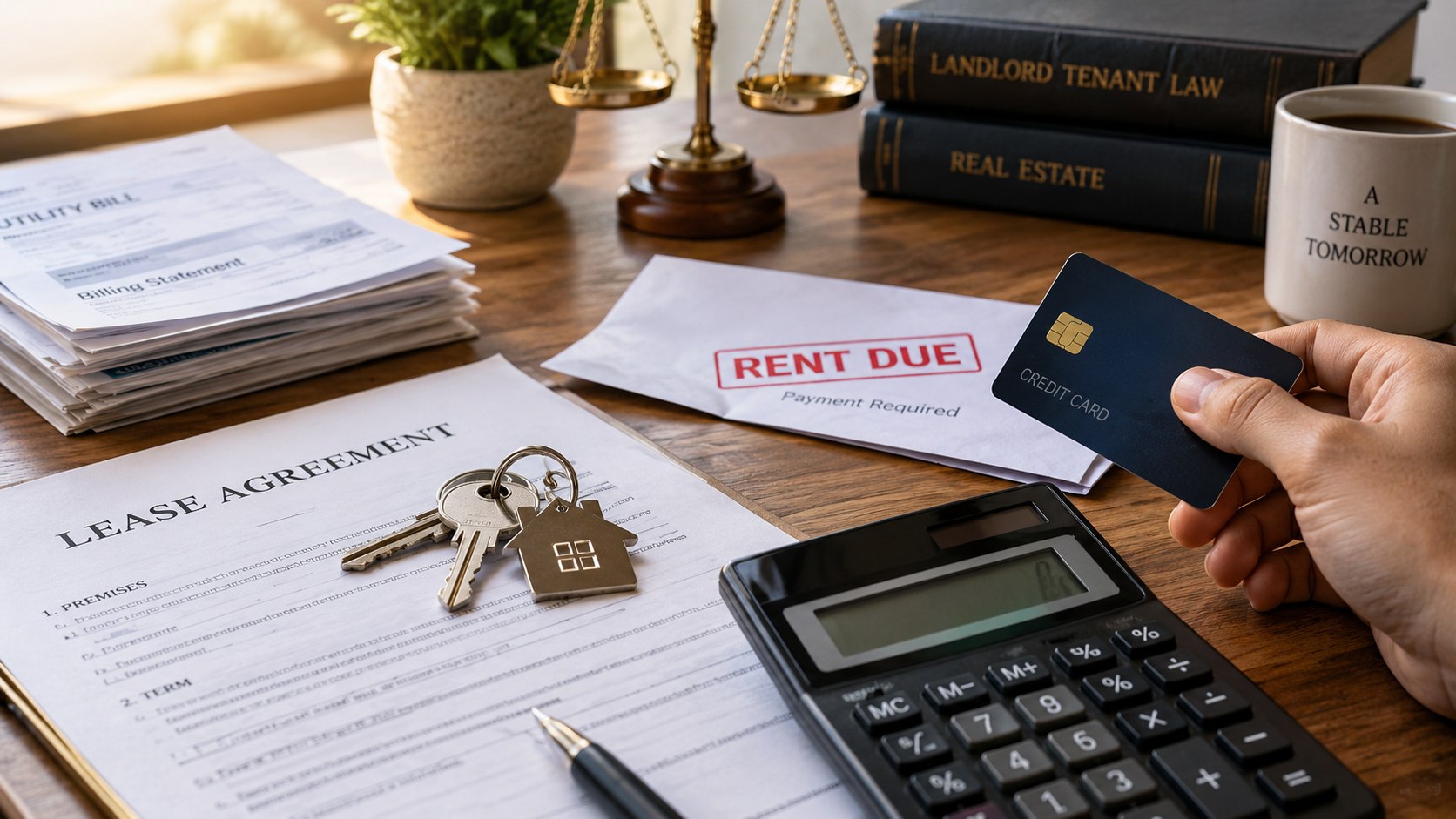
State caps can change the answer by hundreds of dollars
The practical lesson is mathematical. On $2,000 rent, New York’s general maximum is $50. Maryland’s 5% ceiling produces $100. Texas statutory safe-harbor percentages can produce $200 or $240, depending on property size.
That spread shows why searching only for an average late fee for rent can produce a misleading answer. The controlling number comes from the law governing the rental property, not the national average.
Maryland law bars lease provisions imposing a late-payment penalty “in excess of 5%” of qualifying unpaid rent.
Source: Maryland General Assembly, Real Property § 8-208.
A landlord can also face a different rule after crossing a state line. Property owners with rentals in several states should not reuse one late-fee clause without reviewing each jurisdiction. Local ordinances deserve a separate check.
FAQ about late rent fees in 2026
Can a landlord charge $100 for late rent?
Sometimes. A $100 fee can be lawful in one state and excessive in another. On $2,000 monthly rent, Maryland’s 5% ceiling equals $100. New York’s general residential cap would instead be $50 because that is lower than 5%.
Can a landlord charge a late fee after 1 day?
Not everywhere. New York provides a 5-day period before rent can be considered late for this purpose. Texas requires 2 full unpaid days after the original due date before a qualifying late fee may be collected.
What is a reasonable late fee for rent?
A reasonable late fee for rent depends on state law rather than a nationwide percentage. Texas expressly provides percentage benchmarks. Other states impose different caps or statutory conditions.
Can a lease override a state late-fee cap?
No contractual clause can normally erase a tenant protection that the governing law makes mandatory. A signed lease may state the fee, but an unlawful provision does not automatically become enforceable because both parties signed it.
Can a landlord charge a daily late fee?
Daily charges are permitted in some jurisdictions and restricted in others. Texas expressly recognizes initial and daily components under its statute, subject to broader legal limits. State and local rules should be checked before calculating a daily charge.
What should a tenant do about an excessive fee?
Compare the lease, payment records, state statute, and local rules. Then dispute the amount in writing and preserve copies. A local housing agency, tenant organization, or licensed attorney can address disputes involving eviction or substantial balances.
Earlier we wrote about How to Recover Deleted Photos iPhone 2026: Apple’s 30-Day Recently Deleted Rule and the Backup Trap