

New euro banknotes are moving closer to reality after the European Central Bank completed a major public survey on their future design. Almost 10 million people took part, while the final visual concept is expected to be selected around the end of 2026, as noted by Baltimore Chronicle.
According to the European Central Bank, the redesign is intended to improve security, accessibility and sustainability. The new notes will not appear immediately after the design decision.
When will the new euro banknotes enter circulation?
The ECB currently expects the first denominations of the new series to enter circulation in the early 2030s. Several years will be needed after the final design choice for technical development, security testing and production.
The process currently looks like this:
- 23 July 2026: the ECB presented 10 shortlisted designs.
- 21 September 2026: the public survey closed.
- End of 2026: the ECB expects to choose the final design concept.
- Early 2030s: the first new banknotes are expected to enter circulation.
The introduction will therefore be gradual rather than a single euro-area-wide replacement day.
What will the new euro notes look like?
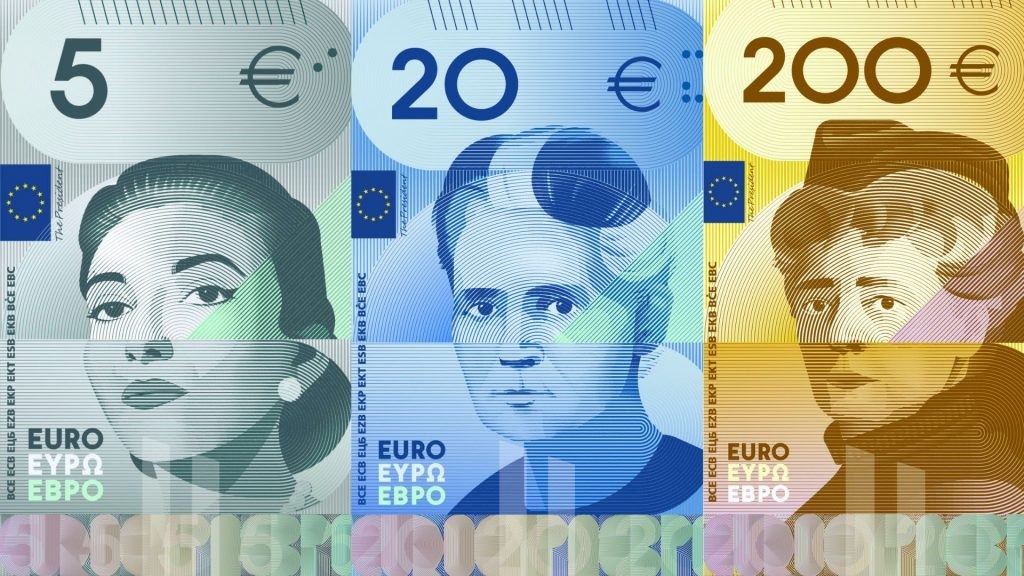
Two competing themes remain at the centre of the redesign: European culture and Rivers and birds. Ten proposals based on these concepts reached the final public consultation.
If the cultural theme is selected, familiar European figures could appear on different denominations.
| Denomination | Possible cultural motif |
|---|---|
| €5 | Maria Callas |
| €10 | Ludwig van Beethoven |
| €20 | Marie Curie |
| €50 | Miguel de Cervantes |
| €100 | Leonardo da Vinci |
| €200 | Bertha von Suttner |
The alternative concept focuses on European landscapes, rivers and bird species. It links natural scenes with EU institutions on the reverse side.
The final banknotes will also receive upgraded anti-counterfeiting features and accessibility improvements.
What happens to the old euro banknotes?
Current euro banknotes will not suddenly become worthless. The ECB says notes already in circulation will remain valid and will circulate alongside the new series.
This means people will not need to rush to banks or exchange their cash immediately when the redesigned notes appear.
The ECB has used a similar gradual transition before. The Europa series began entering circulation in 2013 while earlier notes remained usable.
Why is the ECB changing euro banknotes?
The current redesign comes more than 20 years after the first euro notes were introduced. Central banks periodically update banknotes because printing and counterfeiting technologies continue to change.
The ECB also wants the next generation to be easier to recognise for people with visual impairments and less environmentally intensive to manufacture.
For consumers, the main point is simple: there is no currency conversion and no loss of value. The change concerns the appearance, security and production of physical euro cash.
Earlier we wrote that The Netherlands returns to Eurovision 2027 after one-year boycott