

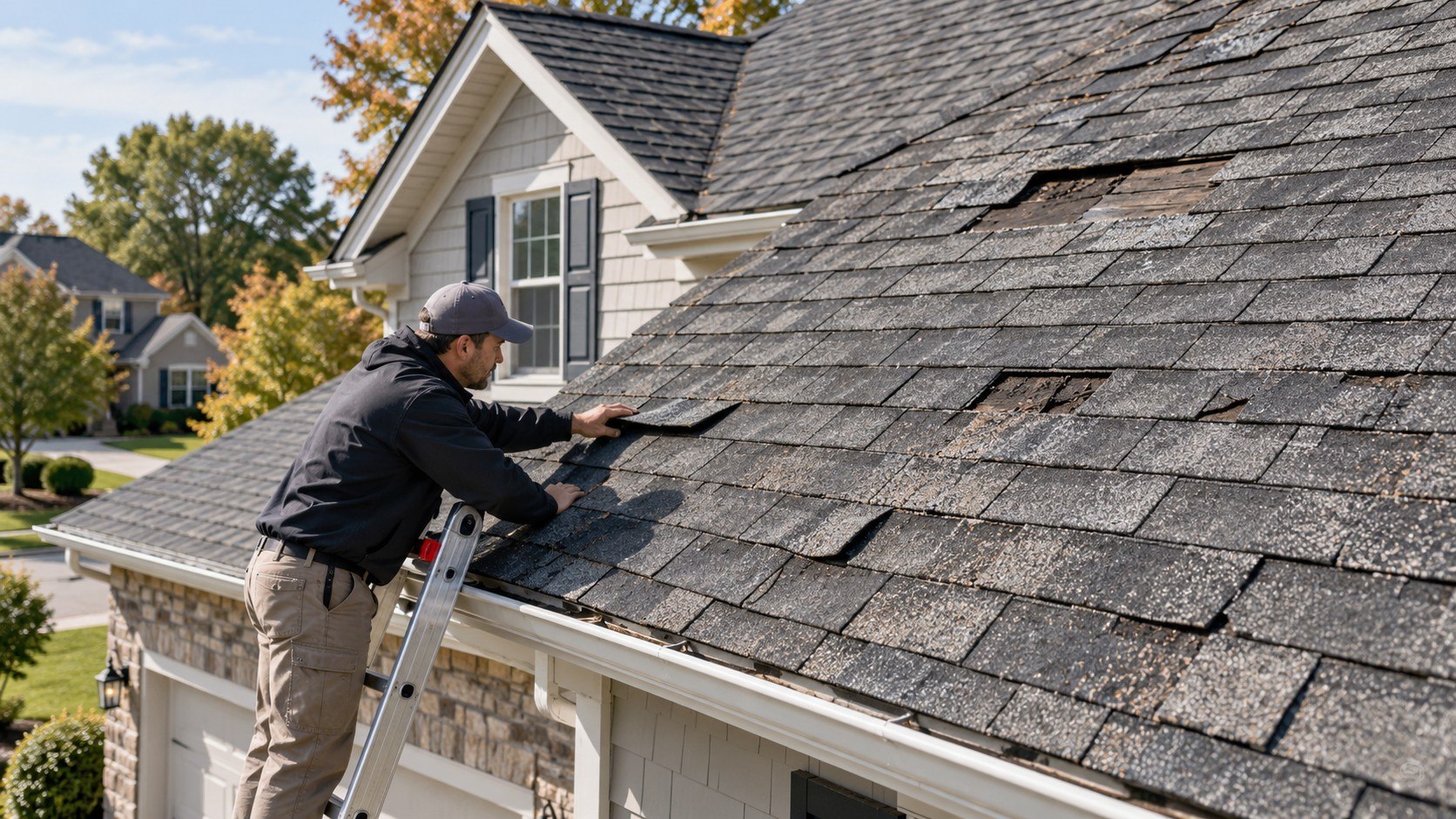
How to know if you need a new roof starts with 3 checks: age, visible damage, and evidence of water entry. A careful ground-level and attic review takes about 30 minutes, while a professional inspection provides the final repair-or-replace answer, as noted by Baltimore Chronicle.
You do not need to replace every roof that leaks. One failed pipe boot may need a small repair. Widespread curling shingles, recurring leaks, sagging decking, and an aging roof create a different case. Those conditions justify a professional inspection before another storm turns manageable damage into structural work.
Key takeaways
- Age matters most when deterioration appears across several roof sections, rather than around one isolated vent or flashing point.
- Water stains, bare shingles, sagging areas, and repeated repairs are stronger replacement signals than roof age alone.
- In 2026, compare inspection findings and complete contractor scopes before committing thousands of dollars to replacement.
A roof should be judged as a system, not as a calendar date. Shingles, underlayment, flashing, decking, ventilation, and penetrations can deteriorate at different speeds. A 16-year-old roof exposed to hail in Colorado may look worse than an older roof elsewhere. Florida heat and hurricanes create different stresses from Maryland freeze-thaw cycles. Texas wind and hail can also shorten useful service life.
What you need
Before checking the roof, gather a few basic tools and documents. They help establish the roof’s age and identify whether recent damage is new or long-standing.
- Binoculars or a phone camera with optical zoom
- Flashlight for an accessible attic
- Original installation invoice or seller disclosure, if available
- Roof warranty and previous repair invoices
- Photos from before and after recent storms
- About 30 minutes for the first inspection
Stay on the ground for the exterior review. Walking on shingles can damage them and creates a serious fall risk. Inspect the attic only where safe flooring or access exists. Write down locations of stains, missing shingles, and previous repairs. Photograph the same roof slopes from several angles so changes remain easy to compare later.
Step 1: How to Know If You Need a New Roof From Its Age
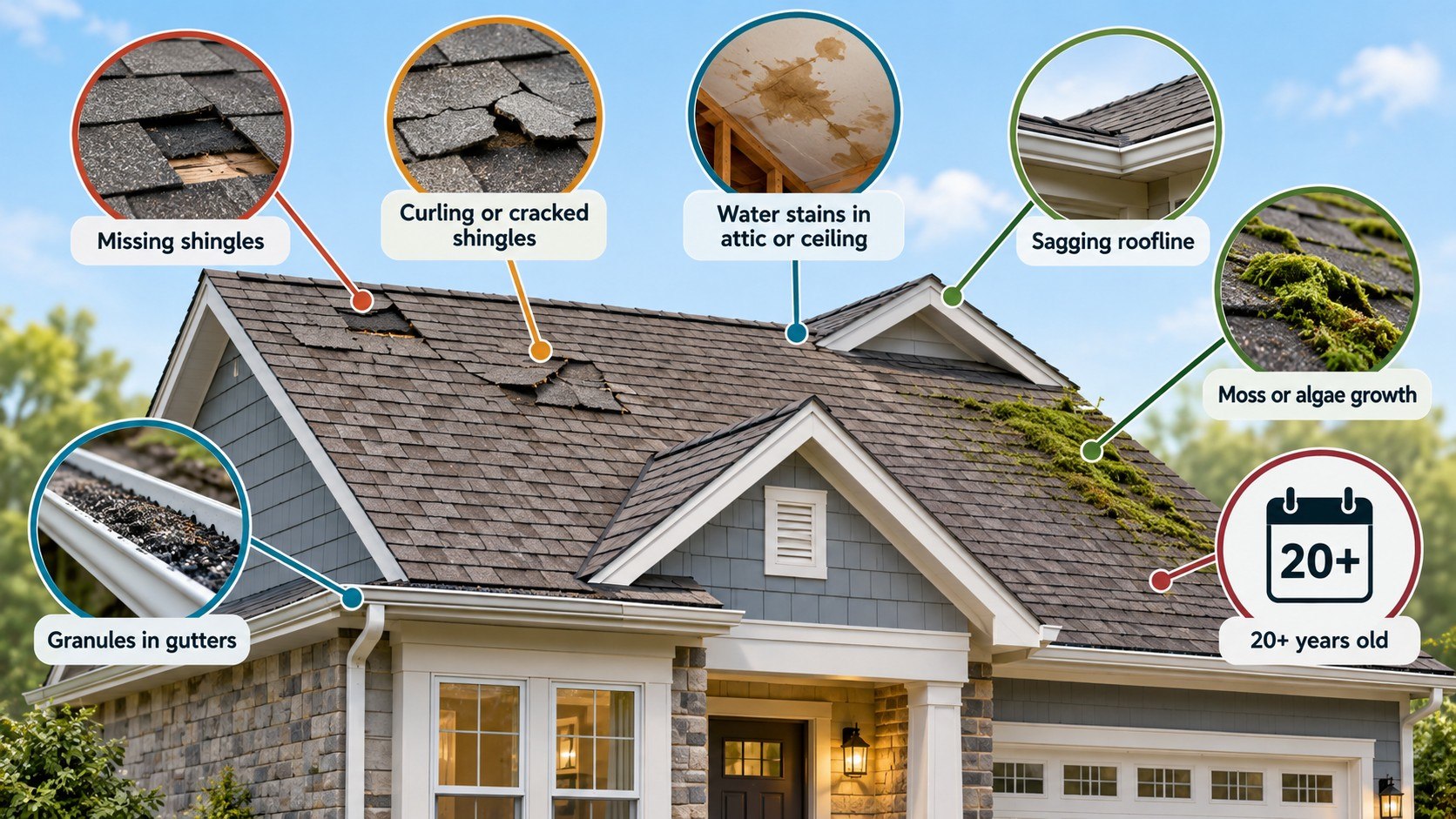
Start by establishing the installation year before judging the roof by appearance. Search closing documents, invoices, permits, warranties, and seller disclosures.
Roof age and replacement decisions become more urgent when physical deterioration accompanies age. GAF’s 2026 homeowner guidance says many residential roofs need replacement around 20 to 25 years. Actual service life depends on materials, installation quality, weather exposure, ventilation, and tree coverage.
“There’s no specific ‘expiration date’ for an asphalt shingle.”
Annie Crawford, contributor to GAF Roof Views, explains that homeowners should focus on roof condition rather than one universal deadline. The GAF guidance on roof replacement also identifies visible deterioration, leaks, and structural problems as factors in the decision.
A common mistake is assuming a roof is healthy because it is only 12 years old. Hail, poor ventilation, installation defects, fallen branches, and repeated wind damage can accelerate deterioration.
Age should trigger closer inspection. It should not substitute for inspection.
Step 2: Inspect Shingles, Flashing, and the Roofline
Stand far enough from the house to see entire roof slopes. Look for missing, cracked, curling, lifted, or visibly bare shingles.
Check valleys, roof edges, chimneys, plumbing vents, and skylights. Damaged or detached flashing can admit water even when surrounding shingles still look intact. A wavy or sagging roofline deserves faster professional attention because decking or framing may be involved.
These are among the most practical signs you need a new roof. GAF identifies curling, cracking, missing granules, multiple leaks, and sagging among common replacement warning signs.
Do not confuse every dark streak with failed shingles. Algae staining can change appearance without proving that the roof system has reached the end of its life.
Step 3: Check the Attic for Evidence the Exterior Hides
Inspect an accessible attic during daylight. Use a flashlight to examine decking near valleys, chimneys, vents, skylights, and other penetrations.
Look for water tracks, darkened wood, damp insulation, rusty nail points, musty odors, or daylight through unintended openings. A ceiling stain downstairs may appear several feet from the actual entry point. Water can travel along rafters before becoming visible inside living space.
Recurring interior moisture changes the roof repair vs replacement calculation. One localized flashing leak may remain repairable. Several leak paths across different slopes suggest a broader system problem.
The Baltimore Chronicle guide to finding household water leaks explains how roof moisture differs from plumbing and HVAC problems. Roof leaks often correlate with rain, while condensation and plumbing failures follow different patterns.
A common mistake is replacing the roof solely because a ceiling has one stain. Identify the water source first.
Step 4: Decide Whether the Damage Is Localized or Widespread
Map every defect by roof slope. A few damaged shingles around one branch impact tell a different story from deterioration across the entire house.
The comparison below helps separate a repair candidate from a replacement candidate. It does not replace a professional structural assessment.
| Condition | Repair may make sense | Replacement deserves consideration |
|---|---|---|
| Missing shingles | Small isolated section | Multiple slopes or repeated losses |
| Leaks | Single identified penetration | Recurring leaks in several locations |
| Granule loss | Minor localized wear | Large bare or aging areas |
| Flashing | One failed boot or joint | Multiple deteriorated penetrations |
| Roof deck | Small repairable section | Widespread softness or sagging |
| Age | Younger roof with isolated damage | Older roof plus broad deterioration |
A contractor should still identify the cause before proposing work. Replacing shingles without correcting defective flashing can preserve the leak. New roofing over compromised decking can create another expensive failure. Ventilation problems also require separate attention. Request photographs of hidden damage after tear-off begins. Require any decking replacement price to appear clearly in the written scope.
The case for replacement becomes stronger when age, repeated repairs, moisture, and widespread surface damage appear together.
Step 5: Compare Replacement Cost With the Next Repair
Obtain itemized repair and replacement estimates. Compare the expected scope, not only the final number.
For 2026 planning, Baltimore Chronicle’s US roof replacement cost guide places many architectural asphalt projects around $9,000 to $18,000. Actual bids vary with roof area, pitch, tear-off, access, decking, permits, and local labor.
The publication’s asphalt shingle price analysis gives a broader installed range near $3.50 to $8.50 per sq ft. Architectural shingles often occupy the middle or upper part of that range. Products from GAF, Owens Corning, and CertainTeed vary by product line, warranty, and installer requirements.
A $1,200 repair can make sense on a sound younger roof. Repeating similar repairs every season on a deteriorated older system can postpone an unavoidable replacement while increasing the risk of interior damage.
Do not compare one contractor’s repair estimate with another contractor’s replacement estimate. Ask both companies whether the remaining roof can reasonably justify the smaller investment.
Step 6: Get a Professional Inspection and Written Scope
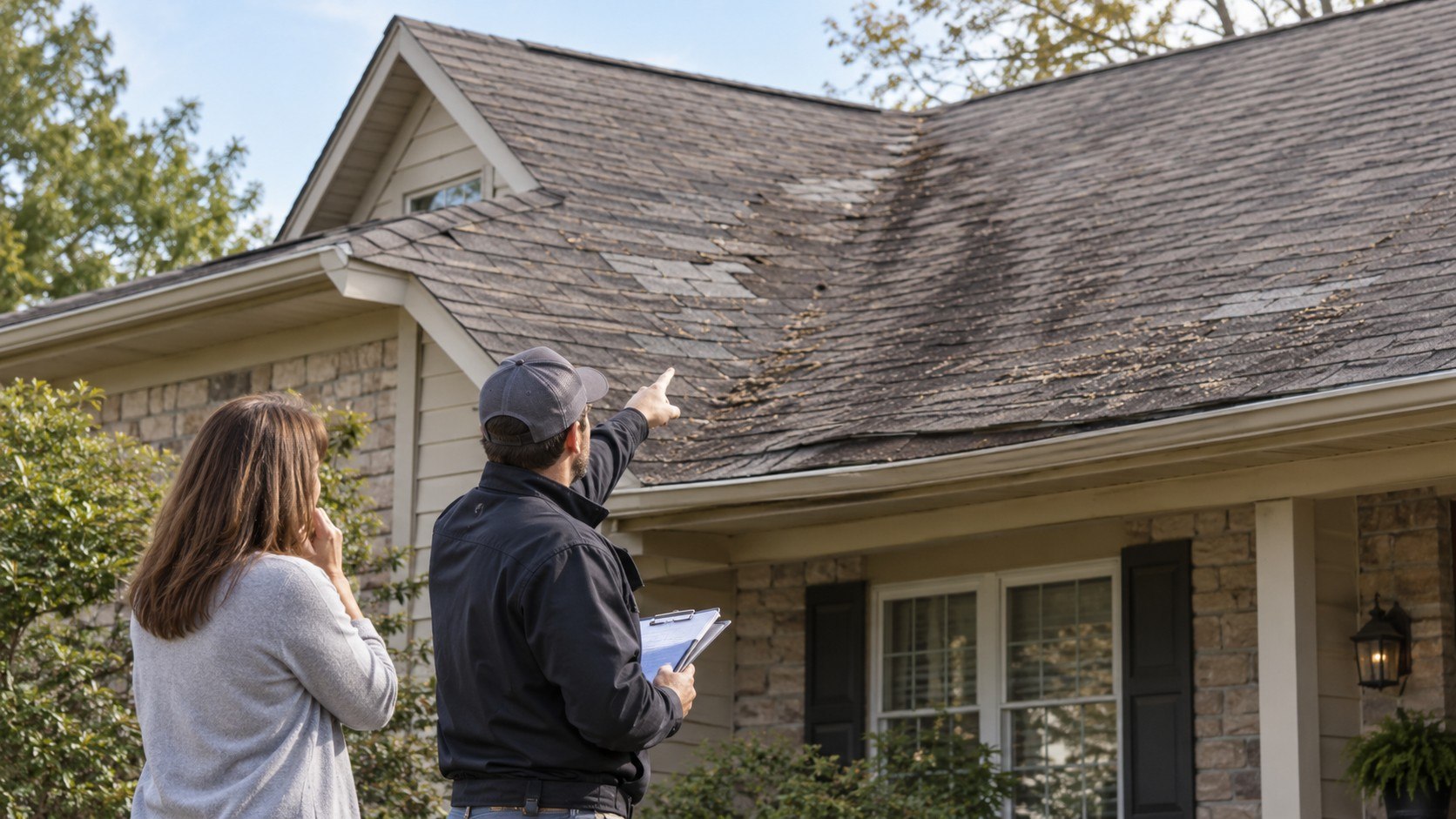
Ask a qualified roofing contractor to inspect shingles, penetrations, flashing, gutters, roof edges, decking, and accessible attic conditions. Request photographs and written findings.
Ask whether the contractor recommends repair or replacement and why. A useful roof inspection checklist should separate urgent defects from maintenance items. It should also identify uncertain areas that may become visible only after tear-off.
Professional documentation gives competing bidders a clearer basis for comparable scopes. It also helps homeowners understand which defects are immediate and which can be monitored.
“Get three written estimates.”
The Federal Trade Commission gives that advice in its consumer guidance on home repair scams. The FTC also recommends checking licenses and insurance, reviewing written contracts, and avoiding risky payment methods. Its home repair scam guidance is especially relevant after storms, when unsolicited contractors may target affected neighborhoods.
Use this sequence before signing:
- Confirm the contractor’s license requirements in your state.
- Request proof of liability insurance and workers’ compensation coverage where applicable.
- Compare at least 3 written scopes using the same roofing material.
- Confirm tear-off, disposal, underlayment, flashing, ventilation, decking, and permits.
- Read workmanship and manufacturer warranty terms before paying a deposit.
A low bid can exclude work that another proposal includes. One contractor may price damaged plywood separately. Another may include a limited allowance. Permit rules also differ between cities and counties. Confirm who obtains required permits before construction begins. Never treat an insurance claim as permission to skip contractor screening.
Troubleshooting Common Roof Decisions
Some cases do not fit a simple age rule. These scenarios help identify the next practical move.
- A 10-year-old roof has one leak: inspect flashing and penetrations before discussing full replacement.
- A 22-year-old roof has curling shingles across several slopes: obtain replacement estimates alongside any repair proposal.
- Shingles disappeared after a windstorm: document damage before temporary repairs and contact the insurer when coverage may apply.
- The roofline visibly sags: arrange prompt professional assessment because decking or structural components may be affected.
- A contractor appears after a storm demanding immediate payment: verify the company before signing or paying anything.
Storm damage and normal aging can appear together. Insurance coverage depends on the policy and the cause of loss. An insurer may distinguish sudden covered damage from long-term deterioration. Temporary protection may still be necessary to prevent additional water entry. Keep dated photographs, invoices, and written contractor findings. Do not authorize unnecessary demolition before documenting conditions when a claim may follow.
How do I know if my roof needs replacing instead of repairing?
Look for several problems occurring together. Widespread shingle deterioration, repeated leaks, sagging, substantial granule loss, and advanced age strengthen the replacement case. One isolated defect usually deserves a repair assessment first.
Is a 20-year-old roof automatically due for replacement?
No. GAF’s 2026 guidance places many residential roofs around a 20-to-25-year replacement interval, but condition still matters. Climate, installation quality, roofing material, ventilation, and storm exposure can change service life.
Can I inspect my own roof?
A homeowner can perform a useful ground-level and attic review. Binoculars can reveal missing shingles, curling edges, damaged flashing, and unusual roofline changes. Leave rooftop walking and close exterior inspection to properly equipped professionals.
How much does a new asphalt roof cost in 2026?
Many US architectural asphalt replacements fall around $9,000 to $18,000 in 2026 planning ranges. Roof size, pitch, decking repairs, local wages, permits, access, and product choice can move the final bid substantially.
Should I replace my roof before it starts leaking?
Replacement can make sense before active leaking when deterioration is widespread and the remaining service life is limited. Waiting for interior water damage can add insulation, drywall, decking, and mold-remediation costs to the roofing bill.
Earlier we wrote about How Long Does DHL eCommerce Take From China 2026? US Delivery Timeline and Customs Delays