

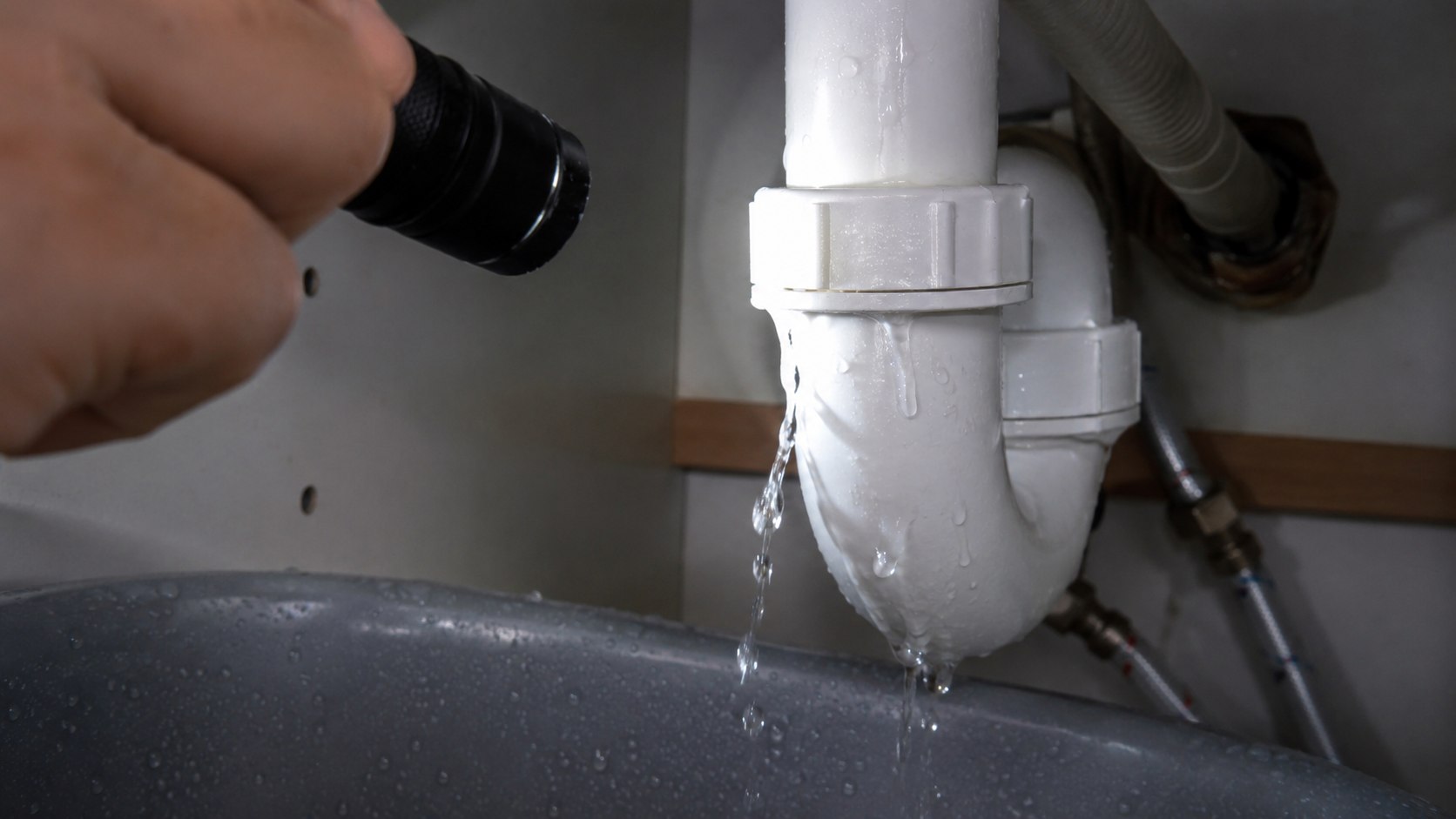
How to find a water leak in your house begins with a simple meter test. Turn off every faucet, appliance, toilet, and irrigation zone, then photograph the water meter. Wait at least 30 minutes without using water. If the reading changes, water is still flowing somewhere on the property, as noted by the Baltimore Chronicle editorial team.
You can complete the first inspection in 30 to 60 minutes. Start with toilets, supply valves, appliance hoses, and visible plumbing. Then isolate indoor and outdoor lines before opening walls or paying for specialist equipment.
Key takeaways:
- A moving meter with every fixture turned off usually confirms a leak in a pressurized water line.
- Toilets, appliance connections, outdoor irrigation, and shutoff valves should be checked before walls are opened.
- Shut off the main valve immediately when water spreads quickly or approaches electrical equipment.
What You Need
Most initial checks require no professional plumbing tools. Gather the following items before turning off fixtures or moving appliances:
- A flashlight or headlamp
- Paper towels or dry toilet tissue
- Food coloring for toilet testing
- An adjustable wrench and screwdriver
- A phone camera for meter readings and damage
- A notebook for recording results
- An optional pinless moisture meter
- At least 30 minutes without water use
A basic inspection may cost nothing. In 2026, entry-level moisture meters often sell for about $20 to $50. Midrange pinless models from Klein Tools and General Tools often cost between $45 and $100. Professional meters can exceed $200.
Small battery-powered leak alarms commonly cost about $15 to $50 per sensor. Connected systems from Moen, Kidde, Govee, and Resideo may cost more. Automatic main-line shutoff systems can reach several hundred dollars before installation.
Tools do not replace careful observation. A dry tissue wrapped around a valve can expose a small leak more clearly than an expensive scanner.
Step 1: Check the Signs of a Hidden Water Leak
Begin in bathrooms, kitchens, laundry rooms, basements, crawl spaces, and utility closets. Look for yellow or brown stains, peeling paint, swollen trim, warped flooring, corroded fittings, or damp cabinet floors.
Listen after the house becomes quiet. Hissing, dripping, tapping, or running-water sounds can point toward a damaged supply pipe. A persistent musty smell may indicate moisture behind drywall or beneath flooring.
Compare recent water bills with the same months from the previous year. Consider changes in occupancy, lawn irrigation, pool filling, and appliance use. A sudden increase without a clear explanation deserves investigation.
Check the lowest floor first when no obvious source appears. Gravity can carry water downward through framing, pipe openings, and drywall seams.
Common mistake: Do not assume a ceiling stain sits directly beneath the leak. Water may travel several feet along joists before becoming visible.
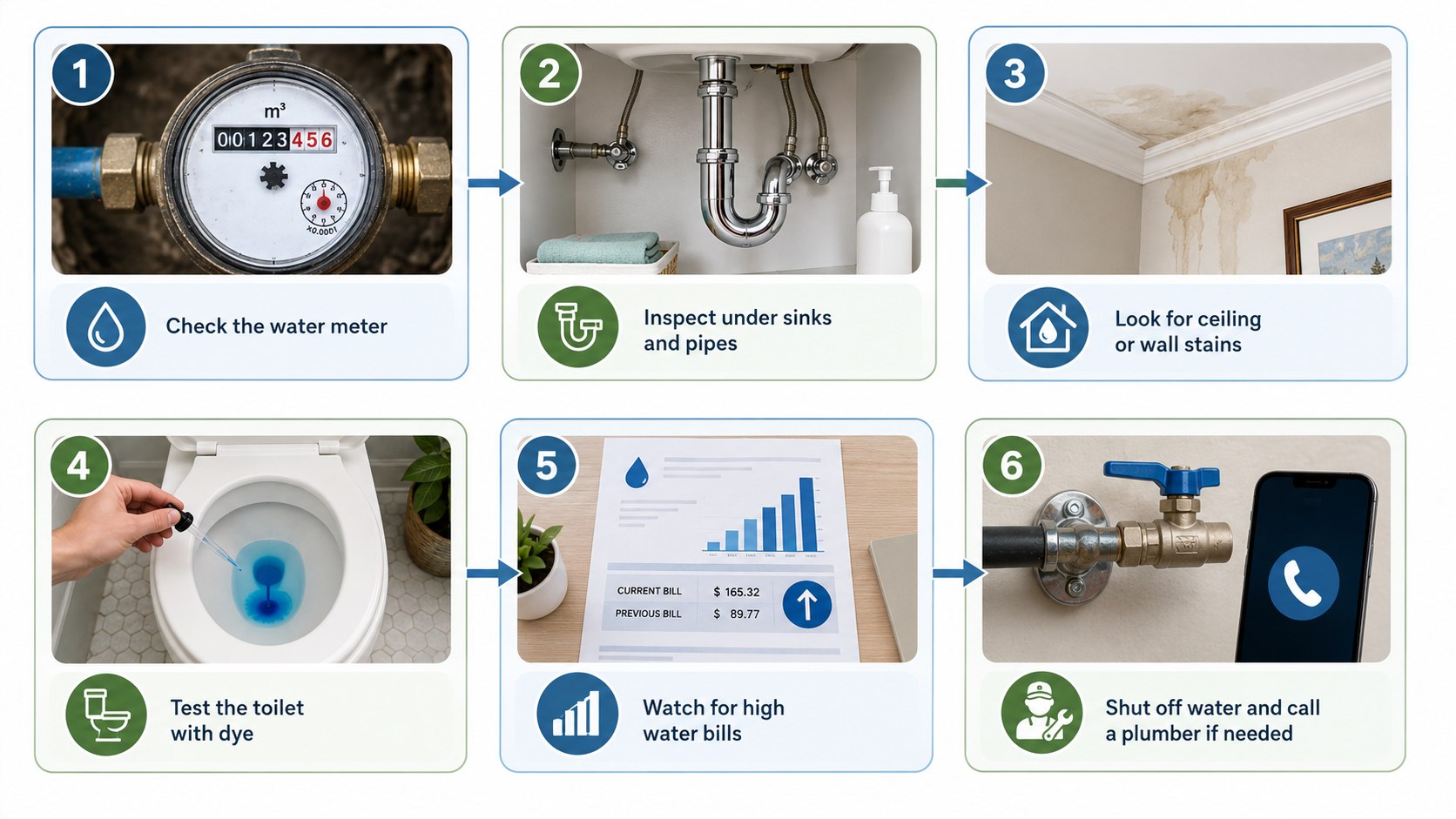
Step 2: Learn How to Find a Water Leak in Your House With the Meter Test
Turn off faucets, washing machines, dishwashers, refrigerator ice makers, humidifiers, water softeners, and irrigation systems. Ask everyone in the home not to flush toilets during the test.
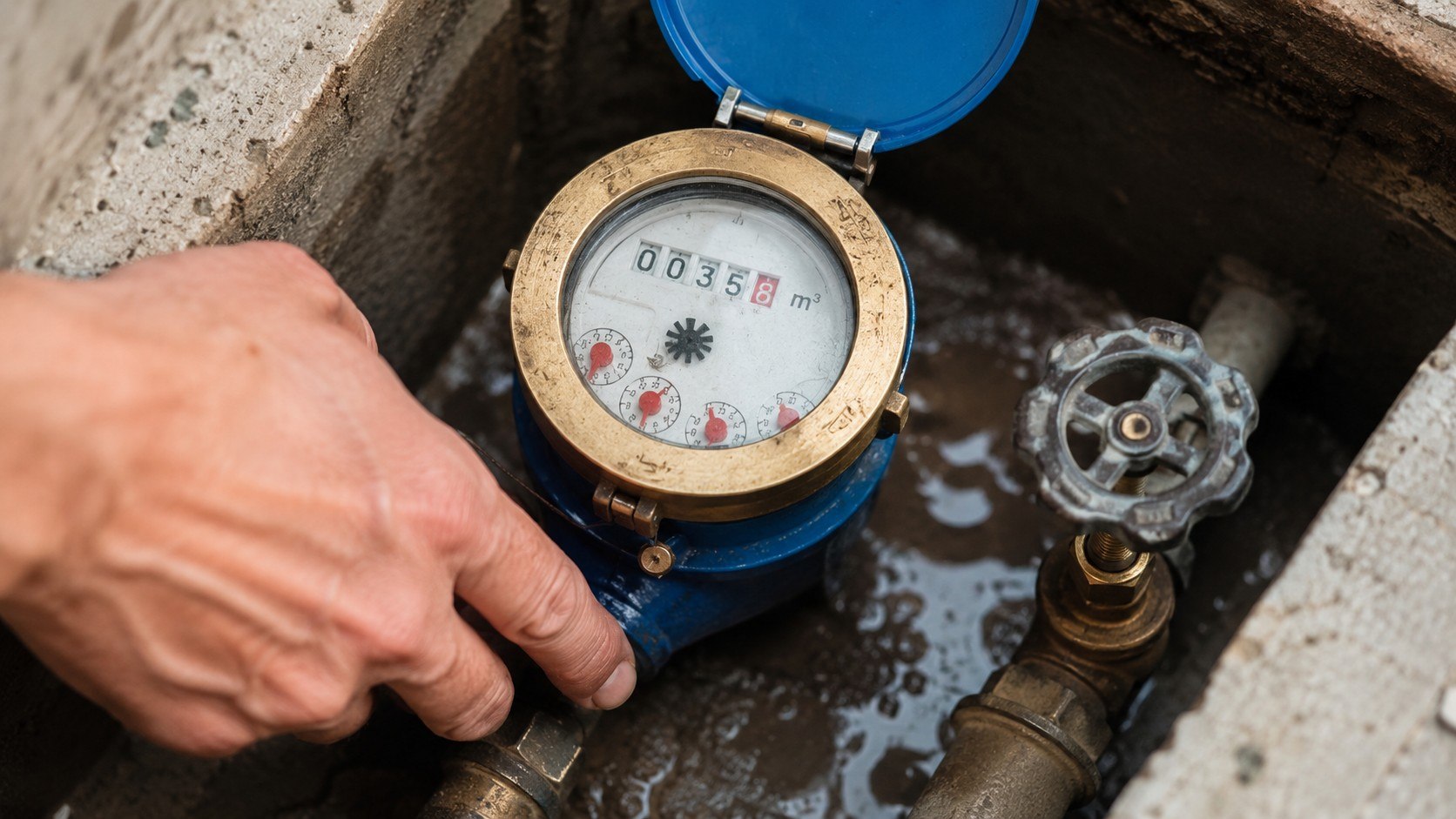
Locate the meter in the basement, garage, utility room, sidewalk box, or front yard. Photograph the complete display, including any small flow indicator or digital leak symbol.
- Confirm that every water-using fixture is off.
- Record the meter reading and the indicator position.
- Wait 30 minutes without using any water.
- Extend the test to 2 hours for a slow suspected leak.
- Compare the final reading with the original photograph.
If the reading changes, water passed through the meter during the test. This usually indicates an indoor plumbing leak, a damaged service line, or leakage from an irrigation branch.
The US Environmental Protection Agency recommends checking the water meter before and after a 2-hour period without water use. Any change during that period can indicate a leak.
Some digital meters update slowly. Wait several minutes before deciding that the display has stopped. A small triangular or star-shaped dial may detect lower flow than the main digits.
Common mistake: Automatic ice makers and scheduled irrigation can invalidate the test. Disable them before recording the first reading.
Step 3: Separate Indoor Plumbing From Outdoor Lines
After confirming meter movement, close the house’s main interior shutoff valve. This valve may sit near the foundation wall, water heater, garage, basement, or crawl-space entrance.
Check the meter again. If it stops, the leak is probably inside the house. If it continues moving, investigate the buried service line or an outdoor branch connected before the main valve.
The pattern below helps narrow the search before excavation or demolition begins:
| Meter result | Likely source | Next action |
|---|---|---|
| Stops after the main valve closes | Indoor plumbing or fixtures | Inspect toilets, valves, appliances, and concealed pipes |
| Continues after the valve closes | Service line or outdoor branch | Check the yard and contact a plumber or utility |
| Moves only during irrigation | Sprinkler system | Inspect valves, heads, and underground irrigation pipes |
| Does not move | Drain, roof, HVAC, or intermittent leak | Test fixtures individually and inspect after rainfall |
Walk from the meter toward the foundation. Look for soft ground, sunken soil, unexplained puddles, erosion, or one unusually green strip of lawn.
Frozen soil can damage service lines in Minnesota, Wisconsin, Maine, and other cold states. Shifting clay soil can stress buried plumbing in Texas, Arizona, and parts of California.
An outdoor leak may disappear into porous soil without producing a visible puddle. Repeat the meter test overnight after several dry days. Record the reading before bed and check it before anyone uses water.
Contact the local water utility when moisture appears close to the meter. Responsibility for the meter, connection, and private service line varies between utilities.
Common mistake: Never dig near a public meter or marked utility line without authorization and proper utility marking.
Step 4: Test Toilets, Faucets, and Shutoff Valves
Toilets are a common source of silent, intermittent water loss. Add several drops of food coloring to the tank, then wait 10 minutes without flushing.
If colored water appears in the bowl, the flapper or flush-valve seal probably leaks. Flush immediately after the test to prevent staining.
Watch the overflow tube inside the tank. Water constantly entering the tube may indicate a poorly adjusted float or a failing fill valve.
Next, wrap dry tissue around faucet bases, flexible supply lines, shutoff valves, and threaded connections. Even a small seep will darken the paper. Check beneath the sink while another person runs both hot and cold water.
Replacement toilet flappers often cost about $5 to $20 in 2026. Standard fill valves usually cost about $10 to $35. Prices vary by toilet design and manufacturer.
Bathroom leaks can also damage subflooring, tile, drywall, and cabinetry. Homeowners estimating a larger repair can compare related costs in Baltimore Chronicle’s guide to bathroom remodeling costs in the USA in 2026.
Common mistake: Do not overtighten an old shutoff valve. Excessive force can damage its seal or crack a weakened fitting.
Step 5: Inspect Appliances and Water Connections
Inspect washing machine hoses, dishwasher connections, refrigerator supply lines, water heaters, filtration systems, and water softeners. Move appliances only when their weight and electrical connections allow safe access.
Use a flashlight to find rust trails, mineral deposits, damp insulation, or swollen flooring. White or green deposits around a connection often show where small amounts of water repeatedly evaporated.
Check the washing machine during filling and draining. A supply hose leaks under pressure, while a drain hose usually leaks only when the machine pumps water out.
Inspect the dishwasher beneath the sink and behind the lower front panel. Water may come from the supply valve, drain hose, pump seal, or door gasket.
Moisture beneath a water heater requires immediate attention. A loose drain valve may be repairable. Water emerging through the tank body can indicate internal corrosion and the need for replacement.
Kitchen leakage can affect cabinets, flooring, electrical outlets, and supply lines. Baltimore Chronicle’s report on kitchen remodeling costs in the USA in 2026 explains how plumbing changes and concealed damage affect renovation budgets.
Common mistake: Condensation on cold pipes can resemble leakage. Dry the pipe completely and watch whether moisture returns from a specific joint.
Step 6: Trace Moisture in Walls, Floors, and Ceilings
Mark the visible edge of a stain with painter’s tape. Photograph it and note which showers, sinks, toilets, or appliances were used before the area expanded.
A pinless moisture meter can compare suspicious drywall with a known dry area. It can help trace the moisture path without making holes.
Readings should be treated as comparisons, not proof of an exact source. Pipes, metal studs, tile, and dense materials can affect the result.
Consider what sits above or behind the damaged surface. A second-floor bathroom may create a ceiling stain only when the shower operates. A refrigerator line may wet the kitchen floor slowly and spread beneath cabinets.
Run fixtures separately. Fill the sink or bathtub, check the surrounding area, then release the water and inspect again. Leakage during filling suggests a supply or fixture problem. Leakage during draining points toward the drain assembly or pipe.
People buying an older property should examine visible plumbing before closing. Baltimore Chronicle’s guide to home inspections in the USA in 2026 explains how inspectors assess plumbing, water heaters, roofs, foundations, and other accessible systems.
Common mistake: Do not cut drywall until nearby studs, plumbing, and electrical lines have been identified.
Step 7: Rule Out Roof, Foundation, HVAC, and Irrigation Problems
Not every wet surface comes from household plumbing. Roof leaks usually appear during or after rain. HVAC condensation problems often emerge during periods of heavy air-conditioner use.
Inspect attic decking around vents, chimneys, skylights, valleys, and roof penetrations. Dark wood, compressed insulation, rusted nails, or water tracks may reveal repeated entry.
Check the air conditioner drain pan and condensate pipe. A clogged drain can overflow near the air handler and damage ceilings or flooring below.
Run each irrigation zone separately. Look for bubbling soil, damaged sprinkler heads, poor pressure, or one area that remains saturated after the system stops.
Foundation seepage usually follows rainfall or snowmelt. A pressurized plumbing leak may continue during dry weather and cause the water meter to move.
Do not seal or repaint a wet wall until the source is confirmed. Cosmetic work can hide evidence while moisture continues to damage insulation and framing.
Common mistake: Paying for waterproofing before identifying the source may leave a plumbing or drainage problem unresolved.
Troubleshooting
Some leaks do not follow an obvious pattern. Use these scenarios to choose the next test:
- The meter moves, but no wet area appears: Check toilets, irrigation valves, crawl spaces, and the buried service line.
- The meter stays still, but the ceiling is wet: Test drains, roof penetrations, shower waterproofing, and HVAC condensate.
- Moisture appears only during rain: Inspect flashing, siding joints, windows, gutters, and foundation drainage.
- One area of a slab floor feels warm: Shut off the water and request professional slab-leak detection.
- Water approaches wiring or outlets: Keep people away and contact emergency plumbing and electrical services.
Professional leak detection may involve acoustic microphones, pressure testing, thermal imaging, inspection cameras, or tracer gas. These methods can reduce unnecessary demolition.
In 2026, basic professional leak detection may cost roughly $150 to $600 in many US markets. Complex slab leaks, buried service lines, large homes, and emergency visits can cost more.
Ask whether the diagnostic price includes written findings, photographs, pipe marking, or repair recommendations. Confirm whether opening and restoring walls is included. Many companies charge separately for access and reconstruction.
Automatic shutoff devices may provide additional protection after repairs. Moen’s Flo system monitors water use, performs plumbing health checks, and can close the main supply when it identifies a critical event.
Do not approve extensive demolition based only on a damp stain. Ask the contractor to explain the testing method and why the proposed access point is necessary.
FAQ
How can I tell whether a hidden water leak is active?
Turn off every water-using fixture and monitor the meter. Continued movement during a no-use period indicates water is passing through a metered connection.
How long should I run a water meter leak test?
A 30-minute test can reveal moderate leakage. Use a 2-hour test when looking for a slow leak. Make sure no appliance or irrigation system starts automatically.
Can a water meter detect a drain leak?
Not reliably. A drain leaks only while water passes through it. The meter may stop after the faucet closes, even though the drain pipe remains damaged.
When should I shut off the main water valve?
Close it when water spreads quickly, damages a ceiling, approaches electrical equipment, or comes from a failed pressurized supply pipe.
Does homeowners insurance cover hidden water damage?
Coverage depends on the policy and cause. Sudden accidental damage may qualify. Long-term seepage, poor maintenance, and gradual deterioration are often excluded.
What should a renter do after finding a leak?
Document the damage with photographs, protect personal belongings, and notify the landlord immediately. Renters should not open walls or modify building plumbing without permission.
Start with the meter, then isolate indoor fixtures, outdoor lines, drains, and weather-related sources. Document each result before repairs begin. Call a licensed plumber when the source remains hidden, the shutoff valve fails, or water threatens the structure and electrical system.
Earlier we wrote about How Do You Share Location on iPhone in 2026? A 7-Step Guide