

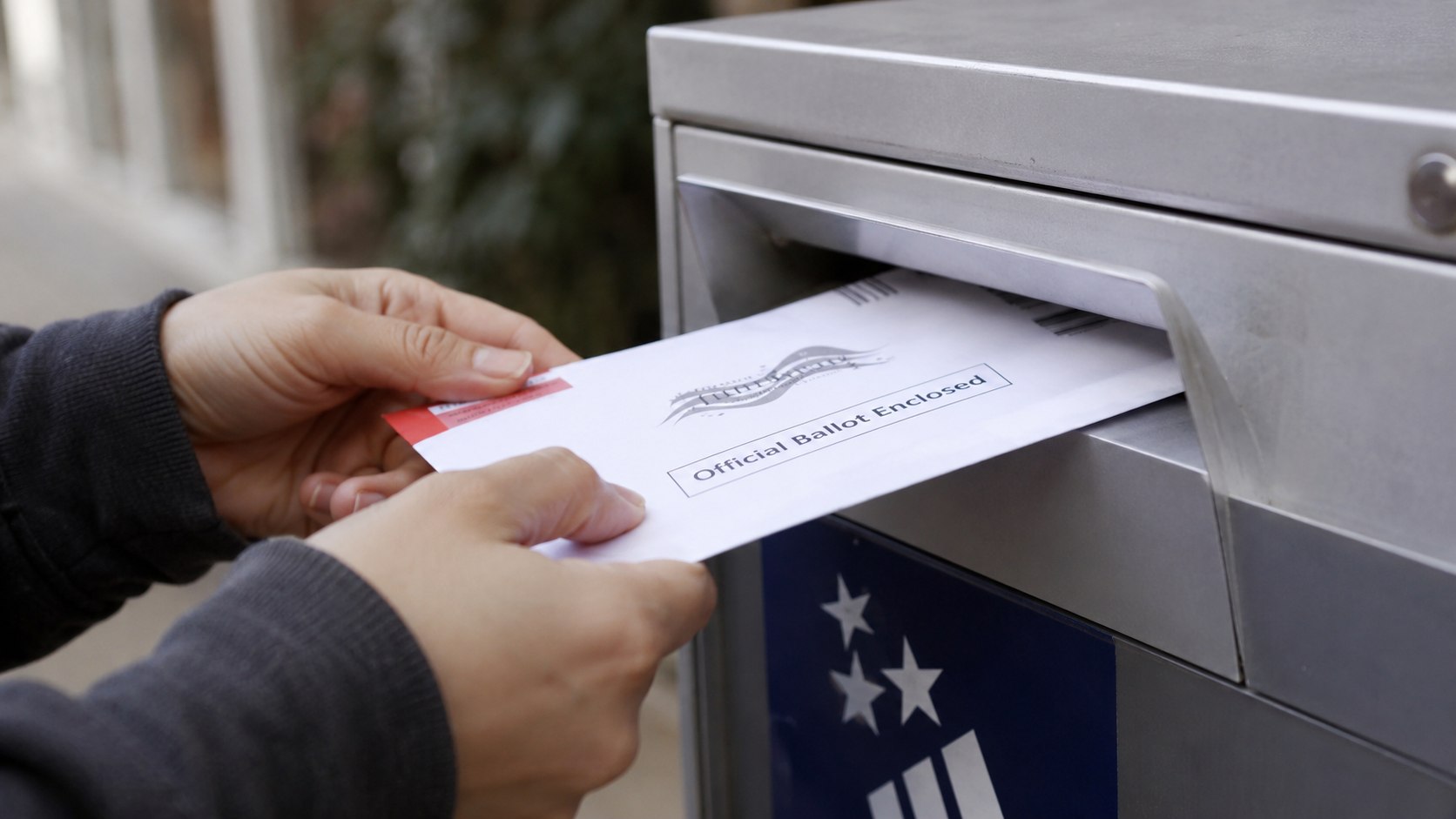
How to vote by mail 2026 starts with checking your voter registration, reviewing your state’s absentee rules, and requesting the ballot before the official deadline. The online portion may take only 5–15 minutes, but voters should allow several weeks for processing and delivery, as the Baltimore Chronicle notes.
The safest approach is to request the ballot as soon as your state opens applications. Complete every required field, follow the envelope instructions, return the ballot early, and confirm that election officials accepted it.
The 2026 federal general election is scheduled for November 3. State primaries, runoffs, special elections, and municipal contests can have different voting dates and request deadlines.
Key takeaways
- Mail-voting eligibility, application methods, identification rules, and return deadlines depend on the voter’s state.
- Requesting an absentee ballot early leaves time to correct address, signature, identification, or delivery problems.
- After returning the ballot, use the official tracking service and respond quickly to any correction notice.
What you need to vote by mail in 2026
You usually do not need special equipment to submit a mail-in ballot request. However, collecting the correct documents before starting can prevent processing delays.
- Your full legal name as it appears on the voter registration record.
- Your registered residential address, including the correct apartment or unit number.
- A separate mailing address when the ballot should be delivered elsewhere.
- Your date of birth and any state-required identification number.
- An email address or telephone number for election-office notifications.
- A printer and envelope if your state requires a paper application.
- Postage if the application or ballot-return envelope is not prepaid.
- About 15 minutes for the request and additional time to review ballot instructions.
Some states ask for a driver’s license number or state identification number. Others may accept the final digits of a Social Security number or another approved identifier.
Use only an official state, county, or local election website. Never enter sensitive information into a form received through an unsolicited email, social media post, or text message.
Military members and US citizens living abroad use separate federal procedures. They can usually register and request an absentee ballot through the Federal Voting Assistance Program.
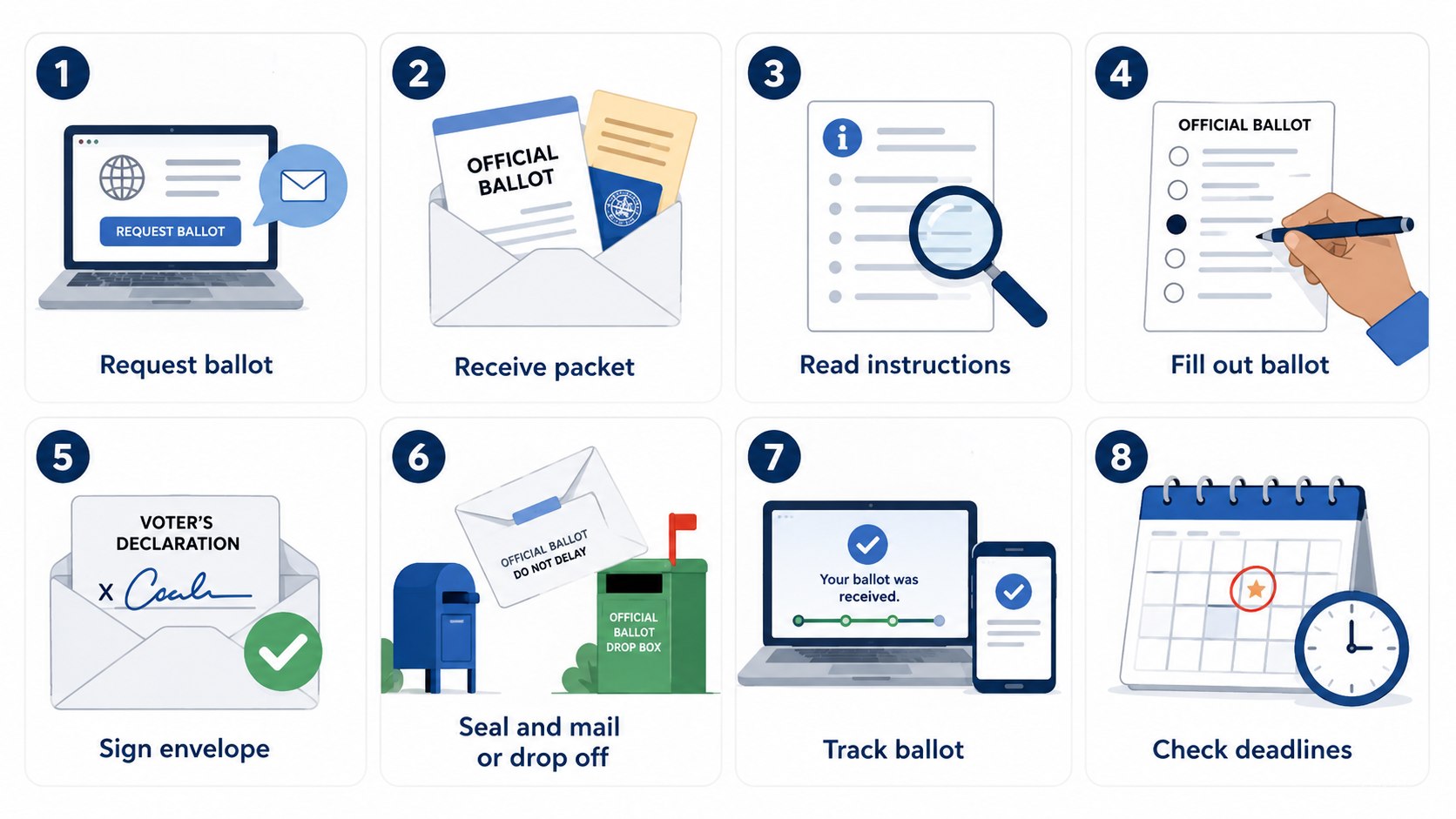
How to vote by mail 2026: requests and deadlines
There is no single nationwide absentee ballot deadline. Each state determines eligibility, request methods, identification requirements, ballot-return options, and counting rules.
Some states automatically send ballots to active registered voters. Others allow any registered voter to request one without providing a reason. Several jurisdictions require an accepted excuse, such as illness, disability, work, travel, age, or absence from the county.
The comparison below shows which details must be verified for the specific 2026 election.
| Requirement | Possible state rule | What to verify |
|---|---|---|
| Eligibility | Automatic ballot, no-excuse request, or approved excuse | Whether you qualify and need supporting details |
| Request method | Online, mail, email, fax, or in person | Which submission methods are legally accepted |
| Request deadline | Several days or weeks before voting | Whether the application must be submitted or received |
| Ballot return | USPS, drop box, election office, or voting center | Available locations, operating hours, and delivery restrictions |
| Counting deadline | Received by Election Day or postmarked by a stated date | Whether a postmark protects a later delivery |
A legal request deadline is not a recommended mailing date. Applying on the final permitted day may leave insufficient time for officials to process the application and deliver the ballot.
A ballot postmarked by Election Day is also not accepted everywhere. In some states, it must physically reach the election office before polls close.
Review the dates for the exact contest. A state primary, runoff, special election, and November general election may have separate schedules.
Maryland residents can also consult the Baltimore Chronicle’s Maryland Election Guide 2026. It covers mail-in ballot deadlines, polling hours, registration rules, voter identification, and available return methods.
Step 1: Confirm your voter registration
Check that your legal name, residential address, mailing address, and party affiliation are accurate. Start with Vote.gov, which directs voters to their official state registration system.
This step matters because election officials process the request against the voter record. A changed surname, incomplete apartment number, or outdated address can delay or block delivery.
Do not assume that updating a driver’s license automatically updated your voter registration. Motor vehicle and election systems may use different procedures.
Step 2: Check your state’s absentee voting rules
Open the official website of your secretary of state, state election board, or local election authority. Look for sections titled vote by mail, absentee voting, or mail ballot request.
Confirm whether your state offers no-excuse absentee voting. Some states allow every eligible voter to apply, while others require a legally recognized reason.
Review whether an application remains valid for one election or a longer period. Rules used during the 2024 election may not apply in 2026.
Avoid relying on campaign websites, social media graphics, or unofficial deadline lists. They may be outdated or may omit county-level requirements.
Step 3: Find the correct request deadline
Record the application deadline for the specific election. Determine whether the request must be received by election officials or merely submitted by that date.
The distinction is critical. A paper application mailed on the final day could arrive too late when state law requires receipt.
Request the ballot several weeks ahead whenever possible. Add more time when traveling, studying away from home, relocating, or using a temporary mailing address.
Also check whether online, email, fax, and paper applications have different deadlines. A state may close electronic requests later than mailed applications.
Step 4: Complete and submit the ballot request
Use the official online portal or download the current 2026 application. Enter your name, birth date, address, and identification details exactly as they appear in the voter record.
Review which election you selected. Some applications cover one contest, while others allow voters to request ballots for several elections.
Provide the correct delivery address. Voters temporarily staying elsewhere may be allowed to receive the ballot away from their registered residence.
A common mistake is sending the application to the wrong jurisdiction. Submit it to the election authority serving your registered home address, not the temporary mailing destination.
Step 5: Monitor the request and delivery
Save the confirmation number, email, screenshot, or copy of the submitted application. Many states provide an online absentee ballot status portal.
The tracker may show when the request was received, approved, processed, and mailed. It may also identify missing information or a rejected application.
Contact the local election office when the status does not change within the expected processing period. Do not submit several duplicate requests unless an election official directs you to do so.
If the ballot is sent to a temporary address, verify that your name appears on the mailbox. USPS delivery problems can occur when the recipient is not associated with that address.
Step 6: Complete the ballot correctly
Read all instructions before marking any contest. Use the required pen color and fill selections exactly as the ballot directs.
Do not circle candidate names, add check marks, or use correction fluid unless those methods are specifically permitted. Request a replacement when an error could prevent the scanner from reading your choice.
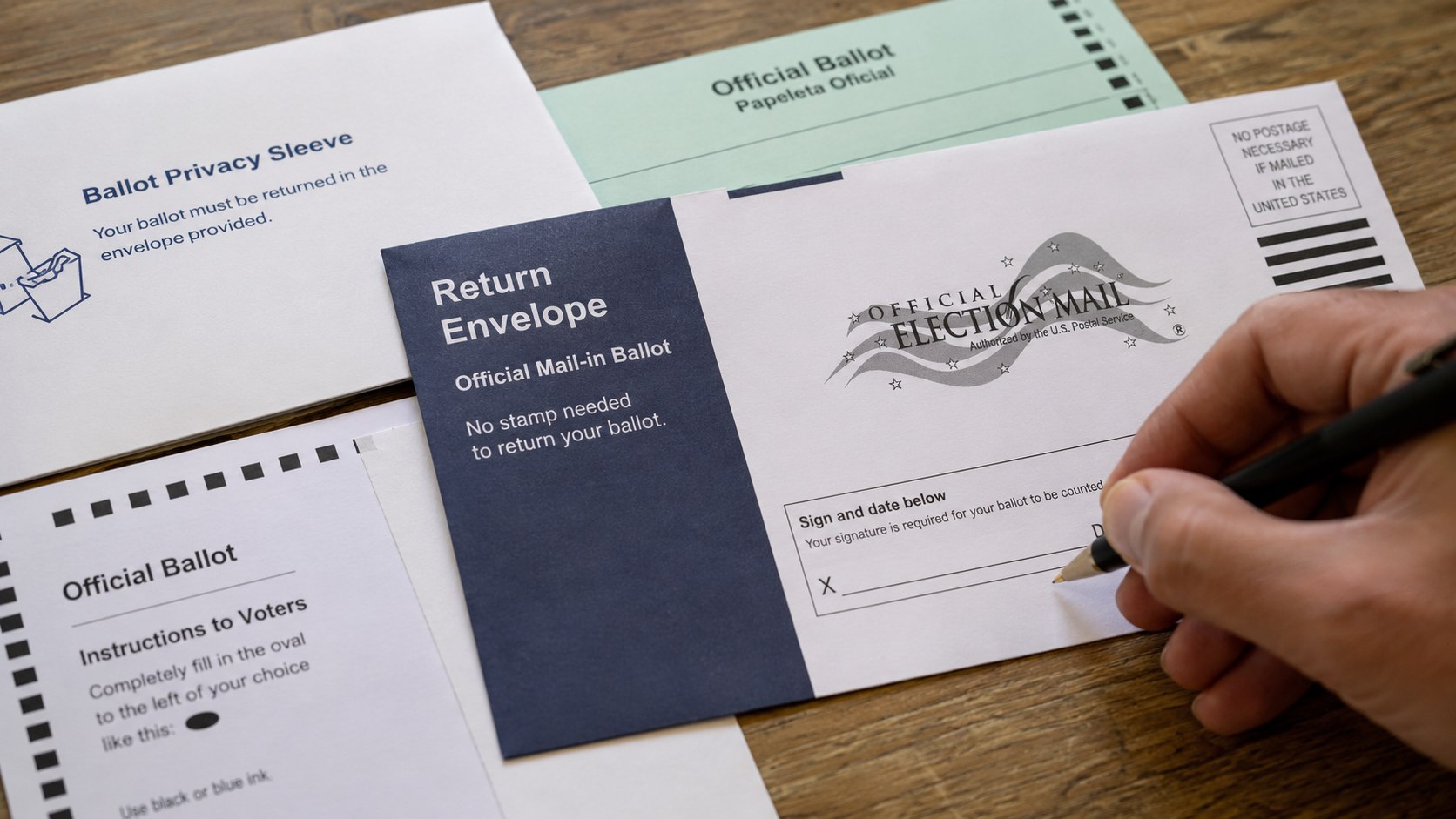
Place the completed ballot inside every required secrecy sleeve or inner envelope. Some jurisdictions use several envelopes for privacy and voter verification.
Do not sign the ballot unless the instructions explicitly require it. Most states place the signature field on the return envelope, voter certificate, or affidavit.
Step 7: Review signature, identification, and witness rules
Before sealing the envelope, check whether your state requires an identification number, photocopy, witness signature, or notarization. Requirements can differ significantly between neighboring states.
A missing voter signature is one of the most avoidable errors. Review the front and back of every envelope because the certification area may not be immediately visible.
Sign naturally. Election officials may compare the envelope signature with records from voter registration documents or a motor vehicle agency.
Voters whose disability or medical condition affects their signature should contact the election office early. Alternative verification or assistance procedures may be available.
Step 8: Return the ballot early
Return the ballot through a legally approved method. Depending on the state, options may include USPS, an official drop box, a county election office, or another designated location.
When using the mail, send the completed ballot at least 7 days before Election Day when possible. Earlier mailing is safer during severe weather, holidays, postal disruptions, or address problems.
Check whether postage is prepaid. If postage is required, follow the election office’s instructions because weight and envelope design can affect the amount.
Read the collection time printed on a USPS box before depositing the envelope. A ballot placed inside after the final pickup may receive the next day’s postmark.
Step 9: Track acceptance and correct problems
Use the official state or county portal after returning the ballot. Possible statuses include received, accepted, challenged, rejected, or awaiting verification.
Some states offer a ballot curing process for a missing signature, signature mismatch, identification problem, or incomplete certification. The response period may be brief.
Follow instructions sent by the election authority. Verify unexpected calls, emails, or text messages using the office’s published telephone number before providing personal information.
Keep the tracking confirmation until the election is certified. Do not attempt to vote again simply because an online status has not updated.
Troubleshooting vote-by-mail problems
Most mail ballots are processed without difficulty when voters apply early and follow every instruction. The following situations require immediate action.
- The ballot has not arrived: contact the election office and ask about replacement or in-person voting options.
- You marked the wrong choice: avoid erasing or using correction fluid unless the instructions permit it.
- You sealed the envelope too early: call the election office instead of replacing official materials yourself.
- Tracking shows a signature problem: complete the state’s curing procedure before the stated deadline.
- You are leaving town: ask whether officials can use a temporary address or provide in-person pickup.
Do not destroy or discard a damaged ballot before receiving instructions. Election officials may require its return before issuing a replacement.
If mailing is no longer practical, ask whether the ballot can be delivered to an authorized drop box or election office. Confirm the location and closing time before traveling.
Maryland voters considering an in-person alternative can review the Baltimore Chronicle’s guide to early voting in Maryland in 2026. It explains voting-center access, registration assistance, required documents, and preparation before arrival.
Some voters may be allowed to surrender an unused mail ballot and vote in person. Others may receive a provisional ballot while officials confirm that the original ballot was not counted.
Bring the complete mail-ballot packet to the polling place when possible. It can help election workers determine which procedure applies.
FAQ about voting by mail in 2026
Can anyone vote by mail in the United States?
No. Eligibility depends on state law. Some states provide no-excuse mail voting, while others require an approved reason or automatically distribute ballots.
When should I request my 2026 absentee ballot?
Request it as soon as your state opens the application period. The final legal deadline should be treated as an emergency cutoff, not a recommended date.
Can I request an absentee ballot online?
Many states offer online applications, but some require a signed form. It may need to be submitted by mail, email, fax, or in person.
Does my ballot count if it is postmarked on Election Day?
That depends on state law. Some jurisdictions accept qualifying postmarked ballots later, while others require physical delivery by Election Day.
Can another person return my ballot?
Rules vary by state. Some jurisdictions restrict who may deliver another voter’s ballot, how many ballots a person may carry, or which forms must be completed.
What happens if my mail ballot is rejected?
You may receive an opportunity to correct the problem. Check the official status portal and complete the curing process before the applicable deadline.
Earlier we wrote about How to Find a Water Leak in Your House: The 2026 Meter Test and Inspection Guide