

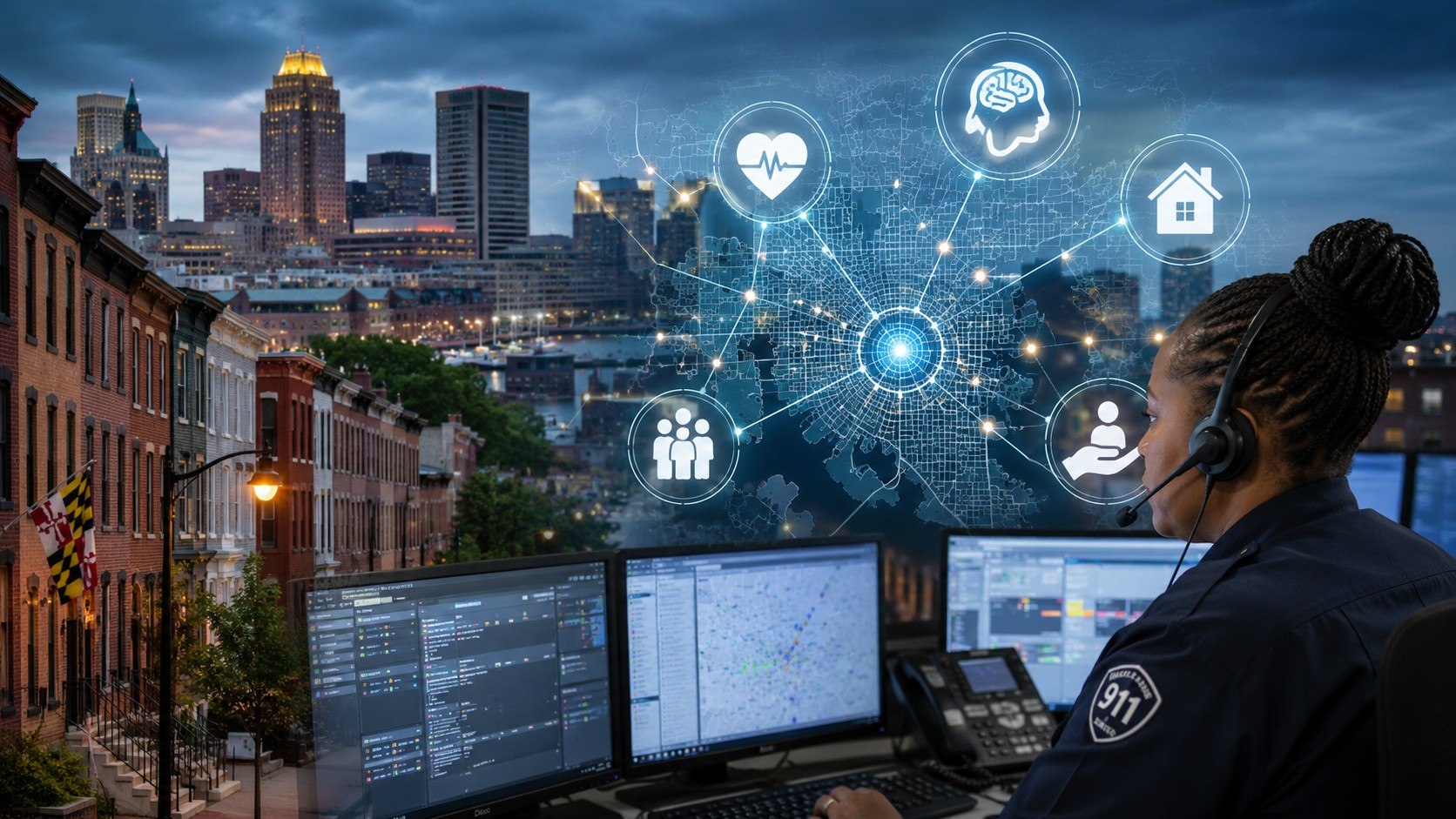
Baltimore 911 expansion will transform the emergency number into a gateway for mental health, housing and addiction support. The city plans to dispatch civilian specialists when callers do not need police, firefighters or paramedics, as the Baltimore Chronicle editorial team notes.
How Baltimore’s 911 response will change
Baltimore already uses mobile crisis teams for some mental health emergencies. A dispatcher can send a clinician and peer counselor instead of armed officers when no immediate threat exists.
The city now wants a broader, 24-hour service. It could handle calls involving homelessness, addiction, confusion in public places or nonviolent behavioral crises. Baltimore received 1.68 million emergency calls in 2024, but tens of thousands did not require traditional responders, according to WYPR.
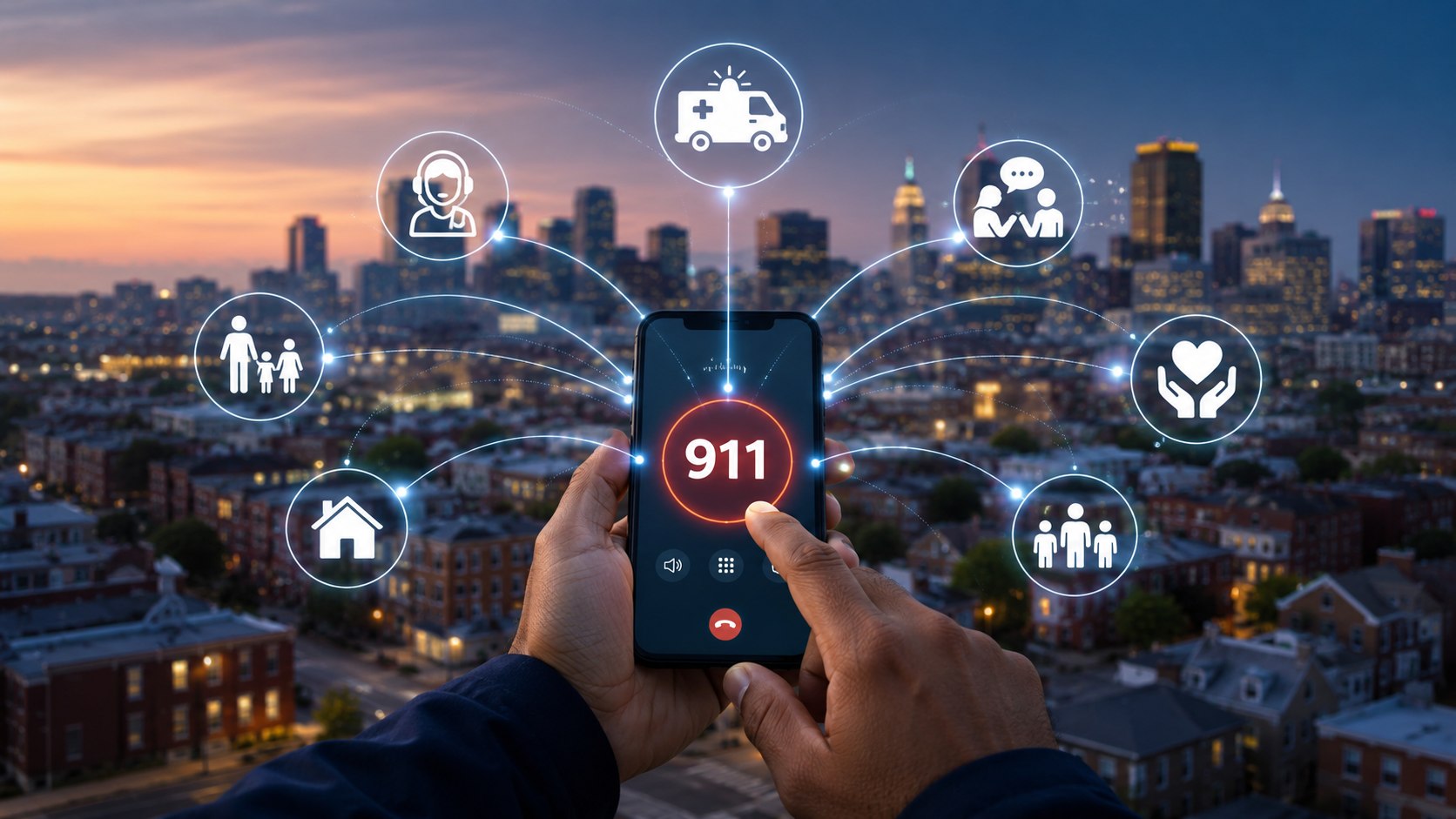
The planned model would help residents reach:
- mental health clinicians and peer counselors;
- housing and homelessness services;
- addiction treatment and overdose support;
- medical, legal and social assistance.
These teams would assess each situation and arrange practical support. Police could still respond when weapons, violence or immediate danger are reported.
Opioid settlement funds will finance the program
Baltimore intends to use money recovered through lawsuits against opioid manufacturers and distributors. The city has allocated $15 million so far for expanded crisis services.
| Key figure | Reported detail |
|---|---|
| 911 calls in 2024 | 1.68 million |
| Initial program funding | $15 million |
| Wider settlement resources | About $400 million |
| Planned availability | 24 hours a day |
The money must address drug-related harm or services that can prevent addiction. Eligible measures include healthcare, housing support, education and crisis intervention.
Durham’s HEART program provides a model
Baltimore studied alternative-response systems in other cities, including Durham, North Carolina. Durham’s HEART teams have diverted more than 12,000 calls during four years, while police backup was requested in only 0.02% of cases.
HEART responders have arranged accommodation, transportation and medical appointments for people who might otherwise face arrest or remain without help. Durham excludes violent incidents and calls involving weapons from unarmed responses.
Baltimore’s central principle is simple: send the right professional for the actual problem. The change could reduce unnecessary arrests while allowing police and paramedics to concentrate on genuine emergencies.
Earlier we wrote about Best Restaurants for a Wedding Celebration in Baltimore in 2026: Venues, Prices and Capacities