

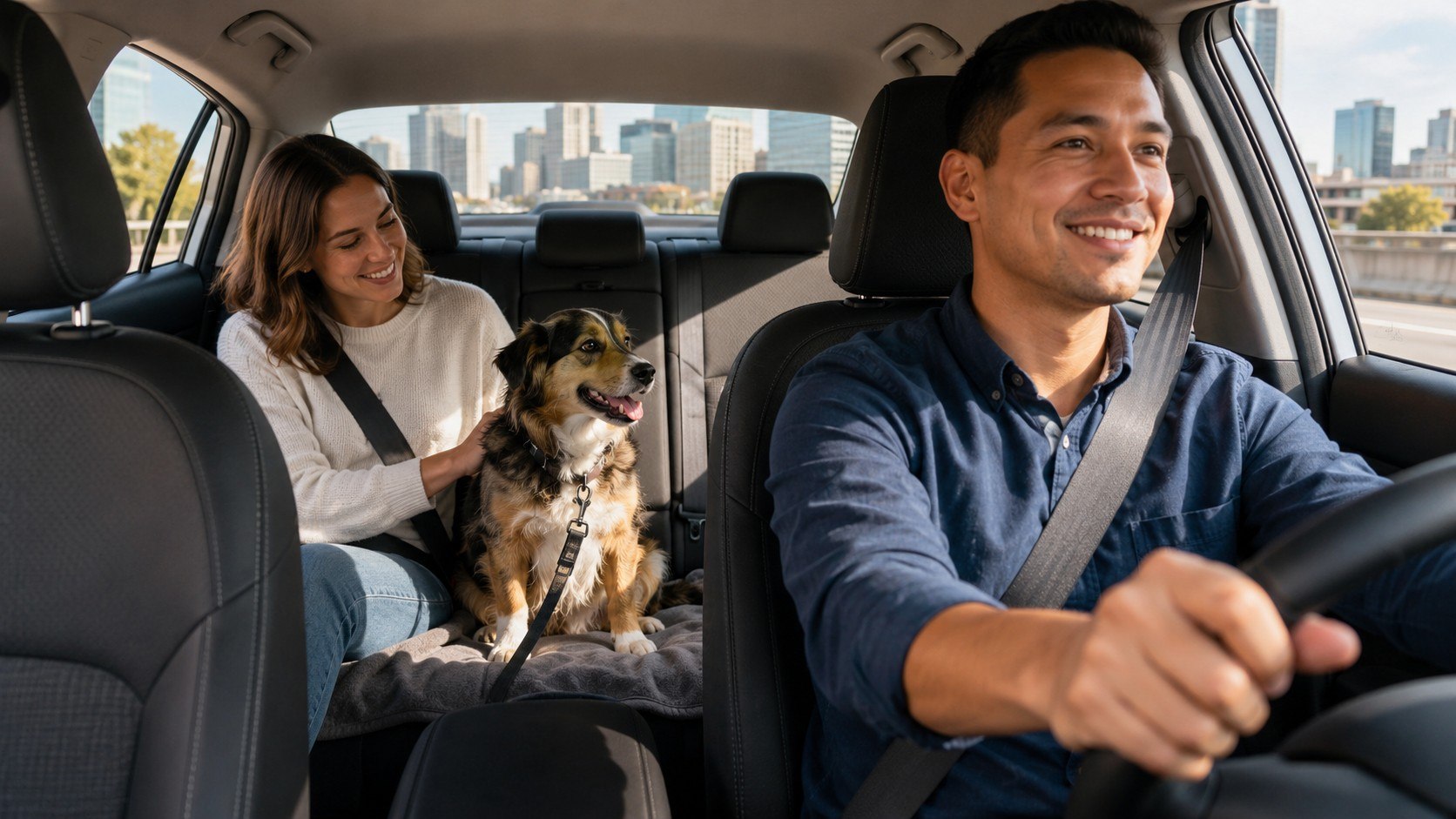
Uber Pet vs regular ride 2026 comes down to one practical rule: choose Uber Pet when traveling with a non-service animal. A regular UberX may cost less, but the driver can refuse an ordinary pet after arriving, as noted by the Baltimore Chronicle editorial team.
Most pet owners should select Uber Pet because the matched driver has agreed to transport pets. A regular ride is better only when you have no animal, travel with a legally protected service animal, or receive the driver’s clear approval before pickup.
Key takeaways
- Uber Pet normally costs more than UberX, but the exact charge appears before you confirm the trip.
- Regular Uber drivers may decline non-service pets, while trained service animals must be accommodated without an added pet charge.
- A carrier, leash, seat cover, and clean paws reduce disputes, delays, damage claims, and possible cleaning fees.
Do not request UberX with a pet and assume the driver must accept it. Message the driver immediately if Uber Pet is unavailable, explain the animal’s size, and cancel promptly if the driver declines.
The cheapest ride is not cheaper when a driver refuses pickup, cancellation fees appear, or another car must be requested.
At a glance
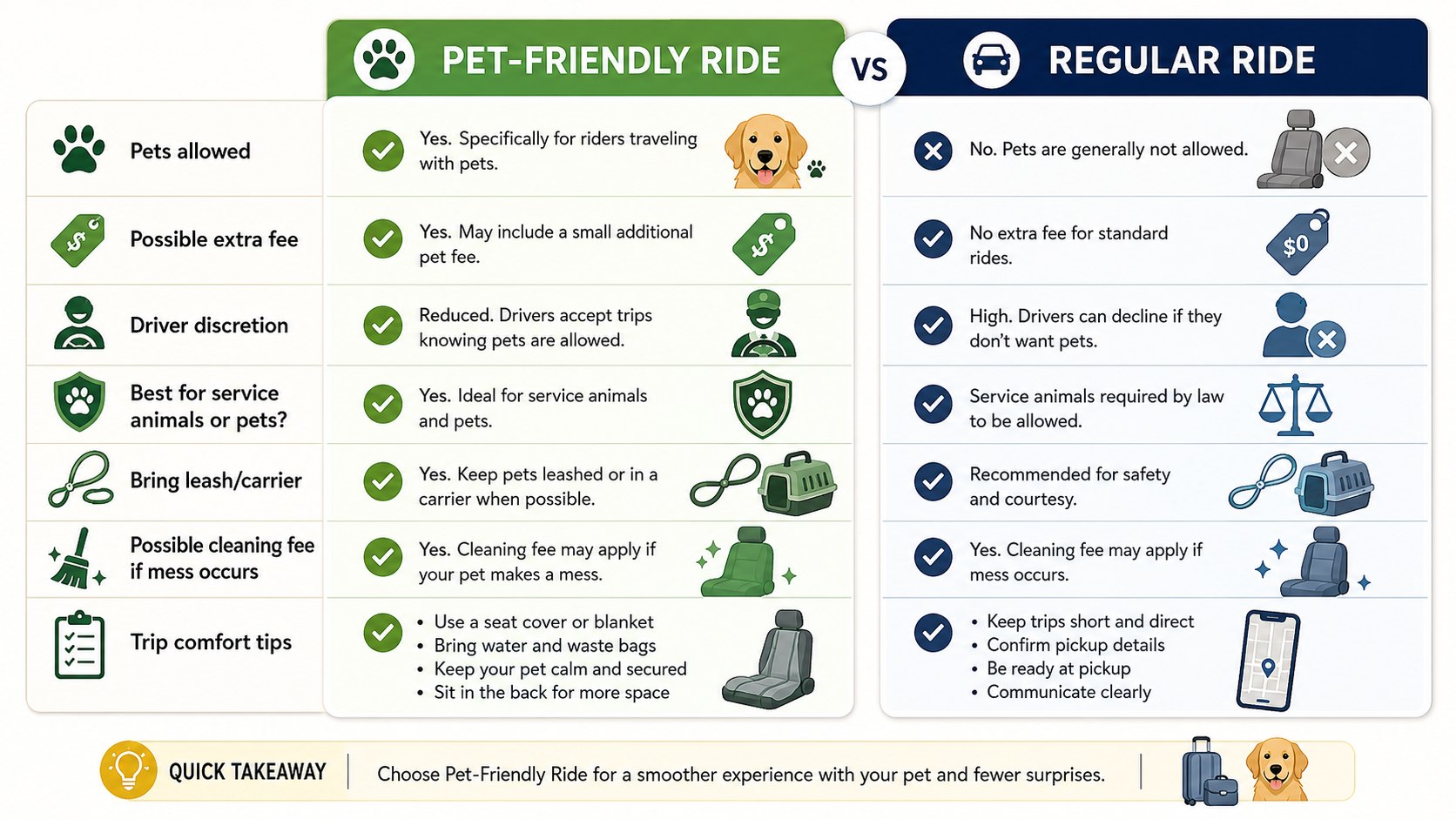
The main difference is not vehicle quality. Uber Pet generally uses vehicles similar to UberX, but it matches riders with drivers who have opted into pet-friendly trips. Prices and availability still change by city, demand, distance, traffic, tolls, and pickup location.
| Factor | Uber Pet | Regular UberX |
|---|---|---|
| Intended use | Rider traveling with a non-service pet | Rider traveling without an ordinary pet |
| Pet acceptance | Driver has opted into pet trips | Driver may accept or refuse ordinary pets |
| Typical 2026 cost | Higher than a comparable UberX fare | Usually the lower-priced option |
| Number of pets | Generally 1 pet; more require driver approval | Entirely subject to driver approval |
| Pet size | No universal breed or size ban stated by Uber | Large animals may be refused |
| Service animals | Uber Pet is not required | Must be accommodated under applicable law |
| Carrier or leash | Strongly recommended | Strongly recommended if the driver agrees |
| Cleaning charge risk | Possible after waste, excessive hair, or damage | Possible after a qualifying mess or damage |
| Availability | Limited in some US markets or hours | Usually more widely available |
Uber does not publish one nationwide Uber Pet surcharge for every route. The app calculates an upfront fare based on the local market and current conditions. Riders should compare Uber Pet and UberX on the same screen before booking.
Demand pricing can widen the difference during rain, airport arrival waves, weekend nights, and major events. The Baltimore Chronicle guide to how Uber surge pricing works in 2026 explains why prices may change within minutes.
Pickup time also matters. Uber Pet may show fewer nearby drivers, so its estimated arrival can be longer. That difference becomes important before a veterinary appointment or flight.
For a broader comparison of app-based fares, see Uber vs Lyft prices in 2026. Lyft does not always offer an identical pet-specific product, so driver communication remains essential.
Uber Pet rules and charges in 2026
Uber Pet rules are designed for ordinary household animals, particularly dogs and cats. Uber’s rider guidance generally allows 1 pet per trip, while additional animals remain subject to the individual driver’s approval.
A rider should not interpret pet-friendly as unrestricted. Drivers can still raise reasonable concerns about unsafe behavior, insufficient space, an unsecured animal, or a pet that cannot fit without interfering with driving.
What riders should bring
Prepare the animal before requesting the car. The following items reduce the chance of a refused pickup or post-trip charge:
- A secure crate or carrier for cats and smaller animals
- A short leash or properly fitted harness for dogs
- A towel or waterproof seat cover
- Waste bags and cleaning wipes
- A compact travel bowl for longer trips
- A muzzle when required by local law or appropriate for safety
- A second adult when handling a large or anxious animal
Place a blanket across the seat before the pet enters. Ask the driver whether the animal should ride on the floor, rear seat, or inside its carrier.
Keep claws away from upholstery and interior door panels. Do not allow the animal to lean into the front compartment, climb across the center console, or obstruct mirrors.
Exercise the dog before pickup and give it time to relieve itself. Avoid feeding a large meal immediately before a long journey when the animal experiences motion sickness.
Never leave a pet unattended inside the driver’s vehicle. The rider remains responsible for controlling the animal throughout the trip.
Uber’s official guidance says riders may face a cleaning charge when a pet leaves waste, excessive hair, or vehicle damage.
Uber Technologies, Inc., Uber Help, guidance for pet-friendly rides, accessed for 2026 publication.
The Uber Pet extra charge is included in the upfront price displayed before confirmation. There is no reliable national flat amount because fares depend on local supply, route conditions, tolls, booking fees, and demand.
As a practical 2026 budgeting method, expect Uber Pet to cost more than the UberX quote shown for the same journey. Verify the actual difference inside the app because even a realistic dollar range may be inaccurate during surge periods.
Regular Uber ride with a pet
A regular UberX does not automatically include permission to bring a non-service animal. Uber advises riders to contact the accepted driver through the app when traveling with an ordinary pet outside Uber Pet.
The driver can agree, ask questions, or decline. This discretion applies to emotional support animals that do not meet the legal definition of a trained service animal.
How to request approval
Send a concise message as soon as the driver accepts. Do not wait until the vehicle reaches your door.
- State that you are traveling with a pet.
- Identify the animal as a dog, cat, or another household pet.
- Give its approximate size and weight.
- Confirm that it has a leash, harness, crate, or carrier.
- Mention that you have a clean seat cover or towel.
- Ask whether the driver is comfortable completing the trip.
A useful message is: “I have 1 calm 35-pound dog on a short leash and a seat cover. Are you comfortable taking us?” This gives the driver enough information to decide quickly.
Do not describe a large dog simply as “a small pet.” Surprising the driver at pickup increases the risk of refusal, conflict, or a late arrival.
When the driver declines, cancel quickly and select Uber Pet. Review the cancellation screen before confirming because a charge may apply after the permitted cancellation window.
Riders who depend on rideshare for daily transportation can also review the Baltimore Chronicle guide to living car-free and building a backup transportation plan.
A regular ride with prior approval can work, but it offers less certainty than selecting the pet-specific option from the beginning.
Service animals are treated differently
Trained service animals are not ordinary pets. Riders with service animals do not need to select Uber Pet or pay an extra pet-related fare.
Uber states that drivers using its platform cannot deny a rider because of a service animal. Federal and state requirements may also prohibit discriminatory treatment.
A driver may ask whether the animal is required because of a disability and what task it has been trained to perform. The driver generally cannot demand medical records, certification papers, or a demonstration of the task.
Emotional support, comfort, and companionship animals do not automatically receive the same federal access rights. Their status may depend on the setting and applicable state law.
Uber’s US accessibility policy states that drivers must accommodate riders with service animals regardless of the selected ride type.
Uber Technologies, Inc., US Service Animal Policy and accessibility guidance, current for 2026.
Report a service-animal refusal through the Uber app. Record the trip details, driver information, time, pickup point, and any relevant messages while the facts remain clear.
The official Uber service animal guide provides the company’s current US policy. Riders should also check state civil rights or transportation guidance when a dispute involves local protections.
Cleaning fees, damage claims, and cancellation charges
The Uber Pet surcharge is not a prepaid cleaning fee. It compensates for participation in the pet-friendly ride option, while a separate charge may follow a documented mess or damage.
Minor shedding should be limited with a carrier or blanket. However, excessive hair, urine, feces, vomit, scratches, torn upholstery, or lingering contamination may produce a claim.
What can trigger an additional charge
- Bodily waste left on seats, carpets, doors, or trim
- Hair requiring cleaning beyond routine vehicle maintenance
- Scratches, punctures, chewing, or torn upholstery
- Mud, water, or debris spread through the cabin
- Odor or contamination that interrupts later rides
- A late cancellation after the driver has begun approaching
Drivers generally submit evidence through the platform. Uber reviews the reported incident and may charge the rider’s payment method when the claim qualifies under its policies.
Photograph the seat area before leaving when you anticipate a dispute. A quick image can show that a carrier, blanket, or protective cover was used.
Challenge an incorrect fee through the specific trip receipt in the app. Explain the facts briefly and attach relevant photographs or messages rather than submitting several unrelated support requests.
Do not offer cash privately to settle vehicle damage. Keeping communication and payment inside the platform creates a clearer record for both parties.
Which should you buy in 2026
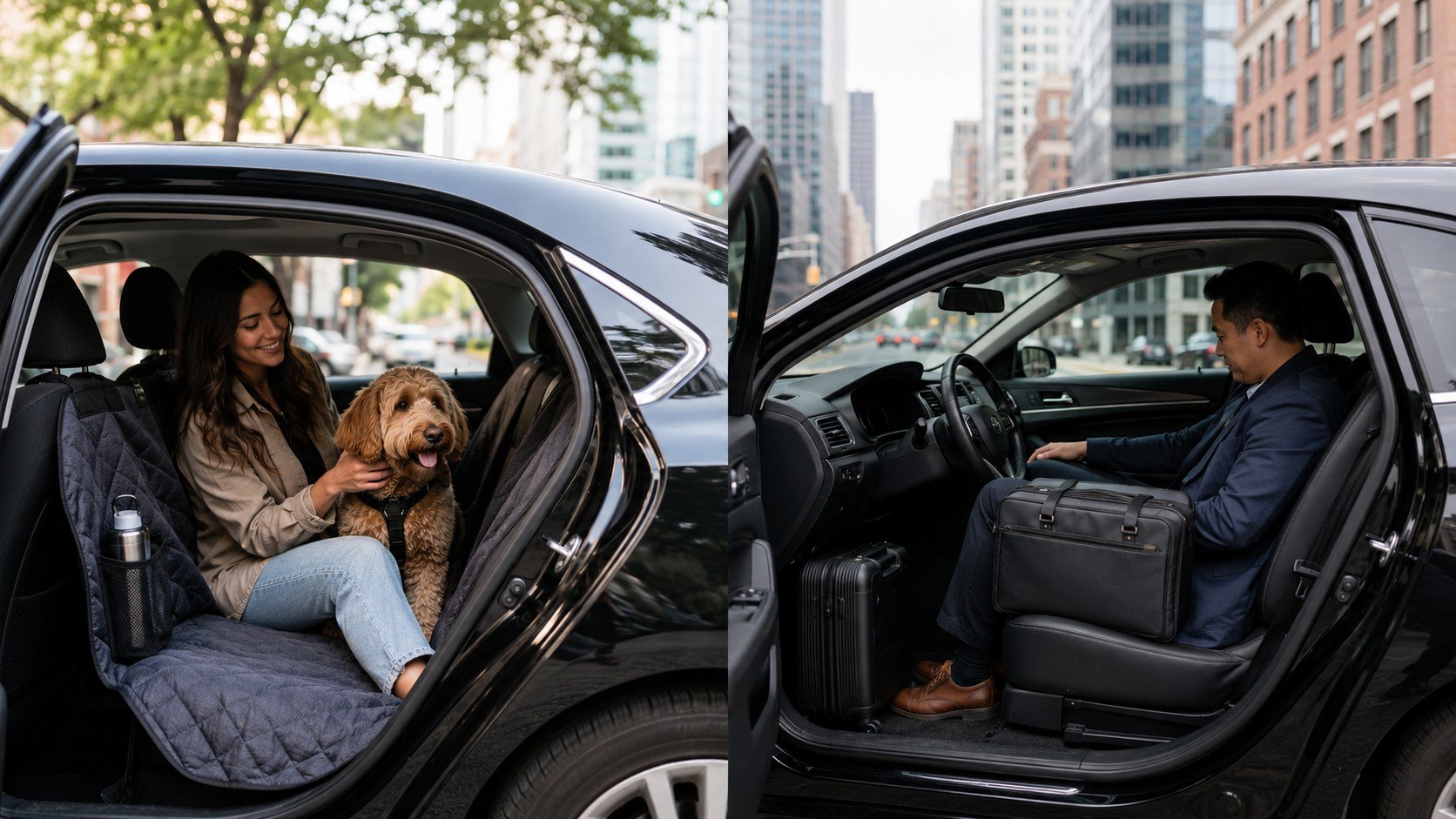
The choice should reflect legal status, driver consent, availability, and the cost displayed at booking. Use this decision tree before confirming:
- If you have a non-service dog or cat, then choose Uber Pet when available.
- If you have a trained service animal, then request the suitable regular ride category without a pet surcharge.
- If Uber Pet is unavailable, then request UberX and obtain the driver’s approval immediately.
- If the pet is large or you carry a crate, then consider UberXL and contact the driver before pickup.
- If the animal is sick, highly anxious, or unsafe in a moving car, then use specialized pet transportation.
Uber Pet is the better default for veterinary visits, grooming appointments, airport transfers, and moves between apartments. It reduces uncertainty because the driver has chosen to receive pet-trip requests.
Regular UberX can make sense for a small pet inside a closed carrier when the driver explicitly agrees. It may also be the only available option in a smaller market.
Do not choose the cheapest category when the animal, carrier, luggage, and passengers cannot fit safely. A larger vehicle may cost more but prevent cramped conditions and driver distraction.
For time-sensitive trips, compare the arrival estimate as carefully as the price. A pet-friendly car arriving in 18 minutes may not work for an appointment beginning in 15 minutes.
FAQ
How much more is Uber Pet than UberX in 2026?
There is no single nationwide surcharge. Uber Pet normally costs more than UberX, but the exact difference appears in the app before confirmation and varies by market.
Can an Uber driver refuse my dog?
An UberX driver can generally refuse an ordinary non-service dog. A driver who accepts Uber Pet requests has opted into pet trips, although unsafe circumstances may still create problems.
Do I need Uber Pet for a service dog?
No. A rider with a trained service animal can use a regular eligible ride option without paying an additional pet charge.
Can I take 2 pets in Uber Pet?
Uber’s general guidance is built around 1 pet. Additional animals require the driver’s approval, so contact the driver immediately after matching.
Does my dog need a crate?
A crate is strongly recommended for smaller dogs and cats but is not always mandatory. Larger dogs should remain controlled with a short leash or harness.
Can Uber charge me if my pet sheds?
A small amount of ordinary hair may not justify a claim. Uber warns that excessive hair requiring additional cleaning can result in a cleaning charge.
Earlier we wrote about Cancel Apple TV Subscription in 2026: iPhone, Mac and Web Steps