

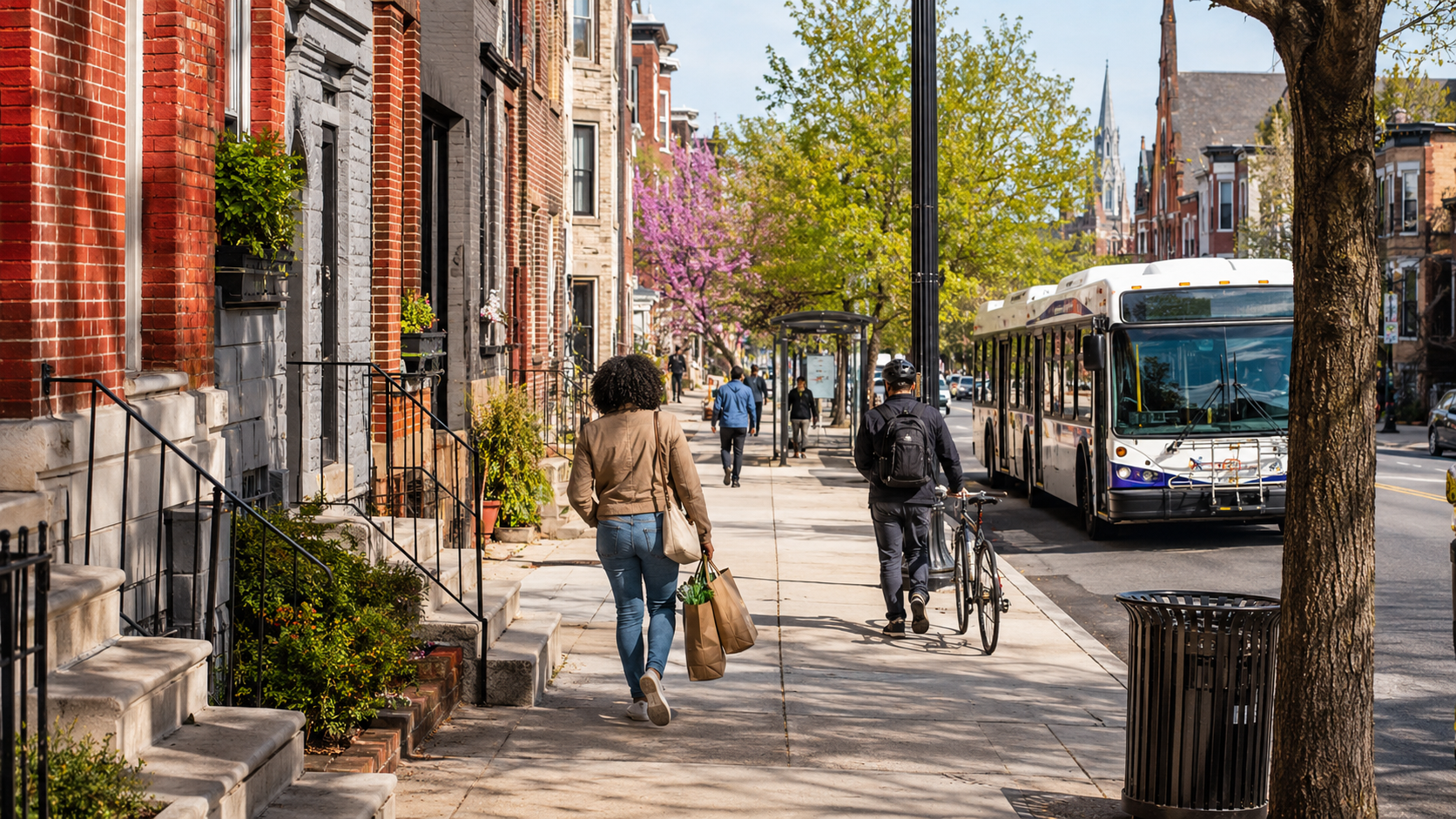
Living car free in Baltimore is possible, but it works best when the neighborhood, commute, grocery routine, and backup transportation plan fit together, as noted by the editorial team at Baltimore Chronicle.
Baltimore has walkable districts, useful bus corridors, Light RailLink, Metro SubwayLink, MARC, the Charm City Circulator, bikeable pockets, and regional rail connections. The city does not work the same way without a car in every area, so the address matters more than the general idea of city living.
The strongest car-free setup is rarely built around one perfect train stop. It usually depends on short walks, direct bus routes, access to daily errands, a realistic plan for bad weather, and the willingness to use rideshare, delivery, taxis, or rentals for trips that transit does not handle well. For route planning, start with the official Maryland Transit Administration site. It links to trip planning, real-time information, routes and schedules, service alerts, transit maps, fares, Local Bus, Commuter Bus, MARC Train, Light RailLink, Metro SubwayLink, and MobilityLink.
For neighborhood research, use Live Baltimore’s neighborhood tool, then compare it with Baltimore Chronicle’s local guides such as the Mount Vernon Baltimore guide, Bolton Hill Baltimore guide, and Patterson Park neighborhood guide.
TL;DR
You can live in Baltimore without a car if your daily life is compact.
The strongest setup puts work, groceries, pharmacy, laundry, parks, and social life within walking distance or along one direct transit route. The best candidates are central, waterfront, north-central, and transit-connected neighborhoods such as Mount Vernon, Midtown-Belvedere, Downtown, Harbor East, Fells Point, Canton, Federal Hill, Charles Village, Remington, Station North, Hampden, Woodberry, Bolton Hill, and parts of Patterson Park.
Before signing a lease, test the real commute, the grocery trip, the pharmacy walk, the late-night ride home, and the route to Penn Station or BWI if regional travel matters.
A neighborhood that feels easy on a sunny Saturday can feel different during a rainy weekday commute.
Can You Live in Baltimore Without a Car?
Yes, can you live in Baltimore without a car has a practical answer: many people can, but the lifestyle is not automatic.
Baltimore is a city of short distances and uneven connections. A renter in Mount Vernon who works downtown, shops nearby, and uses Penn Station can live comfortably without owning a vehicle. A household with a suburban job, school drop-offs, medical appointments across the region, and late-night shifts may spend too much time solving transportation problems. The official MTA trip planner, routes and schedules page, real-time information page, and service alerts page should be checked before making a housing decision around transit.
Routes, schedules, alerts, fares, and service conditions can change, so official pages matter more than old screenshots or secondhand advice. A car-free setup in Baltimore works best when four conditions are true:
- The commute is direct, walkable, or short enough to tolerate daily.
- Groceries and pharmacy access do not require a complicated transfer.
- There is a backup option when transit is delayed or weather is bad.
- The monthly budget includes occasional rideshare, delivery, or rental cars.
Those conditions matter more than neighborhood reputation.
A larger apartment far from daily errands can become expensive in time. A smaller apartment near the right bus route, grocery store, pharmacy, and train connection can make the no-car lifestyle feel normal.
The mistake is treating “no car” as a personality trait instead of a logistics plan. Baltimore rewards residents who plan around actual weekly trips: work, groceries, prescriptions, laundry, medical care, social life, airport access, and regional travel.
Best Neighborhoods for Living Car-Free in Baltimore
The strongest walkable Baltimore neighborhoods share several traits: compact blocks, mixed uses, transit access, nearby errands, and enough foot traffic to make daily walking feel natural.
Live Baltimore says its neighborhood tool includes more than 250 Baltimore City neighborhoods and lets users filter by neighborhood name, geography, vibe, nearby amenities, and estimated housing cost. Its navigation also includes categories such as “Commuter-Friendly” and “Walkable,” which makes it useful for early car-free research before visiting blocks in person.
Mount Vernon and Midtown-Belvedere
Mount Vernon is one of Baltimore’s strongest car-free bases because it is dense, central, and connected to multiple everyday destinations.
It works for people who want apartment living, restaurants, coffee shops, cultural institutions, medical offices, bus access, and a reasonable connection to Penn Station. Midtown-Belvedere adds similar advantages for residents connected to central institutions, downtown offices, nearby campuses, and Station North. The area can be practical for remote workers, students, arts workers, and people who expect to use regional rail. Baltimore Chronicle’s Mount Vernon Baltimore guide is a natural internal link from this section because the neighborhood is one of the clearest examples of car-light urban living in the city.
Best fit if: your life points toward downtown, Penn Station, Station North, University of Baltimore, MICA, cultural institutions, or central Baltimore offices.
Mount Vernon still requires exact-address thinking. Depending on the block, groceries, larger household purchases, and late-night trips may still require transit, delivery, or rideshare. The neighborhood is a strong candidate, not a guarantee.
Downtown, Inner Harbor, Harbor East, and Little Italy
Downtown Baltimore is practical without a car because many jobs, government offices, hotels, courts, medical buildings, restaurants, and transit connections sit close together. Harbor East and the Inner Harbor add waterfront access, newer apartment buildings, restaurants, gyms, and easy movement toward Fells Point, Little Italy, and central offices. This area fits residents who value convenience and are willing to pay for it. It also works for people whose daily trips are short: office, gym, grocery, dinner, waterfront walk, and occasional transit connection.
The tradeoff is rhythm. Some downtown blocks feel busy during work hours and much quieter later. A building can be convenient on paper but feel different on a Sunday evening, after an event, or during a late-night walk home.
Best fit if: you work downtown, want short central trips, and prefer convenience over extra space.
For readers comparing convenience with monthly budget, link this section to Baltimore Chronicle’s cost of living in Baltimore guide. Car-free living can reduce vehicle expenses, but housing in the most convenient areas may cost more.
Fells Point, Canton, Butchers Hill, and Patterson Park
Fells Point and Canton are strong choices for car-free residents who want restaurants, bars, parks, waterfront paths, neighborhood retail, and social life within a walkable area.
Butchers Hill and Patterson Park-adjacent blocks can work well for people who want a rowhouse feel with access to Southeast Baltimore, Johns Hopkins Hospital, Fells Point, and Canton. This part of the city is especially attractive when work and social life are also in Southeast Baltimore or downtown. A person who works remotely, walks to Patterson Park, meets friends in Fells Point, and uses occasional rideshare may not miss owning a car. The tradeoff is cross-town movement. Trips to North Baltimore, West Baltimore, or suburban job centers can become slow if they require transfers or late-night travel.
Best fit if: your life is centered around Southeast Baltimore, Johns Hopkins Hospital, downtown, Harbor East, remote work, or neighborhood-based social life. Baltimore Chronicle’s Patterson Park neighborhood guide belongs naturally here because park access, rowhouse blocks, and Southeast Baltimore errands are central to the car-free decision.
Federal Hill, Riverside, and Locust Point
Federal Hill and Riverside are strong South Baltimore options for residents who want walkable restaurants, parks, rowhouses, waterfront access, and relatively short downtown connections.
The area can work well for young professionals, downtown workers, remote workers, and people who spend much of their social life south of the harbor. Locust Point is more complicated. It can be comfortable and attractive, but it may feel more isolated without a car depending on the exact address and commute. A resident with a flexible schedule may love it. A resident who needs frequent cross-town transit may not.
The tradeoff is directionality.
South Baltimore can be easy for downtown and neighborhood life, but less convenient for north-south or cross-town trips that do not follow a direct corridor.
Best fit if: you want South Baltimore walkability, parks, restaurants, and a manageable downtown connection. For readers weighing Federal Hill, Fells Point, Canton, and similar lifestyle-heavy areas, Baltimore Chronicle’s best Baltimore neighborhoods for young professionals can be linked as a secondary neighborhood-intent resource.
Charles Village, Remington, Old Goucher, and Station North
Charles Village is a natural candidate for people connected to Johns Hopkins Homewood, North Charles Street, nearby institutions, and north-central bus corridors.
Remington offers a practical mix of rowhouses, apartments, food options, and access to several central and north-central destinations. Station North and Old Goucher can be useful for people who want access to Penn Station, arts venues, Mount Vernon, Charles Village, and downtown. This cluster is often better for residents who are comfortable walking and evaluating exact blocks rather than relying on broad neighborhood labels. The tradeoff is unevenness. Some blocks are strong for transit and errands. Others require longer walks or more careful route choices.
Best fit if: your anchor is Hopkins Homewood, Penn Station, Station North, Remington, Midtown, or north-central Baltimore.
This is also where safety, lighting, and block-by-block walking comfort become central. A useful internal link is Baltimore Chronicle’s Baltimore neighborhood safety guide, especially for readers comparing similar-looking neighborhoods from a distance.
Hampden and Woodberry
Hampden works for residents who want a neighborhood main street, independent shops, restaurants, rowhouses, and a distinct local identity.
It can feel like a village inside the city, which is one reason it appeals to people who want urban living Baltimore without being downtown. Woodberry can be useful for some car-free residents because of Light RailLink access. That advantage matters most when the resident’s commute or regular trips line up with the rail corridor. The tradeoff is that Hampden can feel walkable inside the neighborhood while still being less convenient for some citywide trips. Woodberry can be transit-relevant but may not offer the same density of daily errands directly outside the door.
Best fit if: you want neighborhood character, can keep many errands local, and have a commute that does not require complicated transfers. Hampden and Woodberry should be judged by daily routines, not weekend appeal. A great dinner district does not automatically solve groceries, pharmacy, airport access, or a weekday commute.
Bolton Hill, State Center, Reservoir Hill, and Madison Park
Bolton Hill can work well because it sits near Midtown, MICA, State Center, and central-west transit options. It also offers a quieter residential feel while staying relatively close to several central destinations. Reservoir Hill, Madison Park, and nearby areas may work for residents who are comfortable judging Baltimore block by block. The right address can offer central access, historic housing, and reasonable connections. The wrong address can make every errand feel harder than expected.
Baltimore Chronicle’s Bolton Hill Baltimore guide is a strong internal link from this section because Bolton Hill is one of the clearest central-west examples where walkability, transit, apartments, and institutional access overlap.
Best fit if: you want central-west access, historic housing, and are willing to evaluate exact blocks carefully.
These neighborhoods reward in-person testing. Visit at commute time, after dark, and on a normal weekday. The walking route to transit matters as much as the distance on a map.
Neighborhood Comparison for Car-Free Baltimore Living
| Area | Why it can work without a car | Main tradeoff | Best fit |
|---|---|---|---|
| Mount Vernon / Midtown | Dense, central, bus access, near Penn Station | Some errands still need delivery, bus, or rideshare | Downtown workers, students, remote workers |
| Downtown / Inner Harbor / Harbor East | Short central trips, jobs, restaurants, waterfront, transit connections | Higher housing costs, uneven street life by time of day | Office workers, hospital workers, convenience-first renters |
| Fells Point / Canton / Butchers Hill | Strong neighborhood walking, nightlife, parks, Southeast Baltimore access | Cross-town trips can be slow | Hopkins Hospital workers, remote workers, social residents |
| Federal Hill / Riverside | Walkable South Baltimore base, parks, downtown access | Weekend crowds, weaker access to some north/west trips | Young professionals, downtown commuters |
| Charles Village / Remington / Station North | Useful for Hopkins, Penn Station, north-central trips | Block-level differences in errands and comfort | Students, academics, rail users |
| Hampden / Woodberry | Main-street lifestyle, Light RailLink relevance in Woodberry | Less central for many commutes | Local-first residents, some rail users |
| Bolton Hill / State Center area | Central-west access, institutions, historic blocks | Exact location matters heavily | MICA, Midtown, State Center users |
This table is a filter, not a final ranking.
The exact address matters more than the neighborhood name. Two apartments five blocks apart can have different grocery access, sidewalk comfort, lighting, bus options, and late-night travel patterns. For car-free living, the practical core of the neighborhood is usually more valuable than the edge. A cheaper apartment outside the core may save rent but add time, rideshare costs, and friction to every errand.
How Baltimore Transit Works in Real Life
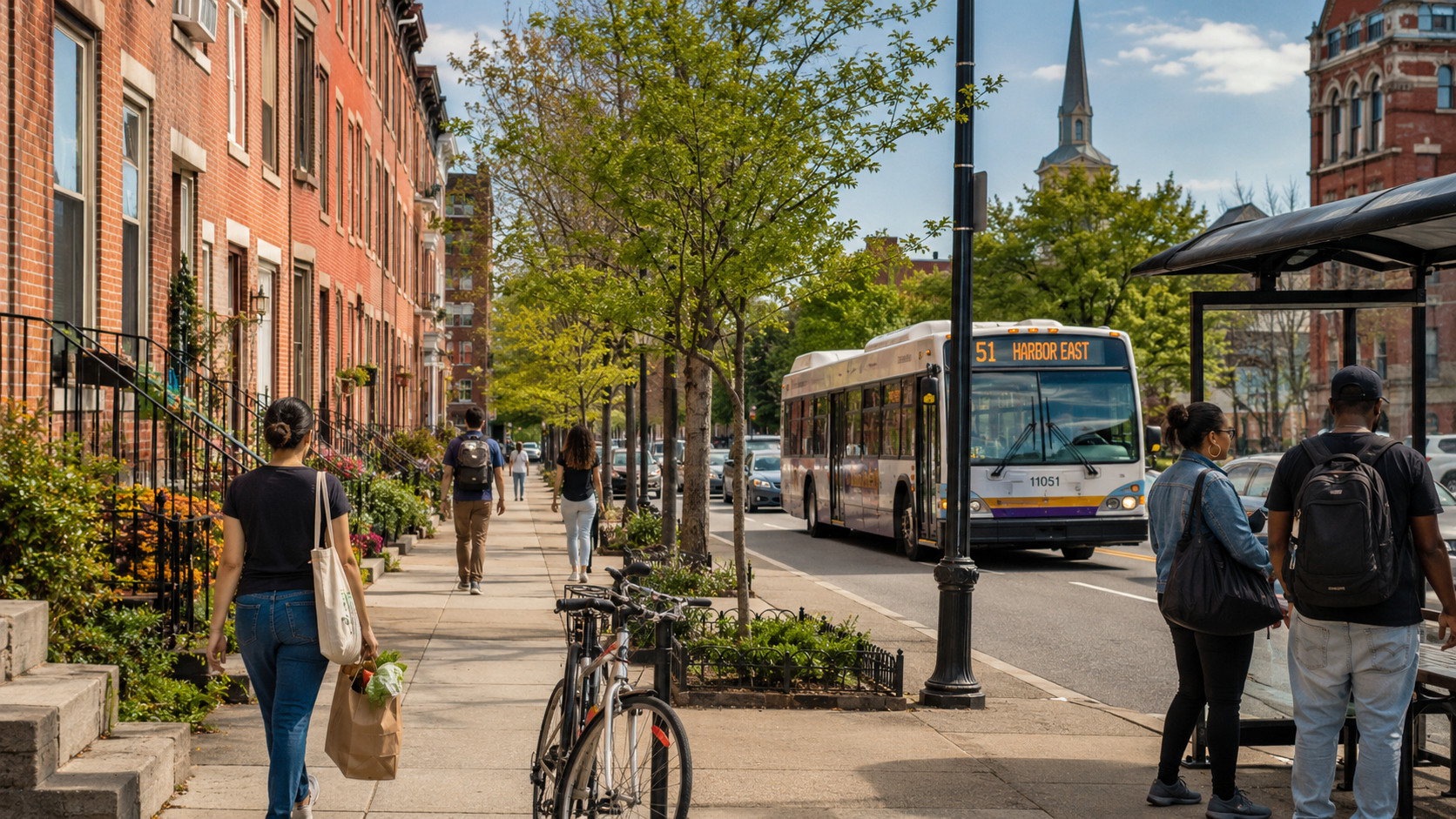
Baltimore’s transit network is useful, but it is not a single all-purpose rail grid.
Buses carry much of the daily workload. Light RailLink and Metro SubwayLink are valuable when the route fits. MARC is central for DC and regional rail trips. The Charm City Circulator helps with certain downtown and central-neighborhood movements.
For a deeper local overview, link this section to Baltimore Chronicle’s Baltimore public transit guide. For official planning, use MTA’s routes and schedules, real-time information, and service alerts.
Local Bus and CityLink
Buses are the backbone of many transit friendly neighborhoods Baltimore residents actually use.
MTA lists CityLink and LocalLink routes across the city, with service connecting downtown, Johns Hopkins areas, West Baltimore MARC, Canton, Towson, Patapsco, Mondawmin, Rogers Avenue, White Marsh, Dundalk, and other city and regional destinations. A direct bus can make a neighborhood work. A transfer-heavy bus trip can make a short distance feel long. When comparing apartments, do not only find the nearest stop. Check the direction, route pattern, wait time, transfer point, and whether the same route helps with groceries, work, medical care, and social life.
The strongest bus-based setup has redundancy.
If one route is delayed or detoured, another route, rail connection, walk, or rideshare should still get you home.
Light RailLink
Light RailLink is useful when both ends of the trip are close to stations.
It can help with certain north-south trips, downtown access, stadium-area travel, and airport-related movement depending on timing and starting point. A rental listing that says “near Light Rail” should be tested on foot. A station may be close on a map but inconvenient with luggage, groceries, bad weather, or late-night timing.
The rail line is a powerful advantage for the right person and only a minor benefit for someone whose regular trips go in another direction.
Metro SubwayLink
Metro SubwayLink matters most for residents whose life aligns with its corridor.
It can be useful for trips involving downtown, northwest Baltimore, and destinations along the line.
For many Baltimore residents, Metro is either very useful or barely relevant. The deciding factor is not whether the city has subway service. The deciding factor is whether your weekly map touches it naturally.
MARC Train
MARC is the essential car-free tool for Baltimore residents who commute to Washington, DC, or travel regionally by rail.
Penn Station and West Baltimore MARC are major practical anchors for no-car residents. A person living near Penn Station can combine walking, buses, MARC, Amtrak, rideshare, and delivery in a way that reduces the need for car ownership. A person who lives far from the station may still be able to commute by MARC, but the door-to-door trip becomes the real test.
Baltimore Chronicle should link this section to the Baltimore to DC MARC train guide if that URL is active in the CMS. Current MARC details should always be checked through MTA before choosing housing around a train commute.
Charm City Circulator
The official Charm City Circulator page lists five routes: Green from Downtown to Johns Hopkins Hospital and North Avenue, Purple from 33rd Street to Federal Hill, Orange from Hollins Market to Harbor East, Banner from the Inner Harbor to Fort McHenry, and Cherry from the Inner Harbor to Cherry Hill.
The same city page provides service alerts, live bus information, operating hours, headways, and route details.
It also describes the Circulator as a free transit network connecting downtown and central neighborhoods with other options such as Light Rail, MARC, subway, and the Harbor Connector. The Circulator is best treated as a helpful layer, not the entire plan. It can make central Baltimore easier, but a lease should not depend on one circulator route without checking current service, hours, and alternatives.
How to Choose an Apartment Without a Car
A strong Baltimore no car guide starts before the lease.
The right apartment reduces weekly decisions. The wrong apartment turns small errands into recurring chores. Use this sequence before applying:
- Map the commute at the exact time you will travel.
- Walk from the building to the nearest real grocery option.
- Walk to the nearest pharmacy.
- Check laundry access if the building does not have machines.
- Test the route to your most likely doctor, dentist, or clinic.
- Check the trip to Penn Station, West Baltimore MARC, or BWI if regional travel matters.
- Look at MTA service alerts before a sample trip.
- Visit the block after dark.
- Price a few rideshare trips into the monthly budget.
- Ask whether one missed bus would ruin a normal morning.
This checklist focuses on the errands that shape daily life.
Restaurants, bars, and parks matter, but groceries, prescriptions, laundry, bad weather, and recurring appointments matter more. The best apartment is not always the largest or cheapest unit in the most popular neighborhood.
It is the unit that makes the most repeated trips boring. For renters or buyers comparing housing costs, Baltimore Chronicle’s cost of living in Baltimore guide can support the budget side of the decision.
Daily Errands Without a Car
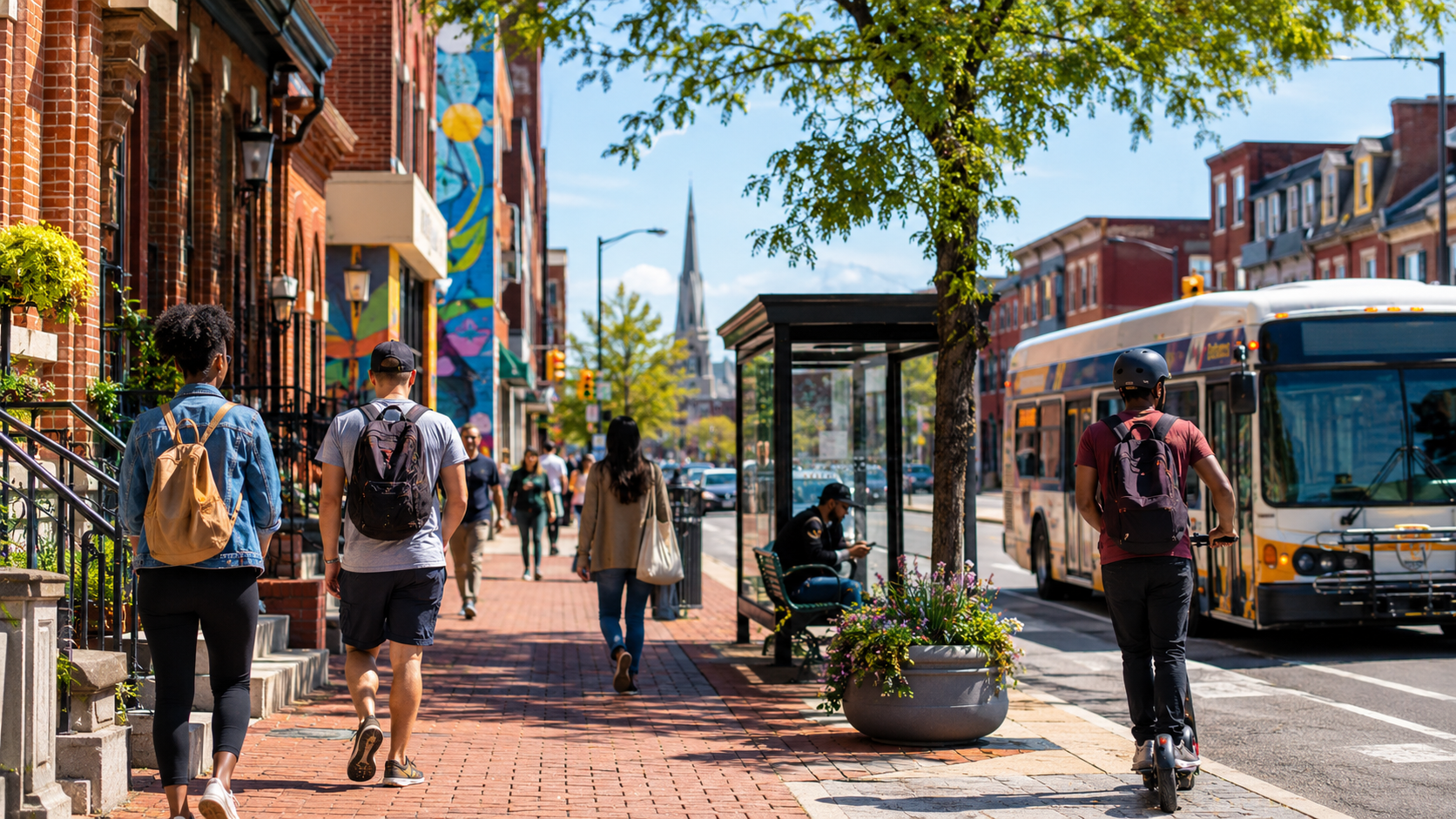
Car-free living succeeds or fails through ordinary errands.
A commute might look fine, but the weekly grocery run, pharmacy stop, and laundry routine can reveal the real cost of location.
Groceries
Grocery access is the first test.
A strong setup has one walkable grocery option, one backup option by transit or delivery, and a plan for heavy items. That plan may include a folding cart, backpack, delivery account, occasional rideshare, or smaller trips during the week.
Without a plan, every large grocery run becomes a negotiation with time, weather, and patience.
A neighborhood can have excellent restaurants and still be weak for groceries. Dining options are not the same as practical food access.
Pharmacy and Medical Appointments
A nearby pharmacy matters more than many newcomers expect.
Prescriptions, basic medicine, toiletries, and urgent household items are exactly the errands that become annoying without a car. Medical appointments are another test.
A doctor across town may be technically reachable but impractical during a lunch break or before work. A recurring appointment that requires two transfers should be treated as a real transportation cost.
Laundry
Laundry is a hidden factor.
In-building laundry makes car-free life easier. A laundromat five blocks away may be fine in spring and frustrating in winter rain. If the apartment does not have laundry, walk the route before signing.
Carrying a laundry bag across a busy intersection or uphill changes the practical value of the unit.
Pets
Dog owners need a different map.
Parks, late-night walking comfort, vet access, pet supply stores, and emergency animal care all matter. A neighborhood that works well for a single office worker may be harder for someone carrying pet food, managing winter walks, and getting to a vet without a car.
Pet owners should test the daily dog route, not only the commute.
Work Commutes, DC Trips, and BWI
Car-free Baltimore is easiest when work is central, remote, campus-based, hospital-based, or aligned with a direct transit corridor.
Downtown and Harbor jobs are often the simplest. Residents in Mount Vernon, Federal Hill, Fells Point, Station North, or downtown may be able to walk, use one bus, take the Circulator, or combine short transit trips. Hospital and university jobs can also work well, but the specific campus matters. Johns Hopkins Hospital, Johns Hopkins Homewood, University of Maryland Baltimore, MICA, University of Baltimore, and nearby institutions create different commute patterns. DC commuting is possible for many residents, especially near Penn Station or West Baltimore MARC.
The real test is not only train time. It is door-to-station time, schedule fit, transfer risk, fare cost, and the distance from the DC station to work.
BWI trips can be manageable without a car, but the best route depends on starting point, flight time, luggage, and service conditions. Some residents use rail or bus connections. Others use rideshare for early flights, late arrivals, or heavy bags. Link airport-related readers to Baltimore Chronicle’s BWI to Downtown Baltimore guide for a more specific breakdown. Regional leisure trips deserve the same honest planning. A person who wants frequent train-based getaways should also read Baltimore Chronicle’s best day trips from Baltimore by car and train, then check current transit schedules before making plans.
Who This Is Best For
Living without a car in Baltimore works best for:
- Remote and hybrid workers who can choose when to run errands.
- Downtown workers with a walkable or direct-transit commute.
- Students near campus and transit.
- Hospital and university workers near the right route.
- DC commuters near Penn Station or West Baltimore MARC.
- Residents who enjoy walking and can handle imperfect weather.
- People who would rather pay occasionally for rideshare than pay daily for ownership, insurance, parking, fuel, and repairs.
This lifestyle is strongest when the weekly map is compact.
It works especially well when work, friends, errands, and transit overlap in the same part of the city. It is weaker for residents whose obligations spread across the region. Suburban job sites, multiple school pickups, caregiving trips, late-night shifts, and weekend sports schedules can make car-free living harder than it looks during an apartment tour.
Common Mistakes to Avoid
The biggest mistake is choosing a neighborhood by vibe and solving transportation later.
Other common mistakes include:
- Renting at the edge of a walkable neighborhood instead of inside the useful core.
- Trusting “near transit” without testing the actual route.
- Ignoring grocery access.
- Assuming rail matters more than buses.
- Forgetting about late-night return trips.
- Underestimating summer humidity, winter rain, and hills.
- Skipping a block visit after dark.
- Forgetting pharmacy, laundry, and medical appointments.
- Not budgeting for rideshare or delivery.
- Building life around one route with no backup.
These mistakes usually show up before the lease.
A resident who walks the commute, tests errands, checks official service alerts, and visits at several times of day gets a clearer picture than someone relying on a listing description. The strongest rule is simple: if the no-car routine requires heroic planning before moving in, it will probably feel worse after moving in.
If the main reason for going car-free is avoiding parking stress, Baltimore Chronicle’s parking in Baltimore guide can help frame what car ownership actually adds to daily life.
A Practical Decision Framework
Use a three-circle test before committing to a neighborhood.
Circle 1: Daily Life
This circle includes groceries, pharmacy, laundry, coffee, gym, dog walks, school, childcare, and the places visited several times a week.
If these are not walkable, transit must be direct and dependable. If both walking and transit are weak, the neighborhood is probably not a strong car-free fit.
Circle 2: Work and Obligations
This circle includes office, campus, hospital, recurring appointments, caregiving, worship, and regular social commitments. A good car-free home has a clear route to these places.
It does not require a new travel strategy every week.
Circle 3: Occasional Trips
This circle includes BWI, DC, suburban family visits, big shopping trips, weekend getaways, and late-night events. These trips can be solved with MARC, Light RailLink, rideshare, taxis, rentals, friends, or delivery. They do not need to be effortless, but they should be priced honestly.
The three-circle test separates appealing city living from sustainable car-free living.
If all three circles are complicated, the plan needs a different address or a different transportation budget.
FAQ
Can you live in Baltimore without a car?
Yes.
Many residents can live in Baltimore without a car, especially in central, waterfront, north-central, and transit-connected neighborhoods. The best fit depends on commute, grocery access, pharmacy access, walking comfort, and backup transportation.
What are the best Baltimore neighborhoods without a car?
Mount Vernon, Midtown-Belvedere, Downtown, Harbor East, Fells Point, Canton, Federal Hill, Charles Village, Remington, Station North, Hampden, Woodberry, Bolton Hill, and Patterson Park are among the stronger candidates.
The exact block matters.
Is Baltimore walkable?
Parts of Baltimore are very walkable, but walkability changes by neighborhood and block.
Live Baltimore’s neighborhood tool is useful for early research because it lets users explore more than 250 neighborhoods and filter by factors such as vibe, nearby amenities, and housing cost.
Is Baltimore public transit good enough for daily life?
It can be good enough if home, work, errands, and social life align with bus, Light RailLink, Metro SubwayLink, MARC, or central circulator routes.
It is harder when regular trips involve scattered suburban destinations or late-night cross-town travel.
Is Mount Vernon good for car-free living?
Yes.
Mount Vernon is one of the stronger Baltimore neighborhoods for car-free living because it is central, dense, near Penn Station, and connected to multiple bus and walking routes. The exact address still matters for groceries and late-night comfort.
Is Federal Hill good without a car?
Federal Hill can work well without a car because it has walkable blocks, restaurants, parks, and downtown access.
It is strongest for people whose commute and social life stay in South Baltimore or central Baltimore.
Can you commute from Baltimore to DC without a car?
Yes.
Many Baltimore residents use MARC for DC commutes, especially from Penn Station or West Baltimore MARC. Current schedules, fares, and service changes should be checked through MTA before making housing decisions.
How do you get to BWI without a car from Baltimore?
Options may include rail, bus, Light RailLink, rideshare, taxi, or a combination depending on starting point, flight time, luggage, and service conditions.
Check MTA before travel, especially for early or late flights.
Is biking enough to replace a car in Baltimore?
Biking can help for short trips, but it depends on route comfort, traffic, hills, storage, weather, and rider confidence.
For most residents, biking is one layer of a car-free lifestyle, not the whole plan.
What is the biggest downside of living car-free in Baltimore?
The biggest downside is friction.
A commute may be easy while groceries, medical appointments, airport trips, and late-night rides are harder. The best no-car setup reduces friction before the lease is signed.
Earlier we wrote about How to Spend 24 Hours in Baltimore Without Feeling Rushed