

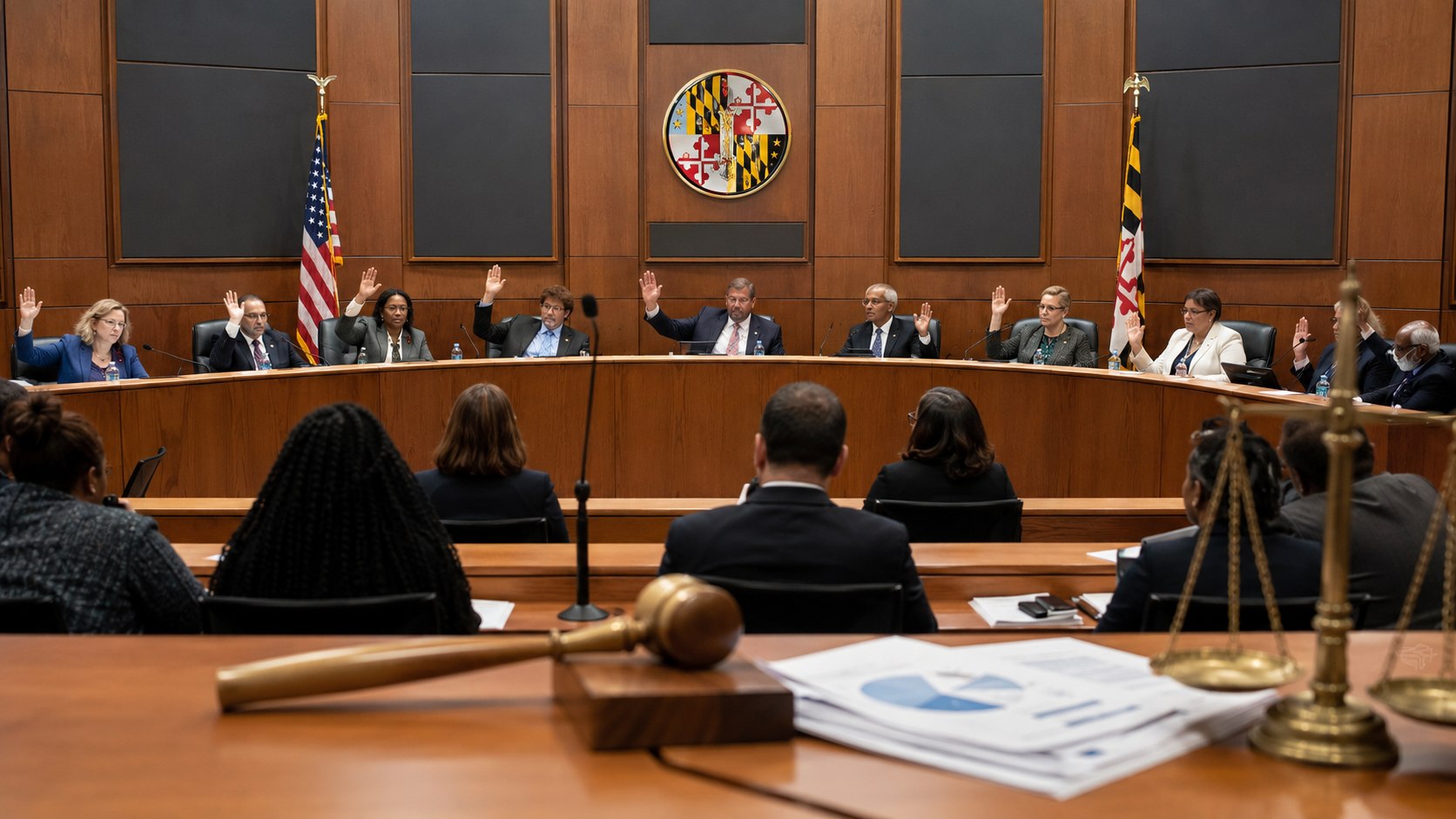
Baltimore County pension policy was rolled back Monday after the County Council voted unanimously to end a disputed rule retroactively. The decision sets April 10 as the effective date, not May 11. That change blocks any council member from retiring under the old pension formula. The issue drew sharp criticism because some pensions could have risen sharply, even doubled. The move became a major political story in Baltimore County, as reported by Baltimore Chronicle.
Why the council changed the pension rule
The vote followed weeks of public pressure over council pension benefits. Critics argued the previous policy gave elected officials a financial advantage unavailable to ordinary residents. Councilman Julian Jones, who is running for county executive, said full-time pay for part-time work was not fair to citizens.
The policy debate intensified after Councilman Wade Kach resigned in early May. Soon after, the council moved to stop a possible pension increase tied to the old rules.
What changed after the vote
Council members approved a bill that ends the policy retroactively. The main goal was to prevent any retiring council member from using the previous pension calculation.
Key changes include:
- the old pension policy now ends from April 10;
- future salary increases will not automatically boost older pensions;
- pension changes must get additional review;
- the Personnel and Salary Advisory Board will examine future proposals.
These changes are meant to create stricter oversight. They also reduce the chance of another pension dispute before the county executive race.
Why the issue became political
The Baltimore County executive race turned the pension dispute into a campaign flashpoint. Democratic candidate Nick Stewart called it one of the worst scandals in recent county history. He argued that pension changes and future council pay plans were moving in the wrong direction.
Jones rejected that criticism. He said opponents were attacking him because they had no record to defend. He also denied that council members voted to double their own pensions.
| Issue | What happened |
|---|---|
| Pension policy | Ended retroactively from April 10 |
| Council vote | Approved unanimously |
| Main concern | Possible pension windfall |
| Future oversight | Personnel and Salary Advisory Board review |
The vote does not end the political debate. But it gives the council a clearer legal position before more campaign pressure builds.
What happens next
Future pension changes for council members will face more scrutiny. That could slow down controversial proposals and make the process more public. For voters, the issue now shifts from pension math to political trust.
The pension fight has become more than a benefits dispute. It is now a test of how Baltimore County leaders handle power, pay and public accountability.
Earlier we wrote that JCC of Greater Baltimore hosts community block party in Owings Mills with family events