

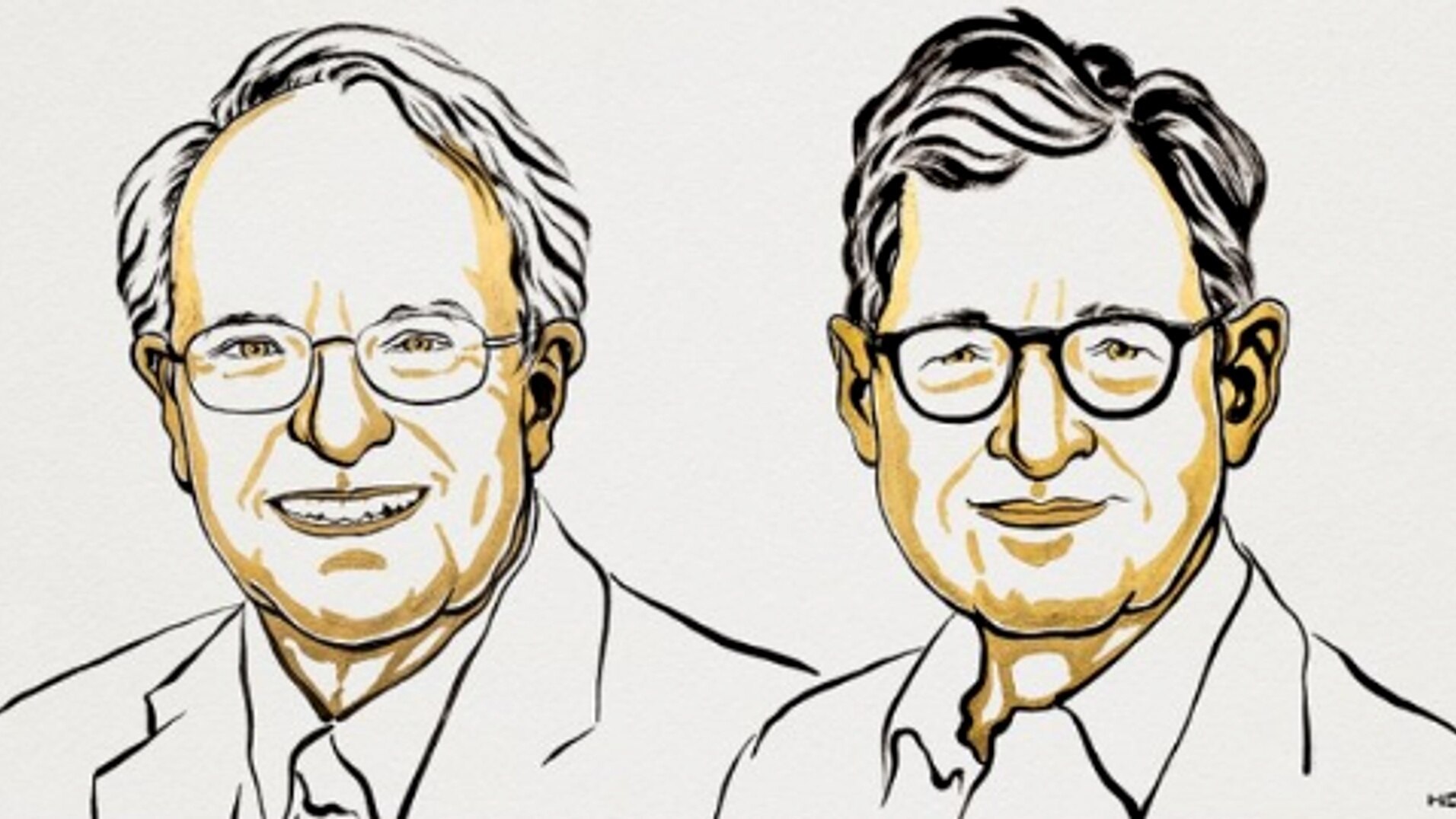
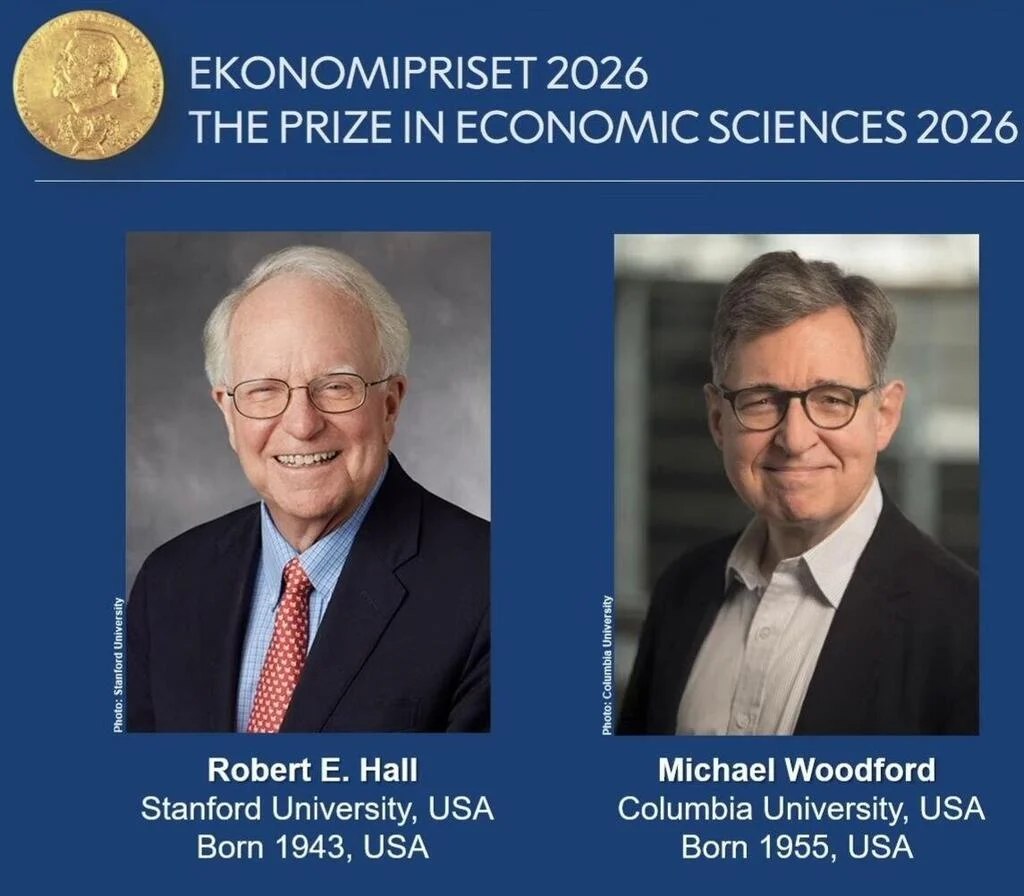
Nobel Prize in Economics 2026 has been awarded to Robert E. Hall and Michael Woodford. The economists were honored for the microeconomic foundations of macroeconomic stabilisation, as the Baltimore Chronicle editorial team reports.
The Royal Swedish Academy of Sciences announced the winners on October 12. Hall is affiliated with Stanford University, while Woodford teaches at Columbia University.
Why Hall and Woodford won the 2026 economics prize
Their research reshaped how economists connect individual decisions with economy-wide fluctuations.
Hall and Woodford helped develop models explaining how households and companies react to changing prices, interest rates and expectations.
Those foundations became central to modern stabilisation policy. Governments and central banks can use such models when responding to recessions, inflation or sudden economic shocks.
The Academy summarized their contribution through several practical areas:
- explaining how expectations affect consumer and business decisions;
- improving models used to study economic cycles;
- strengthening analysis of fiscal and monetary policy;
- helping policymakers evaluate responses to economic shocks.
Their work helped shape what became modern New Keynesian macroeconomics. Expectations about future policy became an important part of economic analysis.
How their research changed central banking
Woodford became particularly influential through research on monetary policy and expectations. His work demonstrated why central-bank communication can influence present economic behavior.
Hall contributed extensively to research on consumption, labor markets and business cycles.
| Laureate | Institution | Main field |
|---|---|---|
| Robert E. Hall | Stanford University | Macroeconomics and business cycles |
| Michael Woodford | Columbia University | Monetary policy and macroeconomics |
The Academy said their models allow better-timed fiscal and monetary measures. Such interventions can reduce extreme economic peaks and downturns.
John Hassler, chair of the prize committee, said their work provided a stable theoretical foundation for models used worldwide.
How much will the 2026 winners receive?
The prize amount for 2026 is 12 million Swedish kronor.
Hall and Woodford will share the award equally, according to the official announcement.
The Sveriges Riksbank created the economics prize in 1968. It commemorated the bank’s 300th anniversary.
Unlike the original Nobel categories, economics was not listed in Alfred Nobel’s will.
The Royal Swedish Academy of Sciences selects the laureates. The prize has been awarded annually since 1969.
When will Hall and Woodford receive the award?
The formal Nobel ceremonies traditionally take place on December 10, the anniversary of Alfred Nobel’s death.
The economics award is presented alongside the other Nobel prizes in Stockholm.
For Hall and Woodford, the recognition also highlights how academic macroeconomics moved closer to everyday policymaking. Their theories now influence decisions made during recessions, inflation shocks and financial disruptions.
Earlier we wrote about How Mortgage Forbearance Works in 2026 as Homeowners Weigh Payment Pauses, Deferrals and Modifications