

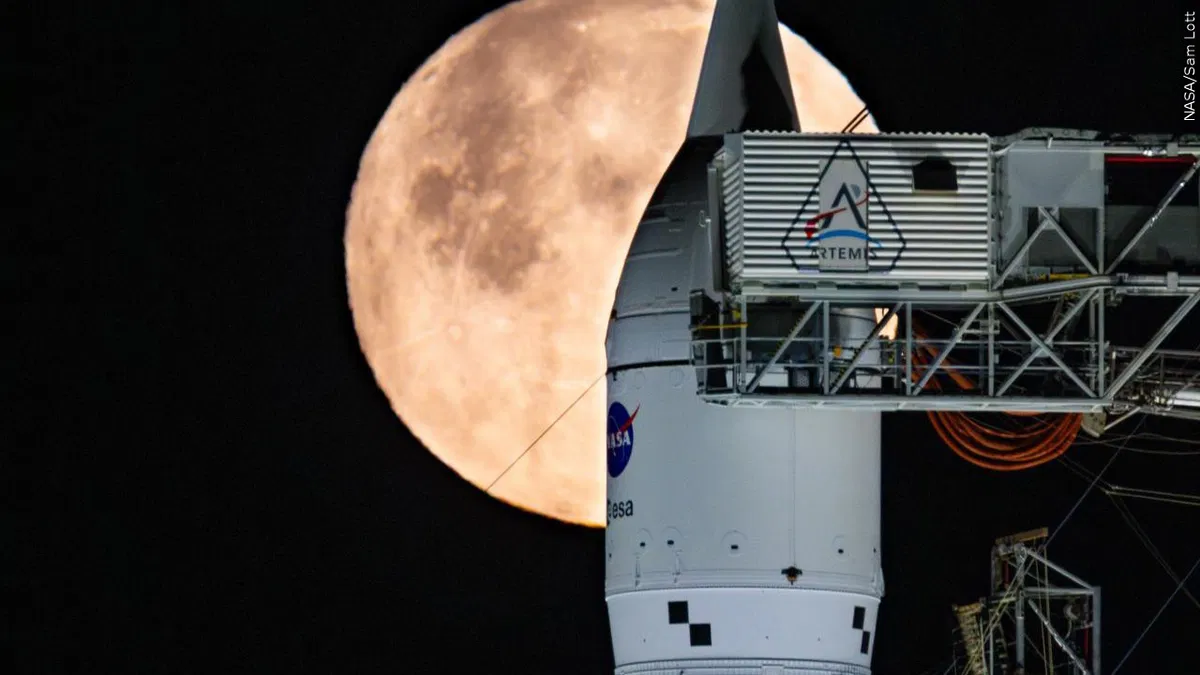
NASA announces new Mars mission details alongside a transformative strategy for lunar exploration under its new leadership. Administrator Jared Isaacman unveiled an ambitious road map that prioritizes a permanent moon base over previous orbital projects. The space agency plans to invest approximately 20 billion dollars over the next 7 years to achieve this goal. This vision includes dozens of missions designed to build a sustainable settlement for astronauts to live and work. Isaacman aims to inject a sense of urgency into scientific pursuits and human spaceflight through these revamped plans. The agency will also focus on high-speed timelines for new deep space technologies including nuclear propulsion. These updates represent a significant shift in the National Space Policy to clear away obstacles for rapid progress. Industry partners are warned to expect uncomfortable action if they fail to meet strict performance and budget requirements. The strategic shift away from previous international orbital platforms marks a new era for the agency, as noted by the Baltimore Chronicle via CNN.
Shelving Gateway to prioritize a permanent lunar base
The space agency has decided to pause the development of the Gateway space station in the moon’s orbit. This orbital platform was originally intended as a stop-off point for cargo and crews traveling to the lunar surface. Instead, NASA will redirect existing hardware and resources to directly support the construction of a surface-based lunar habitat. This change reflects a focus on a surface-focused mission rather than maintaining a permanent presence in lunar orbit. Repurposing these assets will accelerate the timeline for building a base where astronauts can stay for extended periods. Monthly robotic landings are now a primary goal to ferry essential science instruments and cargo to the moon.
The Artemis program remains the central pillar for returning humans to the lunar surface after 50 years:
- Artemis 2: a crewed mission slated for April 1 2026 to fly around the moon.
- Artemis 3: the mission aimed at putting boots back on the moon by early 2028.
- Monthly Landers: a significant increase in robotic missions to establish infrastructure before crew arrival.
- Repurposed Hardware: using Gateway facilities for surface exploration objectives to save time and money.
- Industrial Might: leveraging private sector partners to speed up the development of landing technologies.
This strategic shift forces contractors to reimagine how space infrastructure will work together without a central orbital hub. Isaacman stated that returning to the moon is only the beginning of what the nation is capable of accomplishing. Robotic landers will play a crucial role in delivering life support systems and building materials to the south pole. These missions will work in tandem with crewed flights to ensure a continuous presence on the lunar surface. The agency is also looking for ways to bolster its core competencies by hiring more specialized workers. Success depends on the ability of commercial partners to deliver reliable lunar landers within the next 2 years.

Accelerating the Mars mission with nuclear electric propulsion
The newly announced SR-1 Freedom mission represents a bold leap toward the exploration of the red planet. This project aims to launch a nuclear-powered Mars vehicle by 2028 to test advanced propulsion technologies in space. Nuclear electric propulsion offers extremely efficient engines that are ideal for the long distances required for deep space travel. This technology could significantly reduce the travel time for future human missions to Mars and beyond. The mission will also carry advanced helicopters designed to achieve controlled flight in the thin Martian atmosphere. These aerial vehicles will follow in the footsteps of the successful Ingenuity helicopter to map new territories.
Key technological goals for the SR-1 Freedom and Mars exploration:
| Mission Objective | Technology Used | Expected Outcome |
| Deep Space Travel | Nuclear Electric Propulsion | Efficient long-distance transport |
| Martian Flight | SR-1 Freedom Helicopters | High-resolution aerial mapping |
| Surface Power | Fission Surface Reactor | Reliable energy for moon and Mars |
| Radiation Safety | Space Reactor Shielding | Protection for sensitive instruments |
| Cargo Delivery | Heavy Lift Rockets | Transport of essential habitats |
Testing these nuclear systems in space will inform plans for a fission reactor on the lunar surface. NASA intends to launch a surface power plant by 2030 to support the permanent lunar base. This reactor will provide consistent energy during the long lunar nights when solar power is not available. Officials emphasized that the reactor remains off on the ground and only activates once safely in space. Educating the public about the safety of these nuclear technologies is a priority for the agency program executives. The lightning-fast timeline for the 2028 launch reflects the new sense of urgency at the agency.
Accountability and industry partnerships in the new space era
NASA is demanding more accountability from commercial space companies like SpaceX, Blue Origin, Boeing, and Lockheed Martin. Isaacman expressed frustration with past projects that were billions of dollars over budget and years behind schedule. The agency is now deeply embedded alongside industry partners to increase the chances of successful lunar landings. This hands-on approach aims to prevent the hangups that delayed the Orion capsule and Space Launch System. Oversight reports have warned that current lander development is lagging behind the 2028 goal for human landings. Companies have been told that NASA will pull the cord on underperforming projects to save resources.
The agency is also reimagining its contracts to foster faster innovation and lower costs for taxpayers. Deep integration with the private sector will allow NASA personnel to work side-by-side with commercial engineers. This collaborative model is designed to clear away needless obstacles that impede scientific and human progress. Isaacman is pushing for a workforce that is more enterprising and focused on high-priority mission objectives. The transition involves shifting requirements and reimagining the entire space-based infrastructure to meet the 2028 deadline. Monthly robotic missions will serve as a constant test for the reliability of these new commercial systems. By unleashing industrial might, NASA hopes to achieve goals that were previously considered impossible or too distant.
Earlier we wrote that EU Conducts Key Meetings Without Hungary Over Alleged Moscow Data Leaks, 2026