

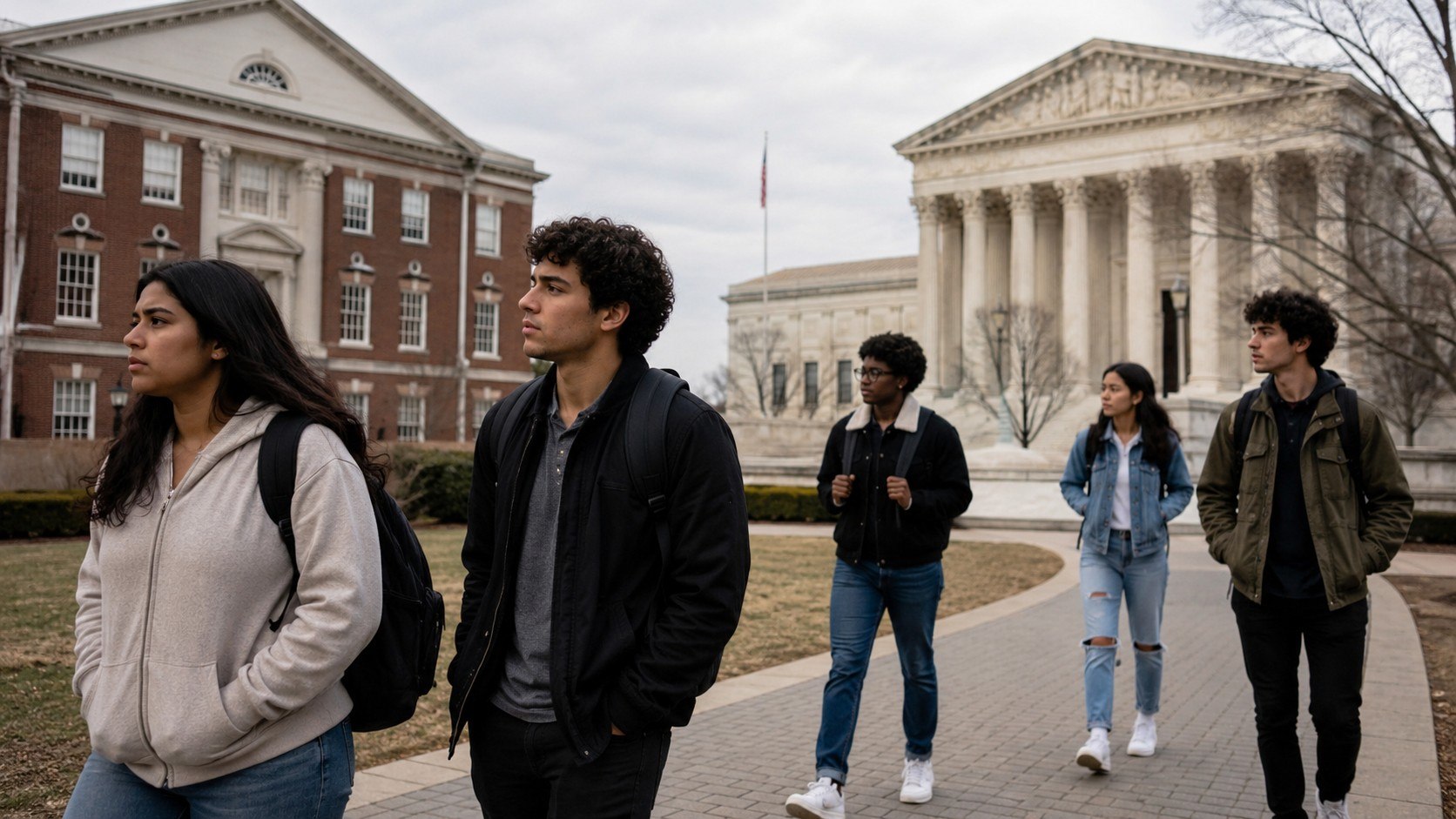
DOJ sues Maryland over a state policy that grants reduced tuition to eligible undocumented students. The federal complaint also challenges access to publicly funded scholarships and grants, the Baltimore Chronicle reports.
DOJ challenges the Maryland DREAM Act
The US Department of Justice filed the case against Maryland, the Maryland Higher Education Commission and the University System of Maryland Board of Regents.
Federal lawyers argue that the Maryland DREAM Act conflicts with federal immigration law. That law restricts residency-based education benefits for undocumented immigrants. The DOJ says comparable benefits must also be available to US citizens from other states.
Maryland law includes undocumented immigrants among students who may qualify for a nonresident tuition exemption. Applicants must satisfy education, residency and tax-related conditions.
How many students receive reduced tuition?
The complaint cites a 2025 report prepared by MHEC Secretary Sanjay Rai. It estimates that students saved almost $9 million between summer 2024 and spring 2025.
| Institution type | Students reported | Institutions |
|---|---|---|
| Community colleges | Almost 500 | 15 |
| Public universities | 309 | 9 |
| Total tuition difference | Nearly $9 million | One academic year |
These figures describe tuition reductions, not direct cash payments. They are central to the DOJ’s argument about costs for Maryland taxpayers.

Scholarships are also targeted
The government wants Maryland to stop providing certain students with state financial assistance. The challenged programs include:
- Maryland Senatorial Scholarship;
- Delegate Scholarship;
- Guaranteed Access Grant;
- Cybersecurity Public Service Scholarship.
MHEC distributes more than $100 million in state financial assistance annually, according to the complaint. Eligible students can apply through the Maryland State Financial Aid Application.
The lawsuit does not immediately cancel tuition exemptions or awards. Existing rules remain relevant unless a court blocks them or Maryland changes its legislation.
Maryland faces a second federal immigration lawsuit
The tuition case follows a separate DOJ action announced on July 9, 2026. That lawsuit challenges Maryland’s Community Trust Act and restrictions on cooperation with federal immigration agencies.
The latest dispute could determine whether Maryland may continue linking reduced tuition to local education and tax history. It may also affect other states with similar policies.
Earlier we wrote that Baltimore County Smoke Shop Bill Would Require 1,000-Foot Buffers Near Schools and Parks