

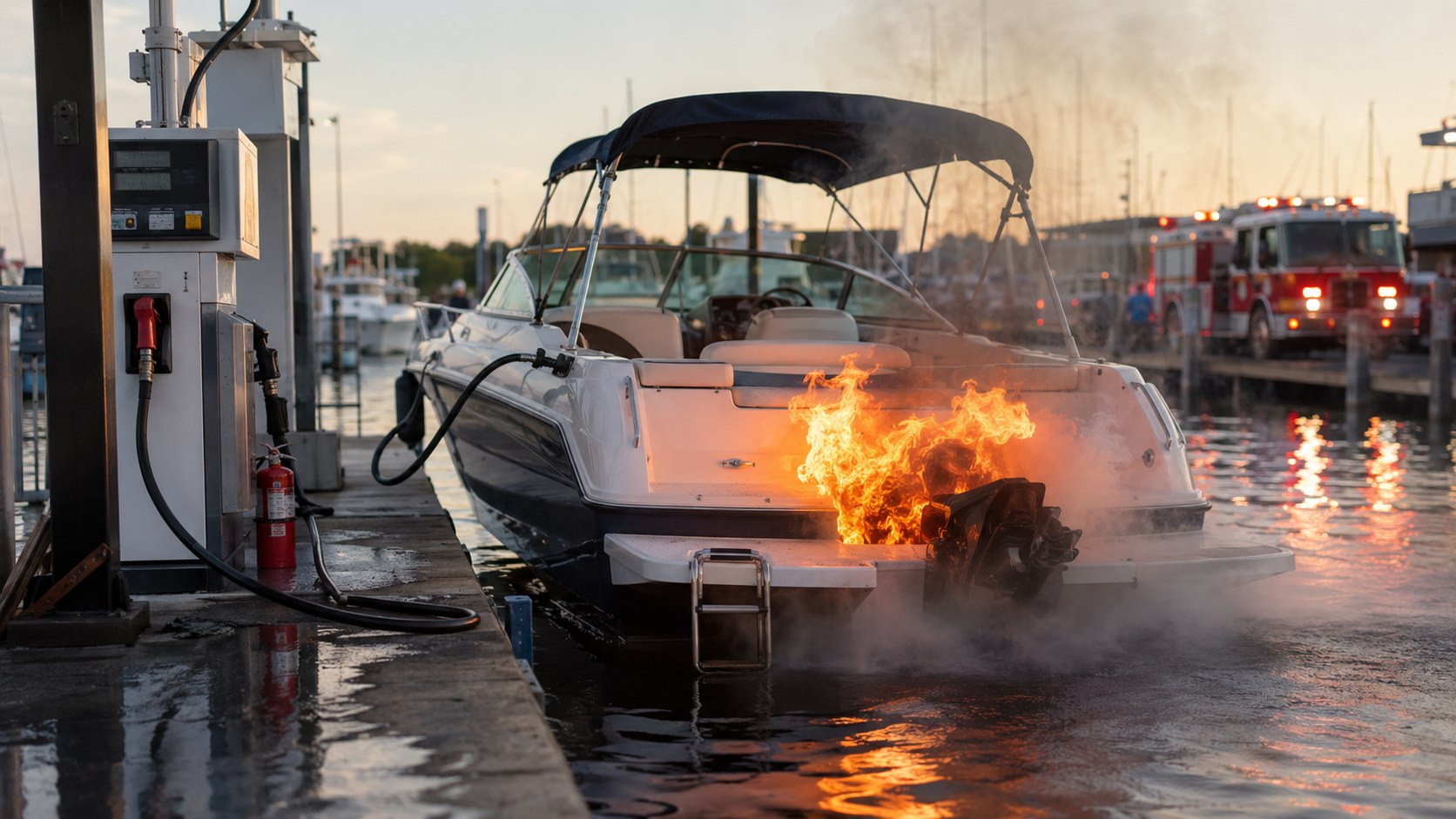
Boat fuel vapor explosion safety begins before anyone turns the ignition key. Investigators are examining whether trapped gasoline fumes contributed to Maryland’s July 4 boat explosion, as reported by the Baltimore Chronicle.
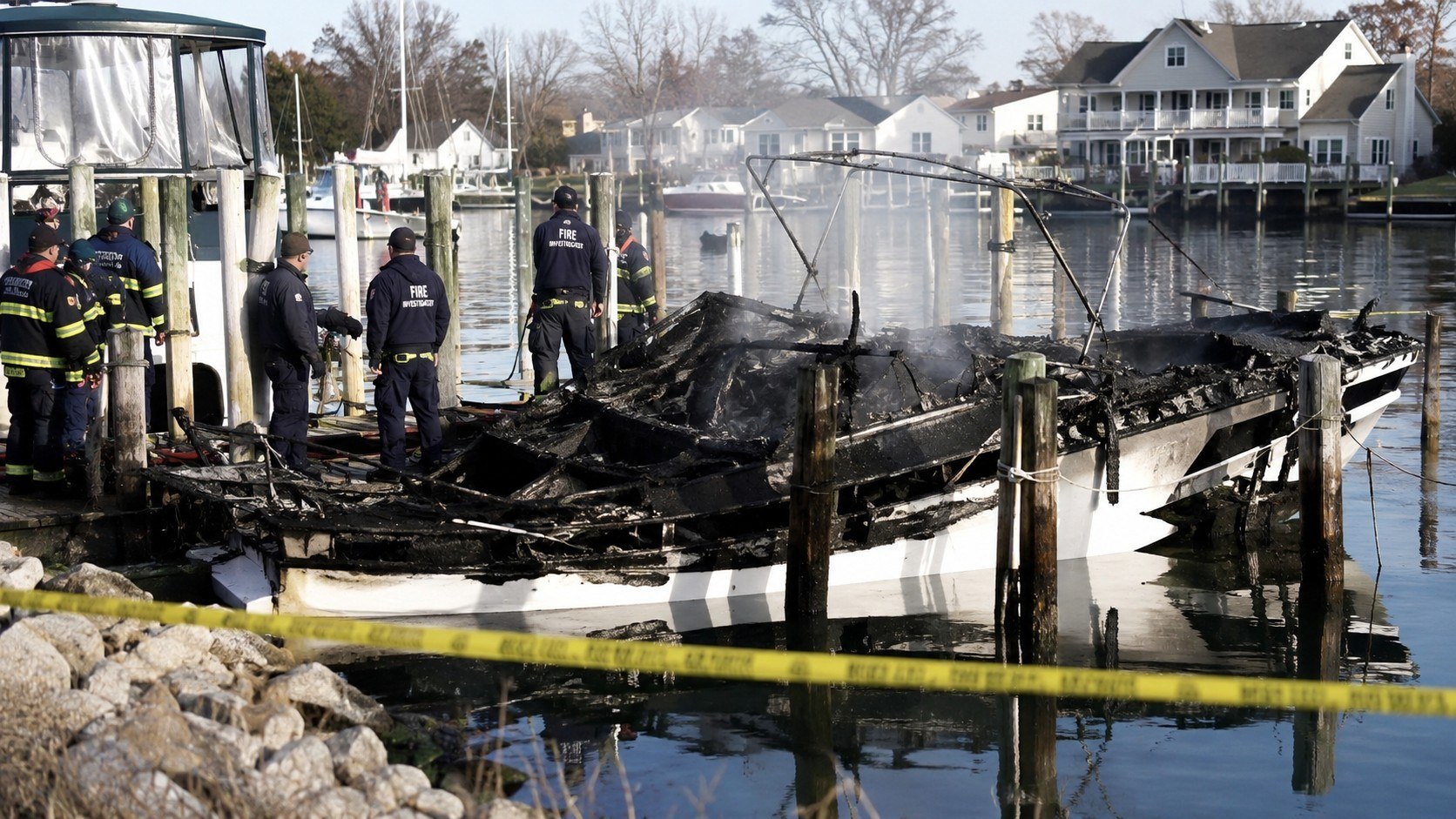
The blast occurred after a 32-foot cruiser refueled near Schaefer’s Canal House in Chesapeake City. Nine people were injured, including 7 aboard and 2 dock workers. Authorities have not announced a final cause. However, they are examining whether the blower operated long enough before the engine started.
Why Gasoline Vapors Collect Inside A Boat
Gasoline evaporates quickly and produces flammable vapor. That vapor is heavier than air and can settle inside the bilge or engine compartment.
An enclosed motor space may retain fumes after refueling, especially when ventilation is weak. A spark from an ignition system, starter, switch, or damaged connection can ignite the mixture.
The blower fan moves contaminated air outside through dedicated ventilation ducts. It does not guarantee safety when fuel is leaking or fumes remain detectable.
Coast Guard Blower Rules Before Starting
The Coast Guard warning for gasoline-powered inboard boats is direct. Operators should run the blower for at least 4 minutes before starting the engine. They must also inspect the bilge and engine compartment for gasoline vapors.
Boat operators should follow this sequence after refueling:
- Close fuel caps and check for spills.
- Open available engine-compartment access points.
- Run the blower for at least 4 minutes.
- Smell carefully for gasoline near the compartment.
- Delay ignition when any fuel odor remains.
Four minutes is a minimum period, not automatic proof that the compartment is safe. Strong fuel odor can signal a spill, loose fitting, damaged hose, or ventilation failure.
What Each Warning Sign Means
| Warning sign | Required response |
|---|---|
| Gasoline odor | Do not start the engine |
| Visible fuel | Stop all electrical activity |
| Blower not operating | Repair it before departure |
| Odor remains after ventilation | Leave the boat and seek assistance |
| Engine stalls after refueling | Inspect the fuel system before restarting |
Passengers should remain ashore while the operator completes these checks. Smoking, open flames, and unnecessary electrical switches should remain prohibited near the fueling area.
What The Maryland Investigation Must Establish
Investigators must determine whether vapor accumulated, whether the blower worked, and how long it operated. They must also identify the ignition source.
The possible blower issue remains an investigative theory, not a confirmed finding. The practical lesson is already clear: never treat refueling as complete until the engine space is ventilated and odor-free.
Earlier we wrote that Severna Park Independence Day Parade rescheduled for July 11 amid extreme heat