

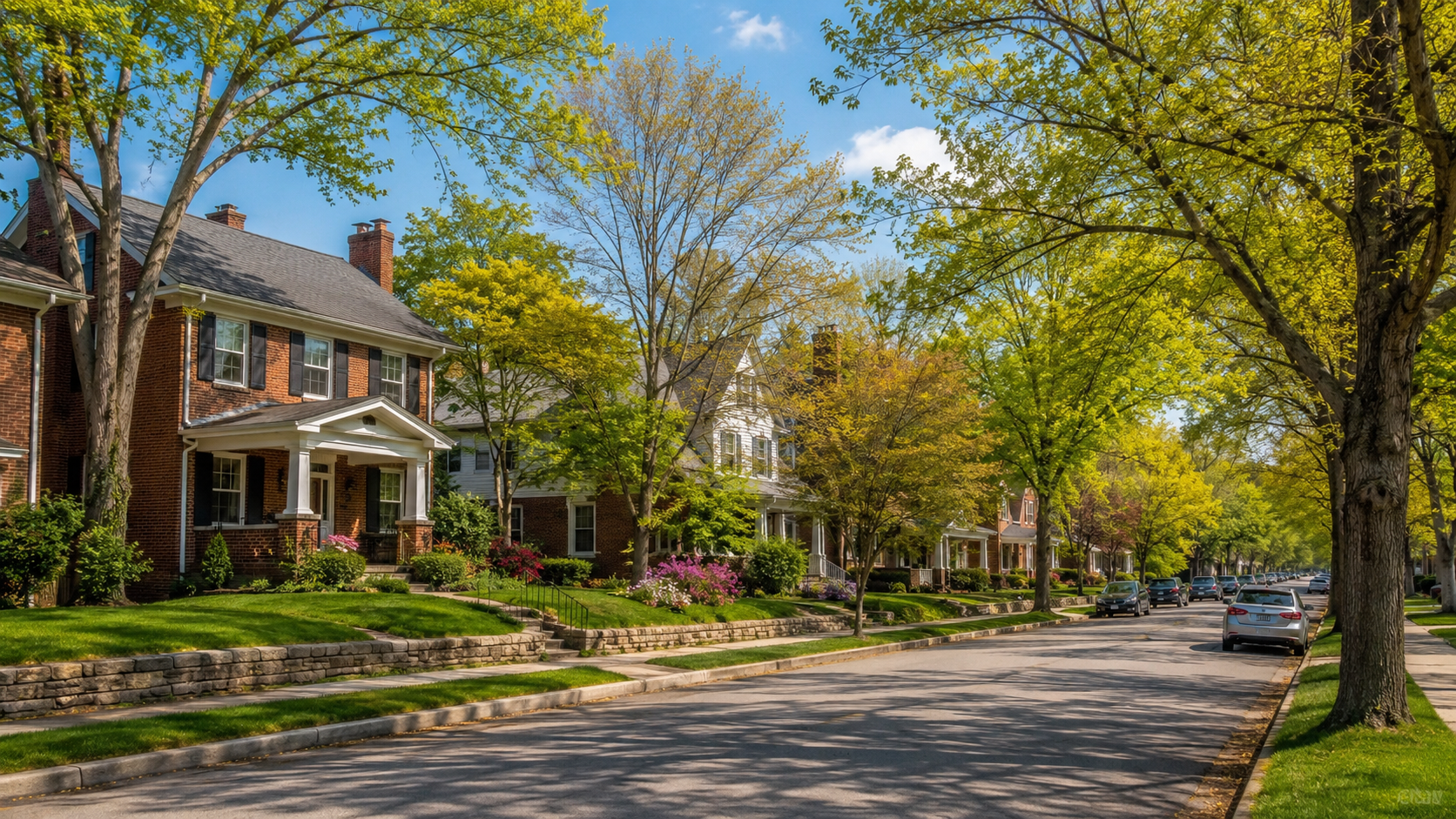
Mayfield Baltimore guide searches usually come from people looking for something harder to find in city neighborhoods: quiet streets, stable housing stock, and a community that feels residential without becoming suburban sprawl. Tucked into Northeast Baltimore near Lake Montebello, Mayfield sits in a pocket of the city that many newcomers overlook until they drive through it, as noted by the editorial team at Baltimore Chronicle.
The neighborhood attracts families, longtime Baltimore homeowners, and buyers leaving denser parts of the city in search of more space. According to Live Baltimore’s Mayfield neighborhood overview, the area stands out for its detached homes, residential atmosphere, and access to green space.
TL;DR
Mayfield is one of the quieter residential neighborhoods in Northeast Baltimore, known for detached homes, green space access, and a strong neighborhood identity near Lake Montebello. It works especially well for buyers and renters who prioritize space, parking, and community stability over nightlife or dense commercial corridors. The tradeoff is that daily life often depends on driving or longer transit trips. \
Housing inventory can also be limited because many residents stay for years rather than treating the neighborhood as a short-term stop.
Where Mayfield Is in Baltimore
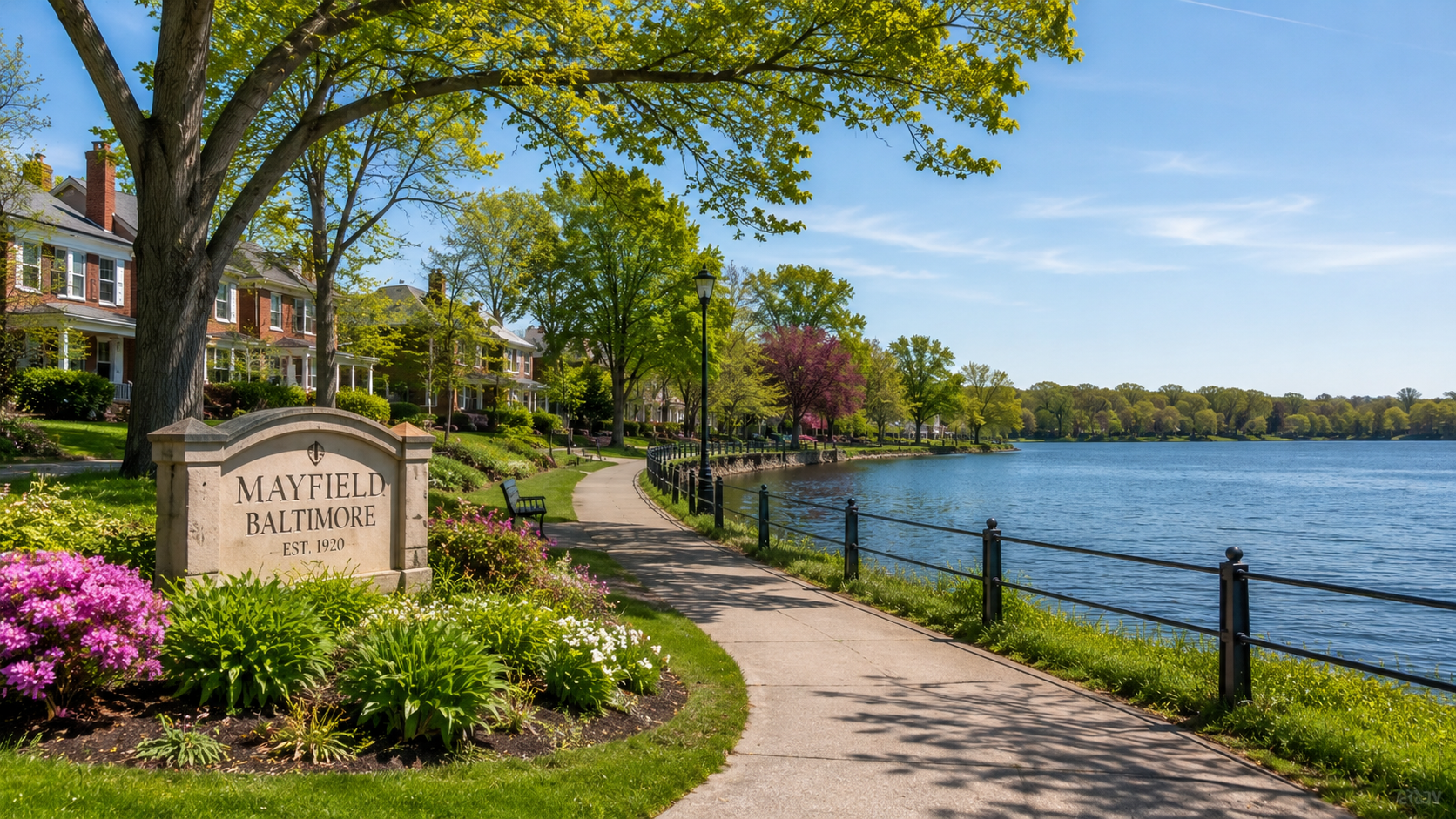
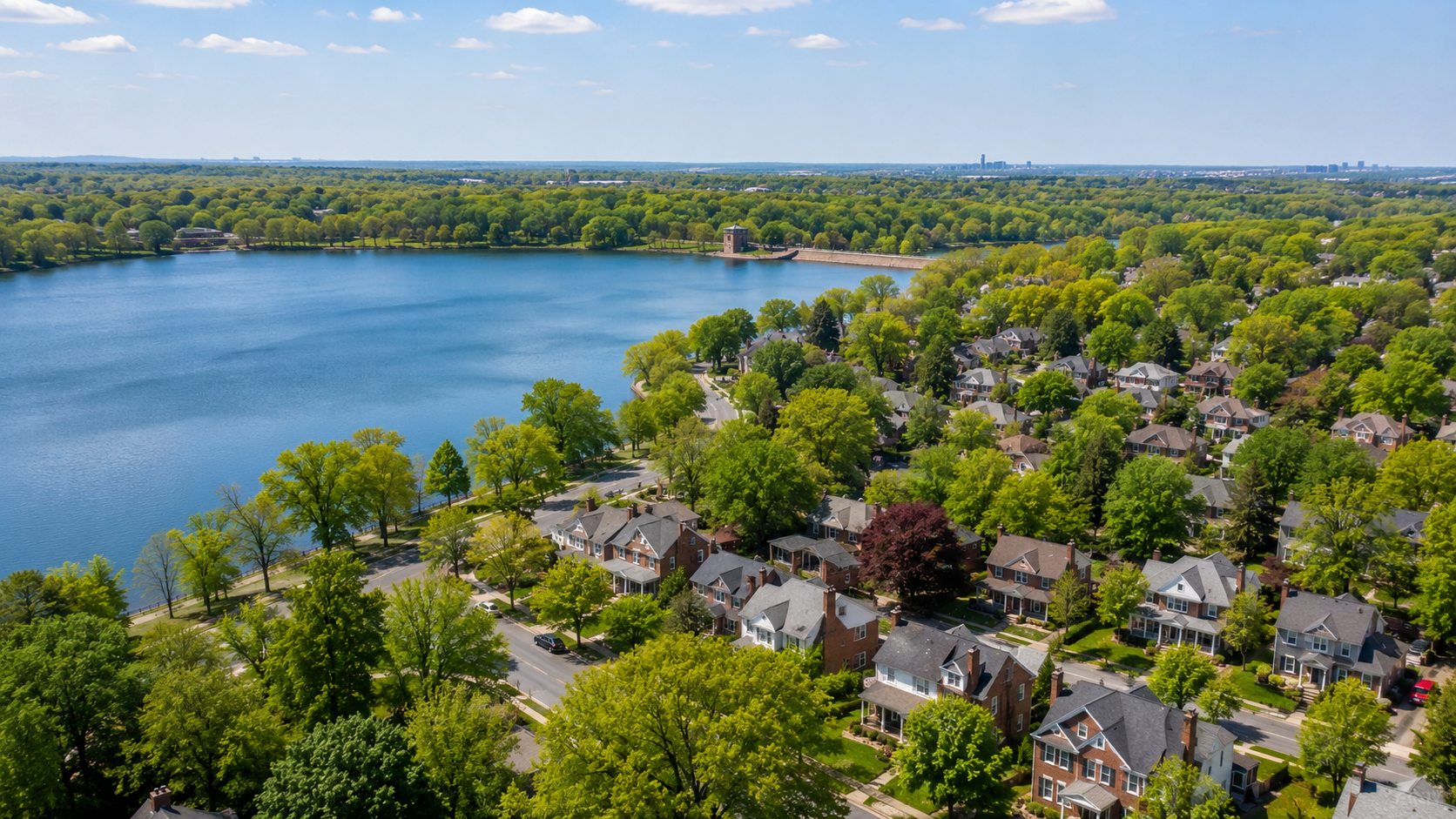
Mayfield sits in Northeast Baltimore near Lake Montebello and borders neighborhoods including Lauraville, Beverly Hills, Mid-Govans, and Arcadia.
The area feels physically separated from denser commercial sections of Baltimore because of its curved streets, mature trees, and primarily residential layout. One reason the neighborhood stands out among quiet neighborhoods baltimore residents discuss is its design. Many blocks were developed with suburban-style planning principles that included lawns, setbacks, and detached homes rather than tightly packed rowhouses. For commuters, the location creates a middle ground between city access and neighborhood calm.
Visitors researching Baltimore neighborhoods through Baltimore tourism and neighborhood resources often overlook Northeast Baltimore because it lacks the tourist-heavy identity of Inner Harbor districts.
Typical drive times depend on traffic, but residents often use:
- Harford Road for local retail and dining
- York Road for north-south commuting
- I-83 and I-695 for regional travel
- Charles Village routes for Johns Hopkins access
- Downtown Baltimore corridors for office commutes
Public transit exists, though Mayfield is less transit-oriented than neighborhoods closer to central Baltimore. That difference becomes noticeable for residents who rely on late-night transit or prefer neighborhoods built around dense commercial corridors.
What Living in Mayfield Actually Feels Like
The strongest selling point for people researching living in mayfield baltimore is consistency.
The neighborhood does not feel heavily commercialized or transient. Streets are quieter than many central Baltimore neighborhoods, and residential upkeep tends to be stronger than in areas with high rental turnover.
Residents often describe the neighborhood as:
- Community-oriented
- Family-focused
- Less hectic than central Baltimore
- More residential than entertainment-driven
- Stable compared with rapidly flipping markets
That stability matters for buyers comparing Northeast Baltimore options. Unlike neighborhoods where nightlife defines the local identity, Mayfield revolves around home life, outdoor walking routes, schools, and neighborhood events. People moving from Washington, D.C., Philadelphia, or denser Baltimore neighborhoods sometimes describe the area as “unexpectedly suburban” while still remaining inside city limits.
Readers comparing different Baltimore lifestyles may also want to explore Mount Vernon’s walkable urban environment or the more nightlife-focused atmosphere in Fell’s Point neighborhood guide.
“Mayfield offers a quieter residential experience while staying connected to the rest of Baltimore through major commuter routes and nearby neighborhood corridors.”
That combination is the main reason many residents stay in the neighborhood long term rather than treating it as a temporary stop before moving to the suburbs.
Housing in Mayfield
The housing stock is one of the biggest reasons this area appears in searches for mayfield baltimore homes.
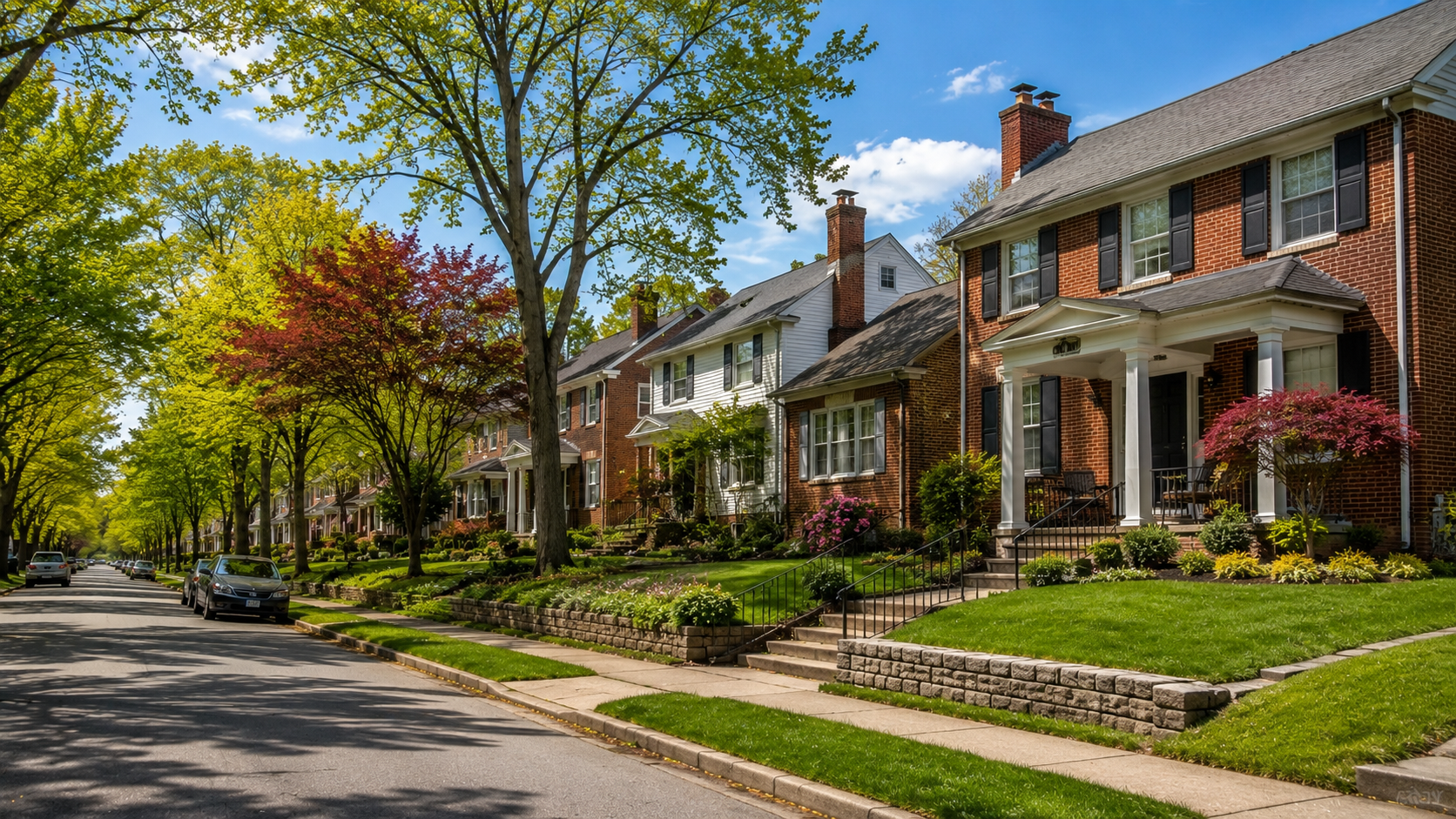
Many homes are detached or semi-detached single-family properties with front yards, driveways, and larger footprints than rowhouse-heavy sections of Baltimore. Architectural styles vary, but buyers commonly encounter:
- Colonial-style homes
- Brick detached houses
- Early-to-mid 20th century construction
- Properties with porches and garages
- Larger corner lots than average city neighborhoods
Inventory can move slowly because owner occupancy is relatively high. Buyers looking for turnkey properties may face more competition than expected, especially for updated homes with parking and renovated kitchens or basements.
What buyers should know
People relocating into Baltimore sometimes underestimate how unusual detached housing is within city boundaries. In Mayfield, that housing pattern is part of the neighborhood identity.
The tradeoff is price sensitivity. Detached homes in stable Northeast Baltimore neighborhoods can command stronger demand than buyers initially expect, particularly for renovated properties with updated systems and off-street parking.
Before buying, pay attention to:
- Basement condition and waterproofing
- Electrical and HVAC updates
- Garage usability
- Property tax differences versus county homes
- Street parking realities if the home lacks a driveway
Those details matter because many homes were built decades ago and may have hidden maintenance costs behind cosmetic renovations. Buyers moving from newer apartment buildings or condos should factor long-term upkeep into their budget calculations. First-time buyers comparing Northeast Baltimore with Canton, Hampden, or Hamilton may benefit from reading Baltimore Chronicle’s first-time homebuyer guide before making offers.
Current neighborhood profiles and relocation resources are available through Live Baltimore, though buyers should still verify active listings and market conditions directly before making decisions.
Renting in Mayfield
Mayfield is less rental-heavy than neighborhoods closer to universities or downtown employment centers. That can be good or bad depending on the renter.
Best fit for renters who want:
- Lower neighborhood turnover
- Quieter evenings
- More residential surroundings
- Larger apartments or converted homes
- Easier parking than central neighborhoods
These features appeal to renters planning to stay multiple years rather than people looking for highly social apartment districts.
Less ideal for renters seeking:
- Dense nightlife
- Car-free daily living
- Large apartment towers
- Frequent late-night transit options
- Immediate access to bars and entertainment districts
Because rental inventory is limited, some renters expand searches into neighboring areas near Lake Montebello and Lauraville. Apartment hunters expecting large modern complexes may find fewer options here than in Harbor East or downtown Baltimore.
Students, medical staff, and university employees relocating to Baltimore may also compare options using the University of Maryland Baltimore housing guide.
Lake Montebello and Nearby Green Space
One reason lake montebello neighborhoods continue attracting attention is access to outdoor space without leaving the city.
Lake Montebello functions as a major recreational asset for Northeast Baltimore residents. Walking and running loops around the reservoir attract cyclists, joggers, dog owners, and families throughout the week.
For Mayfield residents, that proximity creates a different rhythm than denser urban sections of Baltimore.
Common neighborhood routines include:
- Morning walks around the lake
- Weekend cycling routes
- Dog walking near green corridors
- Family outings without long drives
- Outdoor fitness activity close to home
Compared with neighborhoods where parks require driving, Mayfield benefits from nearby open space integrated into daily life. That access changes how residents use weekends and evenings, particularly families with children or dog owners looking for nearby recreation.
Baltimore residents prioritizing outdoor access may also want to compare other major green spaces in Baltimore Chronicle’s parks guide.
Schools, Family Life, and Neighborhood Culture
Searches for family neighborhoods northeast baltimore often include Mayfield because of its residential atmosphere and community organizations. The neighborhood has a longstanding community association presence, and residents tend to participate in local improvement efforts more consistently than in highly transient districts.
Who this neighborhood fits best
Mayfield works especially well for:
- Families wanting more square footage
- Buyers leaving apartment-heavy areas
- Professionals working at Johns Hopkins or downtown institutions
- Older buyers downsizing from county suburbs but staying in the city
- Residents prioritizing neighborhood calm over nightlife
The neighborhood especially appeals to households that want city access without the intensity of entertainment-heavy districts. Buyers moving from counties surrounding Baltimore sometimes see Mayfield as a compromise between urban convenience and suburban comfort.
Families researching education options can also review Baltimore’s school choice guide for parents for enrollment and district context.
Tradeoffs families should think about
The neighborhood is not a perfect fit for everyone.
| Factor | Advantage | Tradeoff |
|---|---|---|
| Housing | Larger detached homes | Higher maintenance costs |
| Streets | Quiet residential feel | Less commercial activity |
| Parking | Easier than downtown | Some homes still rely on street parking |
| Lifestyle | Community-oriented | Less nightlife and entertainment |
| Transit | Bus access available | Car ownership is often easier |
Those tradeoffs explain why Mayfield tends to attract long-term residents rather than short-term renters focused on nightlife or dense urban activity. Families often prioritize stability and space over walkability to bars or entertainment venues.
School preferences vary significantly by household priorities, so families should independently review current public, charter, and private school options before moving.
Dining, Retail, and Daily Convenience
Mayfield itself is mostly residential, but nearby commercial corridors fill daily needs.
Residents often rely on:
- Harford Road businesses
- Lauraville retail corridors
- Belvedere Square area amenities
- Northeast Baltimore grocery options
- Local coffee shops and carryout spots
These nearby commercial areas help balance the neighborhood’s quieter atmosphere with practical convenience. Most errands remain manageable within a short drive. This is not the kind of Baltimore neighborhood where every errand happens within a two-block radius. Daily convenience exists, but usually through short drives rather than dense walkability. That distinction matters for people comparing Mayfield with neighborhoods like Canton, Federal Hill, Hampden, or Mount Vernon.
For readers comparing neighborhood energy levels, the Hampden Baltimore guide shows how different daily life feels in one of the city’s busiest commercial districts.
Safety and What Newcomers Should Understand
People researching Baltimore neighborhoods almost always compare safety perceptions block by block rather than citywide averages. Mayfield generally maintains a more residential and stable reputation than many parts of the city, but newcomers should still evaluate:
- Specific streets
- Lighting conditions
- Traffic patterns
- Property maintenance
- Daily activity levels
- Proximity to commercial corridors
Those factors often shape daily comfort more than broad citywide crime discussions. A quieter block with strong homeowner presence can feel dramatically different from nearby high-traffic corridors.
Visiting at different times of day gives a more accurate impression than relying on generalized online discussions. Readers researching broader city safety patterns should also review Baltimore Chronicle’s neighborhood safety guide for context on how block-by-block differences shape daily life in Baltimore.
Commute and Transportation
The neighborhood works best for people who expect to use a car at least part of the time.
Common commute patterns include:
- Downtown Baltimore offices
- Johns Hopkins campuses
- Towson employment centers
- County healthcare systems
- Regional commuting via I-695
Those regional connections make the area practical for workers commuting both into downtown and toward Baltimore County employment hubs.
Residents who want fully car-free living may find neighborhoods closer to central transit infrastructure easier to navigate daily. Transit expectations are often the deciding factor between Mayfield and more central Baltimore neighborhoods. Buyers prioritizing parking and lower street congestion may see that tradeoff as worthwhile.
Common Mistakes People Make When Choosing Mayfield
Assuming all Northeast Baltimore neighborhoods feel the same
Neighborhood identity changes quickly across Northeast Baltimore. Mayfield feels different from denser rowhouse corridors or heavily student-oriented sections of the city.
Expecting downtown-style walkability
This area prioritizes residential space over dense retail clustering.
Ignoring housing maintenance realities
Older detached homes can require more upkeep than condos or newer construction.
Shopping only online
Street-by-street impressions matter here. Visiting in person usually changes how buyers view the neighborhood.
Many newcomers form opinions based entirely on listing photos or citywide reputation discussions. In practice, Northeast Baltimore neighborhoods vary dramatically from one another in feel, traffic, and housing quality.
How Mayfield Compares With Nearby Neighborhoods
| Neighborhood | Best Known For | Best For | Potential Drawback |
|---|---|---|---|
| Mayfield | Quiet detached homes | Families, long-term buyers | Less nightlife |
| Lauraville | Local business corridor | Walkable local feel | More traffic |
| Arcadia | Residential affordability | Entry-level buyers | Mixed housing consistency |
| Homeland | Large historic homes | Luxury residential living | Higher prices |
| Charles Village | Dense urban energy | Students, transit users | Less residential calm |
The comparison highlights where Mayfield sits in Baltimore’s housing landscape. It offers more residential calm than Charles Village or Hampden, but less nightlife and walkability than those neighborhoods. Buyers prioritizing home size and quieter streets usually understand the appeal quickly after visiting in person.
What Editors Should Update Regularly
Some sections of this guide can become outdated faster than others.
Quarterly updates recommended for:
- Housing market conditions
- Rental inventory trends
- Major retail openings or closures
- Transit changes
- Development projects nearby
These updates matter because neighborhood perception can shift quickly once new development projects, retail corridors, or transportation changes appear nearby.
Annual review recommended for:
- Neighborhood positioning
- School-related references
- Community amenities
- Cost comparisons with nearby areas
A yearly refresh also helps maintain accurate comparisons between Mayfield and nearby Northeast Baltimore neighborhoods as housing prices and demand evolve.
FAQ
Is Mayfield a good neighborhood in Baltimore?
Many residents consider Mayfield one of the more stable and residential Northeast Baltimore neighborhoods, especially for buyers seeking quieter streets and detached homes.
Is Mayfield walkable?
It depends on expectations. Daily walks and recreation are easy, especially near Lake Montebello, but many errands still work better with a car.
Are homes in Mayfield mostly rowhouses?
No. Detached and semi-detached homes are a major part of the neighborhood’s appeal compared with more rowhouse-dense Baltimore areas.
Is Mayfield good for families?
The neighborhood is commonly considered family-oriented because of its residential layout, larger homes, and quieter environment.
How close is Mayfield to downtown Baltimore?
Driving access is relatively manageable compared with outer suburban areas, though commute times vary heavily with traffic patterns.
Is Mayfield expensive?
Pricing varies by property condition, lot size, parking, and renovation quality. Detached homes in stable Baltimore neighborhoods can be more competitive than newcomers expect.
What neighborhoods are similar to Mayfield?
Homeland, Lauraville, Beverly Hills, and some Lake Montebello-adjacent areas often attract buyers looking for similar residential characteristics.
Can you live in Mayfield without a car?
It is possible, but many residents find car ownership more practical for errands and commuting.
Earlier we wrote about Washington Village/Pigtown Guide: Affordability, Community, Stadium Access