

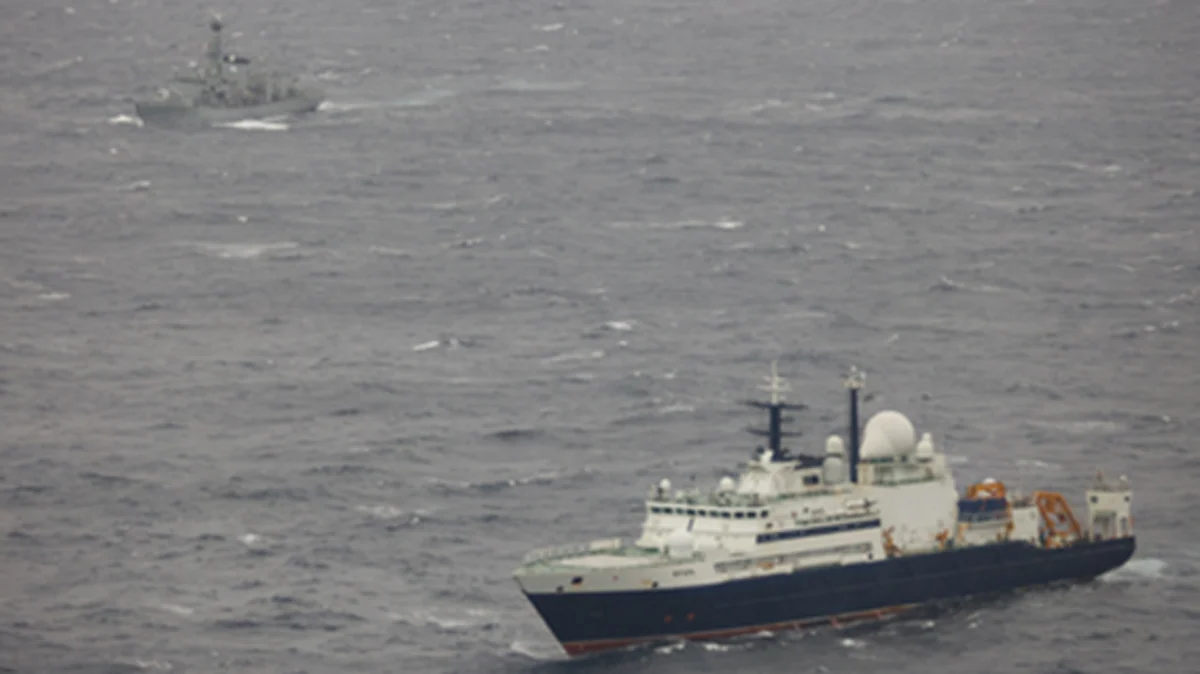
Russian spy submarines near undersea cables became the focus of a major international military operation in the North Atlantic. For several weeks, the UK and Norway led a massive effort to protect critical communication lines. Defense Secretary John Healey confirmed that a Royal Navy frigate and specialized aircraft tracked three Russian vessels. These included one attack submarine and two advanced spy submarines operating north of the British coast. The operation aimed to prevent any attempt at sabotage against Western infrastructure during a period of global tension. Moscow reportedly used the distraction of the war in Iran to increase its malign presence in European waters. This coordinated response highlights the growing vulnerability of the internet cables that sustain the global economy and security. As Britain remains vigilant, the full scope of this mission shows the intensity of modern deep-sea warfare. Details of this strategic maneuver were shared by the Baltimore Chronicle via CNN.
Undersea infrastructure and the threat from GUGI
The Russian vessels were identified as part of the Main Directorate of Deep Sea Research, commonly known as GUGI. This specialized unit is an elite branch of the Russian armed forces focused on deep-sea mapping and sabotage. NATO allies have long expressed concern over GUGI ships like the Yantar, which linger near vital data pipelines. The UK defense chief warned that these subs are built to survey infrastructure in peace and destroy it in war. Norwegian Defense Minister Tore Sandvik noted that the recent activity occurred in sensitive maritime areas near both nations. This specific incident lasted more than a month, requiring a constant presence of NATO naval assets. The persistence of the Russian fleet suggests a calculated effort to map the seabed for future hybrid operations.
Key details of the Russian naval presence in the North Atlantic:
- One Russian attack submarine used for tactical escort and defense of the mission.
- Two specialized spy submarines designed for deep-sea interference and data collection.
- Location concentrated in the UK exclusive economic zone, reaching 200 nautical miles from shore.
- Coordination by GUGI, Russia’s most secretive deep-sea research and sabotage directorate.
- Strategic timing coincides with the height of the conflict involving Iran and Israel.
- Participation of multiple unnamed NATO allies to ensure total surveillance coverage.
The operation involved hundreds of personnel working in shifts to maintain a 24-hour watch on the intruders. Surveillance aircraft provided aerial data to the frigates on the surface, ensuring the submarines had nowhere to hide. This level of coordination was necessary to prove that Western allies can monitor even the quietest vessels. British officials stressed that the exit of the Russian ships only happened after intense pressure from NATO.
Geopolitical distractions and the shadow fleet challenge
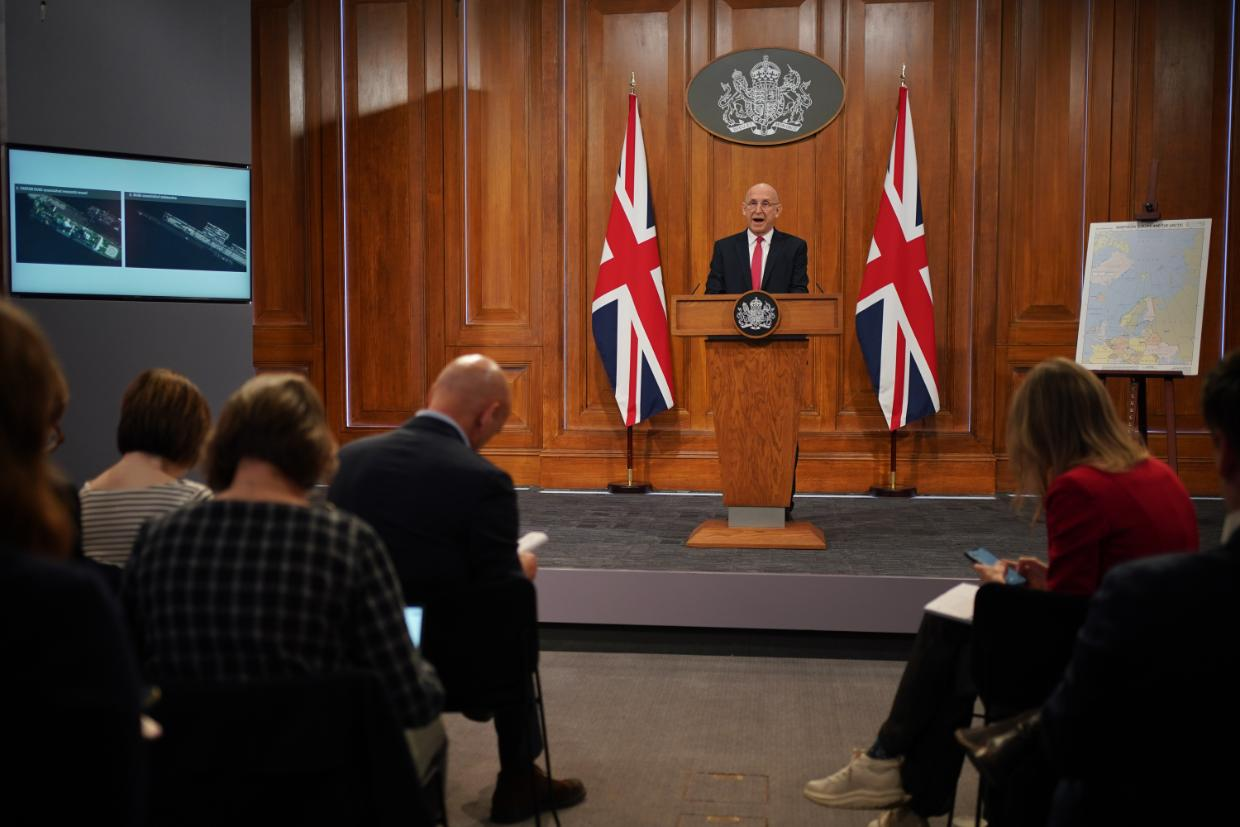
London believes that Vladimir Putin is trying to divert Western attention away from Ukraine toward the Middle East. By ramping up activity in the North Atlantic, Moscow tests the response time of the Royal Navy and allies. Defense Secretary Healey made it clear that the UK will not take its eyes off Russian threats. The link between Moscow and Tehran remains a major concern, specifically regarding drone parts and military cooperation. While the world watches Iran, the security of European pipelines and cables remains a top national priority. Britain has also signaled a tougher stance on Russia’s shadow fleet of oil tankers in the North Sea. These vessels often bypass sanctions and pose environmental risks while funding the ongoing war in Ukraine.
Strategic assets and response measures against Russian maritime activity:
| Asset Type | Function in Operation | Strategic Purpose |
| Royal Navy Frigate | Surface surveillance and sonar tracking | Direct deterrence and physical presence |
| P-8 Poseidon Aircraft | Long-range maritime patrol and sub hunting | Rapid response and aerial monitoring |
| Special Forces | Protection of sensitive undersea nodes | Counter-sabotage and rapid intervention |
| GUGI Vessels | Deep-sea mapping and cable interference | Russian offensive capability |
| Shadow Fleet | Transporting oil in violation of sanctions | Funding the Russian military budget |
The UK military is now prepared to seize ships suspected of being part of this illegal oil trade. Previously, British forces only monitored such vessels alongside French and American partners during their transit through the Channel. This shift toward direct action indicates a new phase in the maritime confrontation between London and Moscow. Healey warned that any attempt to damage infrastructure will result in serious and immediate consequences for Russia. The defense ministry continues to allocate more resources to the protection of the Scottish coastline and northern waters. Intelligence suggests that Russia is further developing its ability to operate at extreme ocean depths where cables are most vulnerable.
Defense Secretary John Healey stated that the UK will not tolerate incursions into its exclusive economic zone. The protection of these subsea assets is essential for the stability of global financial markets and communication. Norway has also increased its naval patrols near gas pipelines that provide energy to much of Europe. Joint exercises between the UK and Nordic countries are becoming more frequent to counter the GUGI threat. This latest month-long standoff is a reminder that the North Atlantic is once again a primary theater of conflict.
Earlier we wrote about when is tax day 2026? Clock ticking on filing deadline for income tax returns