

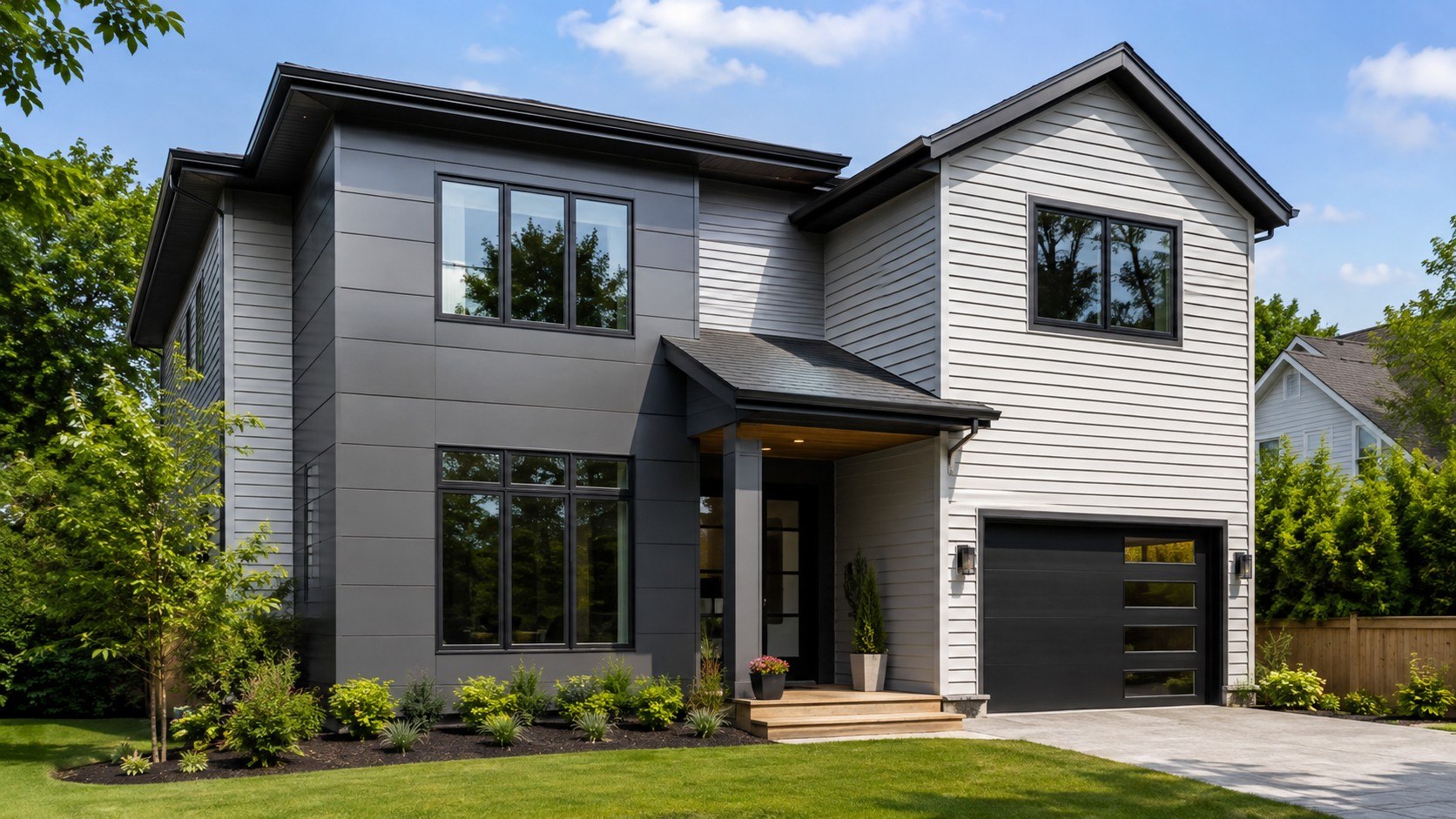
PPF vs vinyl siding cost 2026 usually favors vinyl for a full-house exterior. Polypropylene panels make more sense when durability, texture, or accent areas matter more than the lowest installed price, as noted by Baltimore Chronicle.
There is one naming issue homeowners should know before requesting bids. PPF is not a standard US siding abbreviation. In this guide, it means polypropylene or polymeric facade panels, including shake and stone-look products sold by brands such as Novik.
Key takeaways
- Vinyl remains the safer budget choice for covering large exterior wall areas in 2026.
- Polypropylene panels work well for shakes, stone profiles, gables, foundations, and architectural accents.
- Installation quality can matter more than a small difference in material price.
For most homeowners replacing an entire exterior, vinyl offers the simpler cost structure. Polypropylene becomes more compelling when appearance or impact-resistant molded profiles drive the project.
At a glance
The first comparison should separate basic material price from the finished contract. Trim, demolition, wall repairs, corners, flashing, and labor can move either project well above shelf prices.
| Factor | PPF / polypropylene panels | Vinyl siding |
|---|---|---|
| Typical 2026 material pricing | About $4.75–$7+ per sq ft for some current specialty panels | Varies widely by grade and profile |
| Installed cost benchmark | Panel projects can begin around $7–$11 per sq ft | About $7.32–$12.51 per sq ft nationally |
| Best use | Accents, shakes, stone looks, selected elevations | Whole-house cladding |
| Installation | Interlocking molded panels and dedicated trim | Long lightweight courses with J-channel and trim |
| Maintenance | Low | Low |
| Repair | Individual panel replacement may require matching profiles | Individual courses can often be unlocked and replaced |
| Climate concern | Product rating and fastening system matter | Expansion and contraction require correct fastening |
| Appearance | Strong 3D shake or masonry imitation | Lap, vertical, shake, board-and-batten styles |
These figures should be treated as bidding ranges rather than guaranteed prices. A simple ranch in Ohio may cost much less to side than a 3-story house in Maryland or California. Scaffolding, labor rates, corners, windows, and existing damage change the final number.
Removal is another major variable. Contractors may discover rotten sheathing, failed house wrap, damaged flashing, or insect activity after demolition. Those repairs are separate from the visible siding itself.
Material grade also matters. A basic vinyl panel should not be compared directly with a deeply molded polymer shake panel. The two products solve different design problems.
Homeowners planning larger renovations can also compare exterior costs with Baltimore Chronicle’s guide to building a house in the USA in 2026.
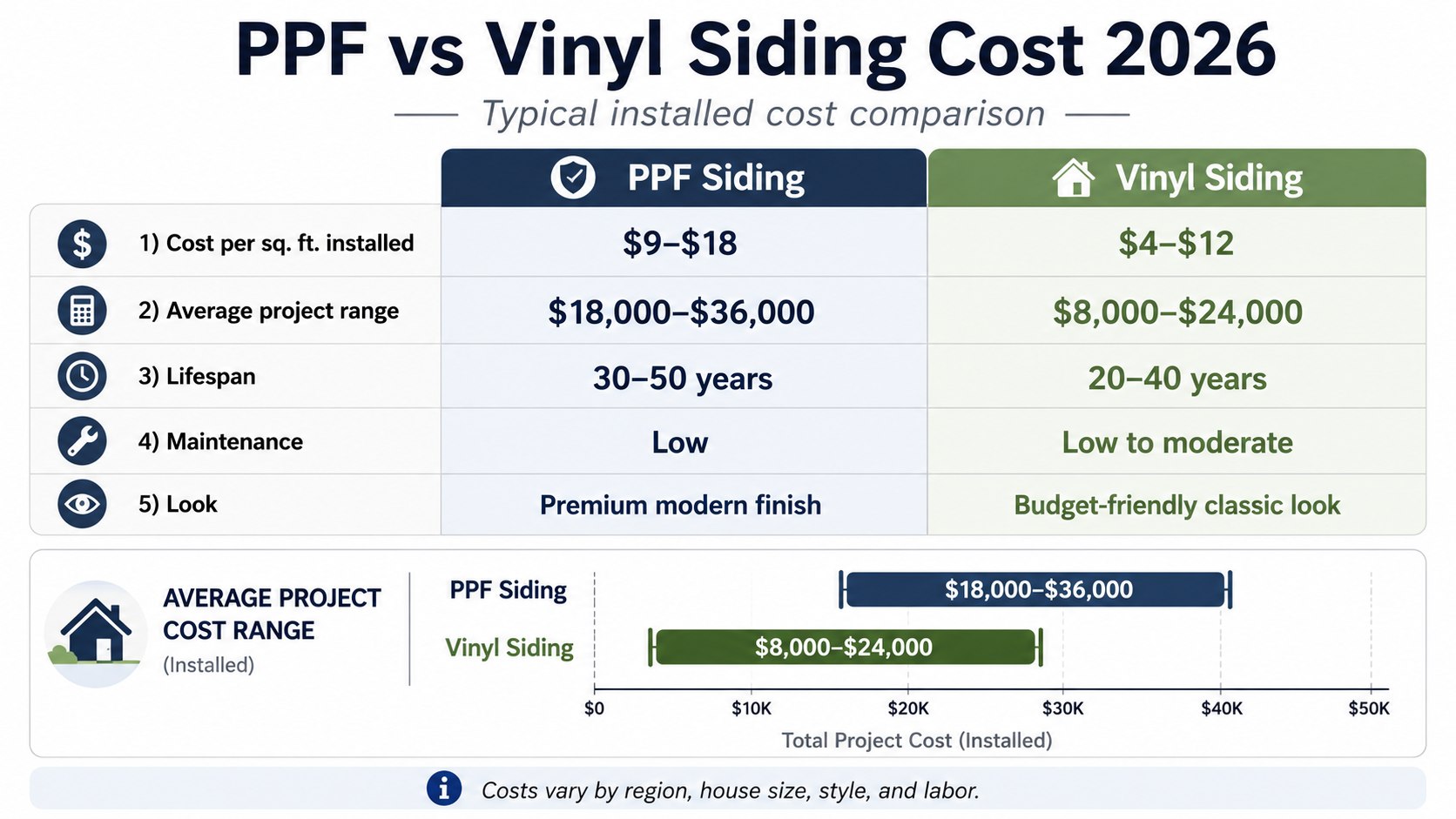
PPF vs vinyl siding cost 2026: what you actually pay for
A siding quote contains more than square footage. Contractors calculate waste, starter strips, corners, channels, flashing, fasteners, trim, staging, disposal, and labor.
Current US retail examples show polypropylene products around $4.75–$7 per sq ft before installation for selected Novik profiles. Decorative stone-style products can cost more than simple shake panels.
Vinyl has a broader market and more pricing tiers. Homewyse’s May 2026 national estimate starts around $7.32–$12.51 per sq ft installed. Premium insulated or specialty vinyl can exceed basic project pricing.
A homeowner should therefore request bids with the same scope. Use this checklist before comparing totals:
- total wall area being covered;
- tear-off and disposal of old siding;
- sheathing or moisture repairs;
- house wrap and flashing work;
- trim around windows and doors;
- corners, soffits, fascia, and starter components;
- labor, permits, and cleanup;
- manufacturer and workmanship warranties.
A cheap quote can omit several of these items. That makes the initial number look attractive but creates change orders later. Ask whether rotten wood repairs are priced per sq ft or hourly.
Also check whether the contractor measured exterior wall area or simply used the home’s floor area. A 2,000-sq-ft house does not automatically have 2,000 sq ft of siding.
Gables, dormers, attached garages, and 2-story walls increase exterior surface. Windows subtract some area but create more trim labor. Complex architecture can therefore cost more despite using fewer panels.
For broader budgeting, Baltimore Chronicle’s guide on finding a trustworthy home builder explains why detailed specifications matter before deposits are paid.
PPF and polypropylene siding: pros, cons, and ideal homeowner
Polypropylene siding panels are molded polymer products rather than conventional horizontal PVC siding. They are commonly used to reproduce cedar shakes, shingles, stacked stone, and similar textured surfaces.
The main advantage is visual depth. Molded panels can create shadows and irregular surfaces that are difficult to reproduce with inexpensive flat siding.
Pros
- low routine maintenance;
- lightweight compared with real masonry;
- realistic molded textures;
- useful for gables and accent walls;
- no periodic painting on many products.
Installation can also be faster than real stone or individual cedar shakes. Panels usually cover several square feet at once and connect through engineered locking systems.
The disadvantage is product dependence. Corners, starter strips, transitions, and replacement panels may need components from the same system. That matters years later if a particular profile changes.
Polypropylene is therefore ideal for homeowners who want a pronounced architectural finish without using real stone or cedar. It is less compelling when the only objective is covering thousands of square feet cheaply.
Vinyl siding: pros, cons, and ideal homeowner
Vinyl siding installation cost remains attractive because the US market is mature. CertainTeed, Georgia-Pacific branded products, Ply Gem, and other manufacturers offer many profiles and price levels.
Vinyl is lightweight and relatively quick for an experienced crew to install. That can reduce labor compared with heavier cladding systems.
Pros
- competitive whole-house pricing;
- large installer network;
- many colors and profiles;
- minimal painting requirements;
- straightforward replacement of damaged sections.
The material has one installation characteristic that cannot be ignored. Vinyl moves as temperatures change.
The Polymeric Exterior Products Association says a 12-foot-6-inch panel can expand or contract by 1/2 inch or more. Its installation guidance calls for loose fastening and expansion clearances. Homeowners can review the official installation guidance.
If installers nail panels tightly, buckling can appear later. Incorrect clearances can also cause distortion near corners, windows, or doors.
A higher-grade vinyl product cannot compensate for fastening errors. The wall system needs space to move through seasonal temperature changes.
Vinyl is ideal for homeowners who need an economical, low-maintenance exterior across a large surface area. It is particularly practical when local contractors regularly work with the chosen brand.
Installation and lifespan: where the real difference appears
Siding lifespan is difficult to reduce to one universal number. Sun exposure, wind, hail, moisture management, wall preparation, product grade, and installation all affect service life.
Vinyl does not normally require repainting. However, impact damage, heat exposure, fading, or badly installed panels can create localized problems before the rest of the exterior needs replacement.
Polypropylene products also avoid the rot associated with natural wood. Their molded construction makes them useful where a homeowner wants texture without maintaining cedar or masonry joints.
Neither product should be expected to fix a wet wall. Contractors must address flashing, penetrations, drainage, and damaged sheathing first.
For comparison, fiber-cement systems occupy another part of the market. James Hardie currently backs its siding substrate with a 30-year non-prorated limited warranty. Its ColorPlus finish has separate coverage. Product details are available through James Hardie’s official support information.
This does not mean every alternative lasts exactly 30 years. A warranty period and a real-world service life are different measurements.
Climate, repairs, and regional differences
State and regional conditions should influence the final choice. A contractor in Florida faces different wind and moisture conditions from one in Minnesota.
Cold climates make correct vinyl clearances especially relevant. PEPA guidance increases certain installation gaps when work occurs below 40°F.
Hot, sunny exposures create another issue. Dark cladding can experience substantial surface heating, while reflected heat from nearby glass can create localized stress. Manufacturer specifications should govern those installations.
Coastal homes need close attention to wind ratings and fasteners. Wildfire-prone areas may require a completely different material discussion because local codes can restrict acceptable exterior assemblies.
Repairs should also influence the purchase. Before choosing a specialty polypropylene design, ask the contractor how replacement pieces would be obtained in 10 years.
Anyone planning new construction rather than re-siding can compare these decisions with Baltimore Chronicle’s custom home versus production home cost comparison.
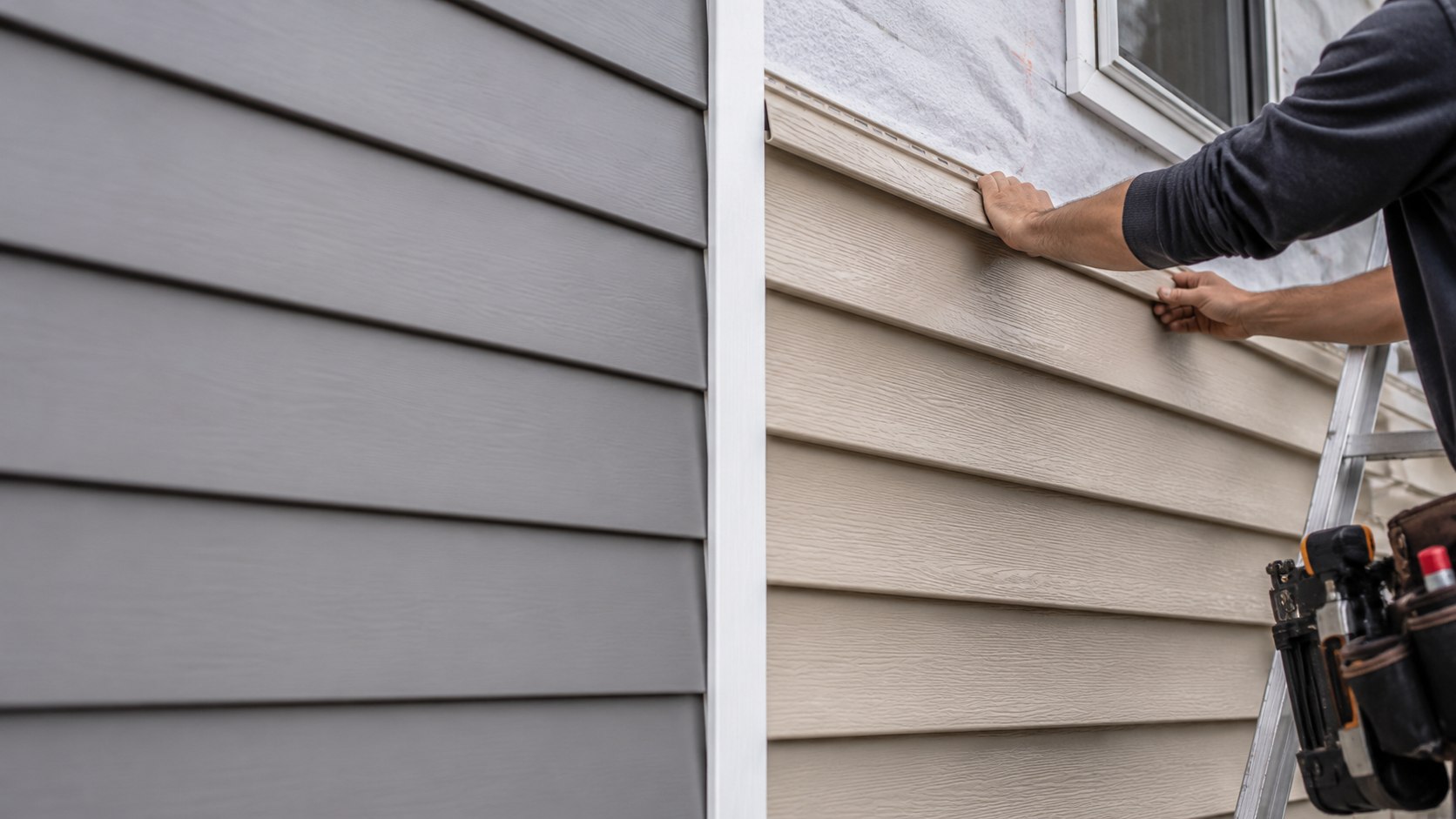
Which should you buy in 2026
The best choice depends on how much wall you need to cover and what appearance you expect. Use these rules before requesting final bids.
- If lowest whole-house cost matters most, then price standard vinyl first.
- If you want strong shake or stone texture, then compare polypropylene panels.
- If only the gables need visual interest, use specialty polymer there and vinyl elsewhere.
- If extreme climate exposure matters, compare manufacturer ratings before comparing colors.
- If replacement availability concerns you, choose an established system with local distribution.
A mixed exterior can be financially sensible. Vinyl can cover broad wall areas while molded polymer panels create a higher-cost accent near an entry, foundation, porch, or gable.
Get at least several itemized local bids before signing. Require the exact manufacturer, product line, square footage, tear-off allowance, wall repairs, and trim specification.
Do not select a contractor solely because one estimate has the lowest per-square-foot figure. An incomplete scope can erase the apparent saving once work begins.
FAQ
What does PPF siding mean?
PPF is not a standardized US siding-industry abbreviation. In this comparison, it refers to polypropylene or polymeric facade panels. Confirm the exact product when requesting a quote.
Is PPF siding cheaper than vinyl in 2026?
Not necessarily. Standard vinyl generally has the advantage for large whole-house projects. Specialty polypropylene shakes and stone-look panels can carry higher material and trim costs.
How much does vinyl siding cost per square foot in 2026?
Homewyse’s May 2026 national benchmark starts around $7.32–$12.51 per sq ft installed. Local bids may fall outside that range because labor and project complexity vary.
Which siding is easier to install?
Conventional vinyl is usually simpler for large continuous walls. Polypropylene systems also install quickly but may require proprietary starter strips, corners, and trim pieces.
Which option lasts longer?
There is no reliable single lifespan for every product in either category. Product grade, UV exposure, impact, moisture control, and correct fastening determine actual service life.
Can vinyl and polypropylene siding be used on the same house?
Yes. Designers often use economical lap siding across broad walls and textured panels on gables, foundations, entries, or other accent areas.
Earlier we wrote about How to Install an Over the Range Microwave in 2026: Venting, Mounting and Cabinet Setup