

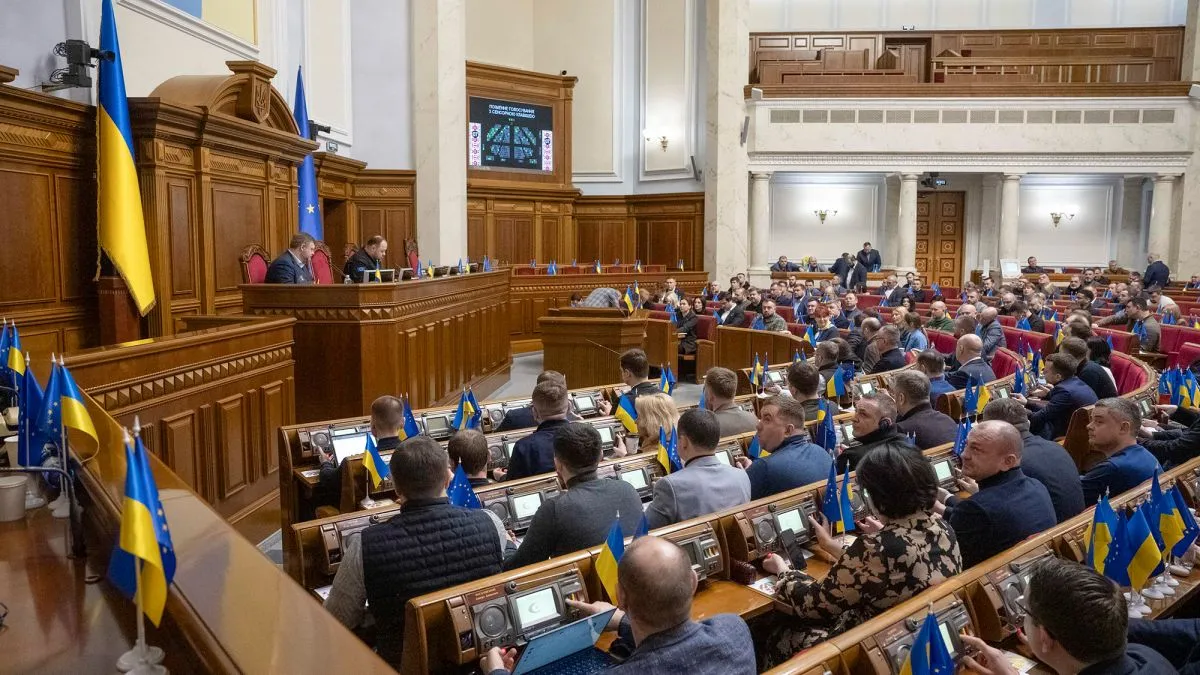
The Verkhovna Rada of Ukraine has approved draft law No. 13533, initiated by President Volodymyr Zelensky, aimed at strengthening the independence of the National Anti-Corruption Bureau of Ukraine (NABU) and the Specialized Anti-Corruption Prosecutor’s Office (SAP). The bill was supported by 331 members of parliament, reports Baltimore Chronicle.
The urgent review of this initiative was prompted by provisions of the new edition of the Criminal Procedural Code, adopted by parliament on July 22, which could undermine the stable functioning of the country’s anti-corruption infrastructure. The law guarantees protection for NABU and SAP from the influence of the aggressor state, ensures the procedural independence of SAP, and introduces new counterintelligence mechanisms.
The document limits interference in the work of NABU detectives. The Prosecutor General will have the right to issue instructions, but only in cases excluding NABU’s internal units. Powers to change or withdraw appeals remain with the leadership of SAP. The law also allows the transfer of cases from the Bureau of Economic Security (BEB) to other investigative bodies if BEB proves ineffective, but NABU’s investigations cannot be transferred except in cases of NABU’s complete incapacity.
The law introduces accountability for the heads of investigative bodies who fail to follow instructions from prosecutors, with the exception of cases handled by NABU detectives, who are accountable solely to SAP prosecutors. Meanwhile, operational units of the SBU, National Police, DBR, BEB, and other law enforcement agencies will act only based on written orders from investigators or prosecutors, while NABU units must act only on instructions from NABU detectives or SAP prosecutors.
SAP prosecutors will have the right to declare cases under NABU’s jurisdiction in instances where the crime has caused or could cause significant harm to human rights or state interests. Additionally, any crimes discovered within NABU (excluding its leadership) will be investigated by NABU detectives themselves.
If there is a dispute over jurisdiction, the decision will be made by a higher-level prosecutor. If the case belongs to NABU, the decision will be made by the Prosecutor General or SAP leader, and if the case pertains to BEB, only the Prosecutor General will decide.
The law also allows entering a person’s home without a court ruling in cases related to rescuing people or immediate pursuit of a suspect. It is specified that the closure of a case involving one person does not halt the investigation in the overall case. The term for pre-trial investigation can be extended to 12 months if authorized by an investigating judge.
Agreements to recognize guilt in NABU cases will be made only with SAP’s approval. A separate procedure is established for proceedings involving high-ranking officials, including the head of NABU and SAP prosecutors. Notifications of suspicion for them must be made solely by the Prosecutor General or SAP leader.
The law guarantees SAP prosecutors’ independence: the Prosecutor General and his deputies will not have the right to intervene in their work. Administrative acts regarding the organization of SAP’s work will be issued only with the SAP leadership’s consent.
A special section of the law requires integrity and loyalty checks for employees of NABU, SAP, BEB, DBR, and the Prosecutor General’s Office. These checks, which involve polygraph testing, will be conducted once every two years, based on methods approved by the SBU. Within six months of the law coming into force, the SBU will conduct a review of all such employees for possible collaboration with the aggressor state.
The law also obliges the Prosecutor General’s Office and the Ministry of Justice to intensify efforts to find and return individuals who are evading justice abroad. If necessary, within three months of the law’s enactment, they must prepare and submit legislative amendments to the Verkhovna Rada to improve extradition cooperation.
The bill also removes several provisions that granted the Prosecutor General excessive powers, such as the right to determine the composition of prosecutor teams, transfer powers to other prosecutors, and establish special procedures for high-ranking officials. This aims to prevent administrative pressure on investigations of corruption at the highest levels and ensures equality before the law.
Earlier we wrote that the Verkhovna Rada will review President’s bill on NABU on July 31.