

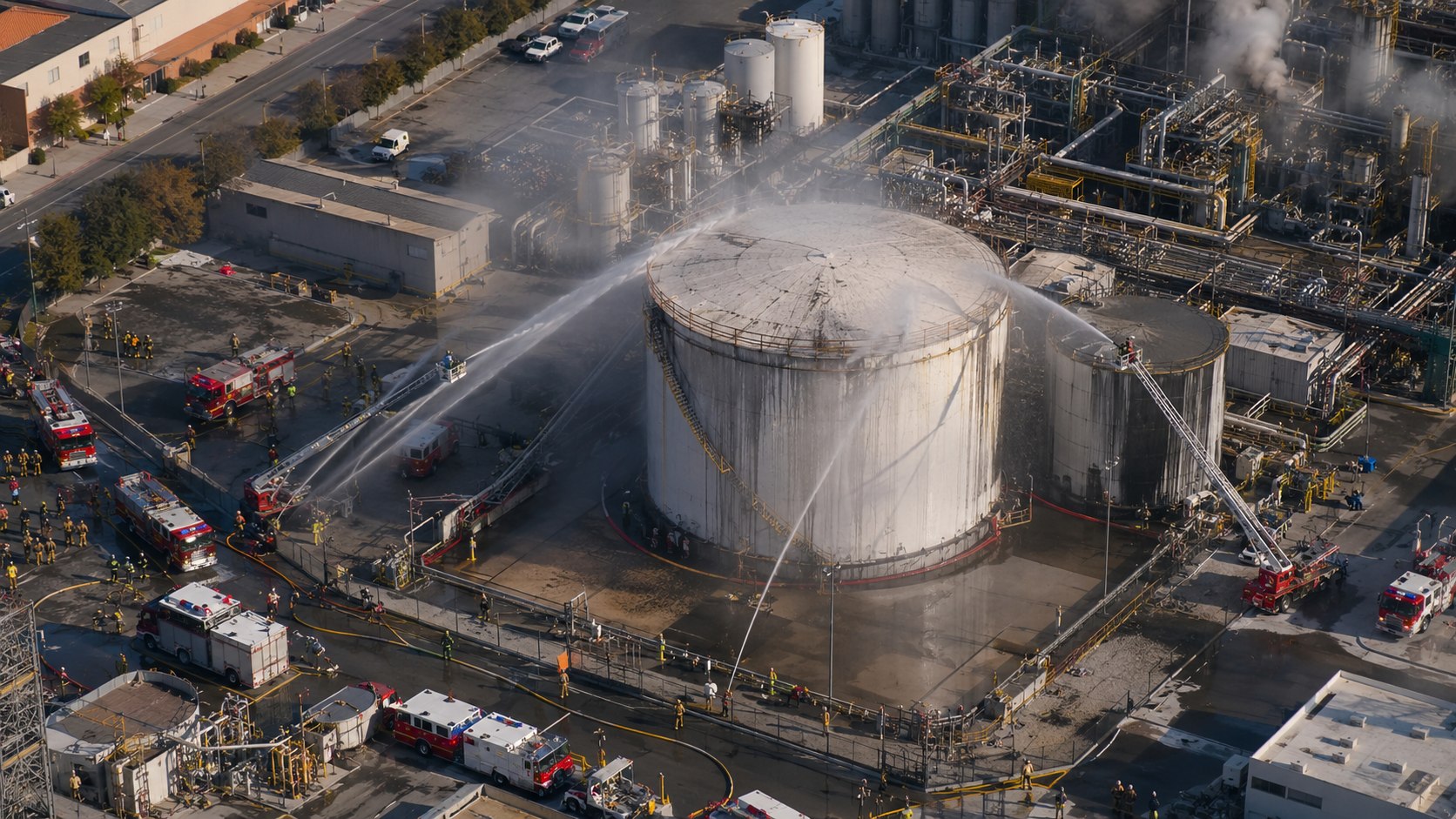
California chemical plant crisis in Garden Grove has forced about 40,000 residents from their homes as firefighters continue cooling a pressurized chemical tank at a GKN Aerospace facility. Crews are spraying water on the tank to slow overheating and reduce the risk of a rupture, toxic vapor release, or explosion. The situation has affected Garden Grove and nearby Orange County communities, with shelters opened for evacuated residents, as noted by Baltimore Chronicle editorial team via NY Times.
What happened at the GKN Aerospace plant
The emergency began after a storage tank containing roughly 6,000 to 7,000 gallons of methyl methacrylate overheated and started venting vapors. The chemical is used in plastics and aerospace manufacturing and is both toxic and flammable. Fire officials said the tank could fail in two dangerous ways: by spilling chemicals or by exploding during a thermal runaway event.
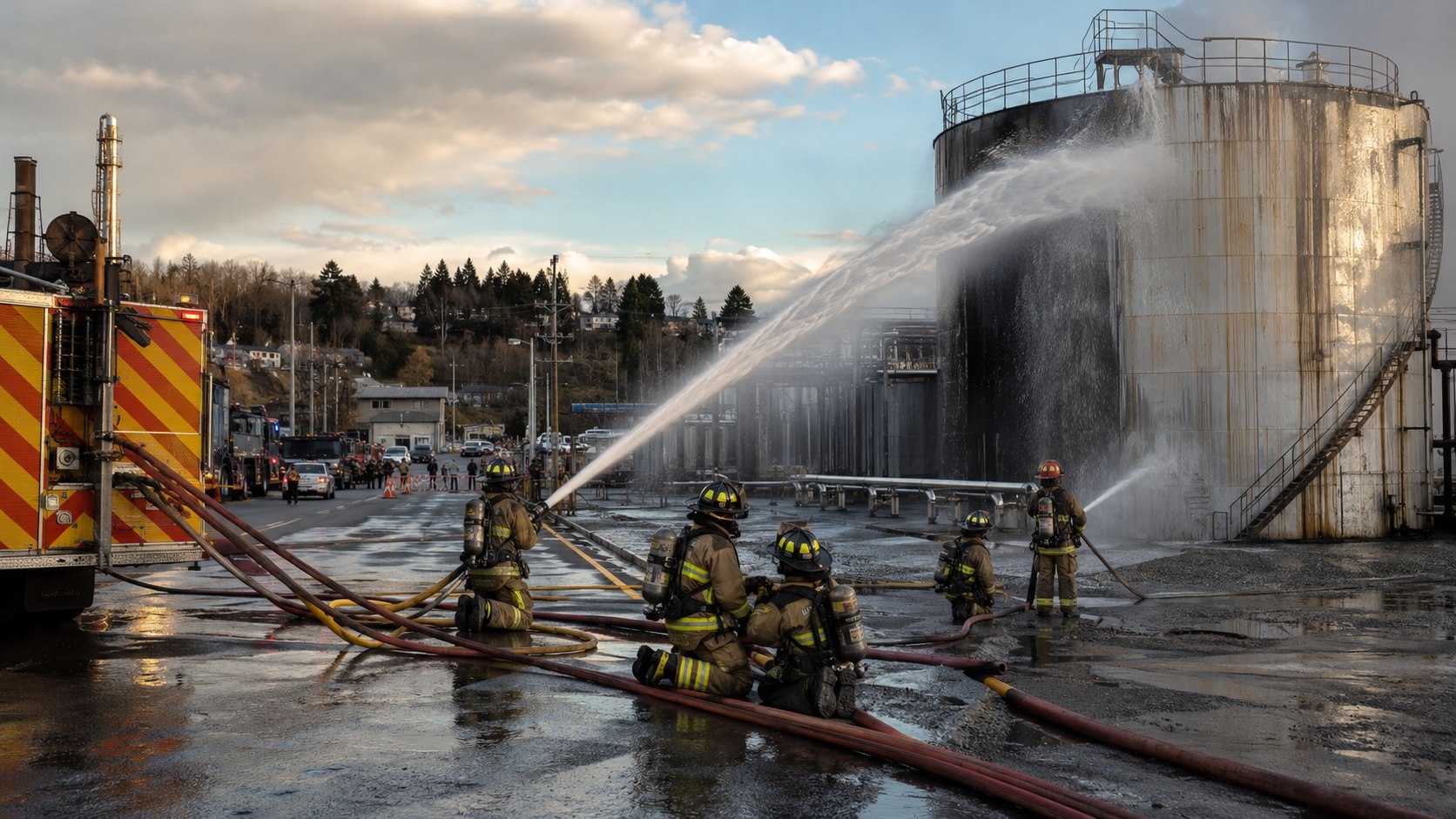
Officials said crews tried to stabilize the tank, but damaged or blocked valves complicated access. That left emergency teams relying on water cooling, drones, remote hoses and containment barriers. The central goal is simple but difficult: keep the tank cool enough to prevent catastrophic pressure failure.
Why residents were evacuated
The evacuation zone was set wide because officials could not predict how far debris, fire or toxic vapors might travel if the tank failed. Orders covered Garden Grove and parts of Cypress, Stanton, Anaheim, Buena Park and Westminster. Authorities also set up shelters, while health officials warned that exposure could irritate the eyes, skin and respiratory system.
Residents were advised to follow official instructions, avoid closed areas and not return home until evacuation orders are lifted. Some people reportedly refused to leave, but officials stressed that the risk remained active. Methyl methacrylate exposure can become especially dangerous if vapors spread after a sudden release.
Key facts residents should know
Before returning home, residents should wait for official clearance. The incident is still being managed as a hazardous materials emergency, not a routine industrial leak.
| Issue | Current status |
|---|---|
| Location | GKN Aerospace facility, Garden Grove |
| Chemical | Methyl methacrylate |
| Estimated volume | 6,000–7,000 gallons |
| Main risk | Spill, toxic vapor release or explosion |
| Evacuations | About 40,000 residents |
Emergency crews also built sandbag barriers to limit possible chemical runoff into storm drains and waterways. That measure matters because a spill could create environmental concerns beyond the immediate fire risk. Officials have not reported a final resolution yet.
Residents should focus on the following steps:
- Follow evacuation orders from local authorities.
- Stay away from the plant area and blocked roads.
- Watch for official shelter and reopening updates.
- Seek medical help if exposed to strong fumes.
- Do not rely on unofficial social media claims.
These steps may sound basic, but they reduce confusion during a fast-moving chemical emergency. The biggest danger now is premature return, especially if the tank fails suddenly.
What happens next
Firefighters are expected to keep cooling the tank while experts look for a safe way to stop the reaction or relieve pressure. The best-case scenario is controlled stabilization without a major spill. The worst-case scenario remains a rupture with fire, debris and toxic vapor. For now, Orange County evacuations remain the clearest sign that officials are treating the threat as serious.
Earlier we wrote that Harford County data center ban advances as leaders weigh permanent prohibition