


Peel and stick wallpaper pros and cons 2026 come down to one practical verdict: most renters should choose peel-and-stick for accent walls. Traditional wallpaper is better for long-term durability, while paint remains safer for rough or questionable surfaces, as noted by Baltimore Chronicle.
The deciding factor is not the pattern. It is the wall underneath. Smooth, fully cured paint gives removable wallpaper its best chance of working cleanly. Textured walls, weak paint, humidity, or rushed removal can turn a renter-friendly project into a security-deposit problem.
Key takeaways
- Peel-and-stick works best on smooth, clean, cured paint and is poorly suited to damaged or heavily textured walls.
- Expect roughly $1–$4 or more per sq ft for material in 2026, depending on brand, finish, and pattern.
- Renters should test a sample, photograph the wall before installation, and confirm lease rules before covering a large area.
For renters, a small test patch is more valuable than a manufacturer’s broad “removable” claim. Adhesive interacts with the existing paint, primer, wall texture, temperature, and previous repairs. A product that removes cleanly from one apartment may pull weak paint from another. Newly painted walls also need curing time before installation. RoomMates and Tempaper recommend waiting before applying removable wallpaper over fresh paint.
- A removable product is only as renter-friendly as the painted surface supporting it. *
At a glance
Peel-and-stick is best understood beside the 2 alternatives renters usually consider: pasted wallpaper and paint. The differences become significant when the move-out date is already visible on the calendar.
| Factor | Peel-and-stick wallpaper | Traditional wallpaper | Paint |
|---|---|---|---|
| Typical 2026 material cost | About $1–$4+ per sq ft | About $1–$8+ per sq ft | Usually lowest for basic DIY walls |
| DIY installation | Easiest on smooth walls | More demanding | Usually straightforward |
| Separate adhesive | No | Usually yes | No |
| Removal | Designed to peel away | Can require soaking or stripping | Requires repainting to change |
| Expected durability | Best for temporary to medium-term use | Better for long installations | Depends heavily on paint quality |
| Textured walls | Often poor | Possible with correct preparation | Usually more forgiving |
| Repairs | Replace a damaged strip when material remains | Patch matching can be difficult | Touch-up may be simple |
| Best renter use | Accent wall or temporary room change | Usually unsuitable without permission | Good when landlord allows repainting |
The convenience gap is largest during installation. Peel-and-stick eliminates paste and booking time, but alignment still matters. Large patterns can waste material because adjoining strips must match. Traditional wallpaper demands more preparation yet generally feels more permanent once installed. Paint remains the simplest fallback for walls with difficult corners or inconsistent texture.
Price also changes with scale. Tempaper lists removable designs at different price points depending on size, finish, and collection. Premium or designer patterns can cost considerably more than basic removable wallpaper. Buyers should compare the roll dimensions rather than judging value only by the sticker price.
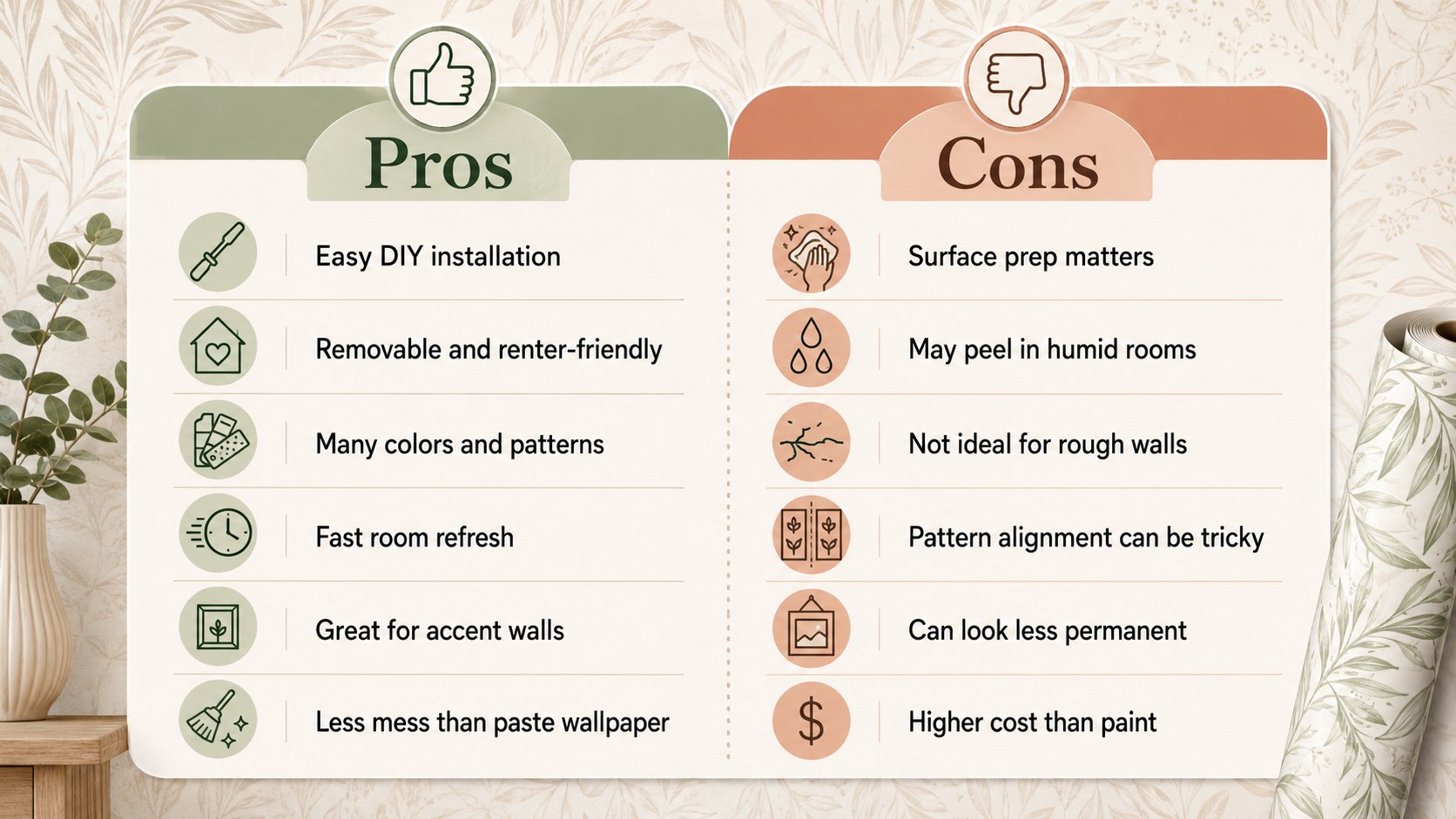
Peel and stick wallpaper pros and cons 2026
The strongest case for removable wallpaper for renters is control. A tenant can change one bedroom wall without paste, professional equipment, or several coats of new paint. Panels can also be repositioned during installation when the manufacturer permits it.
The weaknesses appear at the edges. Heat, steam, wall texture, dust, incompatible paint, and repeated repositioning can reduce adhesion. Corners behind radiators or beside sunny windows deserve closer attention than a cool interior wall.
Pros
- No separate wallpaper paste is required.
- Installation can usually be handled by 1 or 2 people.
- Patterns create more visual change than a single paint color.
- Individual strips can sometimes be replaced after localized damage.
- Removal is generally faster than stripping conventional wallpaper.
- It works well for accent walls, closets, shelves, and selected furniture surfaces.
These advantages make temporary wallpaper useful for apartments with predictable move-out dates. It also reduces commitment for children’s rooms, home offices, and guest bedrooms. Renters can coordinate patterns with furniture without rebuilding the room.
The material also allows experimentation before choosing permanent wallpaper. Removing one accent wall is usually easier than reversing a full-room pasted installation.
Cons
- Textured surfaces can prevent reliable adhesion.
- Weak paint may lift during removal.
- Pattern matching increases waste and installation time.
- Cheap material can stretch, wrinkle, or show seams.
- Steam and temperature changes can challenge edges.
- A lease may still classify wallpaper as an unauthorized alteration.
The last point matters more than packaging language. A landlord does not have to treat every product marketed as removable as automatically permitted. Lease wording controls alterations, painting, wall coverings, and restoration duties.
Renters in Maryland, New York, California, Texas, and other states can face different legal frameworks. The lease should be checked for clauses dealing with decoration, wall coverings, repainting, and restoration.
“Peel and stick wallpaper is not recommended for textured walls.”
Tempaper, official product guidance concerning recommended wall surfaces.
Peel-and-stick wallpaper for renters
A renter should treat renter-friendly wallpaper as a reversible installation project, not a decorative sticker. Start with a hidden test area measuring several inches across. Leave the sample in place long enough to experience ordinary heating, cooling, and humidity conditions.
Before covering a wall, photograph its existing condition. Record chips, nail holes, discoloration, and previous repairs. That evidence can separate pre-existing damage from later removal problems.
Read the lease for terms such as “alterations,” “wall coverings,” “decorating,” and “restoration.” Written permission is preferable when the wording is unclear. A removable adhesive does not override a lease prohibition.
Preparation deserves the same attention as removal. Sanding dust, weak patches, grease, and poor surface preparation can undermine any wall covering.
For a 12-month lease, one tested accent wall is usually a lower-risk project than wrapping an entire apartment.
Durability depends on the wall more than the label
Peel and stick wallpaper durability cannot be reduced to one lifespan number. Manufacturers design these materials for removable use, but actual performance depends on surface condition and the room. A smooth bedroom wall can behave very differently from a steamy bathroom.
Tempaper recommends smooth surfaces in good condition and gives specific guidance for compatible painted walls. Newly painted surfaces also need enough time to cure before wallpaper is installed.
RoomMates similarly recommends smooth, clean, dry painted surfaces for peel-and-stick products. Textured walls may reduce adhesion, and removal should be slow and controlled rather than aggressive.
“Please allow newly painted surfaces to fully cure for a minimum of 4 weeks.”
RoomMates Decor, official peel-and-stick wallpaper guidance for newly painted walls.
Humidity also matters. Bathrooms, kitchens, laundry rooms, and exterior-facing walls can expose adhesive to more heat and moisture. A product suitable for a dry bedroom may perform differently near a shower or stove.
Traditional wallpaper for long-term rooms
Traditional paper remains the stronger option when permanence matters more than easy removal. Properly prepared walls and suitable adhesive can create a finish intended to stay in place for years. It also offers materials and textures that removable vinyl cannot fully reproduce.
The tradeoff is labor. Wallpaper paste, precise plumb lines, trimming, seam control, and future stripping make the project less forgiving. Professional installation may become reasonable when material costs are high.
For homeowners renovating a dining room, primary bedroom, or formal living area, conventional wallpaper can justify the extra work. Renters should usually avoid it unless the landlord has specifically approved the installation.
Paint remains the lowest-risk alternative
Paint wins when the wall is rough, patched, or incompatible with self-adhesive wallpaper. It also makes localized repair easier when the original paint color remains available.
For renters, permission still matters. Some leases require restoration to the original color before moving out. Dark colors can also require primer and several coats before a wall returns to white, cream, or beige.
Paint lacks the depth of a botanical, geometric, or faux-grasscloth pattern. It compensates with easier corners, simpler touch-ups, and fewer adhesive-related uncertainties, as was written by spowo.ch.
How to reduce damage before installation
A successful removable wall covering project begins before the backing paper comes off. The following checklist addresses the failure points most likely to matter at move-out.
- Read the lease and obtain written approval when alteration rules are unclear.
- Confirm that paint has cured for at least the manufacturer’s required period.
- Check for loose paint, moisture damage, texture, dust, and fresh drywall repairs.
- Order a sample and test it in an inconspicuous location first.
- Measure wall height and pattern repeat before calculating roll quantities.
- Buy enough material from the same production lot when the brand uses lot numbers.
- Keep leftover material for future repairs.
- Remove panels slowly, following the manufacturer’s direction.
Do not install wallpaper over active water damage. Adhesive can hide staining without solving the moisture source. Avoid placing a large order before testing the actual wall.
Keep photographs of the original surface and installed test patch. Save the product instructions until move-out. Store an unused strip for repairs near switches or furniture.
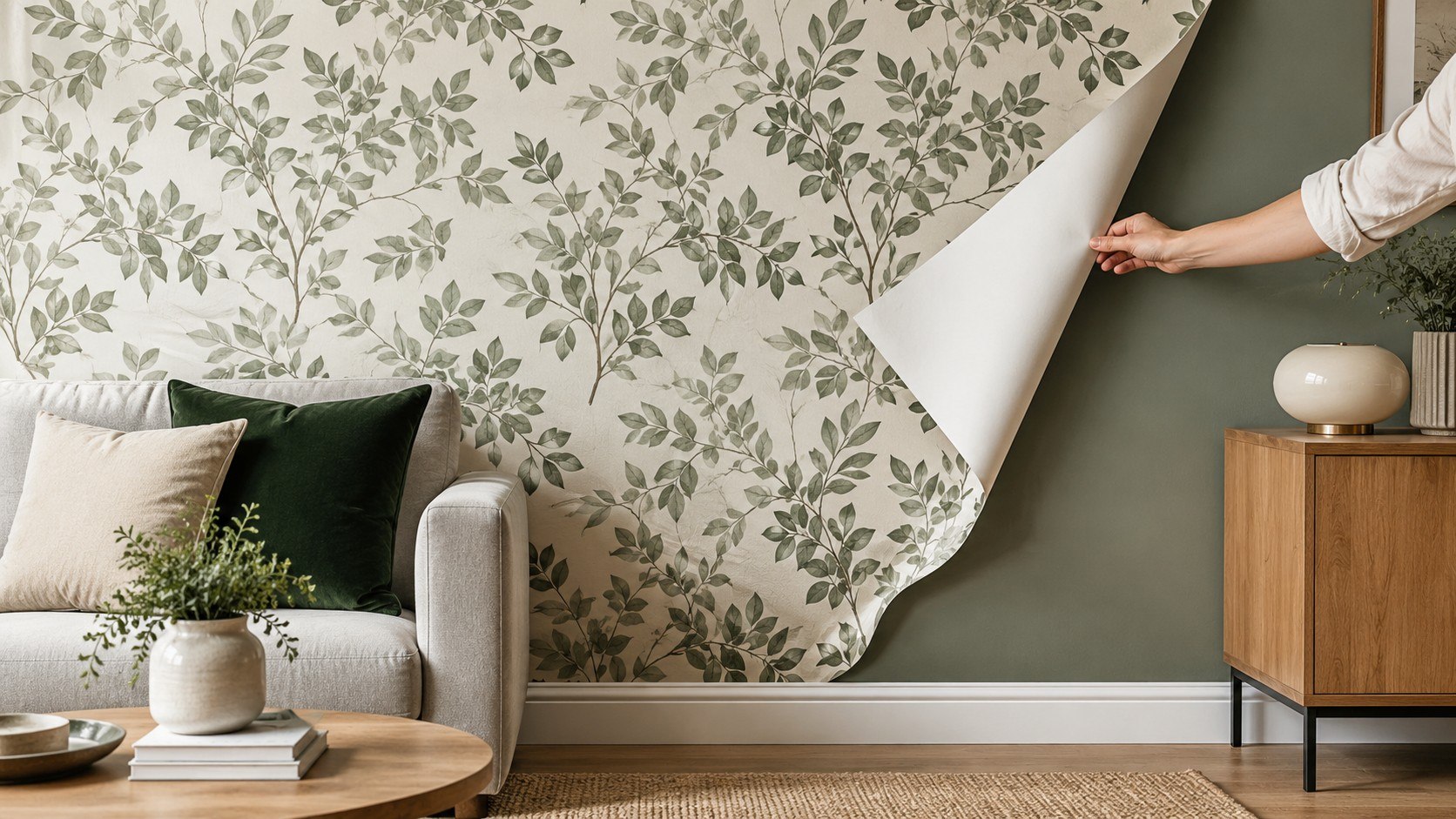
If removal starts lifting paint, stop immediately. A small damaged area can become a wall-wide repair when wallpaper is pulled too quickly.
Which should you buy in 2026
The correct choice depends on tenancy length, wall condition, and how much restoration work is acceptable.
- If you rent and have smooth cured walls, choose peel-and-stick and test one sample first.
- If you own and want a finish for many years, consider traditional wallpaper.
- If the wall has substantial texture, paint is usually the safer option.
- If the lease prohibits wall coverings, avoid wallpaper regardless of its removable marketing.
- If the room has humidity, use only products approved for that environment.
For most US renters in 2026, peel-and-stick wins because it balances design freedom with comparatively simple removal. It is strongest on one focal wall rather than every vertical surface.
Homeowners planning a permanent room should compare its convenience against conventional wallpaper’s longer-term finish. Paint remains preferable when the substrate is doubtful. The cheapest roll is not automatically the cheapest project if it damages existing paint.
FAQ
Does peel-and-stick wallpaper damage rental walls?
It can damage weak, uncured, or poorly bonded paint. Smooth, stable surfaces are safer, but a hidden test patch remains necessary before covering a full wall.
How long should new paint cure before peel-and-stick wallpaper?
Some major manufacturers recommend waiting at least 4 weeks after painting. Follow the instructions for the exact product because coatings and adhesives differ.
Is peel-and-stick wallpaper good for textured walls?
Usually not. Major manufacturers commonly recommend smooth surfaces because texture reduces adhesive contact and can create bubbles, lifting edges, or poor seams.
How much does peel-and-stick wallpaper cost in 2026?
A practical US material range is roughly $1–$4 or more per sq ft. Premium designer products can exceed that range, especially when sold in smaller rolls or specialty finishes.
Is peel-and-stick wallpaper better than traditional wallpaper?
It is better for temporary decorating, renters, and easier DIY removal. Traditional wallpaper is usually the stronger choice when the installation should remain for many years.
Should renters ask permission before installing removable wallpaper?
Yes, when the lease restricts alterations or wall coverings. “Removable” describes the product, not the tenant’s contractual rights.
Earlier we wrote about Best Shipping Service in 2026: When USPS Beats UPS and When FedEx Makes More Sense