

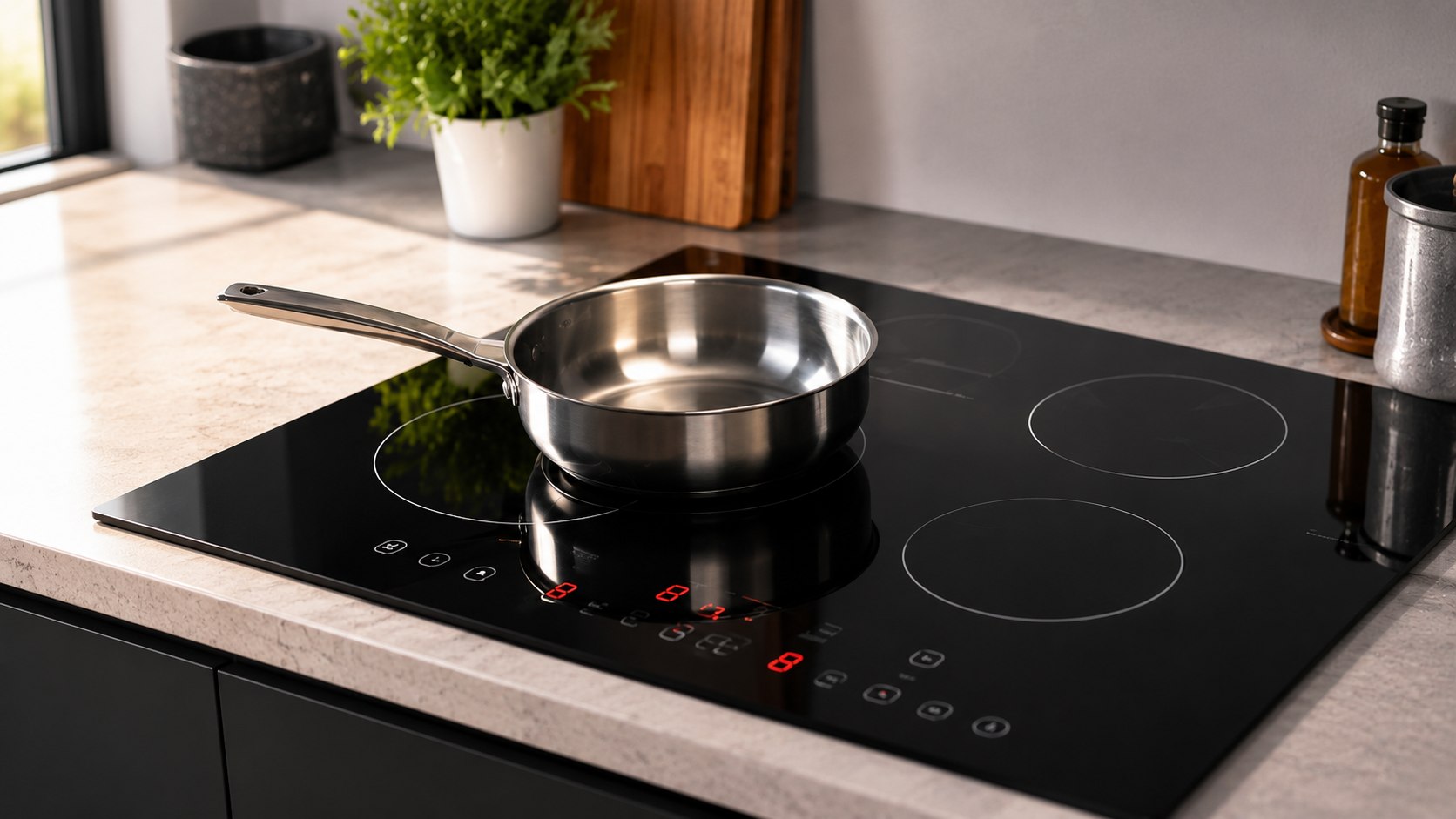
Gas vs induction vs electric stove 2026 comes down to 3 practical questions: how quickly you cook, what installation your kitchen supports, and how much you can spend. Most buyers should choose induction for speed and control, but conventional electric remains better for tight budgets. Gas still suits cooks who value visible flames and already have a safe connection, as the Baltimore Chronicle editorial team notes.
A standard electric range usually creates the lowest replacement bill. Induction provides the strongest overall performance but may require new cookware or electrical work. Switching to gas can become the most expensive option when the home lacks a gas line and exterior ventilation.
Induction is the strongest all-around choice for an owner upgrading a compatible kitchen. Electric resistance offers the simplest low-cost replacement, while gas makes sense mainly where the infrastructure already exists.
Key takeaways
- Choose induction for fast boiling, precise control, cooler kitchens, easier cleaning, and strong performance during daily family cooking.
- Choose conventional electric when purchase price matters most and your kitchen already has a suitable 240-volt circuit.
- Keep gas when you prefer flame cooking, have proper ventilation, and can avoid expensive fuel-line modifications.
Do not compare only the advertised appliance prices. Delivery, removal, permits, wiring, ventilation, cookware, and cabinet work can change the final bill. Older homes in Maryland, Pennsylvania, New York, and Massachusetts often need closer electrical inspection.
The cheapest stove on the sales floor can become the most expensive choice after installation problems appear.
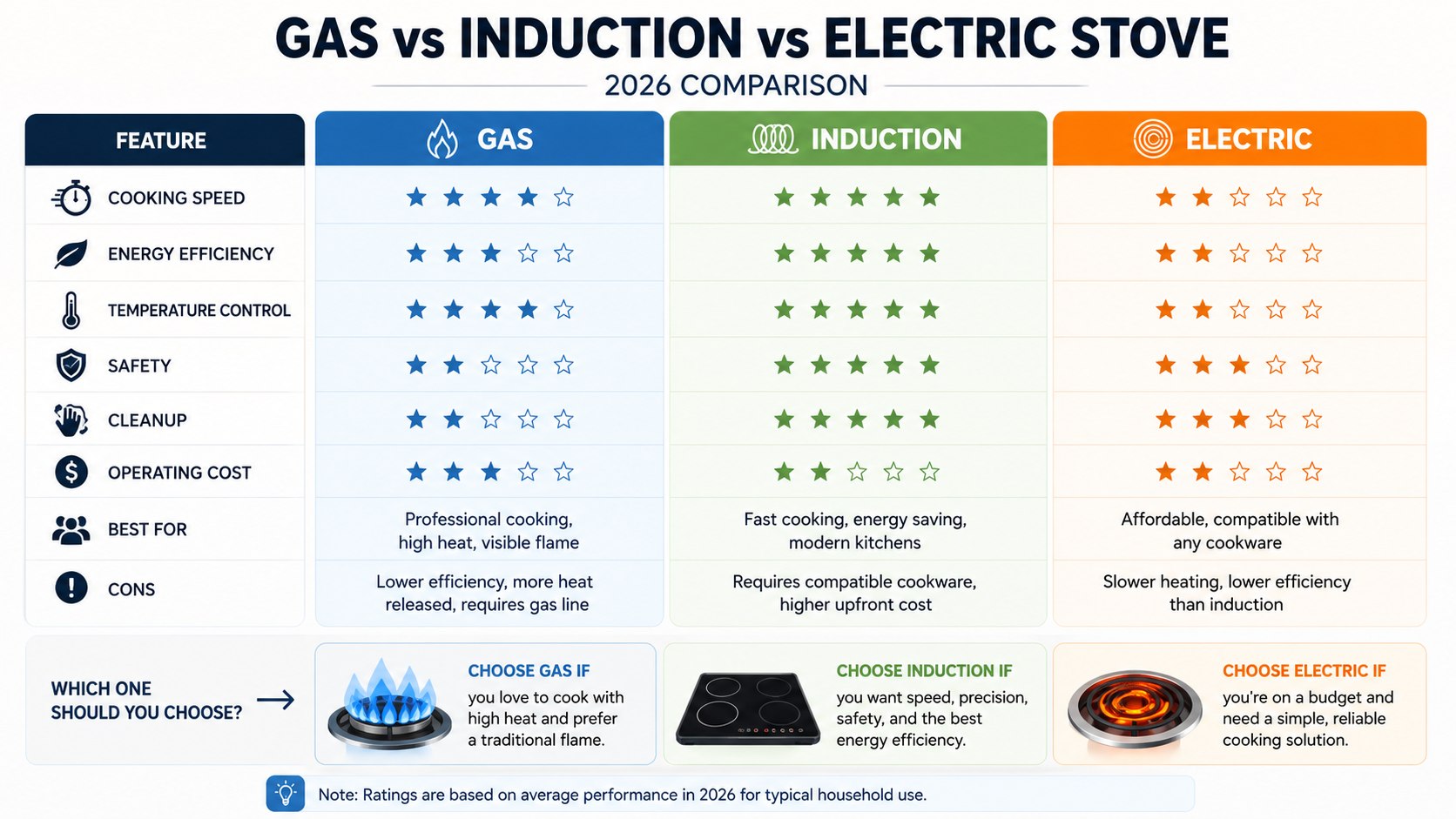
At a glance: gas vs induction vs electric stove 2026
The following comparison covers standard 30-inch freestanding or slide-in ranges. Retail prices vary by finish, oven capacity, promotions, and smart features. Premium models from Bosch, Café, Fisher & Paykel, and Miele can cost far more.
| Factor | Gas | Induction | Electric resistance |
|---|---|---|---|
| Typical 2026 appliance price | $650–$2,500 | $1,100–$3,500 | $500–$1,800 |
| Cooking speed | Fast response | Fastest overall | Slowest response |
| Heat control | Immediate flame adjustment | Precise digital adjustment | Noticeable heating lag |
| Basic installation | Gas line and outlet | Usually 240-volt circuit | Usually 240-volt circuit |
| Possible conversion cost | $500–$3,000 or more | $300–$2,500 or more | $250–$1,500 or more |
| Cookware requirement | Nearly any cookware | Magnetic cookware | Nearly any cookware |
| Kitchen heat | Highest | Lowest | Moderate |
| Cleaning | Grates require more work | Smooth and relatively easy | Smooth-top models are easy |
| Expected service life | About 10–15 years | About 10–15 years | About 10–15 years |
| Best fit | Existing gas kitchens | Performance-focused upgrades | Budget replacements |
These prices are broad national ranges as of 2026, not fixed quotes. A basic GE or Frigidaire electric range can sell below $900 during promotions. Entry-level induction models from Frigidaire, Samsung, LG, and GE increasingly appear between $1,100 and $1,700.
Installation is usually inexpensive when the new appliance matches the old fuel source. Costs rise when an electrician must replace a panel, extend wiring, or install a 40-amp or 50-amp circuit. Gas conversions may require a licensed plumber, pressure testing, permits, and a new exhaust route.
Before ordering, measure the width, depth, height, doorway, and counter clearance. A related 2026 kitchen remodeling cost guide explains how appliance changes affect the larger renovation budget.
Gas stoves: familiar control with installation complications
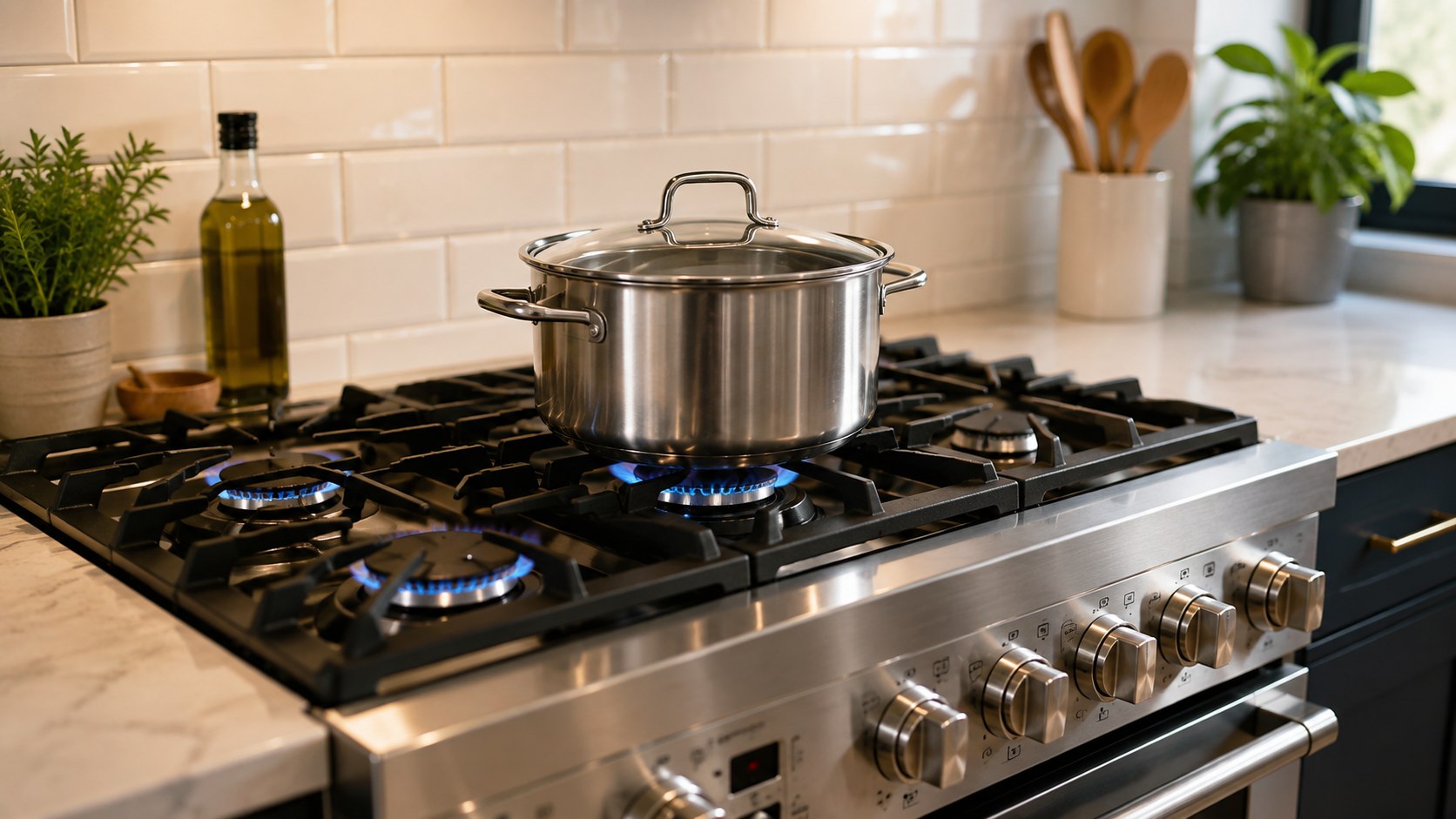
A gas burner responds immediately when the flame changes. That direct feedback remains useful for charring vegetables, heating rounded cookware, and adjusting sauces by sight. Gas also accepts cast iron, stainless steel, aluminum, copper, and most other cookware.
Brands including GE, Whirlpool, Frigidaire, LG, Samsung, KitchenAid, and Thor Kitchen offer many 30-inch gas ranges. Basic freestanding models usually start near $650. Slide-in designs with convection, air frying, and stronger burners often reach $1,500 to $2,500.
Advantages of gas
- Immediate visual confirmation of the heat level.
- Wide compatibility with existing pots and pans.
- Strong performance for wok cooking and flame charring.
- No costly fuel conversion when a safe gas connection already exists.
- Burners may sometimes be lit manually during outages, where manufacturers permit it.
Gas also has clear disadvantages. Grates, burner caps, and recessed surfaces take longer to clean. Open flames create more ambient heat, which can make kitchens uncomfortable in Arizona, Texas, Florida, and other hot regions.
Combustion produces pollutants, so ventilation deserves serious attention. The US Environmental Protection Agency recommends using an outdoor-venting range hood and improving ventilation while cooking.
Recirculating hoods can capture some grease, but they do not discharge combustion gases outside. Owners should also maintain carbon monoxide alarms and arrange qualified service when ignition becomes delayed or irregular.
Who should buy gas?
Gas suits an experienced cook whose kitchen already has a compliant line and effective exterior exhaust. It can also suit homes where electricity is expensive and natural gas remains relatively affordable.
Renters should not alter a fuel connection without written landlord approval. Homeowners should request itemized estimates before abandoning an existing electric setup. The cost of trenching, piping, permits, and wall repairs can erase any appliance discount.
Induction stoves: fastest cooking and the highest upfront hurdle
Induction cooking uses electromagnetic energy to heat compatible cookware directly. The glass surface becomes warm mainly through contact with the pan. This process delivers quick response without an exposed flame or glowing resistance element.
ENERGY STAR reports that induction transfers about 85% of heating energy into cookware. It can also boil water in nearly half the time required by many gas or conventional electric products. Actual results depend on burner power, pan size, and food volume.
In everyday use, induction feels closer to gas than to a traditional glass-top stove. Power changes occur quickly, and low settings can hold delicate sauces steadily. The surrounding kitchen also receives less waste heat.
Advantages of induction
- Very fast heating and boiling.
- Precise adjustment across a broad temperature range.
- Lower surface temperatures than conventional electric cooking.
- Flat glass that can be wiped without removing burner parts.
- No combustion pollutants created by the appliance.
- Automatic pan detection on most current models.
The main barrier is the complete installed cost. Many full-size induction ranges require a dedicated 240-volt circuit. An older 100-amp electrical panel may lack capacity for a new range, heat pump, dryer, and electric vehicle charger.
An electrician should calculate the service load rather than guess from unused breaker spaces. A panel replacement can push an otherwise simple stove project into several thousand dollars. Owners planning cabinets should review the kitchen cabinet installation guide before finalizing appliance clearances.
Cookware creates another possible expense. Cast iron and many stainless-steel pans work, while aluminum, glass, and copper usually need a magnetic base. Place a refrigerator magnet against the bottom; a strong hold generally signals compatibility.
Induction delivers its best value when the electrical circuit and most cookware are already suitable.
Who should buy induction?
Induction is ideal for families who cook frequently and value speed, safety, and simple cleanup. It also fits open-plan homes where excess heat and flame are undesirable.
Parents may appreciate pan detection and control locks, although the glass can remain hot after cooking. Buyers should test touch controls in person. Some interfaces become frustrating with wet fingers, spills, or heavy oven mitts.
Electric stoves: the practical budget replacement
Conventional electric ranges use exposed coils or radiant elements beneath ceramic glass. They cost less than induction and usually fit kitchens already wired for an electric range. This makes them the simplest option after an older electric appliance fails.
In 2026, entry models from Amana, Hotpoint, Frigidaire, and GE often fall between $500 and $900. Better Whirlpool, LG, Samsung, and GE models with convection or air-fry settings commonly cost $900 to $1,800.
Advantages of conventional electric
- Lowest average purchase price among the 3 technologies.
- Broad availability from national and local appliance dealers.
- No specialized magnetic cookware requirement.
- Straightforward replacement when a working 240-volt connection exists.
- Smooth-top models provide a clean, simple appearance.
The trade-off is slower response. A radiant element continues releasing heat after its setting changes. That delay can scorch milk, overcook sauces, or complicate rapid temperature changes.
Coil models are inexpensive and relatively repairable, but spills can reach drip pans. Glass-top models look cleaner, yet burned sugar and melted plastic require immediate attention. Rough cast-iron cookware may also mark the surface when dragged.
Who should buy conventional electric?
Electric resistance ranges make sense for landlords, renters replacing an approved appliance, and homeowners controlling upfront costs. They also work well for people who bake more often than they cook on the stovetop.
A midrange electric model can provide convection, temperature probes, and flexible elements without induction pricing. Buyers should focus on usable controls and repair access rather than decorative Wi-Fi features.
Installation costs to check before ordering
Confirm the existing utility connections before choosing a model. Photographs of the receptacle or gas valve are not always enough. A qualified contractor should inspect damaged wiring, questionable fittings, or outdated panels.
- Measure the opening at the front, middle, and back.
- Confirm whether the range requires 120 or 240 volts.
- Check the required breaker size in the installation manual.
- Ask whether the power cord is included or sold separately.
- Verify gas type, connector size, shutoff access, and local permit rules.
- Confirm whether the hood vents outdoors.
- Price delivery, old-appliance removal, and floor protection.
- Check cookware with a magnet before choosing induction.
Standard delivery often includes placement but not major electrical or gas work. Some retailers connect only appliances using code-compliant existing utilities. They may refuse installation when a valve is corroded or a receptacle is damaged.
A basic same-fuel replacement may add $150 to $400 beyond the appliance. New circuits, gas lines, panel upgrades, ducts, or cabinet alterations can add hundreds or thousands. Local labor costs are often higher in California, New York, Massachusetts, and Washington.
Older Baltimore rowhouses can present narrow doors, uneven floors, limited panel capacity, and difficult vent routes. Measure the complete delivery path before purchasing. The Baltimore Chronicle guide to choosing reliable appliance brands also explains why local service coverage matters.
After installation, keep the invoice, model number, serial number, manual, and warranty details together. Registering the appliance can simplify safety notices and warranty claims.
Which should you buy in 2026?
Use the following decision path to reduce the choice to practical constraints:
- If speed, control, and cleanup matter most, then buy induction.
- If your budget is below about $1,000, then choose conventional electric.
- If a gas line and exterior hood already exist, then keeping gas can limit installation costs.
- If your electrical panel lacks capacity, then price the upgrade before ordering induction.
- If you rent, then replace only with the landlord-approved fuel type and installation method.
For most owner-occupied homes, an induction range in 2026 provides the best balance of speed, control, and reduced kitchen heat. The recommendation weakens when electrical upgrades are expensive or the household rarely cooks.
Conventional electric is the rational choice when affordability and installation simplicity dominate. A reliable $700 model can serve a household better than a $2,500 induction range burdened by unwanted controls.
Gas remains defensible in a properly ventilated kitchen with existing infrastructure. Installing a new gas line solely for a stove is harder to justify. The project becomes slower, more disruptive, and more dependent on local codes.
FAQ
Is induction cheaper to run than gas?
Not always. Induction uses energy efficiently, but operating cost depends on local electricity and gas rates. Compare current utility prices and expected cooking frequency before estimating annual savings.
Can an induction stove use a normal outlet?
Most full-size induction ranges require a dedicated 240-volt circuit. Some portable burners and battery-assisted models use 120-volt outlets. Always follow the manufacturer’s installation manual.
Do I need new pans for induction?
Only when existing pans lack a magnetic base. Cast iron, enameled iron, and many stainless-steel pans work. Test each pan with a strong refrigerator magnet.
Does a gas stove work during a power outage?
Some burners can be lit manually, but many modern models restrict that practice. Electronic ovens usually will not operate. Follow the manufacturer’s outage instructions rather than assuming.
How long should a stove last?
A well-maintained range often lasts about 10 to 15 years. Usage, electronics, cleaning, parts availability, and power quality affect the actual service life.
Does induction need a range hood?
Yes, ventilation remains useful because cooking itself produces steam, grease, odors, and particles. Induction removes combustion emissions, but it does not remove pollutants created by frying or searing.
Earlier we wrote about Why Is Baltimore Called Charm City? The 1974 Campaign Behind the Famous Nickname