

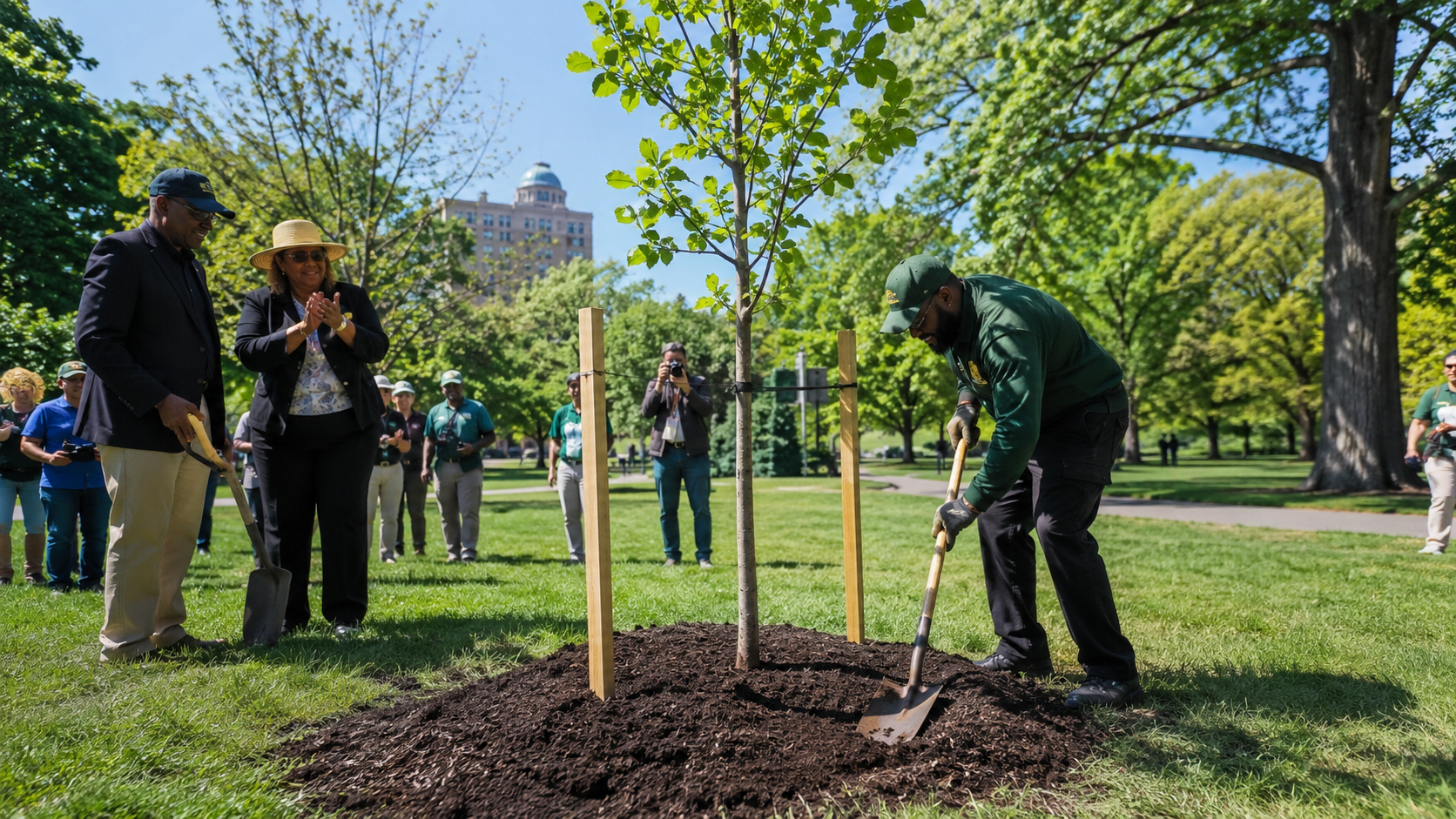
Liberty Tree planted in Druid Hill Park became one of the most discussed civic events in Baltimore this week. City officials, environmental advocates, and community leaders gathered Thursday for a ceremonial planting tied to America’s upcoming 250th anniversary celebrations. The young tulip poplar now stands inside one of Baltimore’s most historic green spaces. The event also highlighted broader environmental goals for the city and future tree-planting projects across Maryland, as noted by Baltimore Chronicle.
The new tree was planted in Druid Hill Park, home to Baltimore’s Forestry Division headquarters. Organizers confirmed the sapling was propagated from Maryland’s historic Liberty Tree that once stood at St. John’s College in Annapolis. That original tree dates back to the Revolutionary War era and remains an important symbol of American civic identity. Local officials described the planting as both a historical tribute and an environmental investment.
Why the Liberty Tree matters in Maryland
The Liberty Tree became a powerful symbol during the American Revolution. Colonists gathered under such trees to organize protests and discuss independence from British rule. Maryland’s original Liberty Tree stood in Annapolis in 1775 and became associated with civic participation and resistance movements.
Now, descendants of that tree are being planted across all 23 Maryland counties and Baltimore City. Officials say the statewide campaign connects historical memory with environmental restoration. The project also encourages younger generations to engage with local history.
During Thursday’s ceremony, remarks from Senator Chris Van Hollen were read by a staff representative after schedule changes prevented his attendance.
“The Liberty Tree stood as a symbol of civic participation, shared purpose, and the belief that ordinary people could shape their shared future.”
City leaders described the new planting as part of Baltimore’s long-term urban greening strategy. Community well-being, stormwater management, and improved air quality remain key priorities for the city.
Environmental impact of the Druid Hill Park planting
Officials emphasized that the Liberty Tree project is not only ceremonial. Additional grove plantings are planned around Druid Hill Park in the coming months. These trees are expected to improve local biodiversity and help reduce urban heat effects during summer.
Environmental planners outlined several expected benefits during the event:
- Improved air quality in densely populated neighborhoods
- Better stormwater absorption during heavy rain
- Expanded shaded public areas for visitors
- Long-term support for Baltimore’s urban forestry goals
- Increased educational opportunities for local schools
After the ceremony, residents and visitors stayed in the park to discuss Baltimore’s ongoing green initiatives. Several environmental groups also distributed educational materials about native Maryland tree species.
Key details about Baltimore’s Liberty Tree project
Below are the main facts connected to Thursday’s ceremony and the statewide initiative.
| Detail | Information |
|---|---|
| Location | Druid Hill Park, Baltimore |
| Tree species | Tulip poplar |
| Historical source | Descendant of Maryland’s 1775 Liberty Tree |
| Statewide initiative | Trees planted in every Maryland county |
| Main goals | History preservation and environmental restoration |
| Additional plantings | Planned grove expansion in Druid Hill Park |
The planting ceremony also attracted historians and local environmental volunteers. Many attendees described the event as symbolic during a period of renewed focus on public spaces and climate resilience. Baltimore officials believe similar projects can strengthen neighborhood engagement over time.
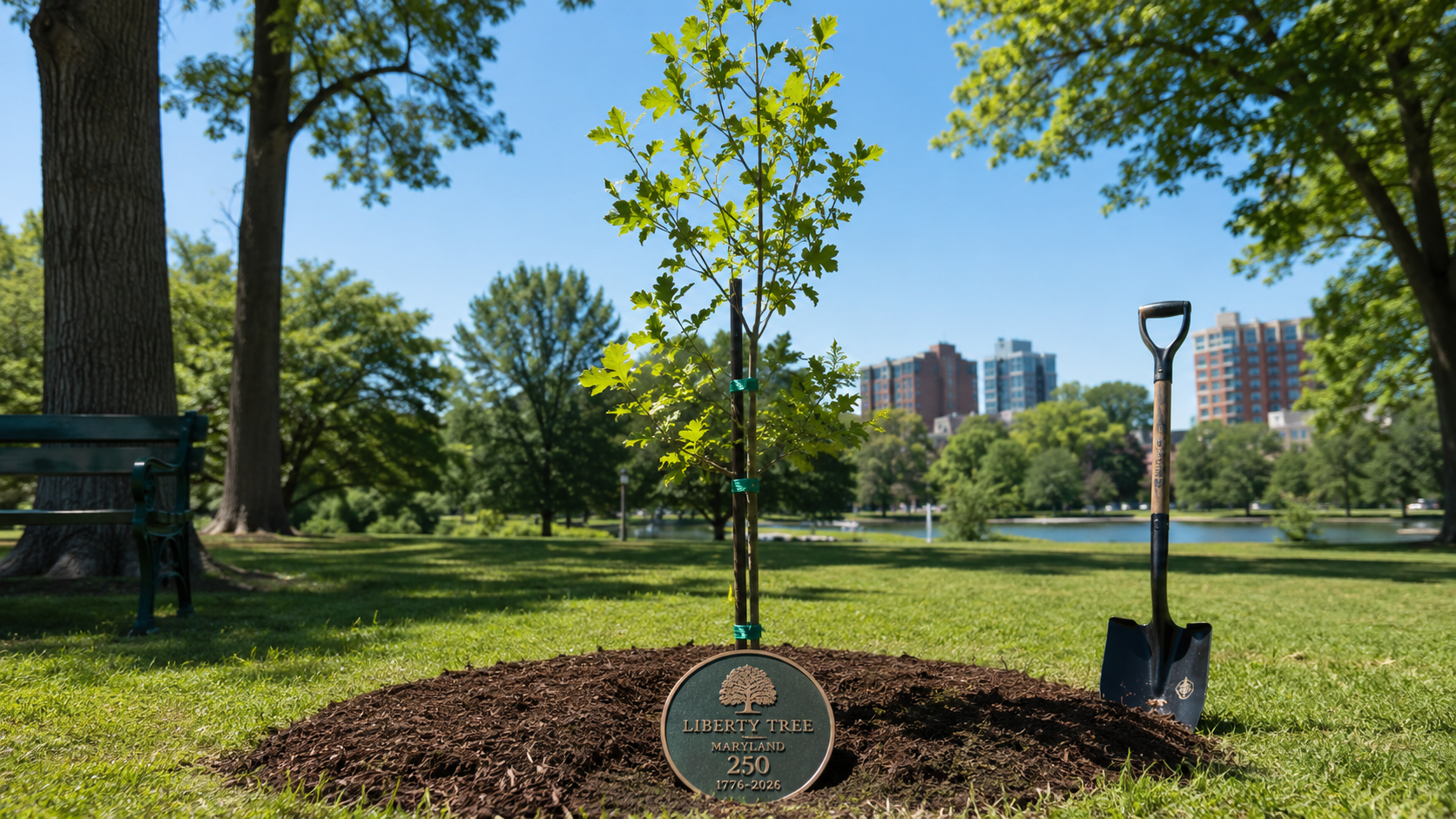
Baltimore prepares for America’s 250th anniversary
Maryland continues preparing events connected to the United States Semiquincentennial celebrations in 2026. The Liberty Tree initiative has become one of the most visible public projects linked to the anniversary. Annapolis received another descendant of the original tree earlier this spring.
Historians note that Liberty Trees once served as gathering points during political demonstrations in colonial America. Today, organizers want these new plantings to become community landmarks instead of simple memorials.
Several local residents described the ceremony as emotional and unusually optimistic for a public civic event.
Baltimore’s Forestry Division confirmed more environmental programs are expected later this year. Officials also hope the project encourages more volunteer participation in park restoration work. Urban forestry experts say long-term maintenance will determine the project’s success.
Community response and future plans
Public reaction to the Druid Hill Park planting remained largely positive on Thursday evening. Residents praised the combination of historical symbolism and practical environmental planning. Some community groups are already discussing educational tours connected to Baltimore’s Liberty Tree.
Environmental advocates also pointed to increasing interest in native tree restoration across Maryland. Tulip poplars are considered especially important because they support pollinators and local wildlife. Forestry officials expect the tree to become part of future city heritage programs.
Several upcoming initiatives connected to the project may include:
- Public history events in Baltimore parks
- School partnerships focused on environmental education
- Expanded urban tree canopy campaigns
- Volunteer planting programs across neighborhoods
- Historical exhibitions connected to Maryland’s Revolutionary history
After the list of future initiatives, organizers reminded residents that community participation remains essential. City officials stressed that long-term urban forestry success depends on public involvement and continued investment.
Baltimore’s newest Liberty Tree may be small today, but officials hope it becomes a lasting symbol for future generations.
Earlier we wrote about what to know about Artscape 2026 in Baltimore: The Roots, Stephanie Mills and full festival weekend details