

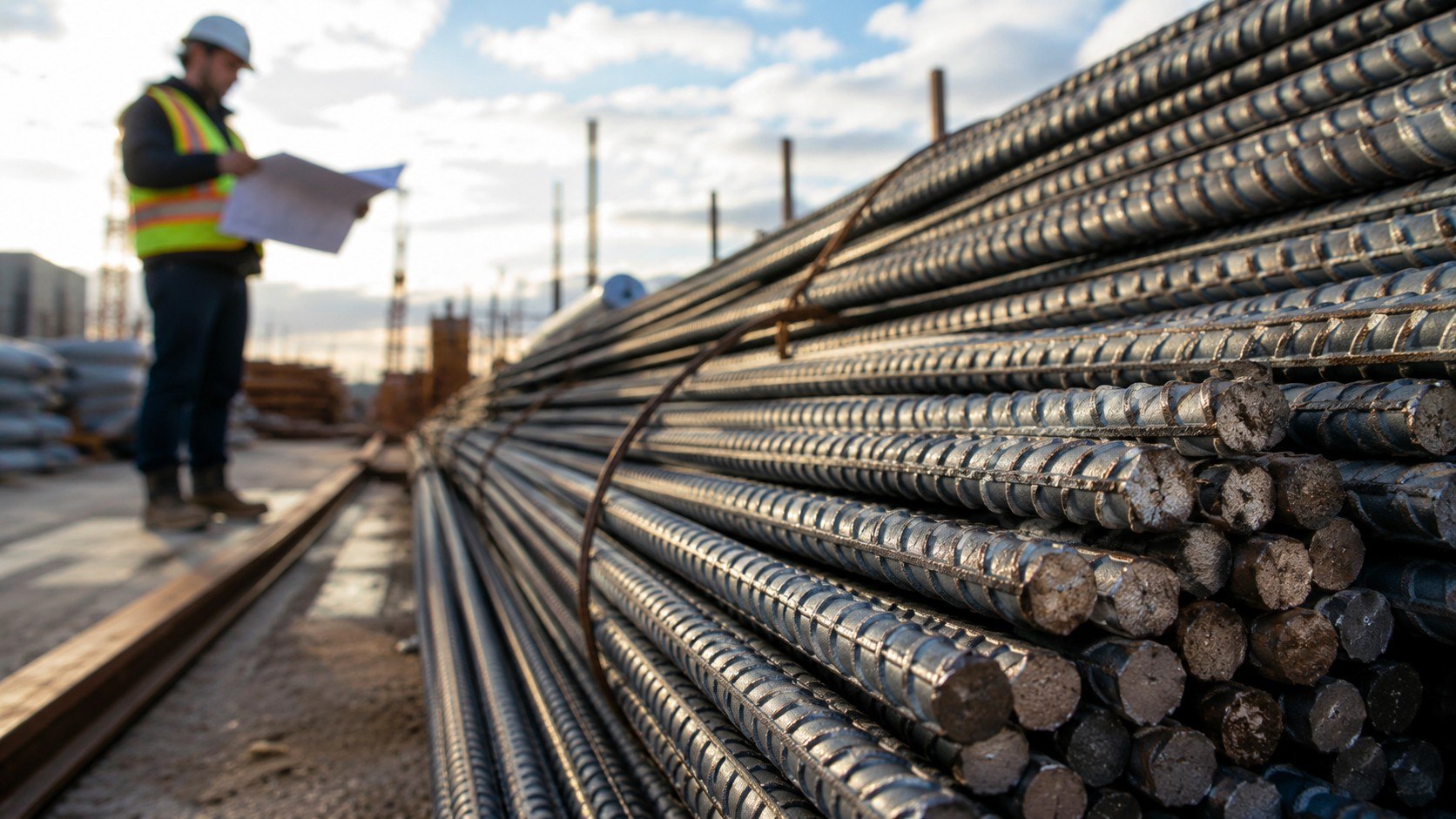
Rebar prices USA 2026 typically work out to roughly $900–$1,500 per short ton for standard carbon-steel reinforcing bar, while smaller retail purchases can cost considerably more per pound. A practical mid-market benchmark in 2026 is around $1,400–$1,450 per ton, or roughly $0.70–$0.72 per pound before delivery, cutting, bending, taxes, and contractor markup. For a homeowner buying individual bars, #4 rebar can work out near $0.50 per linear foot at commodity-equivalent pricing, though local retail prices are often higher, as noted by Baltimore Chronicle.
If you need a budget now, use $1,200–$1,500 per ton for ordinary Grade 60 carbon-steel rebar and then obtain a local quote. Small DIY orders, coated material, fabricated cages, short pieces, and long-distance delivery can move the effective price well above that range. Prices also change by state and even by ZIP code.
Key takeaways
- Standard carbon-steel rebar commonly budgets near $1,200–$1,500 per short ton in the 2026 US market.
- #4 rebar contains about 0.668 lb of steel per foot, making material weight central to per-foot pricing.
- Freight, fabrication, coatings, order size, and local supply often matter more than a small difference in mill price.
A ton price is most useful for contractors and larger foundations. Homeowners usually encounter rebar by 10-ft or 20-ft stick instead. That creates an important distinction between the underlying steel value and the price displayed at a home-improvement store.
Retail inventory includes handling, stocking, cutting, distribution, and store-level margin. Home Depot and Lowe’s also note that availability and pricing can depend on location.
For a driveway, patio, footing, retaining wall, or small foundation, calculate the required linear footage first. Converting the entire job directly from a national ton price can underestimate what a small retail purchase actually costs.
Rebar Prices USA 2026: What Drives the Price
Steel market conditions
Rebar starts with the broader steel market. Scrap availability, energy costs, mill utilization, transportation expenses, and construction demand all affect mill pricing.
The US Bureau of Labor Statistics reported movement in hot-rolled steel product indexes during 2026. That helps explain why quotes can change even during the life of a project.
Companies including Nucor, Commercial Metals Company, and Gerdau are major names in the US reinforcing-steel supply chain. A mill price adjustment can eventually reach distributors, fabricators, contractors, and retail buyers.
Bar size and weight
A #3 bar weighs about 0.376 lb per foot, while #4 weighs about 0.668 lb. #5 rises to about 1.043 lb per foot, and #6 weighs roughly 1.502 lb.
Larger bars therefore cost more per linear foot even when the underlying price per pound is identical.
Order quantity
A contractor buying several tons normally receives different economics than a homeowner buying six 10-ft sticks. Bundled mill-length material minimizes handling.
Short pieces from a retail rack carry more handling expense per pound.
Location and freight
A quote in Texas or Ohio can differ from one in California, Maryland, or a remote mountain market. The steel itself may be similar, but freight distance, warehouse inventory, fuel expense, local labor, and competition differ.
Before comparing bids, review how contractors separate materials and labor in Baltimore Chronicle’s guide to reading a construction estimate. A low rebar line can be misleading when fabrication or delivery appears elsewhere in the estimate.
Grade and corrosion protection
Ordinary unfinished carbon steel is generally the economical baseline. Epoxy-coated, galvanized, stainless, or other corrosion-resistant reinforcing products cost more.
That premium can be rational for bridge work, coastal exposure, deicing-salt environments, and specialized structures.
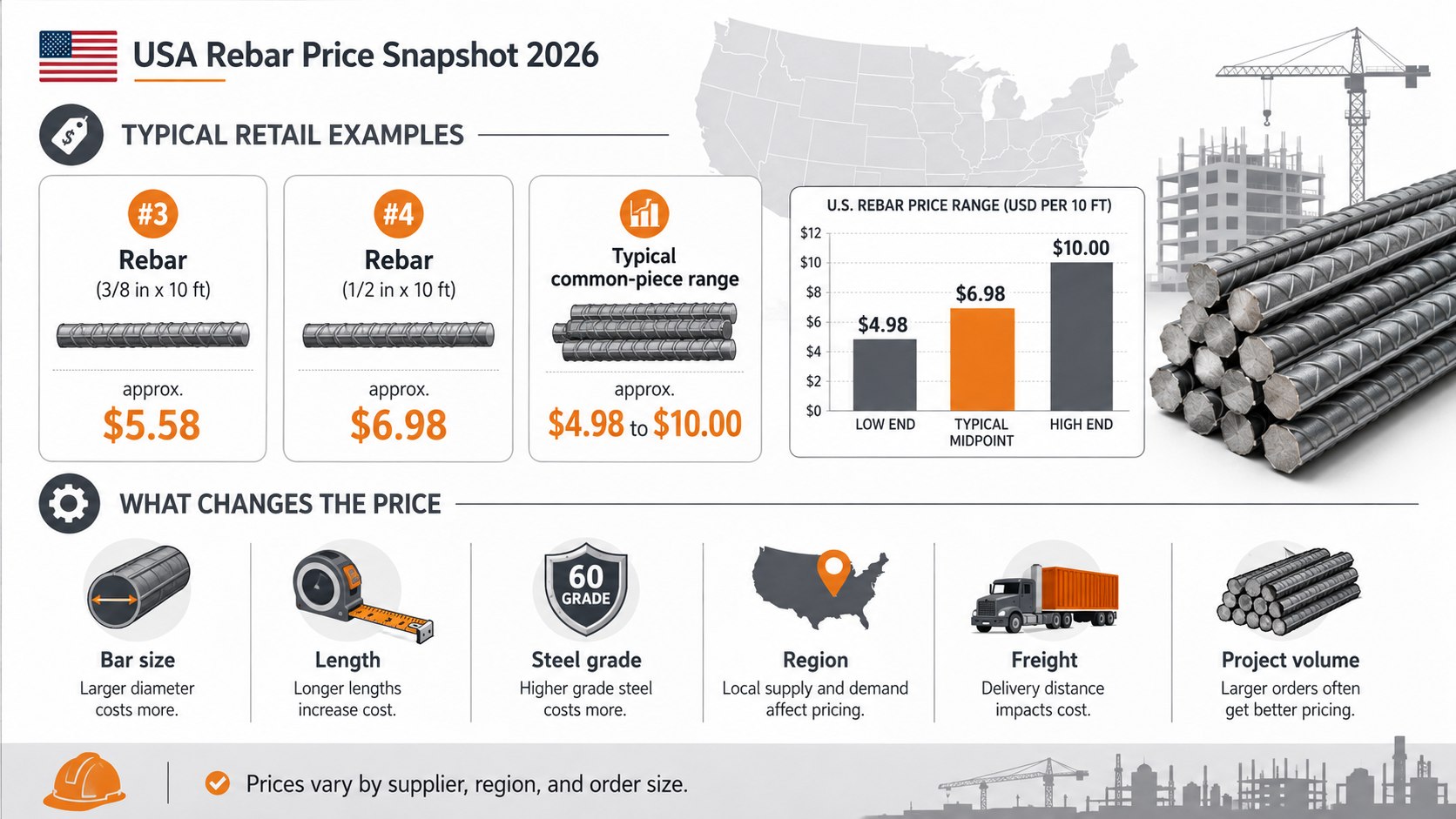
Price Breakdown: Rebar Cost per Ton, Foot and Bar
The following figures are useful as 2026 planning ranges, not guaranteed retail quotes. They combine observed market benchmarks with standard bar weights. A supplier should confirm the final price for your ZIP code and quantity.
| Line item | Typical 2026 cost |
|---|---|
| Standard carbon-steel rebar, bulk | About $900–$1,500 per short ton |
| Higher-cost or small-quantity purchases | Can approach $1,500–$1,900+ per ton equivalent |
| Commodity-equivalent steel cost | Roughly $0.45–$0.75 per lb |
| #3 rebar | About $0.17–$0.28 per ft before retail markup |
| #4 rebar | About $0.30–$0.50 per ft before retail markup |
| #5 rebar | About $0.47–$0.78 per ft before retail markup |
| #6 rebar | About $0.68–$1.13 per ft before retail markup |
| 20-ft #4 bar | Approximately $10 commodity-equivalent benchmark |
The $10 benchmark for a 20-ft #4 stick is consistent with a 2026 calculation based on current steel value and a modeled markup. It should not be treated as a guaranteed Home Depot, Lowe’s, or local steel-yard price.
A full short ton contains 2,000 lb, so bar weight makes conversion straightforward. At $1,400 per ton, steel costs $0.70 per pound. A 20-ft #4 bar weighs about 13.36 lb, giving a raw-equivalent value near $9.35.
At $1,500 per ton, that same steel weight represents roughly $10.02. The store price may be higher because the customer is buying a finished, stocked product rather than a bulk commodity.
The broader construction budget matters too. Anyone comparing reinforcing costs with concrete, framing, labor, and site work can use Baltimore Chronicle’s breakdown of 2026 US home-building costs.
How Much Is Rebar per Foot in 2026?
Rebar cost per foot depends heavily on diameter. Asking only for “the price per foot” without specifying the bar number produces a weak estimate because a #6 bar contains more than twice the steel weight of #4.
For quick estimating, multiply the weight per foot by the steel price per pound. If rebar-equivalent steel costs $0.72 per pound, #4 works out near $0.48 per foot. #5 is near $0.75, while #6 reaches approximately $1.08 per foot before retail handling and fabrication.
Retail-priced short lengths can have a much higher effective cost per foot. A 4-ft bar is convenient for repairs and small concrete jobs, but cutting, warehouse handling, packaging, and shelf space do not shrink proportionally with bar length.
Compare rebar by size, grade, length, quantity, and delivered price. A per-foot figure without those details can create a false comparison between suppliers.
Weight-based estimating is particularly useful when comparing a steel yard with a big-box retailer. It reveals how much of the quote reflects steel value and how much reflects distribution.
That difference is not automatically excessive. Small orders genuinely cost more to process. The better question is whether the final delivered cost fits the project size.
Ways to Save in 2026
The easiest savings usually come from changing how rebar is purchased, not from reducing reinforcement required by the design. For structural work, never substitute a smaller diameter or wider spacing merely because it costs less.
- Calculate total linear footage first. Include laps, corners, dowels, waste, and required development lengths.
- Request prices from a local steel yard before relying solely on big-box retail.
- Ask for a delivered total, including fuel charges and unloading fees.
- Buy standard mill lengths when practical instead of many individually cut pieces.
- Combine multiple concrete pours into one reinforcing-steel order when scheduling allows.
- Request separate pricing for material, cutting, bending, and assembly.
- Compare price per pound or ton when suppliers quote different bar lengths.
A takeoff prevents expensive overbuying. It also reduces emergency trips for missing steel during the pour. Delivery can become disproportionately expensive when a supplier sends a truck for a small second order.
Standard lengths are usually easier for distributors to price efficiently. Fabrication is different: paying a shop to bend complex bars can still save job-site labor. The lowest unit price therefore does not always produce the lowest installed cost.
Owners evaluating several building strategies can also compare custom versus production home costs in 2026. Repeated designs often benefit from purchasing scale unavailable to one-off projects.
When Paying More Makes Sense
Engineered structural work
Foundations, retaining walls, suspended slabs, and other structural elements should follow the engineer’s drawings. Saving a few hundred dollars by changing bar size, spacing, grade, or lap details can create a much larger structural problem.
Corrosive environments
Projects exposed to road salts, seawater, repeated moisture, or aggressive chemicals may justify corrosion-resistant reinforcement. The upfront premium can be more defensible when concrete repairs would later require demolition and reconstruction.
Complex fabrication
Shop-cut and shop-bent rebar costs more than straight stock. Yet accurate fabrication can reduce field labor, mistakes, scrap, and schedule delays on complicated foundations or retaining structures.
The right comparison is installed cost, not simply dollars per ton. A cheaper bundle that requires additional cutting, bending, hauling, and labor can cost more by the time concrete is ready to pour.
Reliable supply before a scheduled pour
Concrete crews, pumps, inspectors, and finishers are expensive to reschedule. Paying slightly more for confirmed rebar availability can make sense when the alternative is delaying an entire concrete placement.
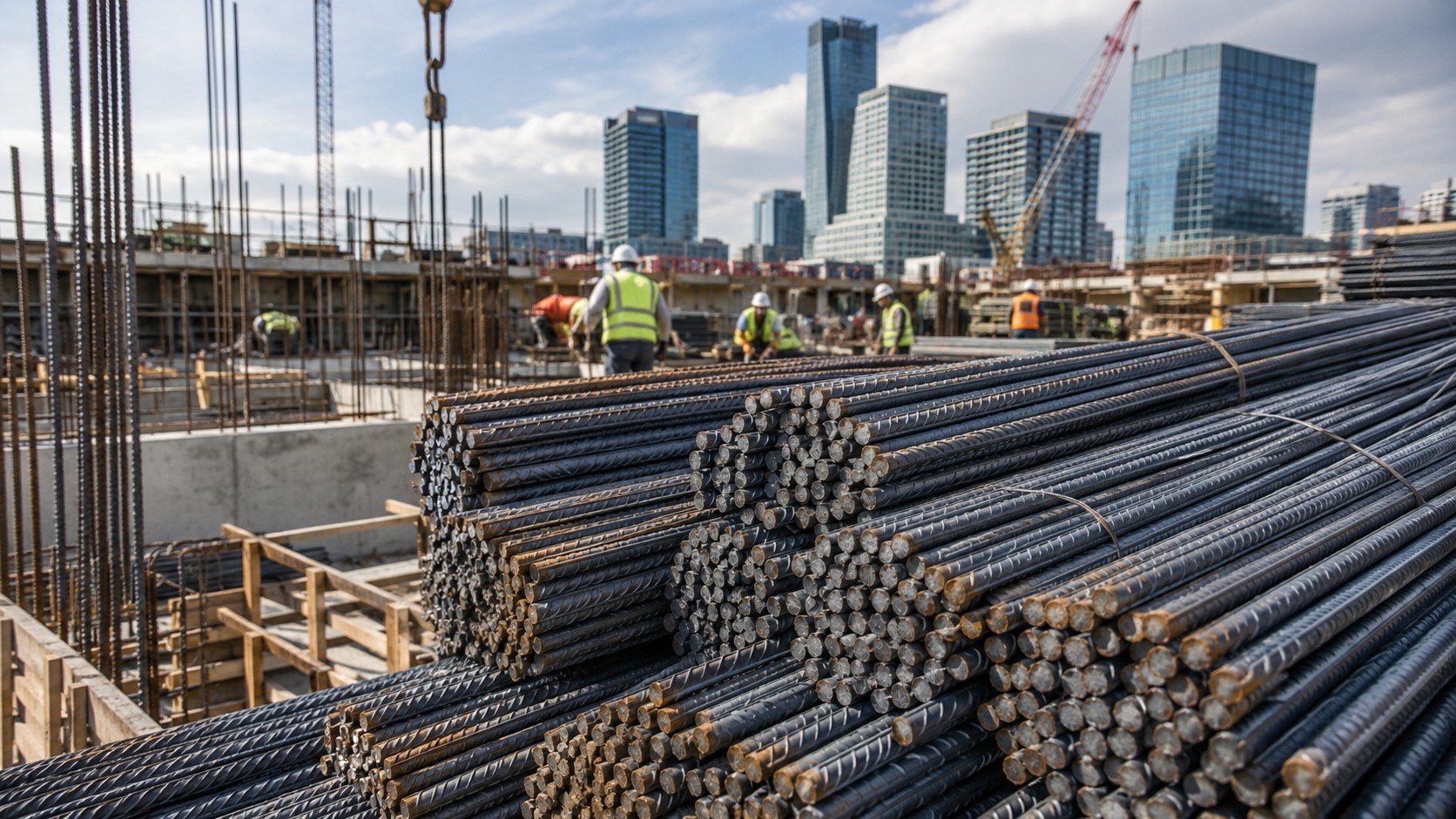
Buying Checklist Before You Order Rebar
For a homeowner or small contractor, a written specification makes supplier quotes easier to compare. Record the details before calling distributors.
- Bar size: #3, #4, #5, #6, or specified alternative
- Required grade, commonly Grade 60 where specified
- Total linear footage or number of bars
- Preferred stock length, such as 10 ft or 20 ft
- Required bends, hooks, stirrups, or cages
- Coating or corrosion-resistance requirement
- Delivery ZIP code and unloading requirements
- Required delivery date
Send the same specification to each supplier. That prevents a 20-ft quote from being compared with a 10-ft quote by mistake. Confirm whether sales tax is included.
Ask whether delivery is flat-rate or distance-based. For fabricated orders, request a shop drawing or bar list when appropriate. Finally, compare the quote with the project’s structural plans before authorizing the order.
For broader steel-market context, the US Bureau of Labor Statistics Producer Price Index tracks producer-price movements, while the US Geological Survey publishes US iron and steel supply information.
These sources are better indicators of market direction than a single store price.
FAQ About Rebar Prices in the USA in 2026
How much is a ton of rebar in the USA in 2026?
A reasonable planning range is roughly $900–$1,500 per short ton for standard carbon-steel reinforcing bar. Smaller orders, fabrication, coatings, freight, and tight regional supply can push the effective price higher.
How much does #4 rebar cost per foot?
#4 rebar weighs about 0.668 lb per foot. At $0.70–$0.72 per pound, its underlying steel value is approximately $0.47–$0.48 per foot. Retail pricing can be higher because it includes distribution and handling.
How much does a 20-ft piece of #4 rebar cost in 2026?
A 20-ft #4 bar has a 2026 commodity-equivalent benchmark near $10. Actual store pricing depends on location, inventory, grade, supplier, and quantity, so verify the final amount locally.
Is it cheaper to buy rebar by the ton?
Usually, yes. Bulk buyers generally pay less per pound because distributors handle fewer individual pieces and larger standardized orders. Delivery and fabrication can still materially affect the final cost.
Why are rebar prices different between states?
Freight distance, warehouse supply, labor costs, construction activity, local competition, taxes, and regional mill access all influence the delivered price. Maryland may therefore quote differently from Texas, Ohio, or California.
Should I buy extra rebar?
A small waste allowance may be sensible, but calculate laps, bends, cuts, and design requirements first. Ordering excessive steel wastes money, while underordering can create costly delivery and schedule problems.
Earlier we wrote about Security Deposit Laws 2026: California, New York, Maryland and Massachusetts Rules