| ||||||||||||||
|
Local News & Opinion
08.30 Casinos and Today’s Scam Artists Ref.: Civic Events Ref.: Arts & Education Events Ref.: Public Service Notices Travel
Books, Films, Arts & Education
Letters
Ref. : Letters to the editor Health & Environment
09.04 Here We Go Again: Another Rig Explosion 08.31 Legislation for Greater Agribusiness Empowerment 08.25 America's Gulf: Updating the Greatest Ever Environmental Crime 08.16 Obama's Gulf Swim Was Fake 08.11 America's Gulf: A Toxic Crime Scene Video National Health Care Systems In Other Countries Media Matters
09.02 How the Right Still Frames Iraq 08.26 The Israeli Lobby: Declassified Documents Expose Its Influence 08.18 Tell NBC: Sunday Morning Needs a Real War Debate 08.12 Who Gets to Review and Be Reviewed? 08.12 Net Neutrality Threatened 08.11 Situation Room Scaremongering Ref. : The Daily Howler Justice Matters
09.05 Ripping Off Dead War Vets' Beneficiaries 09.01 Continuity of Government: Coup d'Etat Authority in America 08.31 Lawsuit Challenges Obama Administration's Targeted Assassination Policy 08.28 Ramsey Muniz - Guilty of Being Latino and Activist in America 08.17 Gender-Based Violence in Haiti 08.16 The Scott Sisters: Victimized by American Injustice 08.15 Universal Jurisdiction to Hold Israel Accountable 08.13 From Goldstone to Uribe US Politics, Policy & Culture
09.05 The True Cost of the War 09.03 Reflections on Jack Kennedy 09.02 The Dishonor of Militarism 09.02 Katrina's Destructive Aftermath 08.30 Persecuting a Conciliator 08.29 Yale University's Pro-Israeli, Anti-Islamic Conference 08.27 Hawks Box in Obama on Afghan War 08.24 Iraq Pullout: Mission Accomplished or Strategic Retreat? 08.23 Thinking About Lying 08.23 America Knows How to Do Xenophobia 08.20 Spinning the US Failure in Iraq 08.19 Part Tinker Bell, Part Predator Drone: The Fantasy of the Presidency as Deus ex Machina 08.16 Thinking About Rainbows 08.16 In Dreams Begin Responsibilities 08.12 A Neocon Preps US for War with Iran High Crimes?
08.31 America's Holy Crusade against the Muslim World 08.23 The Laureate and the Leaker: Swedish Warrant a Salvo in Team Obama's War on Wikileaks 08.18 Impact of Israeli Military Order No. 1650 08.14 Gaza's Poisoned Water 08.13 Timebends: The Further Fruits of Wikileaks' Revelation 08.12 Don't Try These GOP Alibis at Home 08.10 The Charade Begins: Netanyahu's Flotilla Massacre Probe Testimony Economics & Business Non/Mis/Malfeasance
09.06 Thinking About Labor 08.30 Thinking About Fear 08.27 America Facing Depression and Bankruptcy 08.19 Homeowners' Rebellion: Could 62 Million Homes be Foreclosure-proof? International
09.06 Honduran Repression Continues Unabated 09.05 Sanctions kill innocent civilians: Who pays for the loss of life in Iran? 08.30 Israel will not choose to attack Iran: Harun Yahya 08.30 Israel Threatens War with Lebanon 08.24 Notes from Besieged Gaza 08.23 Washington Orders Shahbaz Airbase Saved, not Pakistan's Flood Victims 08.23 Political Killings in Colombia 08.23 A united Iran against a collapsing Israel 08.22 The Charade Announced: Latest Israeli No-Peace Peace Talks for September 08.21 Israeli Academic Freedom at Risk 08.20 Israel's Bogus Construction Moratorium 08.19 We hear "Israel will attack Iran!" and "America will Israel attack Iran!" over and over 08.19 Palestine: Occupied, Divided, Isolated, Oppressed and Unaided 08.15 Iran, Tajikistan and Afghanistan: Diplomacy of Brotherhood We are a non-profit Internet-only newspaper publication founded in 1973. Your donation is essential to our survival.
|
SPEAKING OUT:Vaccinations: Safe or Unsafe?Monday, 26 January 2009
The immediate, known risk to a child from multiple vaccines is more dangerous than the possible risk of almost any childhood disease.
In 1954, at the age of 8, I "read" an article in Life Magazine about polio and how it was treated. Stuck, even now, in my mind is the double-page picture of the children in iron lungs. It seemed like there were acres of them; as far as the eye could see. I learned only one thing from those pictures of iron lungs: I never wanted to be in one.So, when my mom said, "Don't play in puddles?" I didn't. And when my mom said, "Wash your hands!" I did. And, when the government said to all of us, line up to get your shot, I could hardly wait to get to the head of the line. I feared shots; but I feared polio more. And when they told us to line up again a few years later and suck down Sabin's sugar cube, I didn't hesitate: the more immunization, the better. I was not the only one who thought that way. For the last 50-plus years, the entire government structure, from the Centers for Disease Control to local departments of Education and the Congress of the United States, has based its public vaccination policy on that concept: the more immunization, the better. However, given the natural exposure to disease—if there were no vaccines and no vaccinations—most children would only contract two to three childhood diseases in a lifetime. As example: I had measles and mumps; my sister had measles and scarlet fever (no vaccine for that). My daughter had a tendency toward croup, but her only disease in the "childhood" category was chickenpox, which she got at the age of 12. It is simply irrational to think that any child would be in a position to contract 11 to 15 different diseases in a lifetime Government requires every child in the United States, if he or she is going to attend school, to have a minimum of 11 immunizations. In some states, it's more; for instance, Maryland requires 15 immunizations. However, government requires every child in the United States, if he or she is going to attend school, to have a minimum of 11 immunizations. In some states, it's more; for instance, Maryland requires 15 immunizations. The Congress has recommended 22. These result in 36 to 60 injections for our children before the age of three. Averaged out at the top end, that's 1.6 shots a month, beginning with their first month of life. There are some serious problems with this. They fall into two main categories: the viruses themselves and the dilutions through which they are delivered. Vaccines: too much disease Imagine what would happen to your body if you, an adult with a mature immune system, contracted measles, mumps and Rubella at the same time. Are you saying, "Well, I'd probably die!"? Indeed. The human immune system, even when it's fully mature, totally healthy and balanced, is simply not equipped to deal with that much disease all at one time. It is debilitating; it often causes what is called a compromised immune system, one that has difficulty performing the task for which nature designed it. Yet, vaccines simulate disease. Inside the body, when a vaccination is given, our immune systems believe they are getting the disease. That's why they react to the vaccine and create antibodies to it. And every time we shoot a child up with the Measles-Mumps-Rubella vaccine (MMR), we are simulating that hypothetical situation in which the child's immature immune system thinks that it is getting all of these diseases at the same time. The MMR & DPT One study showed that among the Amish, who do not vaccinate their children, only three cases of autism could be found. All three of these children had come to the community from "outside," and all had been vaccinated. In the United States, the link between the MMR and autism continues to be denied by government and the drug companies; but there are proven statistical commonalities among children who have been vaccinated and autism. One study, for instance, showed that among the Amish, who do not vaccinate their children, there could only be found three cases of autism. All three of these children had come to the community from "outside" and all had been vaccinated. The Diptheria-Pertussis-Tetanus (DPT) shot is another that "infects" our children with three diseases at a time. And there are some definitive data that link the DPT shot to ADD, ADHD, dyslexia, dissociative disorder, schizophrenia, seizures, Crohn's disease, and, yes, autism. But, even without these possible long-term debilitating complications, the DPT has immediate deleterious effects.
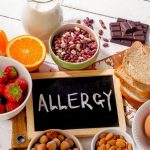
Allergies I am someone who carries a medic alert bracelet which says, "allergic to all tetanus toxoids." I had so many tetanus shots as a child—when they gave them to you for every bee sting—that I will now go into anaphylactic shock if a tetanus shot is administered. The last tentanus shot I had was in 1960; I was violently ill for more than two weeks and almost died. In 1965, I rammed my heel on a rusty nail, but convinced the doctor to test me for toxoid allergy before giving me a tentanus shot. He injected 1/100th of the normal dose under my skin. Then, as he was telling me to come back in two days so he could see the reaction, he suddenly went mute and sat amazed as my forearm swelled to twice its normal size. It stayed that way for more than two weeks. He did not, needless to say, give me that shot. The reason my arm swelled up was because, as far as my immune system was concerned, the toxoid was an invading enemy that needed fighting. It had built up immunity to the shot itself. My system sent thousands of antibodies and plenty of blood to the location of the invasion to fight it; and, had I been injected, my system would have attacked my entire body to stop it. Allergies indicate a malfunction of the immune response, and, as my case shows, can be caused by too much vaccination. But none of our children are tested for allergic reactions to these vaccines before they are administered, even though the onset of autism, for instance, does not usually occur until the second MMR shot— and it is known that 90% of immunity is produced by the first. Allergic reactions, however, do not necessarily show themselves only in allergic reactions to the vaccinations. The corrupted immune response can show itself in allergies to other normal things, like food. Today's children have more allergies, particularly to food, than any generation before them. These responses are often life-threatening, systemic, and can be directly correlated to out-of-whack immune systems. Food allergies are particularly symptomatic of immune system malfunction in the intestinal tract, as are bowel diseases, because 70% of our immune function is resident in our gastrointestinal tract. When the gastrointestinal tract is in good working order, then we have a 70% chance of remaining healthy, have few allergies, and few problems like diabetes and asthma. When it is out of balance, then the whole body gets out of balance. Dr. Daniel More reports that "Allergy to egg, milk, soy, wheat, peanut and tree nuts represents 90% of all food allergies in children." The peanut allergy, in particular, is ubiquitous. In 2007, Dr. Michael C. Young, Assistant Clinical Professor of Pediatrics at Harvard Medical School and a practitioner at Children's Hospital, answered some questions about this for PBS. He said:
DrGreene.com reports that "most children who develop life-threatening food allergies either have asthma or a family history of asthma, eczema, or hay fever." Interestingly, neither Dr. Young nor Dr. Green could come up with a reason. "No one knows why this is happening," said Dr. Young. Yet, all of these conditions indicate a corrupted immune system. And what has been happening over the last 15 to 20 years that could corrupt young immune systems? Increased vaccination should top the list, one would think. In a study of autistic children, doctors found a "high prevalence of histologic [tissue] abnormalities in the esophagus, stomach, small intestine and colon, and dysfunction of liver conjugation capacity and intestinal permeability were reported. Three surveys conducted in the United States described high prevalence of gastrointestinal symptoms in children with autistic disorder" (Horvath, K, and Perman, J.A.,2002). In other words, children who had autism also had tissue disruptions in the very part of their bodies which hold 70% of their immune function. It is not too far to jump to assume that the immune system destruction may have contributed to the autism, and not the other way around. I am fascinated by the fact that no doctor anywhere seems to want to even look at this relationship; yet it seems very plain and obvious. It’s not as if we haven’t openly recognized the dangers of vaccines in the past. We made a good decision with smallpox 30 years ago. We stopped vaccinating for smallpox because the risk of the vaccination outweighed the risk of getting the disease. We recently stopped administering the Sabin live polio vaccine, because it had been causing children to get polio. Even so, in an article about vaccination published by the Baltimore Sun (2008), a Dr. Neal Halsey was quoted as saying that, "One of the reasons that some parents have withheld measles vaccines is that they believe that the risk is very low. This is, unfortunately, a false belief." In fact, the parents are correct and Dr. Halsey is incorrect. The highest number of cases of measles in the U.S. in recent years reported by the CDC is 131; that makes the chance of getting measles approximately 1 in 2 million. If the MMR does, in fact, cause autism, then the risk for autism is much higher than the risk of getting the disease. The current risk of getting autism is 1 in 5. Of course, many will say that the reason the risk of measles is so low is that children have been getting vaccinated against measles. And, though this may be true, the same was true for smallpox; the risk of the shot now outweighs the risk of getting the disease. But it is not just the viruses themselves that cause problems; preservatives and contaminants must be considered when looking at these complications and reactions. Additives, Preservatives and Dilutions Everyone remembers the Mad Hatter from the tale of Alice in Wonderland. What some of you may not know is that mad hatters were very prevalent in 19th Century. In order to mold hats, the hatter would immerse the hat and his hands in vats of mercury, eventually—and unalterably—becoming poisoned. In the 21st century, we are still concerned with mercury poisoning. We stopped using mercury thermometers, for instance, because of the “risk”. We’ve stopped putting mercury in tooth fillings. But the fact is that these minute amounts of mercury did not cause direct harm. Large amounts, however, do. An environmental website, Alliance for a Healthy Tomorrow, reported in 2005 that:
A website called Toxfaqs, posted by the Agency for Toxic Substances and Disease Registry, a division of the Centers for Disease Control (CDC), states that:
The National Autistic Society writes that "75 symptoms of autism parallel those of mercury poisoning." Recent experiments in treating autism as mercury poisoning are, in fact, resulting in some cures. One wonders, then, why the government would compel us to deliberately pump more mercury into our children's healthy bodies. Some Hepatitis B vaccines and the flu vaccine are still preserved with thimerosal, a trade name for a form of mercury preservative, which began being used as a preservative in vaccines since 1931. You might be agreeing with the American Association of Pediatrics, saying, "Well, heck, if it's been used since 1931, then it must be safe." But, in fact, in 1931, the only vaccine that was given to children was smallpox; and it was never injected into the body, but was only pricked into the skin. And, even though it seems that that would not be enough to poison a child, it was the beginning of autism, which, up to that point, had never been documented before. In 2001, two Massachusetts families, parents of autistic children, filed suit against the makers of “hepatitis B, diptheria/tetanus and other vaccines," alleging that their children had been “poisoned with toxic mercury” (Hepatitis Week, vol. 1, 33). HepB Hepatitus B is a blood or fluid transmitted disease. Like HIV, it is prevalent among drug users and those who have unprotected sex. One would not think that an infant is not in need of a vaccination for a sexually transmitted disease, unless he or she has a chance of exposure in the womb. In British Columbia (BC), for example, the vaccine is only given to infants if they are "... born to a mother with hepatitis B or a mother at high risk of the infection, or a baby who has another household contact or a caregiver with hepatitis B infection." And, in BC, the first shot is given at two months, after the baby’s breathing reflex, eating, etc., have stabilized. But in the United States, where the CDC reports only 10,000 cases of the disease every year, unless the parents file a protest and say they will not allow the vaccination (which few parents are even told they can do), their perfect newborn baby will be vaccinated for HepB when he is only two hours old—even if there is no indication of current or potential exposure. At two hours old, a child's body is still adjusting to being outside the womb and his entire immune system is dependent on his mother's milk. And, although other countries are more cautious, in the U.S., the HepB vaccination is considered "safe." But what is “safe”? Michael Belkin, who was at the time Director of the Hepatitis B Vaccine Project of the National Vaccine Information Center (NVIC), in testimony before the Center of Disease Control’s (CDC) Committee on Immunization Practices in 1999, said the following in regard to HepB vaccine:
Belkin also noted in further testimony that:
HepB, however, does not just pose the risk of sudden death. Rheumatic fever, encephalitis, and optic neuritis, as well as other debilitating diseases are all on the list. For instance, in France, the HepB vaccine has been suspended for everyone, even adults, “due to its association with Multiple Sclerosis” (thinktwice.com). How can this vaccine be listed as “safe”? Perhaps the reason is similar to why vaccines containing mercury were considered “safe” for so long. The Kennedy Report Robert F. Kennedy, Jr., in 2005, wrote a startling exposé concerning the relationship between mercury and an international increase in autism, and the government's cover-up of that relationship. Among other things, he notes that as early as 1935 the safety of thimerosal was being questioned, and:
Skeptics often say, well, if thimerosal is the culprit, then why are has the number of autistic cases only increased precipitously in children born between 1989 and 2003 (Kennedy, 2005). It is, quite obviously, the increase in the number of vaccinations required of this generation; every one of which, at that time, contained thimerosal. "Russia banned thimerosal from children's vaccines twenty years ago, and Denmark, Austria, Japan, Great Britain and all the Scandinavian countries have since followed suit" (Kennedy, 2005). Yet, in this country, though many vaccines are no longer preserved with mercury, we do not recognize the connection. The reasons are exposed in Kennedy's report. The Bush Administration, in power when a definitive connection between thimerosoal and autism was discovered—and heavily supported by the pharmaceutical industry—wanted to avoid lawsuits that might put those companies out of business, and so actively chose to cover-up the information. Kennedy claims:
To me, this is just plain stupid. If someone does something with good intentions, not knowing that it may be harmful, then they should not be held responsible. However, if they find that it is harmful, and yet keep doing it, then that is an altogether different matter. What the government did by covering up this information was commit a criminal act, which has so far resulted in the mental, emotional, and physical damage to thousands of children. As one researcher put it in the Kennedy report:
Mercury preservative is still used in vaccines exported to other countries; and, as noted above, in some HepB and flu vaccines; yet the government continues to require their administration. Just this winter (2008), the governor of New Jersey made flu shots for infants mandatory. Admittedly, since 2000, most mercury preservatives have been removed in most vaccine shots in the U.S.; however, other additives and preservatives have taken its place. For instance, aluminum is now often added to vaccines. In a study done on animals by the Department of Opthalmology and Program in Neuroscience, University of British Columbia and reported in Neuromolecular Medicine (2007), it was found that:
The adult HepB vaccine contains “... aluminum phosphate and aluminum hydroxide as adjuvants and 2-phenoxyethanol as a preservative.” (CDC, 2006) Kennedy reports that, in 1982, "Dr. Maurice Hilleman, one of the fathers of Merck's vaccine programs" suggested that there were "non-toxic alternatives" to these preservatives, and "'The best way to go... is to switch to dispensing the actual vaccines without adding preservatives." But, even if the government were to finally follow that advice, the fact is that preservatives are not the only problem. Other Toxins Much has been made of the toxins in cigarettes. Second-hand smoke has been linked—albeit with many qualifiers—to every childhood ailment from sudden infant death to asthma. Yet, even if you consider impossible exposure to cigarette smoke—24/7 in a non-vented environment—the amount of these chemicals entering the body are minuscule compared to those that would enter the body if those chemicals were directly injected into a child's bloodstream. Toxins in vaccines can include formaldehyde, antifreeze, acetone, disinfectant, borax, and latex, and more. You, say, "But this would never happen!" Well... cigarette toxins include formaldehyde, benzene, acetone, ammonia, arsenic, hydrogen cyanide, and more; vaccine toxins include formaldehyde, antifreeze, acetone, disinfectant, borax, and latex, and more. The biggest difference is that the vaccine toxins are directly injected into a child's body every time he or she receives a vaccination. Vaccines also can contain some unique toxins that do not occur in cigarettes, such as MSG, methanol, dye, and glycerine. Then, too, a vaccine may include "ingredients" that supposedly support the actual immune response, such as "aborted human foetus cells," "mutated human viruses," and "animal organ tissues and blood." One of the most effective vaccines—and supposedly one of the "safest" because it contains no preservatives of any kind—is the chicken-pox vaccine (Varivax). The Merck website lists the following ingredients.
Are any of these substances that you want in your child's bloodstream? Serum made from cow fetuses? Potassium chloride? MSG? Is it worth it? Vaccination is dangerous. There is simply no getting around that. Yet, if it really works to stop some of the most dangerous diseases from spreading and decimating whole populations, then it is worth it. And there is some evidence that it does work. Still, there is some evidence that it doesn't. In investigating the effectiveness of vaccines, I found, for instance, that polio was already on the decline when the polio vaccine was administered to thousands of us. In some instances, as with whooping cough, I found that vaccination does not seem to have any effect, or may have a negative effect. As well, there is some evidence that with increased vaccination for pertussis came increases in the number of cases of pertussis. A report in Lancet, the British medical journal, stated that:
And the Journal of the American Medical Association reported that,
And then, there are some vaccines whose effectiveness simply wanes with time. The chickenpox vaccine, for instance, has been shown to lose its effectiveness after 10 years. This is a problem, because chickenpox when one is age 5 or 10 is not dangerous, but chickenpox as an adult can be very dangerous. Or, sometimes, the vaccinations simply don't "take" and children are susceptible to the disease anyway. In a Baltimore Sun article, it was noted that in a study measuring the effectiveness of vaccines, of 131 children who came down with measles, "... 11 of the 131 had been vaccinated." That means that even with vaccination, that group still had a 30% chance of getting the disease. A New York Times article gave another measles example that occurred in 1994. "Out of 625 children exposed to the disease, 17 got measles. Of those 609 who had previously been vaccinated, only 10 (or 1.6%) developed measles. Of the 16 children who were not immunized, 7 (or 44%) developed measles. Thus, the risk for immunized children was less than 2% while the risk for un-immunized children was 44%." It is true that "7 of 16" equals 44%, that does not equate to a 44% chance of getting the disease. Indeed, it seems to me that to get the correct percentages, one would need to compare both 7 and 10 to the full complement of the study, which, if one does so, shows that of 625 children, immunized children, had a 1.6% chance of getting the disease and unimmunized children had a 1.1% chance of getting the disease. It is often said that un-immunized children pose a risk to immunized children, but that should not be the case. If one is immunized, then the unimmunized should carry no risk at all. Unimmunized children should have a higher risk of getting the disease; however, based on the above numbers, this appears to be incorrect. Conclusion New vaccines are being discovered all the time, and most of them are immediately slated for the childhood immunization requirements. Gardasil, for instance, hit the world by storm. Wow! A vaccine to save girls from cervical cancer. Gotta use it! In fact, it was so well sold that it whizzed through FDA approval, and was adopted as mandatory for girls over 12 in Texas, and the UK placed it on the list of mandatory vaccinations for children in 2007. All that was before three healthy young women died within days of receiving the vaccine... before a series of women who didn't even know they were pregnant had miscarriages... before the 1,700 other women suffered everything from blood clots to paralysis and seizures. All this reminds me of the birth control pills that killed many women before anyone would even admit that they were dangerous. The makers of Gardasil are still trying to say, "Oh, no, it wasn't our fault." But the British Telegraph reported said that, if this shot stays on the list of required vaccinations, children taking Gardasil would be “no better than human guinea pigs.” It seems to me that, perhaps, we have all been guinea pigs in the study of vaccination. And, perhaps, it was worth taking a chance on when there was a real danger of world-wide epidemics of smallpox or polio, and only a very few children were harmed by being vaccinated. But this is no longer the case. The immediate, known risk to a child from multiple vaccines is more dangerous than the possible risk of almost any childhood disease. Instead, we have epidemics of autism, food allergies, childhood diabetes, childhood cancer, immune deficiency syndromes, and more, all of which may be directly related to vaccination. Surely, if there is only a chance this is true—and I think there is more than a “chance”—then we should suspend all mandatory vaccination and begin to study unvaccinated populations to see if they have the same problems that the vaccinated do. It is time that the health of our children was put back in our own hands. The government simply has no right to make such a choice for us. It has no right to ask us to knowingly poison the smallest and most defenseless among us. We have to end mandatory vaccination now, before any more children are harmed or killed. Michael Belkin’s final comments about Hep B vaccine before the CDC sum it up better than I can:
HepB, MMR, DPT, Chickenpox... for all of them, the dangers of vaccination are real. More is not better. Wholesale vaccination needs to be stopped. Now. Lynda Lambert, a college English instructor, resides in Baltimore. References:
Copyright © 2009 The Baltimore News Network. All rights reserved. Republication or redistribution of Baltimore Chronicle content is expressly prohibited without their prior written consent. Baltimore News Network, Inc., sponsor of this web site, is a nonprofit organization and does not make political endorsements. The opinions expressed in stories posted on this web site are the authors' own. This story was published on January 26, 2009. |
| ||||||||||||