


How to grow Instagram followers 2026 starts with a simpler strategy than most creators expect. Build a clear profile, publish original Reels, test topics with non-followers, and measure which posts produce follows. A basic setup takes about 60 minutes, while useful performance data usually requires several weeks of consistent publishing, as noted by Baltimore Chronicle.
The central problem is rarely a shortage of posts. Most stalled accounts lack a clear reason for strangers to follow after seeing one Reel. In 2026, conversion from non-follower view to profile visit and follow deserves more attention than raw views.
Key takeaways
- Build every post around one recognizable audience problem instead of chasing unrelated viral topics.
- Use Reels for discovery, then use carousels, Stories, and replies to turn attention into repeat visits.
- Measure non-follower reach, profile visits, follows, saves, and shares before increasing posting volume.
What you need
A workable system does not require an agency contract or an expensive camera. An iPhone, Pixel, or Samsung Galaxy can produce publishable vertical video. Meta’s Edits app and tools such as Canva can handle much of the production work.
- A public Instagram account or professional creator or business account.
- A phone capable of recording clear vertical video.
- 30–60 minutes for profile and content-system setup.
- 3–5 repeatable topics that fit one audience.
- Instagram Insights for measuring reach, interactions, and follower activity.
- A simple notes app, spreadsheet, or calendar for tracking tests.
Organic publishing can cost $0. Optional design, scheduling, transcription, and storage software can add roughly $10–$50 monthly in 2026. Verify current prices directly with each provider before subscribing. A local contractor in Maryland needs a different stack from a Los Angeles fitness creator. The same applies to a Texas realtor or New York freelance designer. Tools should remove production friction rather than create another dashboard to manage.
A useful related guide is Baltimore Chronicle’s article on using social media effectively for business. Its focus on purposeful publishing also applies to Instagram audience growth.
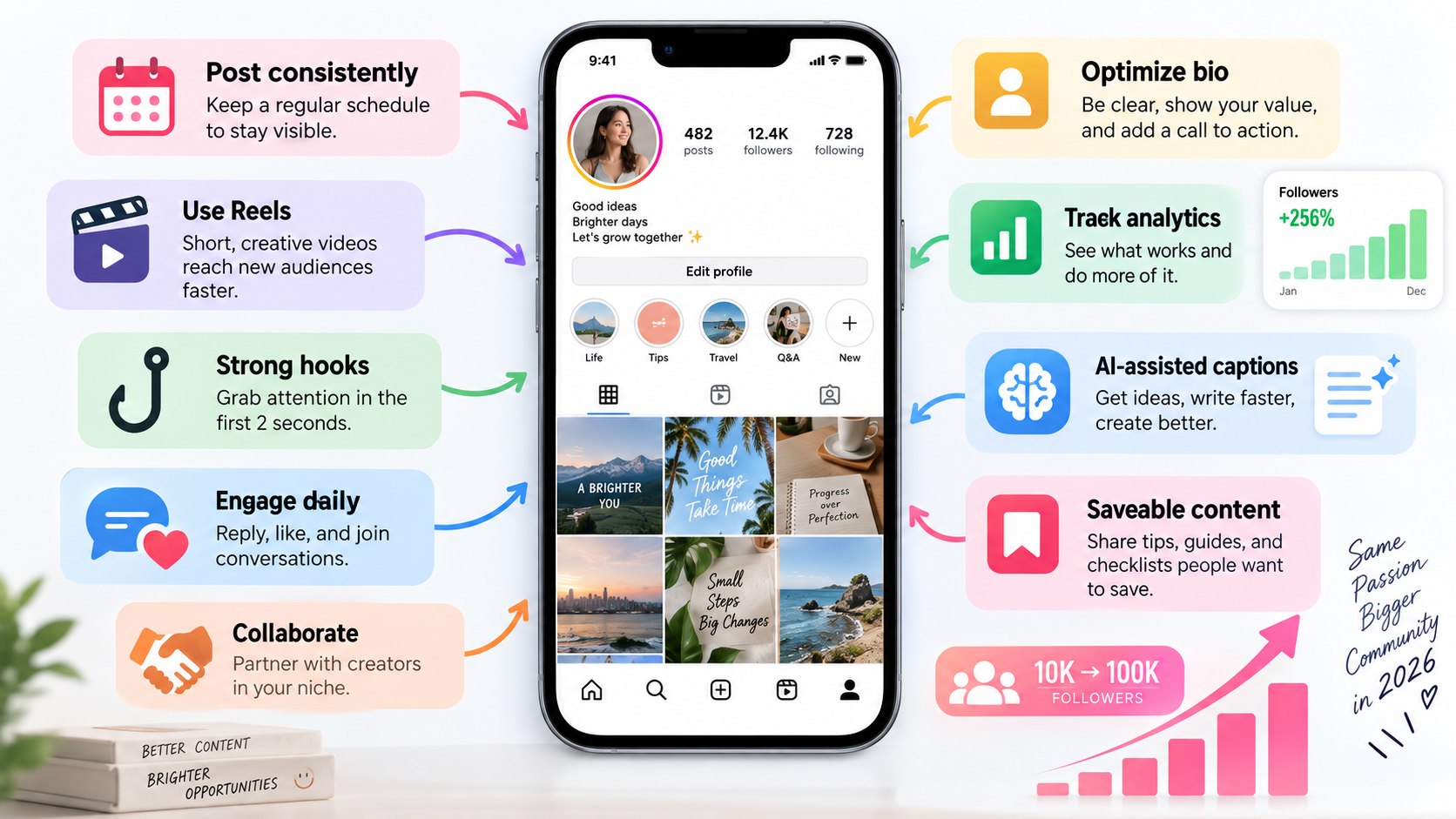
Step 1: Define exactly who should follow you
Write one sentence describing the person your account serves and the result they want. “Easy dinners for working parents” is stronger than “food and lifestyle.” A Baltimore home-service company might focus on maintenance tips for Maryland homeowners.
This matters because Instagram must repeatedly connect your content with people likely to value similar posts. A consistent subject also makes the profile easier for humans to understand.
The common mistake is choosing a broad category instead of a concrete audience problem. “Fitness” gives little direction. “Strength training for busy fathers over 40” immediately suggests useful topics.
- Choose one primary audience.
- List 10 recurring problems that audience faces.
- Group those problems into 3–5 content pillars.
- Write at least 5 post ideas beneath each pillar.
That exercise produces enough material for several weeks without relying on daily trend hunting. Each idea should solve one problem or answer one recognizable question. Avoid forcing every topic into a Reel when a carousel explains it better. Stories can handle quick updates and behind-the-scenes material. Reels should earn discovery rather than function as a diary. Revisit the pillars monthly and remove themes that attract the wrong audience.
- A smaller, clearly defined audience is more useful than broad exposure from people who have no reason to return.*
Step 2: Turn the profile into a follow decision
Your username, name field, profile image, bio, pinned posts, and recent grid should explain the account within seconds. Include the subject people associate with your work, especially when location matters.
This is basic Instagram profile optimization. A Miami photographer might identify “Miami family photographer,” while an Arizona mechanic could use “Phoenix DIY car maintenance.” Geographic language can filter profile visits toward useful followers.
The common mistake is writing a clever biography that explains personality but not value. A visitor arriving from Explore needs to understand what future posts will deliver.
Use pinned posts strategically. One can introduce the account, another can demonstrate expertise, and another can feature a strong evergreen resource. Businesses can also pin an explanation of services without turning every new post into an advertisement.
“Best practices will provide the information you need to improve your content and grow your audience.”
That is Meta’s description of the Best Practices section inside Instagram’s professional dashboard. The company says it covers creation, engagement, reach, monetization, and guidelines. The feature is documented by Meta Newsroom.
Step 3: Create original Reels for non-followers
For organic Instagram growth, produce Reels that make sense without prior knowledge of your account. Start with the useful point rather than a long introduction. Show the outcome, problem, demonstration, or surprising detail early.
This matters because recommendation surfaces can expose posts beyond existing followers. Meta has also changed Instagram distribution to give original creators more opportunities against identical reposts.
The common mistake is copying a popular Reel almost frame for frame. A trend can provide a format, but the information, footage, analysis, demonstration, or perspective should be yours.
| Content type | Best use | Useful signal to monitor | Typical mistake |
|---|---|---|---|
| Reel | Reach new viewers | Non-follower reach and follows | Slow opening |
| Carousel | Explain or teach | Saves and shares | Too much text per slide |
| Story | Retain existing audience | Replies and interactions | Posting without context |
| Collab post | Reach adjacent audiences | Profile visits and follows | Poor partner fit |
Do not treat these formats as competitors. One idea can become a Reel, a deeper carousel, and a Story follow-up. This reduces production work while keeping each format useful. Track which subject produces followers rather than only views. A 20,000-view Reel can be weak if almost nobody visits the profile. A smaller niche post may produce more qualified followers. That distinction matters for freelancers, shops, agencies, and local businesses.
Baltimore Chronicle has also covered Instagram’s fight against fake and inactive followers. Artificial audience inflation offers little value when genuine interactions determine whether a community is commercially useful.
Step 4: Test topics before committing to them
Instagram’s Trial Reels provide a practical method for getting more followers on Instagram without forcing every experiment into the established audience. Trial Reels can initially show content to non-followers.
This matters because creators can test unfamiliar topics, hooks, formats, or presentations before changing their regular content strategy. Meta made Trial Reels broadly available after first introducing them as an experimentation feature.
The common mistake is changing several variables simultaneously. If the topic, opening, length, editing style, and call to action all change, the result teaches very little.
- Choose one topic already related to your niche.
- Create 2 different openings for that topic.
- Keep the central information comparable.
- Compare reach, retention, interactions, profile visits, and follows.
- Repeat the stronger approach with another subject.
This process creates an editorial testing system rather than a collection of random posts. Test one significant variable whenever possible. Keep notes because memory quickly becomes unreliable after dozens of uploads. Do not declare a format dead after one weak post. Look for repeated patterns across several comparable attempts. Strong ideas can later become recurring series with recognizable names and visual structure.
“Trial reels are a new way to try out content and see what performs best.”
Meta says the format first distributes a Reel to non-followers for testing. The company’s official Trial Reels guidance explains the feature and its intended purpose.
Step 5: Build posts people have a reason to share
An effective Instagram growth strategy 2026 should ask why one person would send a post to another. Useful checklists, recognizable situations, demonstrations, comparisons, and concise explanations naturally create that reason.
This matters because shared content gains another path beyond passive feed viewing. Instagram also introduced native reposts, which credit original posters and can extend content into another user’s audience.
The common mistake is asking for shares without creating something shareable. “Send this to a friend” cannot rescue a vague post.
The strongest content idea often contains its distribution mechanism: people immediately know who else needs to see it.
A Chicago renter might share a security-deposit checklist with a roommate. A California parent may send a car-seat reminder to a relative. A Dallas freelancer might forward a pricing breakdown to another contractor. Those behaviors come from relevance, not from decorative calls to action.
Collaboration posts deserve similar discipline. Partner with accounts serving an adjacent audience, not simply a larger one. A Maryland realtor and local home inspector have meaningful overlap. A realtor and unrelated meme page may produce impressive reach but few useful followers.
Step 6: Measure follower conversion and repeat winners
The final stage of how to gain Instagram followers organically is measurement. Review Instagram Insights on a fixed schedule and compare posts by topic, format, opening, and resulting follower activity.
This matters because views alone cannot show whether content builds an audience. Profile visits with few follows often indicate weak positioning. Strong reach with weak watch behavior can indicate a promising topic with poor execution.
The common mistake is copying the biggest post without understanding why it worked. Compare several metrics before deciding what deserves another version.
| Signal | What it can indicate | Possible next action |
|---|---|---|
| High reach, few visits | Interesting post, weak account relevance | Tighten topic alignment |
| Many visits, few follows | Profile promise is unclear | Rewrite bio and improve pinned posts |
| Strong saves | Reference value | Create a deeper follow-up |
| Strong shares | Social relevance | Build a recurring series |
| Follower growth from one topic | Clear audience demand | Produce related posts |
Review results weekly rather than reacting every few hours. Compare posts with similar objectives and formats. Record the topics responsible for meaningful profile activity. Separate reach experiments from retention content. Give proven themes additional versions instead of abandoning them after one success. Over time, the account becomes less dependent on guessing.
Businesses should also connect audience growth with commercial outcomes. Baltimore Chronicle’s guide to turning social followers into customers explains why audience size alone is an incomplete business metric.
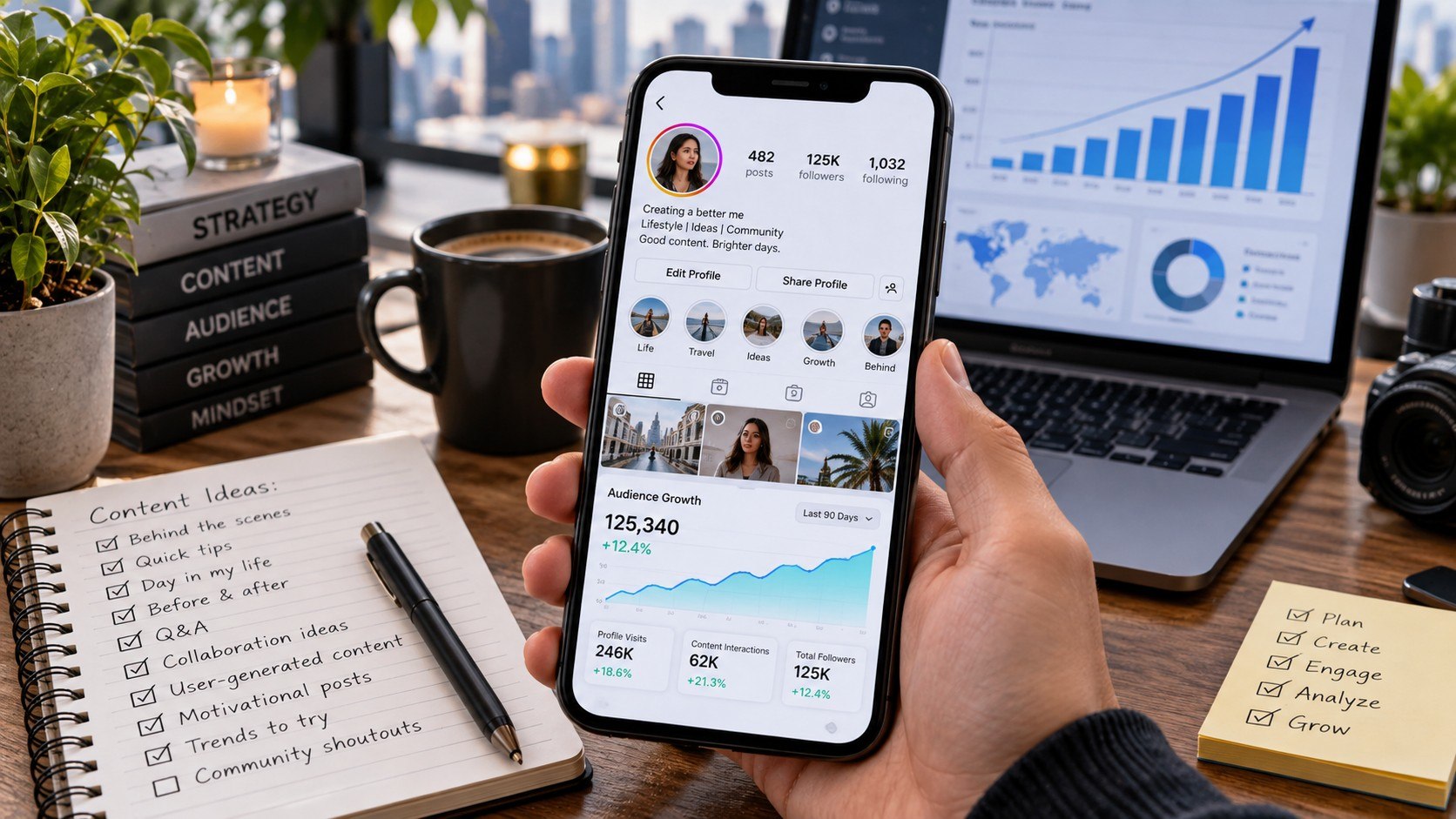
Troubleshooting Instagram growth problems
When an account stops growing, posting more content is not automatically the answer. Diagnose the stage where attention disappears before changing the entire strategy.
- Reels get views but few followers: clarify the bio, pinned posts, niche, and reason to follow future content.
- Posts barely reach non-followers: check recommendation eligibility and Account Status, then reassess originality and topic relevance.
- Followers arrive but engagement stays weak: the viral topic may not match the account’s normal subject.
- Production takes too long: batch filming, reuse research, and turn one idea into several native formats.
- Growth depends on giveaways: replace prize-driven acquisition with content that attracts the intended audience.
Account Status deserves attention when distribution changes suddenly. Instagram uses Recommendation Guidelines for content appearing beyond accounts people already follow. Content can remain permitted while becoming ineligible for recommendation. Buying followers or using follow-unfollow automation also creates misleading numbers. Engagement pods can distort feedback without proving genuine audience demand. A healthy account needs real people choosing to return.
There is no universal daily posting number that guarantees growth. Instagram’s own Best Practices area can show personalized guidance. A creator managing 3 strong posts weekly may outperform someone publishing 14 rushed posts. Quality here means clear audience relevance and original execution. Sustainable production matters because useful patterns only emerge after repeated testing.
FAQ
How can I grow Instagram followers in 2026 without paying?
Use original Reels for discovery, optimize your profile, publish useful carousels, and test topics systematically. Organic publishing can start at $0 with a smartphone and Instagram’s built-in tools.
Do hashtags still help Instagram growth in 2026?
Relevant hashtags can provide context, but they should not replace clear topics and useful captions. Avoid treating large blocks of unrelated hashtags as a growth system.
How often should I post on Instagram in 2026?
There is no single frequency that fits every account. Choose a pace you can maintain while measuring quality, non-follower reach, and follower conversion.
Are Reels still useful for gaining Instagram followers?
Yes. Reels remain a major discovery format, and Trial Reels specifically let creators test content with non-followers. The Reel still needs a clear reason to follow.
Should I buy Instagram followers to make an account look larger?
No. Purchased or automated followers distort audience data and rarely create meaningful engagement. Build real Instagram followers through relevant content and genuine distribution instead.
What should I track besides follower count?
Track non-follower reach, profile visits, follows from content, shares, saves, retention, replies, and business outcomes. These figures reveal where the growth system is failing.
Earlier we wrote about AC Running but Not Cooling: Common HVAC Causes, DIY Checks and 2026 Repair Costs