

Instagram bot purge has shaken the social media industry after millions of fake and inactive accounts disappeared within days. The platform’s latest cleanup affected some of the world’s biggest celebrities, athletes, and influencers. Marketing agencies now question how much of online fame was built on inflated numbers rather than real engagement. Analysts say the move may reshape digital advertising deals during 2026, especially for brands focused on authentic reach. As noted by Baltimore Chronicle, the sudden decline in follower counts triggered a global discussion about transparency across social platforms.
The cleanup was confirmed by Meta Platforms, the parent company of Instagram. According to the corporation, the system regularly removes spam profiles, suspicious pages, and inactive accounts. This process usually happens quietly. However, this latest operation became impossible to ignore because of the massive follower losses among international stars.
Which celebrities lost the most Instagram followers
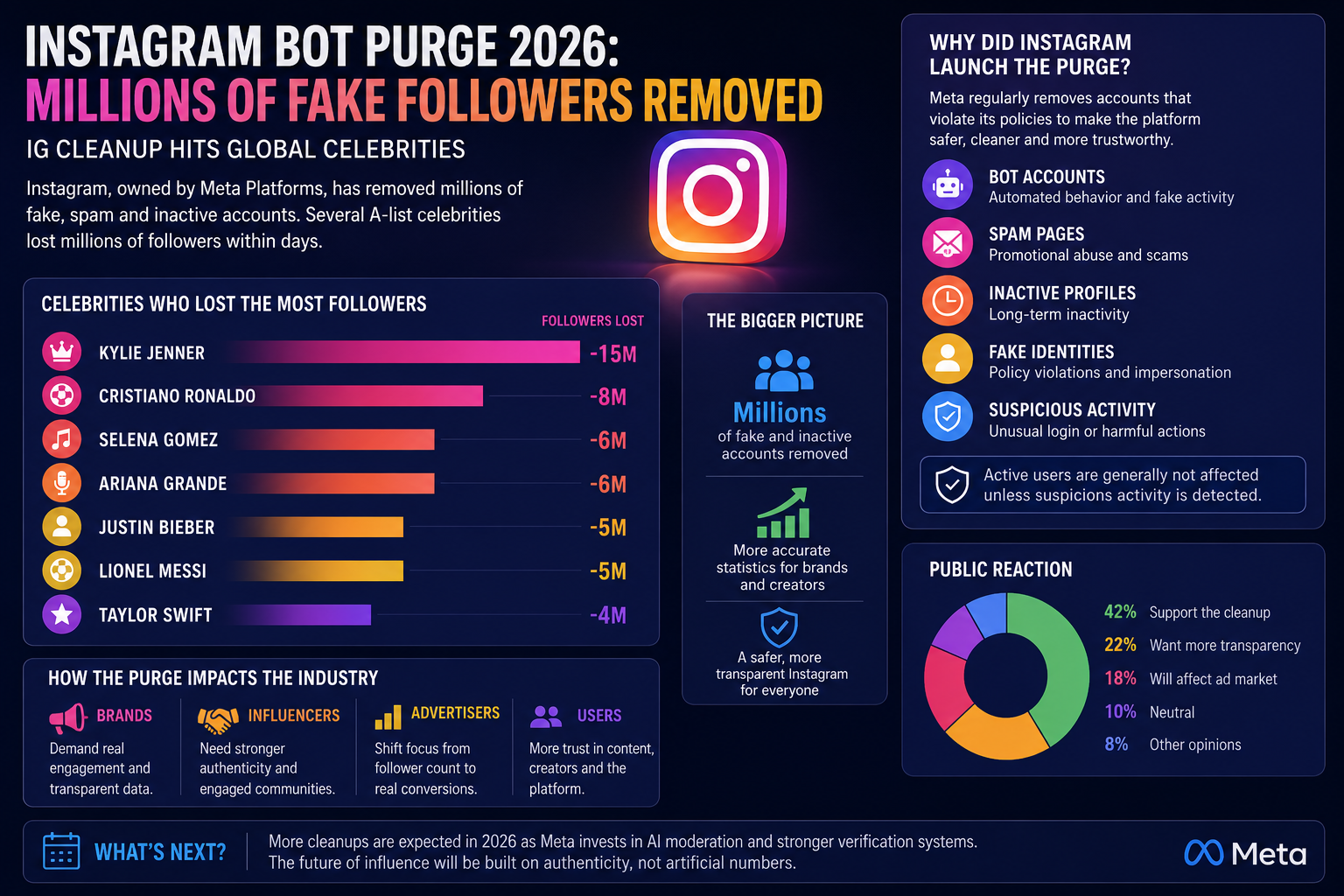
Several famous personalities saw dramatic drops in their audience numbers. Some lost more followers in one week than smaller creators gain in years. The changes immediately fueled speculation about artificial audience growth in the influencer economy.
The biggest declines included:
- Kylie Jenner — lost around 15 million followers
- Cristiano Ronaldo — lost nearly 8 million
- Selena Gomez — down by 6 million
- Ariana Grande — lost approximately 6 million
- Justin Bieber — decreased by 5 million
- Lionel Messi — lost around 5 million
- Taylor Swift — down by 4 million
Many social media analysts argue that these numbers do not necessarily mean celebrities bought fake followers directly. Large accounts naturally attract inactive subscribers over time. Older profiles, abandoned pages, and automated bots often remain attached to major public accounts for years.
Still, the scale of the cleanup surprised even experienced digital marketers. Some agencies described the operation as the largest Instagram purge since the platform’s early moderation campaigns.
Why Meta launched another Instagram cleanup
Meta explained that removing fake profiles improves platform security and advertising quality. The company stated that spam accounts distort engagement metrics and damage trust among advertisers. Brands increasingly demand measurable interaction instead of inflated follower counts.
Before presenting recent engagement statistics, experts recommend looking beyond audience size alone. Several marketing firms already prioritize comments, saves, shares, and watch time rather than raw follower numbers.
Here is how Meta categorizes suspicious accounts:
| Account Type | Reason for Removal | Impact on Platform |
|---|---|---|
| Bot accounts | Automated behavior | Artificial engagement |
| Spam pages | Promotional abuse | Lower content quality |
| Inactive profiles | Long-term inactivity | Distorted statistics |
| Fake identities | Policy violations | Reduced trust |
| Suspicious activity accounts | Unusual login behavior | Security concerns |
After the cleanup, Meta clarified that some accounts could return following additional verification. The company also emphasized that active users should not experience problems unless suspicious activity appears on their profiles.
The corporation believes these actions create a healthier social ecosystem. Critics, however, argue that such purges expose uncomfortable truths about digital popularity.
How the Instagram bot purge affects influencers and brands
The advertising industry reacted quickly after the follower losses became public. Agencies that manage celebrity campaigns now face difficult questions from clients. Brands spending millions on influencer partnerships expect real audiences and measurable conversions.
Several digital strategists say this situation could permanently change sponsorship negotiations. Companies may start demanding detailed analytics instead of focusing only on headline follower counts.
Marketing consultant Rachel Weaver explained the situation in a recent industry discussion:
“Follower numbers became a vanity metric years ago. Real influence comes from audience trust and engagement.”
This shift may benefit smaller creators with loyal communities. Micro-influencers often generate stronger engagement despite having fewer subscribers. Many advertisers already consider these creators more valuable for niche campaigns.
At the same time, celebrities with huge audiences remain powerful marketing tools. Even after losing millions of followers, stars like Cristiano Ronaldo and Selena Gomez still maintain enormous global reach.
Public reaction to the celebrity follower losses
Social media users reacted intensely after screenshots of declining follower counts spread online. Discussions exploded across X, Reddit, TikTok, and YouTube. Some users celebrated the cleanup, calling it a victory against artificial internet fame.
Others questioned whether social networks should publish clearer transparency reports. Critics argue that platforms profit financially from inflated engagement before eventually removing fake activity.
Several recurring opinions appeared online:
- Fans supported stricter moderation policies
- Critics demanded more transparency from Meta
- Advertisers questioned influencer pricing models
- Users debated the meaning of online popularity
- Analysts warned about future reputation risks
The debate also highlighted the growing pressure placed on celebrities in the digital era. Public figures now compete not only through music, sports, or acting careers, but also through algorithm-driven popularity metrics.
For many younger users, follower numbers became a symbol of social status rather than genuine influence.
Could Instagram remove even more fake accounts in 2026
Industry observers believe additional cleanups are highly likely. Meta continues investing heavily in automated moderation systems powered by artificial intelligence. These tools analyze suspicious behavior patterns, spam networks, and coordinated engagement schemes.
Some experts expect stricter verification systems for larger accounts during the next year. Others predict that platforms may eventually introduce more visible authenticity indicators for creators and brands.
At the same time, the pressure from advertisers continues growing. Global brands increasingly demand transparency because influencer marketing budgets keep expanding worldwide.
The latest Instagram purge may become a turning point for the entire creator economy. The era of inflated numbers could slowly give way to a stronger focus on authentic communities and measurable interaction.
Even after losing millions of followers, celebrity influence remains enormous. Yet the industry now faces a new reality where visibility alone may no longer guarantee credibility.
Earlier we wrote that Ted Turner dies at 87: CNN founder’s global media legacy and impact on journalism