

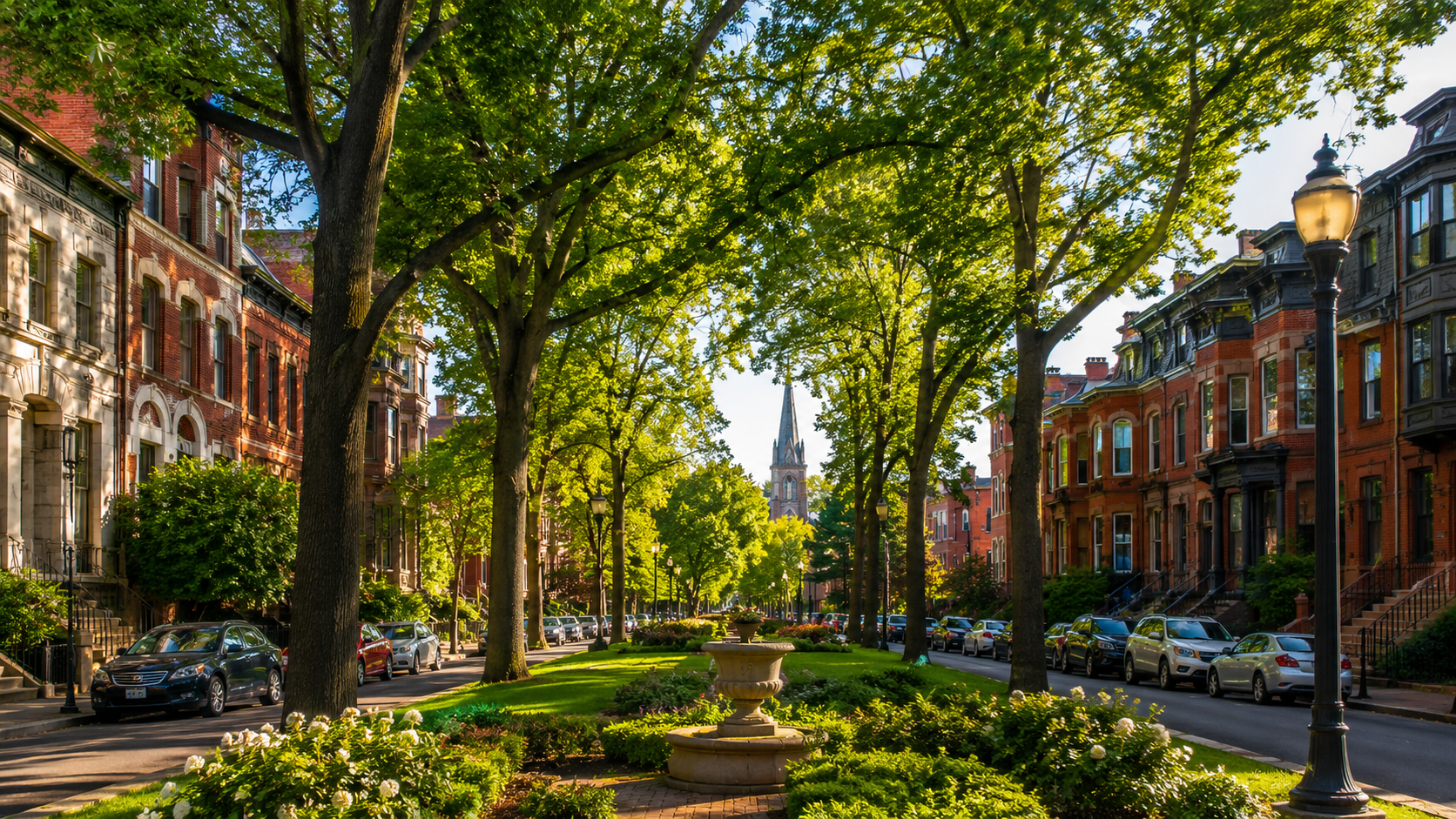
Searching for a bolton hill baltimore guide usually means trying to solve a practical problem fast.
Most people comparing Bolton Hill against other Baltimore neighborhoods are deciding between convenience, architecture, commute time, noise levels, and housing quality. The neighborhood consistently ranks well because it combines several things that are difficult to find together in Baltimore: historic streets, strong transit access, quieter residential blocks, and proximity to downtown without feeling entirely consumed by downtown activity, as noted by the editorial team at Baltimore Chronicle.
Bolton Hill also looks very different once someone actually lives there for several months.
The architecture is beautiful, but many buildings are old enough to create real maintenance issues. Parking becomes frustrating on certain blocks. Some renters love the calm atmosphere near MICA and Midtown, while others eventually realize they want more restaurants and nightlife within immediate walking distance. Compared to Harbor East or Canton, Bolton Hill feels slower, more residential, and more historically rooted.
For buyers and renters researching living in bolton hill, the neighborhood usually becomes appealing because it feels stable without becoming suburban.
TL;DR
Bolton Hill is one of Baltimore’s strongest neighborhoods for residents who want historic architecture, walkability, and central-city transit access.
It works especially well for:
- MICA students and faculty
- Remote workers
- DC commuters
- Historic-home buyers
- Residents who prefer quieter city blocks
It works less well for people who prioritize:
- Large modern apartment towers
- Easy parking every night
- Heavy nightlife
- Suburban-style retail convenience
- Amenity-focused luxury housing
People comparing Bolton Hill with Mount Vernon, Station North, or Federal Hill usually end up choosing based on lifestyle pace rather than price alone.
Where Bolton Hill Is and Why That Matters
Bolton Hill sits north of downtown Baltimore and west of Mount Vernon.
That location changes daily life more than many first-time visitors expect because the neighborhood functions as a connector between several major Baltimore districts rather than as an isolated residential area. Residents can reach Penn Station quickly, move into downtown without a long commute, access Interstate 83 efficiently, and walk into Station North or Midtown without relying heavily on driving.
According to the official neighborhood profile from Live Baltimore, Bolton Hill has strong access to Light Rail, Metro Subway, regional transit, and bus infrastructure.
For many residents, transit access becomes the reason they stay.
Someone commuting occasionally to Washington through MARC, working downtown three days per week, or trying to reduce car dependency can realistically structure daily life differently here compared to many other Baltimore neighborhoods. That becomes especially important as parking costs, commuting fatigue, and gas expenses continue increasing.
Nearby Areas That Shape Daily Life
Bolton Hill is heavily influenced by nearby neighborhoods and institutions.
The surrounding areas include:
- Mount Vernon
- Station North
- Reservoir Hill
- Midtown Belvedere
- Charles North
- Madison Park
The neighborhood also sits close to MICA, Penn Station, and major Midtown employment corridors, which keeps daytime activity relatively consistent even though the area feels quieter at night.
Readers comparing nearby districts should also review Baltimore Chronicle’s guide to Mount Vernon Baltimore, especially when deciding between nightlife access and residential calm.
What Living in Bolton Hill Actually Feels Like
The strongest feature of bolton hill neighborhood guide searches is usually the same hidden question: what does the place feel like after the novelty wears off?
Bolton Hill feels slower than many central Baltimore neighborhoods.
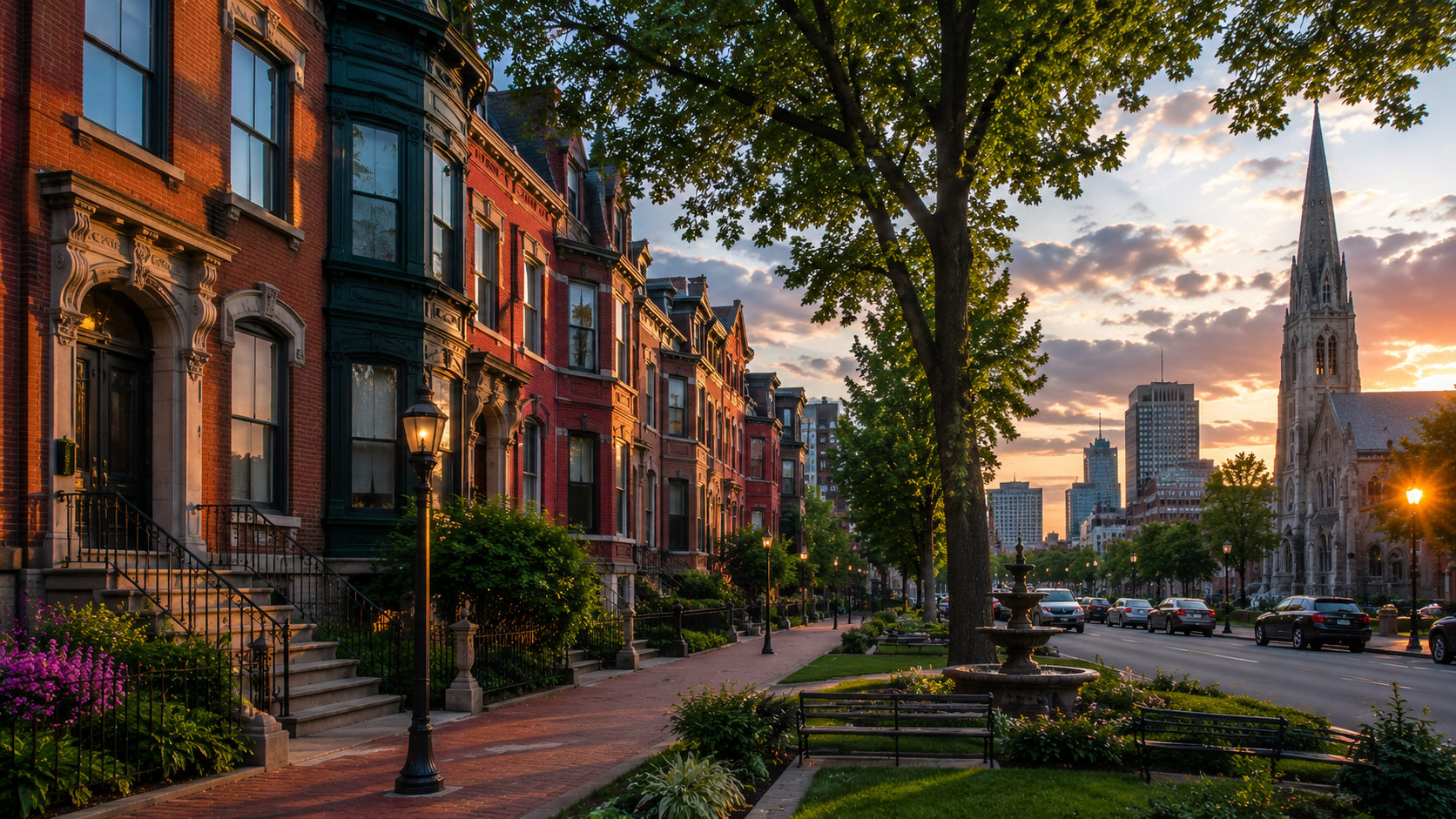
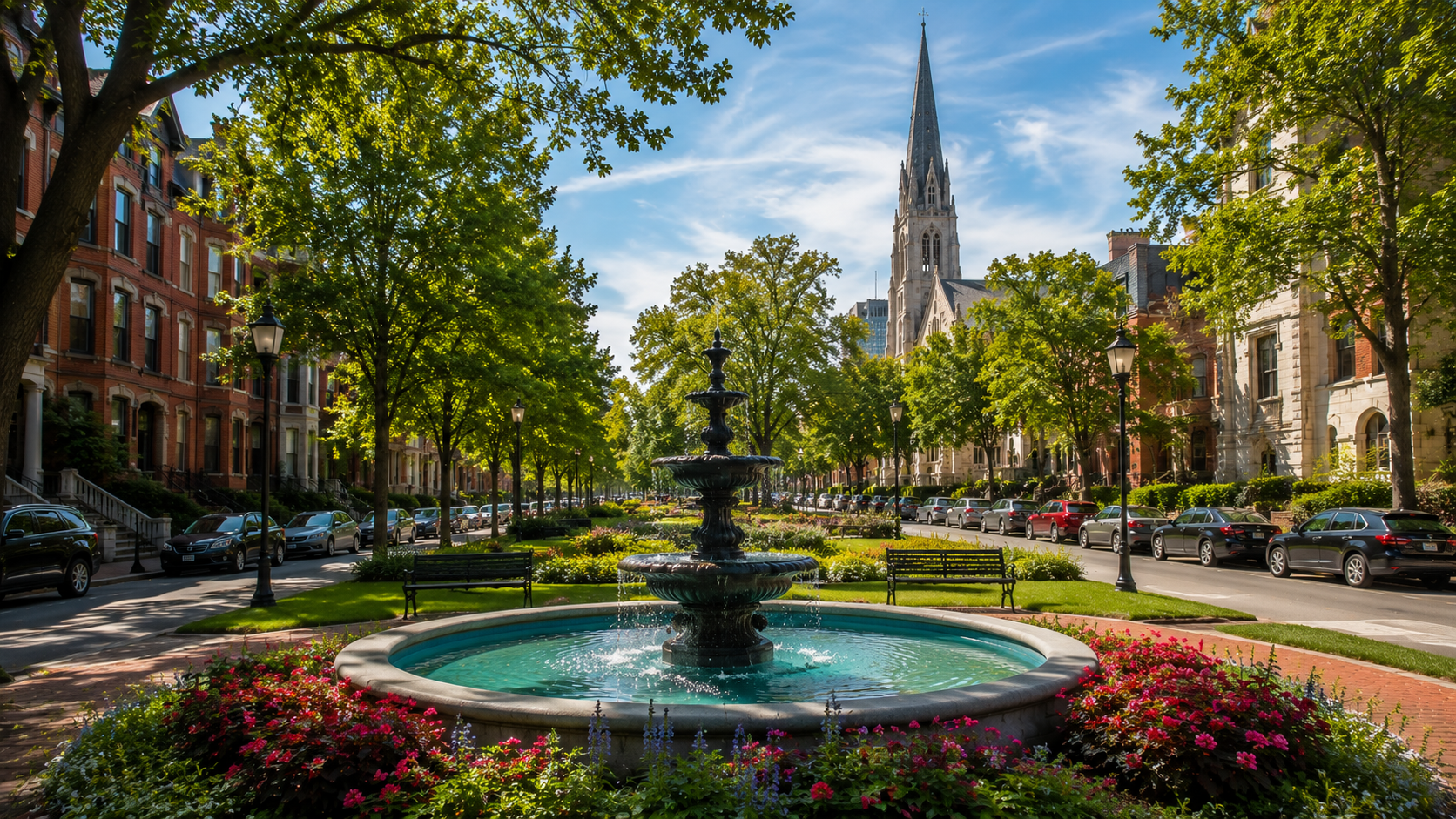
Wide streets, landscaped medians, historic churches, mature trees, and long stretches of preserved rowhomes create a neighborhood atmosphere that feels noticeably different from waterfront districts dominated by newer construction. Walking through Bolton Hill often feels quieter and less commercially intense than Federal Hill, Harbor East, or Fells Point.
Some blocks become almost silent late at night.
That calm atmosphere attracts a very specific type of resident:
- Hybrid professionals
- Longtime homeowners
- MICA faculty
- Graduate students
- Couples wanting quieter city living
- Residents prioritizing architecture over nightlife
- Buyers searching for historically preserved homes
At the same time, Bolton Hill can occasionally feel too quiet for people expecting dense retail or restaurant activity.
Many residents regularly leave the immediate neighborhood for groceries, entertainment, fitness studios, or broader dining options. That tradeoff matters because people moving from larger cities sometimes assume every walkable Baltimore neighborhood functions like a dense mixed-use district.
Bolton Hill does not.
The Historic Character Is Everywhere
Some Baltimore neighborhoods contain isolated historic blocks.
Bolton Hill feels architecturally continuous instead of fragmented. Entire sections of the neighborhood maintain strong visual cohesion through preserved facades, decorative ironwork, marble steps, church architecture, and landscaped public spaces.
The neighborhood includes:
- Victorian rowhouses
- Brownstones
- Ornamental masonry
- Decorative staircases
- Historic fountains
- Tree-lined medians
- Preserved institutional buildings
The official Baltimore City historic district archive outlines Bolton Hill’s preservation status and architectural significance.
That historic identity shapes practical daily life too.
Exterior renovations can face stricter review requirements. Housing systems may be outdated. Older windows and aging plumbing remain common. Buyers attracted to the visual appeal sometimes underestimate how expensive historic maintenance becomes over time.
People researching historic neighborhoods baltimore often place Bolton Hill near the top because the historic atmosphere still dominates ordinary residential streets rather than surviving only around landmarks.
MICA’s Influence on the Neighborhood
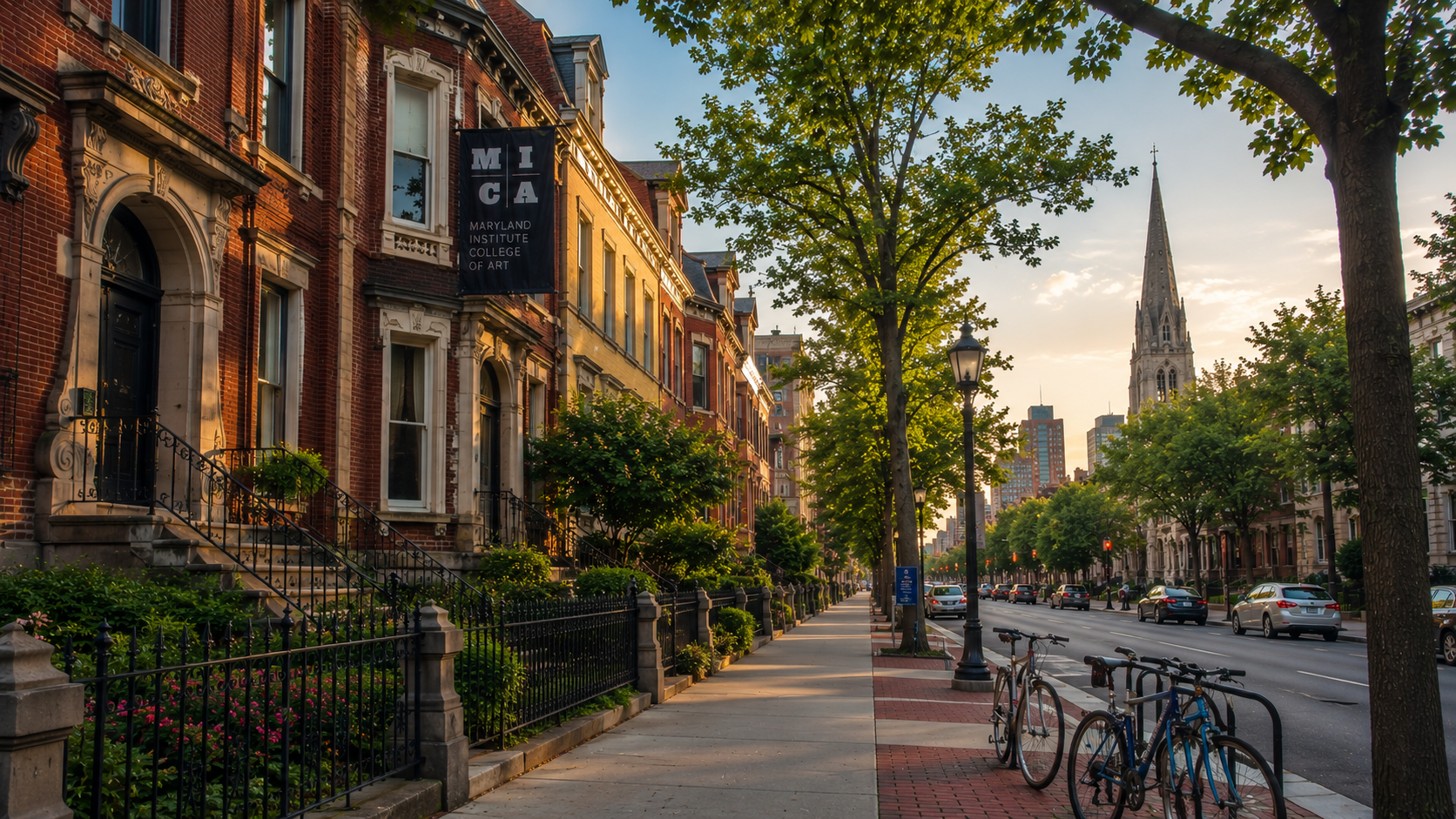
The Maryland Institute College of Art shapes Bolton Hill more than many newcomers initially realize.
MICA affects:
- Rental demand
- Coffee shop traffic
- Student housing
- Gallery culture
- Transit activity
- Foot traffic patterns
- Neighborhood demographics
The official Baltimore tourism portal identifies MICA as one of Baltimore’s major arts institutions and a central part of the city’s cultural identity.
The result is a neighborhood that feels creative without becoming overwhelmingly student-driven. This distinction matters because many people hear “art school neighborhood” and immediately picture nonstop noise or unstable turnover. Bolton Hill usually feels calmer than that stereotype suggests. Student activity exists, especially near campus buildings, but the broader neighborhood still feels residential first.
The institutional presence also creates practical advantages.
Cafes, daytime businesses, transit usage, and pedestrian activity remain stronger than they might otherwise be in a similarly residential Baltimore neighborhood. That helps prevent Bolton Hill from feeling isolated despite its quieter atmosphere.
For people researching the best neighborhoods near mica baltimore, Bolton Hill remains one of the most practical choices because students and faculty can reduce driving dependence significantly.
Housing and Apartments in Bolton Hill
Housing is where Bolton Hill becomes more complicated.
The neighborhood has enormous architectural appeal, but consistency varies sharply from building to building. Two apartments on the same street can feel completely different depending on renovation quality, landlord management, insulation, plumbing upgrades, and building age.
People searching for bolton hill apartments should expect older housing stock rather than standardized luxury development.
Common Housing Types
Most inventory falls into several categories.
| Housing Type | Typical Experience | Best For |
|---|---|---|
| Historic rowhomes | Large layouts, architectural detail, expensive upkeep | Buyers prioritizing character |
| Converted apartments | Unique interiors, inconsistent renovations | Students and young professionals |
| Condo buildings | Lower maintenance, smaller inventory | Professionals and downsizers |
| Mid-century apartment buildings | More predictable systems and amenities | Renters wanting simplicity |
That variation matters because online apartment listings often hide operational realities.
Listings usually emphasize:
- Exposed brick
- Hardwood floors
- Tall ceilings
- Decorative fireplaces
- Historic detailing
They often downplay:
- Drafty windows
- Street noise
- Weak insulation
- Moisture issues
- Aging HVAC systems
- Parking frustration
Historic housing creates atmosphere, but it also creates friction.
Questions Smart Renters Ask Before Signing
People relocating from newer apartment markets often underestimate how much quality varies inside historic Baltimore housing stock.
Before signing a lease, renters should verify:
- Whether central air exists
- What utilities are included
- If laundry is in-unit
- How secure package delivery is
- Whether windows have been updated
- How difficult parking becomes at night
- If plumbing or electrical systems were modernized recently
These details matter more in Bolton Hill than in many newer waterfront developments where building systems are standardized.
Readers comparing affordability between central neighborhoods should also review Baltimore Chronicle’s breakdown of the cost of living in Baltimore.
Pricing Expectations
Bolton Hill is not generally considered a low-cost neighborhood.
Pricing usually reflects:
- Preservation quality
- Building size
- Renovation status
- Parking availability
- Block reputation
- Proximity to MICA
Large historic homes may appear relatively affordable compared to major East Coast cities outside Baltimore, but long-term maintenance expenses can escalate quickly because of roofing, masonry, HVAC, and aging infrastructure.
Renters also pay partially for neighborhood identity rather than luxury amenities alone.
Transit Access and Car-Free Living
Transit is one of Bolton Hill’s strongest advantages.
Many Baltimore neighborhoods advertise walkability while still requiring frequent driving. Bolton Hill comes closer than most to supporting a practical lower-car lifestyle because residents can combine Light Rail, Metro Subway, MARC access, buses, and walkability relatively efficiently.
Residents can access:
- MICA/Mount Royal Light Rail stop
- State Center Metro Subway station
- Penn Station
- MTA bus lines
- Midtown bike corridors
The transportation overview published by Live Baltimore explains why the neighborhood consistently ranks highly for commuting convenience.
For Baltimore standards, the transportation setup is unusually flexible.
Who Benefits Most From the Transit Setup
Transit convenience matters differently depending on lifestyle.
Bolton Hill works especially well for:
- DC commuters
- Downtown employees
- MICA students
- Remote workers sharing one vehicle
- Residents traveling through Penn Station regularly
- People reducing transportation costs
At the same time, Bolton Hill is not perfectly car-free.
Residents still often drive outside the neighborhood for:
- Large grocery stores
- Warehouse shopping
- Medical appointments
- Specialty retail
- Certain entertainment venues
People considering a lower-car lifestyle should also read Baltimore Chronicle’s guide to living car-free in Baltimore.
Safety, Street Activity, and Daily Reality
Every Baltimore neighborhood discussion eventually reaches the same topic.
What does everyday life actually feel like once the architecture stops being exciting?
Bolton Hill is generally perceived as quieter and more stable than several nearby areas, but it remains part of central Baltimore. Residents still deal with package theft, occasional car break-ins, and normal urban concerns connected to density and transit access.
The neighborhood benefits from active community involvement.
The official Bolton Hill community organization outlines local initiatives tied to maintenance, beautification, and neighborhood services. Those efforts help explain why many streets feel more maintained than parts of adjacent neighborhoods.
Still, Baltimore’s block-by-block reality applies here too.
Why Visiting in Person Matters
Two apartments separated by a few streets can create completely different daily experiences.
Before moving, prospective residents should:
- Walk the block at night
- Test parking personally
- Observe transit activity
- Look at alley conditions
- Check rush-hour traffic
- Visit during weekends
Online apartment listings rarely communicate neighborhood rhythm accurately.
Readers wanting broader context should also review Baltimore Chronicle’s Baltimore neighborhood safety guide.
Bolton Hill Compared to Nearby Neighborhoods
Most people comparing Bolton Hill are also evaluating several nearby neighborhoods simultaneously.
Bolton Hill vs Mount Vernon
These neighborhoods share proximity and historic architecture, but daily experience differs substantially.
| Category | Bolton Hill | Mount Vernon |
|---|---|---|
| Atmosphere | Residential and quieter | Denser and busier |
| Architecture | Large rowhomes | Mixed-use historic buildings |
| Nightlife | Limited | Much stronger |
| Dining | More limited | Broader selection |
| Transit | Excellent | Excellent |
| Housing feel | Residential | Urban mixed-use |
Mount Vernon generally works better for residents wanting restaurants and nightlife directly outside their building. Bolton Hill fits people prioritizing calmer residential streets. Readers deciding between the two should compare this guide with Baltimore Chronicle’s full Mount Vernon Baltimore guide.
Bolton Hill vs Station North
Station North feels younger, louder, and more nightlife-oriented.
Bolton Hill feels quieter, older, and more residential. Residents deciding between the two often split based on energy level preferences rather than commute convenience because both neighborhoods remain centrally located.
Bolton Hill vs Hampden
Hampden attracts residents prioritizing retail corridors, independent shops, and restaurant density.
Bolton Hill attracts residents prioritizing:
- Historic calm
- Central transit access
- Architectural cohesion
- Proximity to Midtown institutions
Readers comparing lifestyle fit should also review Baltimore Chronicle’s Hampden Baltimore guide.
Tradeoffs and Common Mistakes
Most neighborhood guides oversell positives and ignore friction points. Bolton Hill has several recurring tradeoffs that matter in actual day-to-day living.
Underestimating Historic Maintenance Costs
Historic homes create atmosphere.
They also create:
- Expensive masonry repairs
- Drafty interiors
- Aging plumbing
- Uneven floors
- Moisture management issues
- Older electrical systems
Buyers sometimes underestimate long-term ownership costs because the architecture feels so appealing initially.
Assuming the Neighborhood Has Endless Retail
Bolton Hill is residential first. Residents frequently leave the neighborhood for:
- Grocery shopping
- Fitness studios
- Retail errands
- Broader dining options
- Entertainment
People expecting Harbor East-style convenience can feel disappointed after moving.
Ignoring Parking Conditions
Parking difficulty changes dramatically depending on block and building type.
Anyone driving daily should evaluate:
- Evening parking availability
- Residential permit rules
- Walk distance from parked vehicles
- Street cleaning schedules
- Winter parking conditions
Parking frustration becomes one of the most common complaints among newer residents.
Why Bolton Hill Still Ranks Highly
Many Baltimore neighborhoods contain beautiful architecture.
Far fewer combine:
- Historic preservation
- Walkability
- Strong transit access
- Institutional stability
- Central location
- Residential calm
That combination explains why Bolton Hill consistently ranks highly for:
- historic neighborhoods baltimore
- living in bolton hill
- bolton hill neighborhood guide
- MICA-adjacent housing
- Central Baltimore relocation
The neighborhood offers a version of Baltimore that feels residential, historic, and urban at the same time without leaning too heavily into tourism branding or nightlife culture.
Readers planning relocation research should also review Baltimore Chronicle’s moving to Baltimore resources before signing a lease or purchasing property.
FAQ
Is Bolton Hill a good neighborhood in Baltimore?
Yes for many residents. Bolton Hill is known for historic architecture, transit access, quieter residential streets, and proximity to MICA and downtown.
Is Bolton Hill expensive?
Compared to many Baltimore neighborhoods, Bolton Hill is generally mid-to-high priced, especially for renovated historic homes and well-maintained apartments.
Is Bolton Hill safe?
Experiences vary by block. Many residents describe Bolton Hill as calmer and more residential than nearby nightlife-heavy districts, though standard urban precautions still apply.
Can you live in Bolton Hill without a car?
Many residents do. Light Rail, Metro Subway, buses, and Penn Station access make Bolton Hill one of Baltimore’s more practical neighborhoods for car-light living.
Is Bolton Hill good for MICA students?
Yes. Bolton Hill remains one of the most convenient neighborhoods for MICA students and faculty because of walkability and transit access.
Are there apartments in Bolton Hill?
Yes. Housing includes converted historic homes, apartment buildings, condos, and rental units integrated into older rowhouses.
What neighborhoods are near Bolton Hill?
Nearby neighborhoods include Mount Vernon, Station North, Reservoir Hill, Midtown Belvedere, Charles North, and Madison Park.
Does Bolton Hill have nightlife?
The neighborhood itself is relatively quiet. Most nightlife activity is concentrated closer to Station North and Mount Vernon.
Earlier we wrote about Patterson Park Neighborhood Guide: Housing, Food, Park Life, Commute