

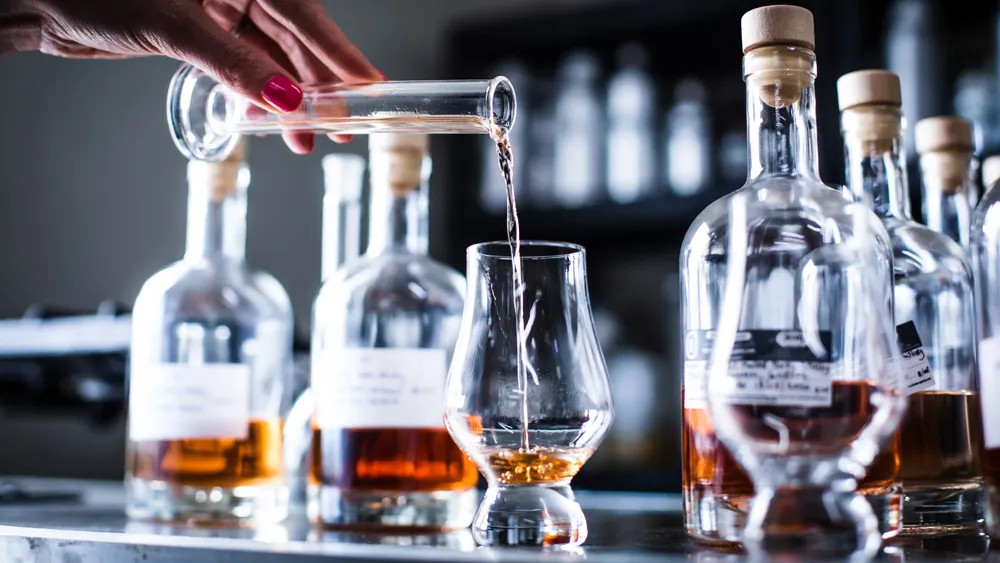
Home alcohol distilleries are no longer subject to a century-old federal ban following a landmark court ruling. The US Court of Appeals for the Fifth Circuit recently delivered a significant blow to federal overreach. In the case of McNutt v. US Department of Justice, judges examined a law dating back to 1868. This law strictly prohibited the operation of home distilling setups for personal consumption. The court found that Congress had exceeded its legal boundaries by maintaining this prohibition. This decision represents a major victory for proponents of constitutional federalism across the United States.
It challenges the long-standing assumption that the federal government can criminalize private, at-home production of spirits. Legal experts are now analyzing the broader implications for state and federal power balances. As noted by the Baltimore Chronicle, via reason.
The limits of the federal taxing power
The ruling, authored by Judge Edith Jones, clarifies that the federal tax power is not a universal license. Congress argued that the ban was necessary to protect tax revenue from distilled spirits. However, the court pointed out that a tax must actually produce some revenue to be valid. By banning the activity entirely, the law prevented the taxable product from ever coming into existence. A legitimate tax should leave citizens with a lawful choice to pay the levy or refrain.
Key legal arguments used by the court include:
- The tax power is intended to raise money, not simply to prohibit private behavior.
- An anti-revenue provision violates the essential feature of constitutional taxation.
- Federal limits must be respected to prevent Congress from criminalizing nearly any at-home conduct.
- The ruling aligns with the NFIB v. Sebelius precedent regarding the nature of federal taxes.
Judge Jones emphasized that the government’s logic could lead to the criminalization of any private activity. If the government can ban something just to simplify tax collection, then no at-home conduct is safe. The court’s rejection of this logic protects the private sphere from excessive federal intervention. This interpretation reinforces the idea that federal powers are enumerated and limited, not absolute.
Analyzing the Necessary and Proper Clause
Beyond taxes, the court examined whether the ban was authorized by the Necessary and Proper Clause. This clause allows Congress to pass laws required to execute its other specific powers. The Fifth Circuit concluded that the ban was not a “proper” exercise of this authority. Under Supreme Court precedent, a power must be ancillary and not a great, substantive, independent authority.
Prohibiting personal home distilling is considered a substantive power that belongs to the states.
The court reached a rare cross-ideological agreement on this complex issue of federalism:
| Judge | Appointing President | Judicial Philosophy |
| Edith Jones | Ronald Reagan | Conservative |
| James Graves | Barack Obama | Liberal |
This unanimity suggests that the federal government’s arguments were particularly weak in this specific context. Even judges with different ideological backgrounds agreed that the 1868 law overstepped constitutional boundaries. This provides a strong foundation for future challenges to similar federal prohibitions. The decision underscores that some powers are simply too vast for the federal government to claim.
The shadow of the Commerce Clause
Despite the win, a significant legal hurdle remains for those interested in home alcohol distilleries. The Fifth Circuit did not address whether the Commerce Clause could justify the federal ban. The government chose not to argue this specific point during the appeal process.
This leaves a massive loophole for future federal enforcement efforts in other jurisdictions. Under the Gonzales v. Raich precedent, Congress has broad power to regulate nearly any economic activity.
The 2005 Raich decision allows the federal government to regulate products that never cross state lines. This includes items produced for personal use, such as medical marijuana or, potentially, home distilled spirits. If the government shifts its strategy, it could defend the ban as a regulation of interstate commerce.
Many legal scholars hope the Supreme Court will eventually limit the reach of the Raich decision. Until then, the legal status of home distilling remains somewhat precarious outside the Fifth Circuit.
Future legal battles are expected as other courts review similar cases. A challenge is currently pending before the Sixth Circuit Court of Appeals. The outcome of that case could create a split among federal circuits. If different courts disagree, the Supreme Court will likely have to settle the matter. For now, enthusiasts in certain states can celebrate a historic step toward legal home production.
Earlier we wrote about Bulk Trash Pickup in Baltimore: What They Take, Schedule, 311 Steps