

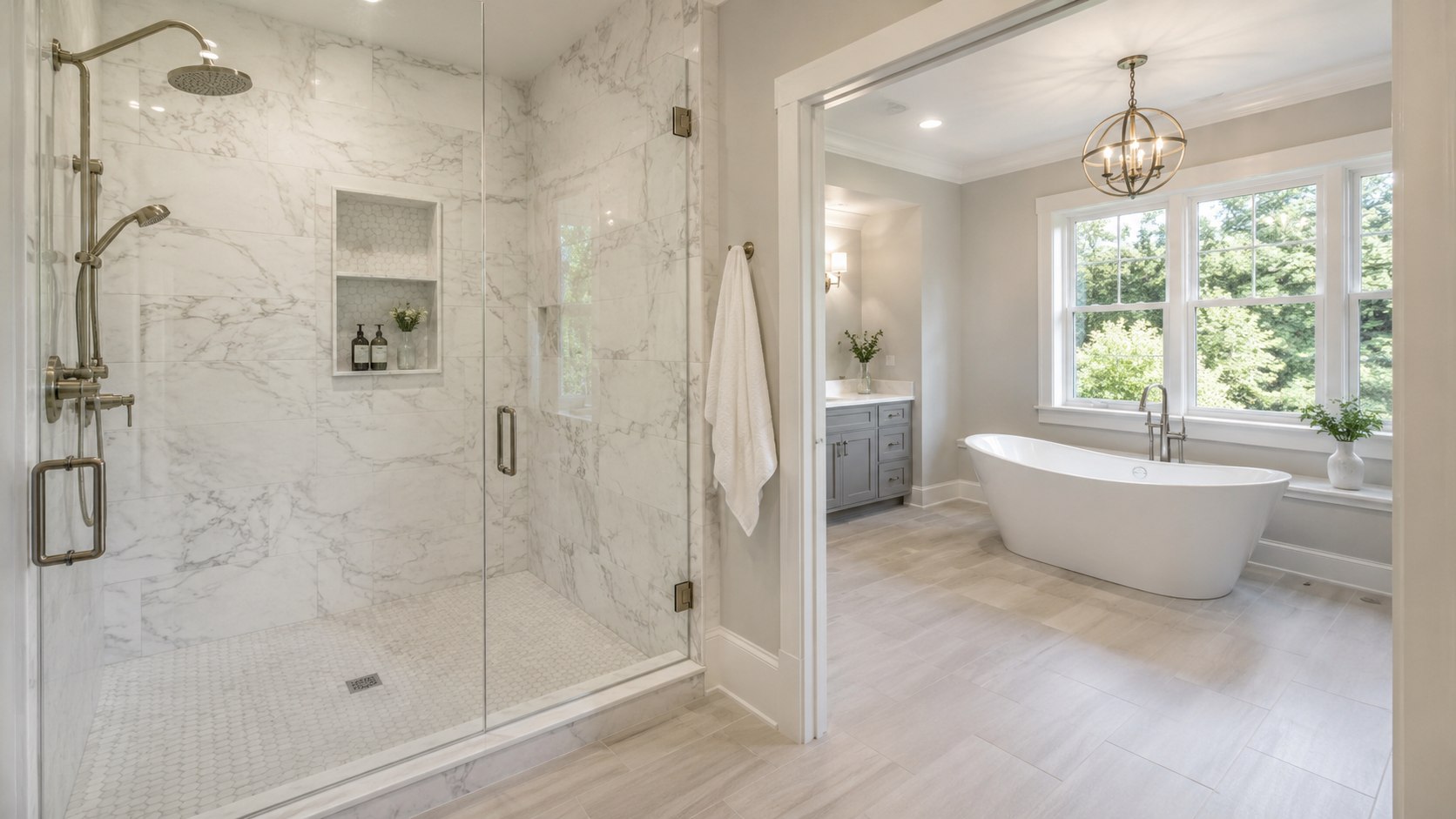
Most homeowners should choose a walk-in shower if the home already has at least one bathtub elsewhere. A tub is the better resale move if the property has only one full bathroom, targets families with young children, or sits in a market where appraisers and buyers expect a full bath, аs noted by Baltimore Chronicle.
The practical answer to walk in shower vs tub which adds value 2026 is not “showers always win” or “never remove a tub.” It depends on bathroom count, buyer profile, project cost, and whether the renovation solves a real problem: an unsafe, outdated, hard-to-clean bathroom that hurts showings.
Key takeaways
- Keep at least one bathtub in most resale-focused homes, especially three-bedroom houses marketed to families.
- Choose a walk-in shower for primary suites, aging-in-place needs, small bathrooms, and homes with another tub.
- Do not overspend on luxury tile, body sprays, or custom glass unless the local price tier supports it.
For homeowners still setting the budget, Baltimore Chronicle’s guide to how much a bathroom remodel costs in the USA in 2026 is a useful first stop before comparing shower and tub quotes.
At a glance
| Factor | Walk-in shower | Bathtub |
|---|---|---|
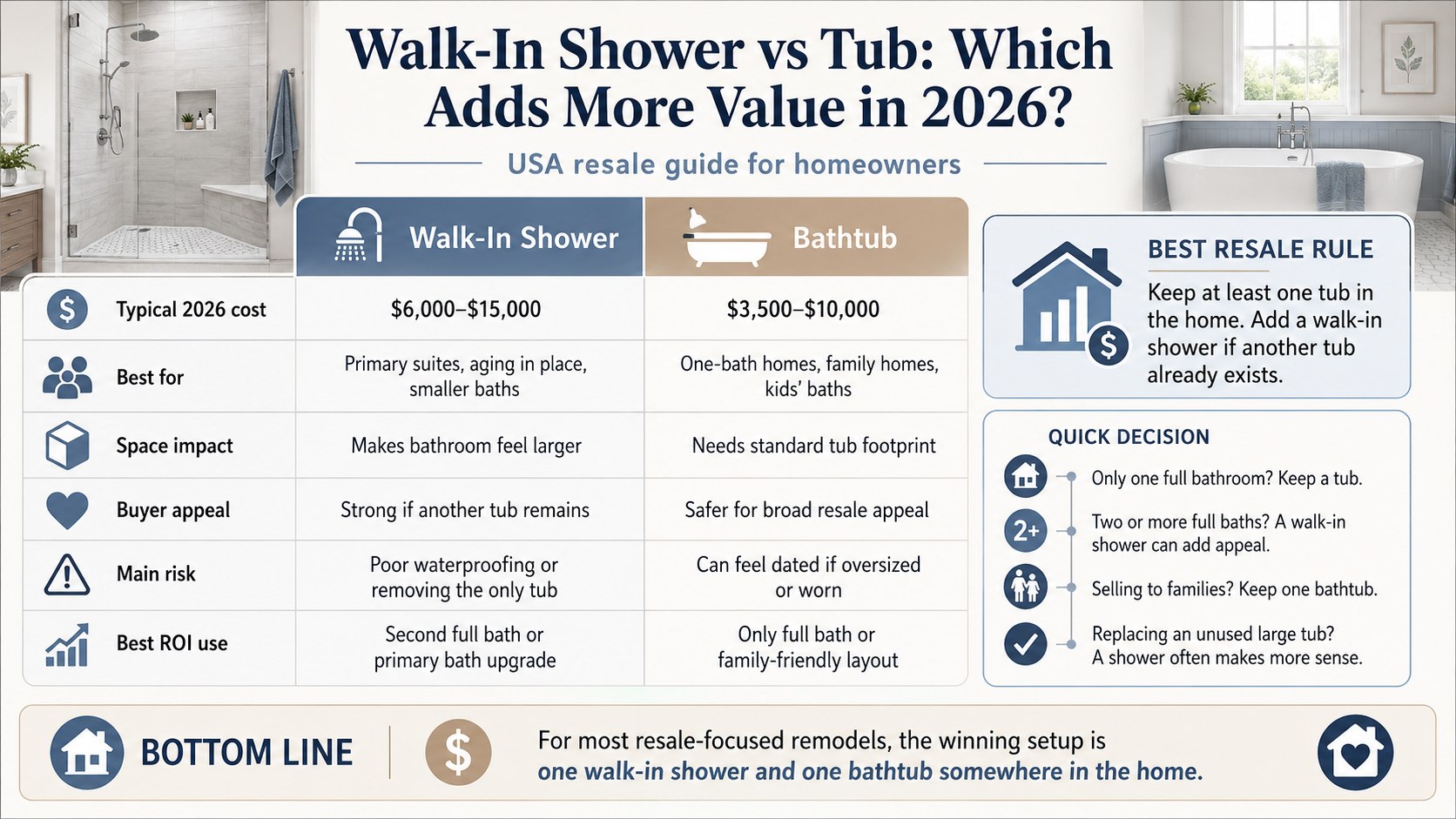
| Best resale fit | Primary suite, second full bath, aging-in-place remodel | Only full bath, family home, kids’ bathroom |
| Typical 2026 installed cost | $6,000–$15,000 for many professional projects; more for custom tile | $3,500–$10,000 for many replacement tubs; more for cast iron or major plumbing |
| Daily use | Fast, accessible, easier for adults | Better for bathing children, pets, soaking, and multi-use needs |
| Space | Can make a small bath feel larger with clear glass | Needs a standard 60-inch alcove or larger footprint |
| Repair risk | Waterproofing, grout, glass hardware, drain slope | Caulk lines, tub finish, overflow, shower surround seams |
| Lifespan | Often 15–25 years if waterproofed correctly | Often 15–30 years depending on material and finish |
| Climate considerations | Strong fit in warm states like Florida, Texas, Arizona, and Nevada | Still common in colder and family-heavy markets across Ohio, Pennsylvania, Michigan, and New York suburbs |
| Buyer reaction | Positive when stylish, low-threshold, and not the home’s only bathing option | Positive when clean, modern, and not oversized or dated |
Walk in shower vs tub which adds value 2026 by resale data
Resale data points to a split decision. Bathroom remodels can recover meaningful value at sale, but they rarely return every dollar spent. Zillow’s 2025 guidance, based on JLC Cost vs. Value data, says bathroom remodels typically return only part of the investment, with midrange projects performing better than upscale or ADA-heavy projects in recent data.
Buyer preference data also supports keeping a tub somewhere in the home. NAHB reported that 78% of buyers rated both a shower stall and tub in the primary bath as essential or desirable in its 2024 feature-preference coverage.
That does not mean every bathroom needs a tub. It means a resale-focused renovation should avoid turning a typical family home into a no-tub listing unless the local market clearly rewards that layout.
A strong resale layout in 2026 often looks like this: a comfortable walk-in shower in the primary bath and a clean tub-shower combo in the hall bath. That mix serves adults, guests, children, pets, and future accessibility needs without forcing one fixture to do every job.
For resale, the safest rule is simple: upgrade the bathroom buyers see as dated, but do not remove the only bathtub unless the property is clearly aimed at adults without children.
Walk-in shower: pros, cons, and ideal buyer
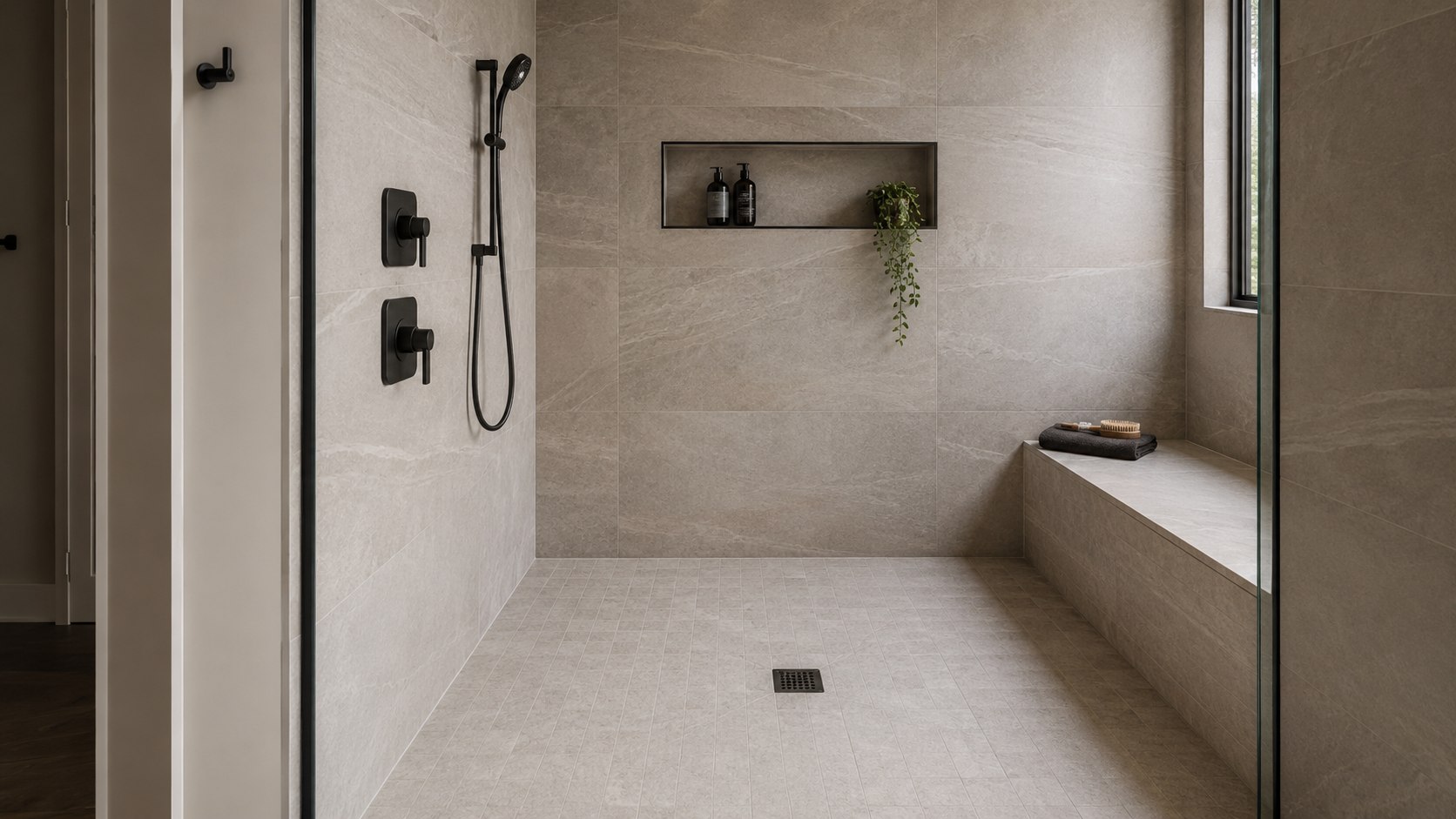
A walk-in shower resale value case is strongest when the existing tub is unused, stained, hard to step into, or making the bathroom feel cramped. Glass panels, large-format tile, a handheld showerhead, and a low curb can make the room feel newer during showings.
Pros
- Better access for older adults, people with knee or hip issues, and anyone planning to age in place.
- Cleaner visual presentation in listings, especially with frameless or semi-frameless glass.
- More usable shower space than a standard 30-by-60-inch tub-shower combo.
- Good fit for primary suites, condos, townhomes, and second bathrooms.
Walk-in showers also support practical upgrades that buyers notice: a bench, a niche, slip-resistant tile, grab-bar blocking inside the wall, and a handheld fixture from Delta, Moen, Kohler, or American Standard.
Water use can be another selling point if the showerhead is efficient. EPA WaterSense-labeled showerheads use no more than 2.0 gallons per minute while meeting performance criteria, compared with the standard 2.5 gpm reference cited by the EPA. Source: EPA WaterSense showerheads, https://www.epa.gov/watersense/showerheads.
Cons
- A bad waterproofing job can create expensive hidden damage.
- Frameless glass adds cost and needs regular cleaning.
- Removing the only tub can shrink the buyer pool.
- Custom tile can over-improve a modest home if nearby comps are basic.
The biggest mistake is paying for a high-end wet room in a neighborhood where buyers mainly care about a clean, functional bath. In many US markets, buyers will reward a fresh bathroom, not a luxury spa buildout.
Ideal user
A walk-in shower fits homeowners who plan to stay five years or longer, adults without young children, retirees, and sellers who already have another tub. It also fits smaller bathrooms where a glass shower makes the footprint feel less boxed in.
Bathtub: pros, cons, and ideal buyer
A bathtub resale value case is strongest when the home has only one full bathroom or when the likely buyer is a family. In listings, “no tub” can become an objection for parents who bathe toddlers, wash pets, or want a flexible full bath.
Pros
- Protects the home’s status as a practical full bath for many buyers.
- Works for children, pets, soaking, and occasional household tasks.
- Usually costs less than a custom tiled shower when plumbing stays in place.
- Pairs well with a shower curtain or sliding glass door in smaller bathrooms.
A basic alcove tub from Kohler, American Standard, Delta, or Bootz can be enough for resale if the surround, valve, caulk, and ventilation are clean. Buyers usually react more strongly to condition than to brand name in a secondary bathroom.
Cons
- Higher step-over height than a low-threshold shower.
- Can feel dated if paired with yellowed fiberglass or old sliding doors.
- Less comfortable for adults who only shower.
- Oversized soaking tubs can waste square footage in the primary suite.
The riskiest tub choice in 2026 is not the standard alcove tub. It is the large corner jetted tub from an older remodel that takes up floor space, looks dated, and rarely gets used.
Ideal user
A tub fits owners of one-bath homes, three-bedroom suburban houses, rental properties aimed at families, and sellers who need the broadest buyer pool. It also fits landlords who want a durable, familiar fixture that maintenance teams can repair without specialty parts.
Cost and ROI in 2026
The shower vs tub ROI calculation starts with cost control. A $7,500 shower conversion in a $425,000 home can make sense if it fixes a dated primary bath. A $28,000 custom shower in a starter home may look good but fail as a resale investment.
As of 2026, many professionally installed walk-in showers fall around $6,000 to $15,000, depending on tile, glass, drain work, waterproofing, and local labor. Angi’s 2026 cost guide places many walk-in shower installations between $6,000 and $12,000, with permits, demolition, waterproofing, and glass affecting the final bill.
Bathtub replacement is often cheaper when the layout stays the same. A practical 60-inch alcove tub with a new surround, valve, and fixtures can be a resale-friendly choice in Baltimore, Cleveland, St. Louis, Pittsburgh, and similar family-heavy markets where buyers expect at least one tub.
| Project type | Typical 2026 budget range | Best resale use |
|---|---|---|
| Basic tub replacement | $3,500–$7,500 | Hall bath, rental, only full bath |
| Tub-shower combo with new surround | $5,000–$10,000 | Family home, starter home, guest bath |
| Prefabricated walk-in shower | $6,000–$11,000 | Budget-friendly accessibility upgrade |
| Custom tile walk-in shower | $10,000–$20,000+ | Primary suite in midrange or higher-end home |
| Curbless shower conversion | $12,000–$25,000+ | Aging-in-place remodel or premium listing |
Labor varies sharply by state. California, New York, Massachusetts, Washington, and parts of Colorado tend to price higher than many markets in Indiana, Kentucky, Alabama, or Oklahoma. Permit rules also vary by city, especially when plumbing, electrical, or structural changes are involved.
Tile can change the budget fast. Owners considering a partial DIY approach should compare contractor quotes with Baltimore Chronicle’s step-by-step guide on how to retile a bathroom yourself in 2026 before deciding which parts of the project are safe to handle without a pro.
Resale rules by home type
A bathroom remodel resale value decision should start with the home, not the fixture. A downtown condo, a suburban four-bedroom house, and a 55-plus community property do not attract the same buyer.
One-bath homes
Keep a tub or a tub-shower combo unless the home is clearly marketed to a niche buyer. Removing the only bathtub can make the listing less flexible and may cause some agents to describe the home as less family-friendly.
Two-bath family homes
The safest setup is one tub-shower combo and one upgraded walk-in shower. This gives the primary bath a modern feel while preserving a child-friendly bathroom.
Primary-suite remodels
Walk-in showers usually make the strongest impression in the primary suite. A large, unused tub can often be replaced with a shower if another bathroom keeps a tub.
Condos and townhomes
A walk-in shower can help a small bathroom feel larger, especially in urban markets like Washington, DC, Chicago, Boston, and Seattle. In small units, storage, ventilation, and lighting may matter as much as the fixture choice.
Rental properties
Durability beats luxury. A standard tub-shower combo or a simple solid-surface shower is often better than expensive tile that needs grout maintenance between tenants.
Hidden issues that affect value
Buyers do not just judge the fixture. They judge whether the bathroom feels dry, safe, and easy to maintain. A beautiful shower with poor slope, weak ventilation, or cracked grout can become a home inspection problem.
HUD’s healthy-home guidance emphasizes bathroom and kitchen ventilation as part of keeping homes well-ventilated and reducing contaminants. Source: HUD Healthy Homes, https://www.hud.gov/sites/documents/doc_11882.pdf.
A resale-focused bath should include a properly ducted exhaust fan, clean caulk lines, GFCI protection where required, shutoff access, and waterproofing behind tile. These are not glamorous upgrades, but they protect the value of the visible renovation.
Drain performance matters after the remodel, too. A slow shower drain can make even a new bathroom feel poorly maintained, so Baltimore Chronicle’s guide to unclogging a shower drain without chemicals is useful for routine upkeep before photos, showings, or inspections.
Accessibility can also influence buyer response. Blocking behind walls for future grab bars costs little during a remodel and can make a shower more useful later. The US Access Board’s ADA bathing-room guidance lists detailed commercial accessibility dimensions, including grab bar and control clearances, which contractors often reference for accessible design principles even when private homes are not required to meet ADA standards.
Which should you buy in 2026
Use this decision tree before approving a quote:
- If the home has only one full bathroom, then keep a tub-shower combo unless there is a specific accessibility need.
- If the home has two or more full bathrooms and at least one tub remains, then a walk-in shower is usually the better primary-suite upgrade.
- If the likely buyer is a family with young children, then preserve one clean, standard bathtub.
- If the current bathroom has a large unused jetted tub, then replacing it with a spacious shower can improve function and listing photos.
- If the quote requires moving drains, changing joists, or rebuilding walls, then compare the resale upside against a simpler same-footprint remodel.
The best tub to shower conversion value appears when the conversion fixes a real weakness without creating a new one. A safer, brighter, low-maintenance shower can help a listing. A no-tub house in a family neighborhood can make buyers hesitate.
For homeowners preparing to sell within 12 months, the safest spending cap is usually the amount needed to make the bathroom clean, current, and inspection-ready. For owners staying longer, comfort and accessibility deserve more weight because the renovation has to work every day before it ever appears in a listing.
Pre-renovation checklist
- Confirm how many full bathrooms the home will have after the remodel.
- Check three to five nearby listings to see whether comparable homes keep a tub.
- Ask the contractor whether the shower pan is prefabricated, mud-set, or curbless.
- Price glass, waterproofing, tile, valve replacement, permits, and demolition separately.
- Keep one fixture choice simple if the home is below the local median sale price.
- Choose slip-resistant flooring, not polished tile, for wet areas.
- Add wall blocking for future grab bars before tile or surround panels go up.
- Verify bathroom fan capacity and ducting before closing the walls.
- Photograph waterproofing and plumbing work for future buyers or inspectors.
A homeowner who wants the broadest resale appeal should avoid extreme design choices: black grout everywhere, open wet rooms without enough heat, tiny soaking tubs, or niche luxury fixtures that require special parts. Neutral tile, reliable brands, and practical storage usually age better.
FAQ
Does a walk-in shower add more value than a tub in 2026?
A walk-in shower can add more value in a primary suite or second bathroom, especially when the home still has another tub. A tub usually protects value better when the home has only one full bathroom.
Is it bad for resale to remove a bathtub?
It can be bad for resale if removing the bathtub leaves the home with no tub at all. The risk is highest in three-bedroom homes, family neighborhoods, and markets where buyers expect at least one child-friendly bath.
What is the best bathroom setup for resale?
For many US homes, the best setup is a walk-in shower in the primary bath and a tub-shower combo in a secondary bathroom. This gives buyers both comfort and flexibility.
Should I install a curbless shower before selling?
A curbless shower can help in higher-end listings or aging-in-place homes, but it is expensive and must be built correctly. Before selling, a simpler low-threshold shower may offer a better balance of cost and appeal.
Which bathroom brands are safe choices for resale?
Delta, Moen, Kohler, American Standard, Toto, and Gerber are familiar to many US contractors and buyers. Brand matters less than correct installation, available replacement parts, and a clean design.
What is the final verdict on walk-in shower vs tub?
Choose a walk-in shower if it improves the primary bath and another tub remains in the home. Choose a tub or tub-shower combo if the remodel affects the only full bathroom or the likely buyer is a family.
Earlier we wrote about First Time Home Buyer Programs 2026 USA: FHA, VA, USDA and State Grants