

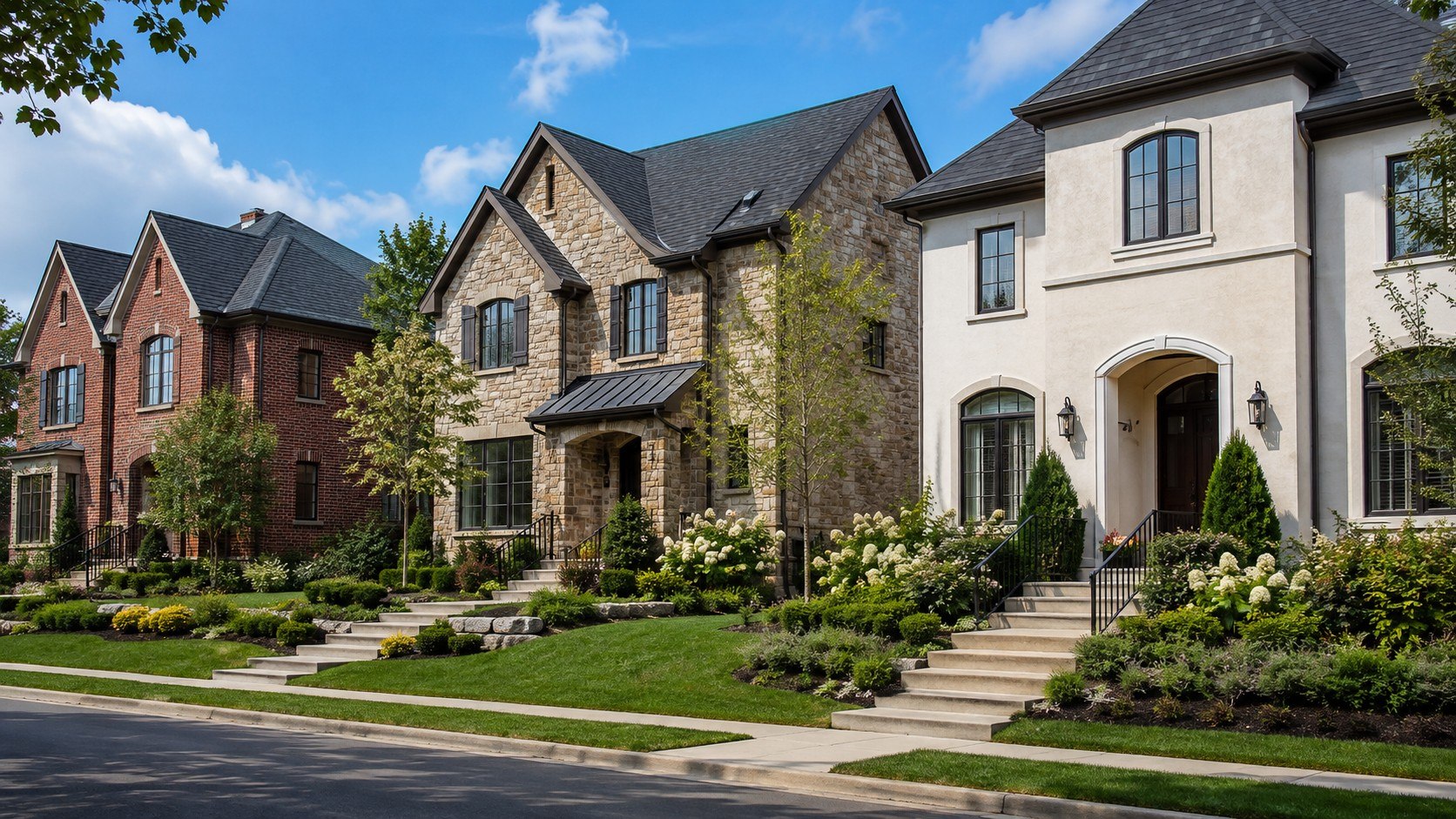
Brick vs stone vs stucco exterior 2026 comes down to 3 practical questions: how much the project will cost, how much maintenance the exterior will need, and how well it will handle local moisture. Most homeowners should choose brick veneer for durability with manageable upkeep, while stucco makes more sense when budget and architectural flexibility matter. Stone veneer is the premium option when appearance justifies higher installation and repair costs, as Baltimore Chronicle notes.
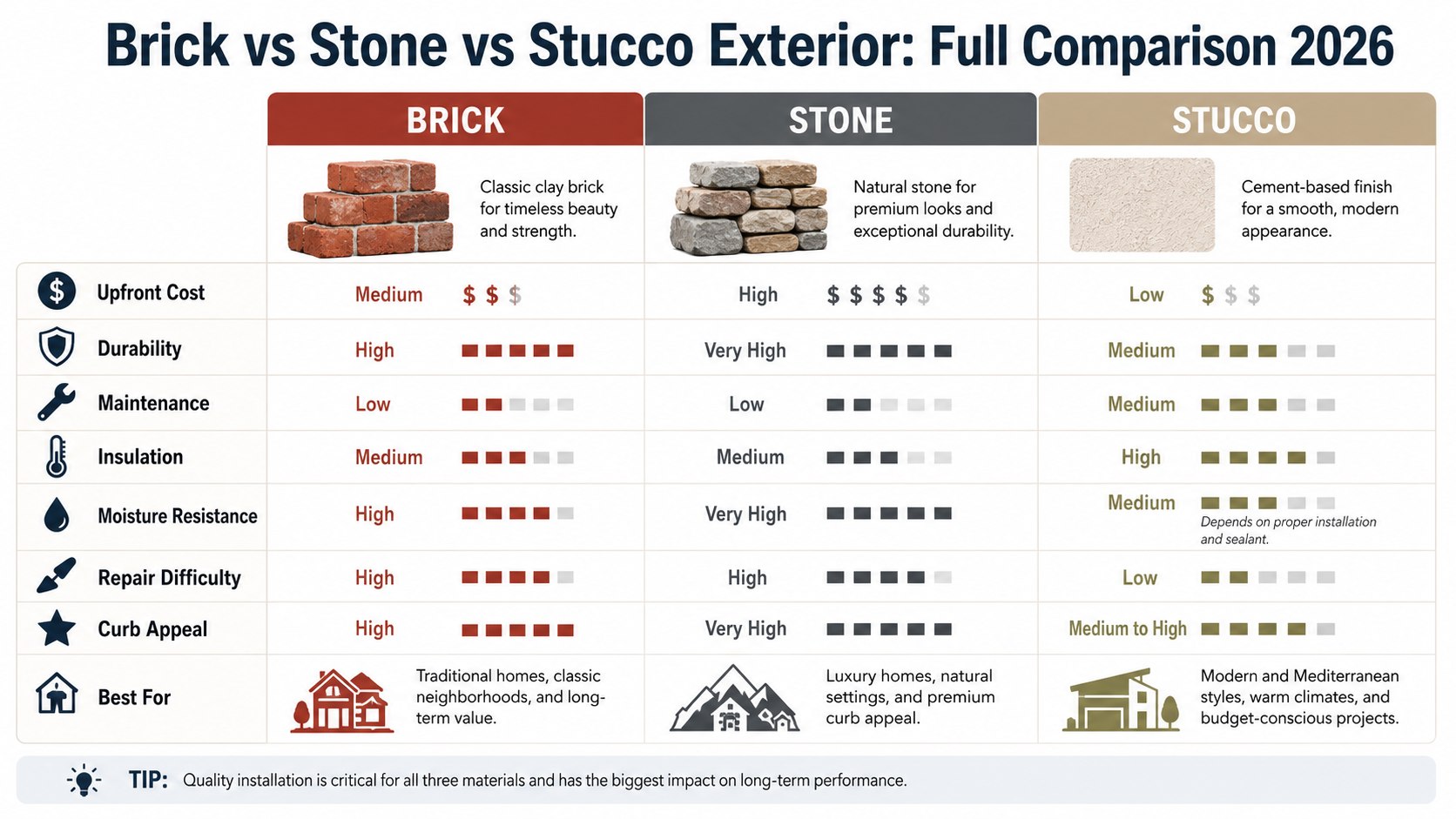
For a typical US project in 2026, professionally installed stucco often costs about $7–$12 per sq ft. Brick veneer commonly falls around $10–$22 per sq ft installed. Manufactured stone veneer frequently costs about $13–$22 per sq ft, while natural stone can move far beyond that range. Complex walls, demolition, scaffolding, flashing, permits, and damaged sheathing can change every estimate.
Key takeaways
- Stucco usually has the lowest initial price, but cracks, coatings, and moisture repairs can increase long-term ownership costs.
- Brick veneer costs more upfront, yet routine maintenance is generally limited when flashing, mortar, drainage, and sealants remain sound.
- Stone offers a premium appearance, but labor, substrate preparation, replacement matching, and moisture detailing can make repairs expensive.
Material price alone should not decide the project. Exterior cladding is part of a wall system that includes sheathing, drainage, flashing, insulation, windows, and penetrations. A low siding bid can become expensive when contractors uncover rotten OSB or a failed weather-resistant barrier.
Regional labor also matters. Masonry crews in Maryland, Massachusetts, New York, and California may charge differently from contractors in Texas or Arizona. Permitting rules, wall height, accessibility, and local demand can widen the gap further. Homeowners planning several upgrades can compare those costs with the Baltimore Chronicle guide to 2026 bathroom remodeling prices. Larger projects may also benefit from the publication’s breakdown of 2026 kitchen remodeling costs.
At a glance
The figures below are useful for early budgeting, not contractor bidding. Installed prices vary because “brick,” “stone,” and “stucco” describe several different assemblies.
| Factor | Brick veneer | Stone veneer | Stucco |
|---|---|---|---|
| Typical 2026 installed range | $10–$22 per sq ft | $13–$22+ per sq ft | $7–$12 per sq ft |
| Natural premium versions | Moderate to high | Very high | Moderate |
| Installation difficulty | High | High | Moderate to high |
| Routine maintenance | Low | Low to moderate | Moderate |
| Common repair | Mortar or sealant repair | Loose units or mortar repair | Crack and finish repair |
| Moisture sensitivity | Detail-dependent | Detail-dependent | High if drainage fails |
| Best climate fit | Broad US use | Broad with proper detailing | Excellent in many dry regions |
| Appearance | Traditional masonry | Premium, textured | Clean, flexible finish |
| Repair matching | Usually manageable | Can be difficult | Texture and color can be difficult |
The most important distinction is between material cost and installed wall cost. A veneer system needs much more than its visible surface. Contractors may need flashing, a water-resistive barrier, drainage components, mortar, lath, fasteners, corner pieces, and new trim.
Removing existing siding adds labor before installation begins. Tall gables and chimney areas may require scaffolding or lifts. Window openings create more cutting and flashing work, while architectural corners increase waste. Permit fees can add another expense depending on the municipality.
The cheapest bid is rarely comparable with the best bid unless both contractors specify the same wall assembly and moisture-control details.
Brick vs stone vs stucco exterior 2026 costs
The cost of brick vs stone vs stucco becomes clearer when the estimate separates visible materials from hidden work. A $15-per-sq-ft proposal over sound new sheathing is not equivalent to $15 per sq ft over an older wall requiring demolition and repairs.
Consider a project with 1,500 sq ft of actual cladding area. At $8 per sq ft, the exterior represents about $12,000 before significant extras. At $18, the same surface reaches $27,000. At $30, it becomes $45,000. Those examples explain why material selection can alter a renovation budget by tens of thousands of dollars without changing the home’s floor area.
“Periodic inspections and maintenance are needed to maximize the life of brickwork in structures.”
The Brick Industry Association makes that point in its technical guidance for brick masonry. Its recommendations include inspecting mortar, sealant joints, flashing, weeps, damaged units, and other components affecting water resistance.
Homeowners should request itemized proposals rather than one total price. A useful estimate identifies demolition, disposal, substrate repairs, weather barrier, flashing, cladding, labor, scaffolding, permits, and cleanup separately.
- Measure actual exterior wall area rather than using interior floor area.
- Subtract large windows and doors only when the contractor’s estimating method does the same.
- Ask whether corners, trim, flashing, and water barriers are included.
- Confirm how concealed rot or damaged sheathing will be priced.
- Get at least 3 comparable written bids using the same project scope.
A written scope also makes change orders easier to understand. Homeowners can see whether a higher proposal includes work excluded by a cheaper bidder. This is particularly important with masonry, where drainage details may disappear behind the finished surface.
Installation photographs taken before the wall closes can become useful records later. Product names and manufacturer specifications should also remain with the house documents. Final decisions should be based on the complete assembly, not the cheapest square-foot number.
Brick exterior: higher upfront cost, lighter routine upkeep
Brick veneer is often the middle ground. It delivers genuine masonry character without requiring a structural multi-wythe brick wall. Brands and regional brick producers offer different colors, textures, sizes, and absorption characteristics, while the supporting wall usually remains framed construction.
The main advantage is durability. Properly detailed brick does not require routine repainting. Maintenance concentrates on mortar joints, sealant around openings, flashing, weep paths, and isolated damaged units.
That does not make brick maintenance-free. Cracked mortar can require repointing, failed sealants need replacement, and blocked drainage paths can turn a small defect into concealed moisture damage.
Brick works best for
- owners planning to keep a house for many years;
- homes where frequent exterior painting is undesirable;
- traditional, Colonial, Craftsman, and mixed-material architecture;
- projects where predictable maintenance matters more than minimum initial cost.
Freeze-thaw exposure deserves attention in states including Maryland, Pennsylvania, Michigan, and Minnesota. Moisture absorbed by masonry needs a safe drying path. Mortar selection, flashing, air spaces, and drainage are therefore part of durability, not optional upgrades.
Brick also has a practical repair advantage. Individual units and mortar joints can often be repaired without resurfacing an entire elevation. Matching an old discontinued brick remains a challenge, especially after decades of weathering.
A contractor may blend replacement units across a larger area to reduce visible patches. Owners should keep spare brick from the original installation when possible. That small stockpile can become useful after impact damage or future window work.
Stone exterior: premium appearance with premium labor
Stone veneer exterior cost depends heavily on what “stone” means. Manufactured products from companies such as Cultured Stone and Eldorado Stone differ from natural thin-cut limestone, granite, or fieldstone. Full-depth natural masonry belongs in another cost category entirely.
Manufactured veneer reduces weight and can recreate many natural profiles. Natural thin stone offers real geological variation but raises material, cutting, transportation, and installation expenses. Irregular pieces also demand more labor from an experienced installer.
Stone makes financial sense when the facade itself is a priority, not merely when the owner wants the most durable material available.
Maintenance focuses on joints, sealants, water entry, and loose pieces. Repairs may become expensive when replacement stone cannot match the original color or profile. Some manufactured product lines also change over time, complicating a repair 10 or 15 years later.
Stone works best for
- high-visibility front elevations and entry areas;
- homes where architectural texture supports resale appeal;
- owners comfortable paying more for skilled masonry labor;
- accent applications that avoid covering every exterior wall.
A common budget strategy uses stone selectively. The front entry, porch columns, chimney base, or lower portion of the facade receives veneer, while another cladding covers larger side and rear walls. This preserves much of the visual impact without applying the highest-cost material across thousands of square feet.
Water management remains non-negotiable. The US Department of Energy describes brick and stucco as reservoir claddings because they can retain rainwater. Its Building America moisture guidance demonstrates why drainage, water-resistive layers, and wall drying matter behind exterior finishes.
Stucco exterior: lower entry price, more maintenance discipline
Stucco exterior cost 2026 usually begins below brick and stone veneer. Traditional cement stucco uses cementitious coats over an appropriate substrate and reinforcement system. Synthetic exterior insulation and finish systems, or EIFS, are different assemblies and should not be priced as interchangeable products.
Stucco’s strength is design flexibility. It creates a continuous surface, handles curves and architectural details, and suits Southwestern, Mediterranean, contemporary, and Spanish-inspired homes. Arizona, Nevada, New Mexico, California, Florida, and Texas have large inventories of stucco-clad properties.
Its weakness is that small visible cracks can become maintenance signals. Hairline cracking may be cosmetic, while widening cracks, staining, bulging, soft areas, or recurring discoloration can point toward movement or water intrusion.
A stucco wall should be evaluated as a complete drainage and flashing system rather than as a decorative coating.
That principle follows federal building-science research into moisture behavior in reservoir claddings. Windows, roof-to-wall intersections, deck connections, utility penetrations, and lower wall terminations deserve particular attention.
Painted stucco also changes the maintenance equation. Exterior coatings eventually weather, and repainting a textured surface requires more labor than rolling a smooth wall. Owners choosing stucco primarily because of its low installation price should include future crack treatment and coating work in the budget.
Maintenance costs homeowners often underestimate
The brick vs stucco maintenance comparison is not simply “brick needs nothing and stucco needs repairs.” Both materials can fail when water management is poor. The difference lies in what usually needs attention and how visible problems become.
Brick owners should inspect mortar deterioration, sealant joints, weep openings, window interfaces, and efflorescence. Stone veneer needs similar attention, plus checks for loose or cracked pieces. Stucco demands closer observation of cracking, penetrations, staining, and finish condition.
Exterior maintenance becomes particularly important after roof, window, or deck work. Contractors can disturb flashing interfaces that previously kept water outside. A later stain may appear far from the actual entry point.
A practical annual inspection should cover these areas:
- cracks that grew since the previous season;
- failed caulk around windows, doors, pipes, and vents;
- dark staining or persistent damp areas;
- loose brick, stone, mortar, or stucco;
- vegetation touching or trapping moisture against walls;
- blocked drainage openings near the bottom of masonry walls;
- roof runoff repeatedly soaking one facade section.
Photographs make these inspections more useful. Taking images from the same positions each year creates a record of changes. Small stable cracks become easier to distinguish from active movement.
Water stains can also be compared after major storms. Any bulging surface, falling masonry, interior dampness, or rapidly expanding crack deserves professional assessment. The Baltimore Chronicle guide to finding hidden household water leaks explains additional ways to separate plumbing problems from exterior water entry.
Which should you buy in 2026
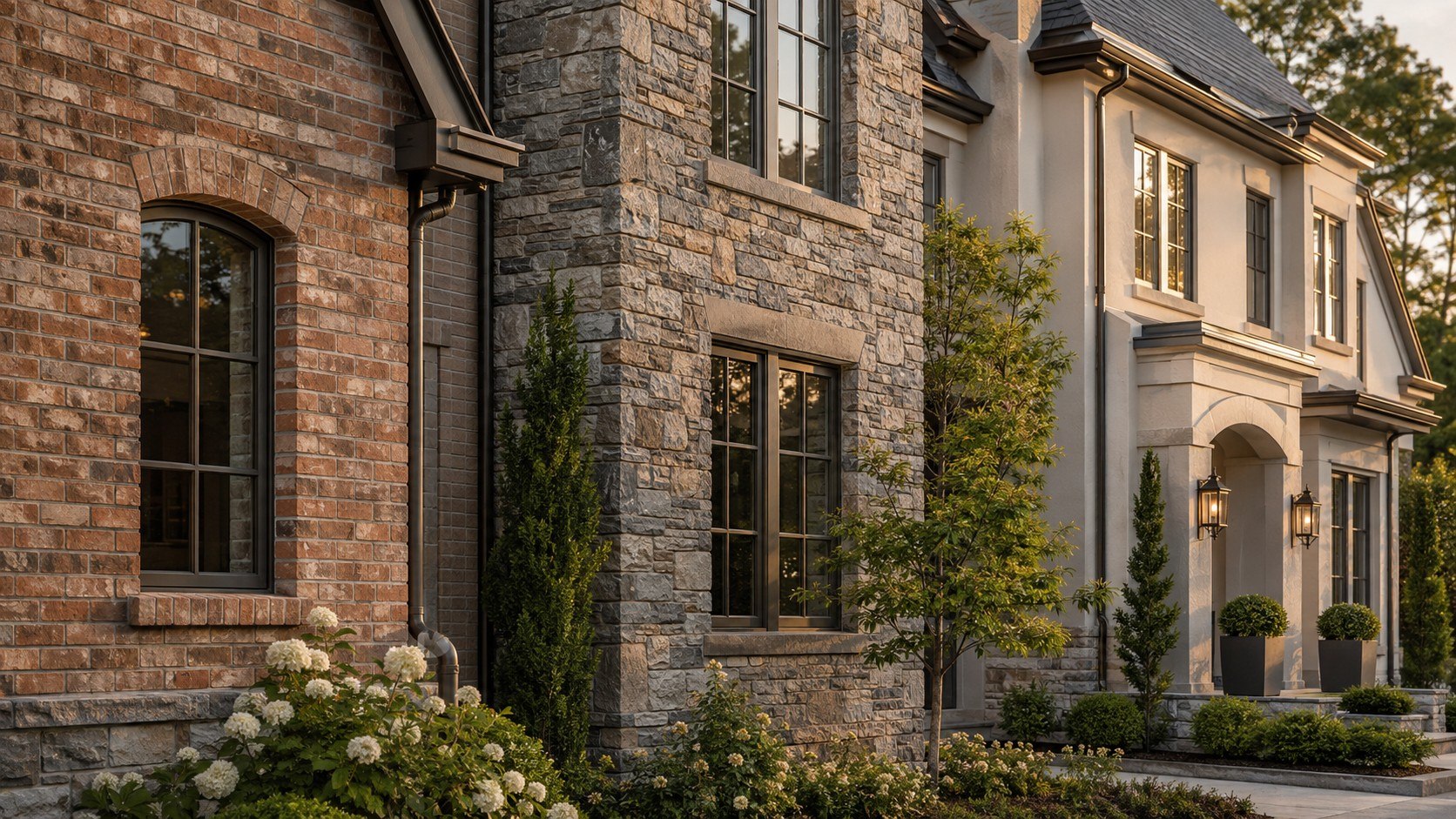
There is no universal winner because location and ownership plans change the economics. The best choice is the material whose installation details and future repairs fit the property.
- If minimum initial cost matters most, choose stucco and budget for crack and coating maintenance.
- If low routine maintenance matters more, choose brick veneer siding with properly detailed drainage and flashing.
- If facade appearance is the main priority, choose stone veneer, particularly on prominent elevations.
- If the home receives heavy wind-driven rain, prioritize the wall assembly and installer before choosing any finish.
- If the budget is limited but stone is preferred, use stone as an accent rather than full-house cladding.
Climate should influence the final scope. Dry Southwestern conditions can favor stucco, although intense sun still affects coatings and sealants. Humid and storm-prone regions place greater pressure on flashing and drainage.
Northern freeze-thaw cycles make absorbed moisture and masonry condition more significant. No exterior finish compensates for badly installed windows or missing water-control layers.
Brand names are less important than matching a tested system with experienced labor. A premium veneer installed over defective flashing can perform worse than a modest product on a properly drained wall. Contractors should identify their proposed system and provide manufacturer instructions when relevant.
References should include projects several years old, not only newly finished facades. Homeowners should inspect those older jobs for staining, cracking, loose units, and repair quality.
FAQ
What is the cheapest exterior: brick, stone, or stucco?
Stucco is generally the least expensive of the 3 for full exterior coverage in 2026. A common professional range is about $7–$12 per sq ft, although substrate repairs can increase the total.
Is brick cheaper than stone veneer?
Brick veneer often costs less than premium stone, but manufactured stone and brick ranges can overlap. Labor, corner details, wall preparation, and regional contractor rates may matter more than the material price.
Which exterior requires the least maintenance?
Properly installed brick usually has the lightest routine maintenance burden. Mortar, sealants, flashing, and drainage still require periodic inspection, particularly around windows and roof intersections.
How long can stucco last?
A well-built cement stucco system can remain serviceable for decades. Longevity depends on climate, drainage, substrate movement, coating choices, and how quickly cracks or water-entry problems receive attention.
Does stone veneer cause moisture problems?
Stone veneer itself is not automatically the problem. Failures commonly involve the surrounding wall system, including flashing, drainage, penetrations, water-resistive barriers, and workmanship.
Should an older US home be reclad with brick, stone, or stucco?
Inspect the existing wall before choosing the finish. Hidden sheathing damage, old windows, weak flashing, or structural movement can change both the correct system and the final budget.
Earlier we wrote about How to Clean an AC Condenser Yourself: 8 Steps That Protect Coils and Fins