

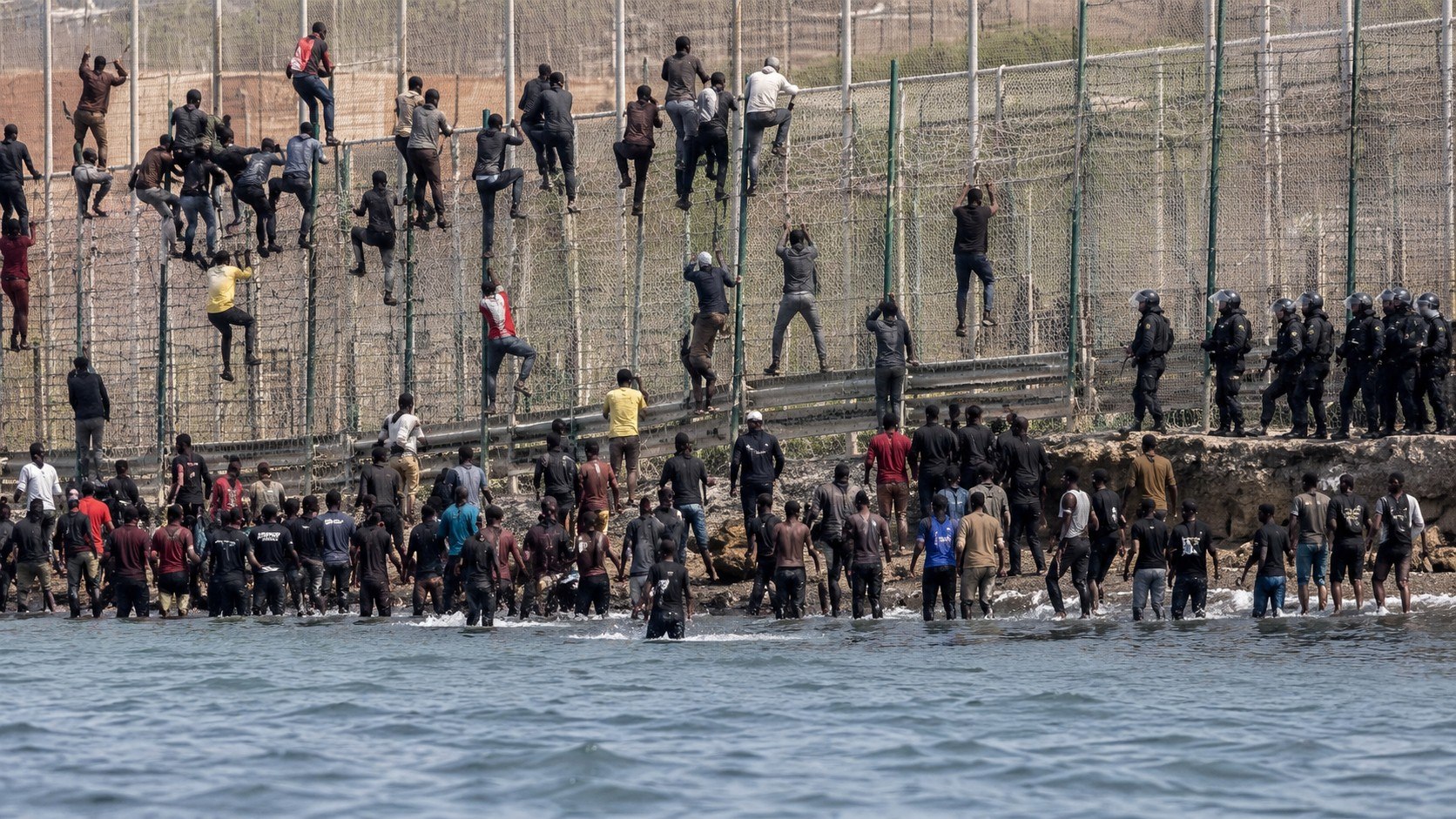
Ceuta migrant surge has pushed Spain’s North African enclave into a humanitarian and political emergency. Estimates range from 49,000 to 60,000 arrivals within roughly 24 hours, according to Spanish authorities and local officials, reports the Baltimore Chronicle.
Spain deploys troops as crossings overwhelm Ceuta
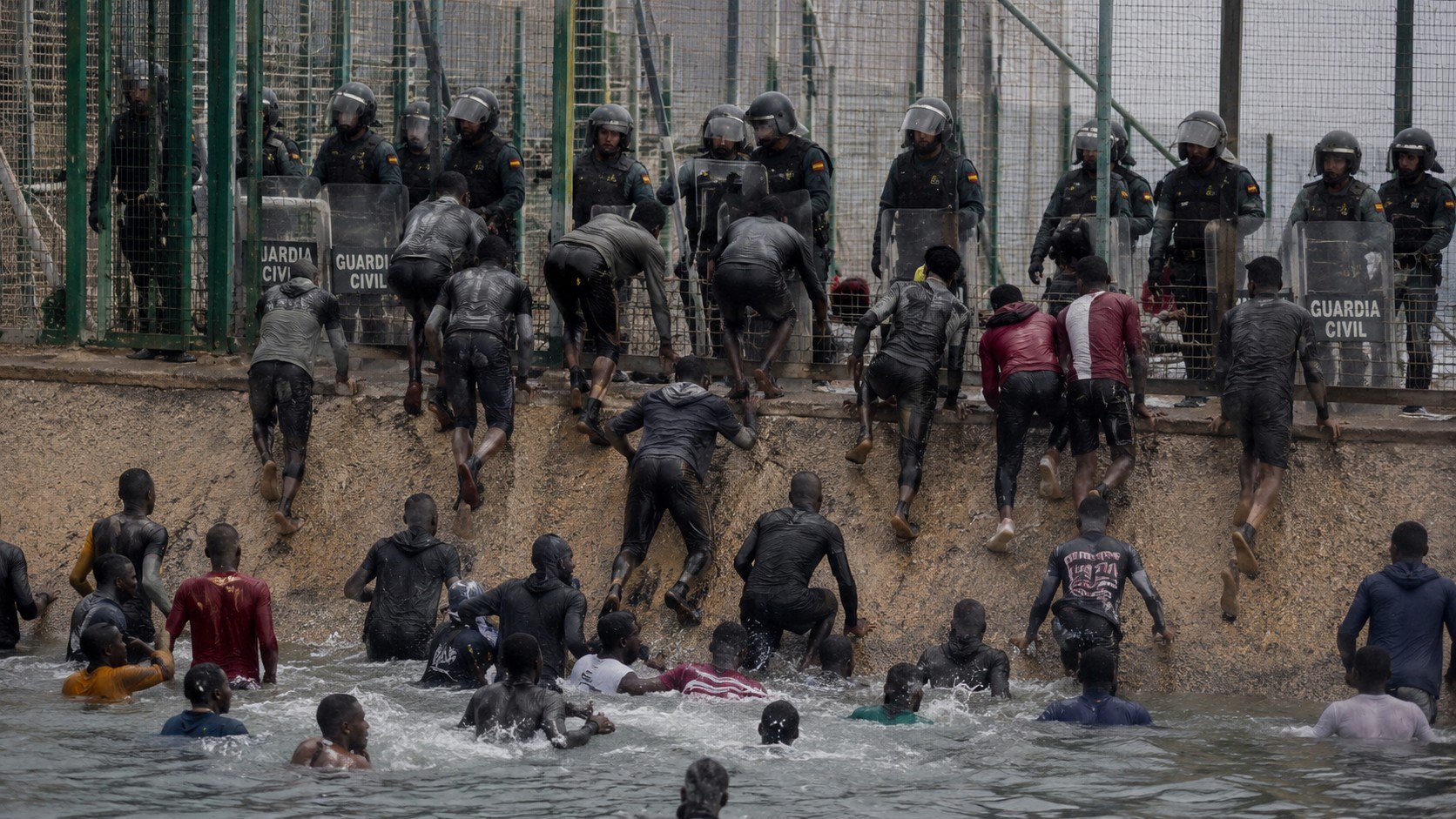
Thousands entered Ceuta from Morocco by swimming around breakwaters or crossing the land border. Spain deployed soldiers and additional Civil Guard officers after reception services became overwhelmed.
Published casualty figures remain inconsistent. Reuters reported 19 bodies recovered by Friday, while AP later cited at least 57 deaths. The final toll may change as rescue operations continue.
| Key development | Confirmed details |
|---|---|
| Estimated arrivals | 49,000 to 60,000 |
| Main routes | Sea crossings and the Morocco border |
| Spanish response | Military and police reinforcements |
| Returns | Many migrants returned voluntarily |
| Political impact | New dispute over Schengen controls |
Spanish and Moroccan forces later reinforced the frontier. Reuters witnessed Moroccan police dispersing crowds while Spanish military vehicles guarded the opposite side.
Why did thousands cross from Morocco?
Spanish officials are investigating several overlapping factors:
- misleading social media posts about migrants’ right to remain in Spain;
- economic hardship and high youth unemployment in Morocco;
- organised smuggling activity near the border;
- confusion surrounding a Spanish court ruling on immediate sea returns.
The ruling requires legal procedures before removal. It does not automatically grant migrants permission to remain, according to reporting by Reuters.
Ceuta crisis fuels Schengen dispute
Italian Prime Minister Giorgia Meloni threatened exceptional controls involving travel from Spain. France also strengthened security along its Spanish border amid fears of onward movement.
Madrid says the crisis remains concentrated in Ceuta. Spanish figures cited by El País indicated that 48,300 of around 50,000 entrants had already returned to Morocco.
The dispute has become the first major test of the EU Migration and Asylum Pact. Its rules entered into application on June 12, 2026, covering screening, asylum procedures and responsibility-sharing between member states.
The central question is no longer limited to Ceuta. European governments must now decide whether shared migration rules can survive a sudden border emergency.
Earlier we wrote about Starbucks Joyful Capsule 2026: Price, Release Date and Plush Keychains Inside