

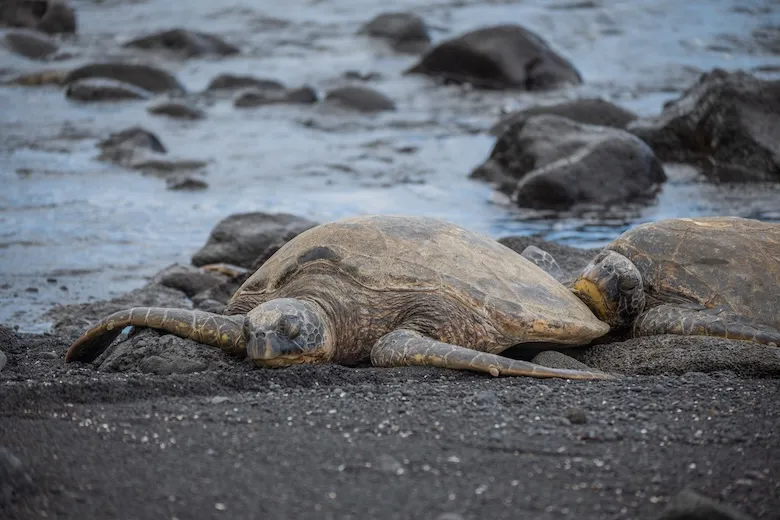
An adult female Kemp’s ridley sea turtle, one of the world’s rarest species, was discovered stranded on a beach near Galveston, Texas, heavily covered with barnacles, algae, sediment, and other organisms, prompting an immediate rescue operation, reports Baltimore Chronicle via Gulf Center for Sea Turtle Research. The turtle, which appeared lethargic and weighed down by epibionts—organisms that attach themselves to other living creatures—was swiftly transported for emergency care by the Gulf Center for Sea Turtle Research (GCSTR) and veterinarians from the Houston Zoo.
Rescuers reported that the adult female turtle had likely been struggling in the Gulf for an extended period before washing ashore. Its shell and body were densely covered in marine growth, which, according to GCSTR director Christopher Marshall, is often a sign of impaired swimming ability and poor health. “Healthy sea turtles are swimming sea turtles,” Marshall explained. “When a turtle slows down due to health problems, it quickly accumulates epibionts. This extra weight further reduces mobility, creating a feedback loop that can severely impact its survival.”
Following the initial rescue on March 7, the turtle received an emergency veterinary assessment at the Houston Zoo before being transported to GCSTR’s rehabilitation hospital. Staff, volunteers, and veterinary partners are providing around-the-clock care. Marshall confirmed that the turtle remains in critical condition, but the team is “hopeful for her recuperation and eventual release back into the Gulf.”
Kemp’s ridley sea turtles are the smallest species of sea turtle globally and are designated as Texas’ official state turtle. They typically inhabit the Gulf of Mexico near Texas, with females nesting on sandy beaches. The species reaches maturity around 13 years of age and can live for at least three decades. NOAA Fisheries lists Kemp’s ridley turtles as endangered under the Endangered Species Act, citing threats from habitat degradation, fishing gear, boat strikes, and ocean pollution. The International Union for Conservation of Nature classifies the species as critically endangered, with an estimated 22,300 mature adults remaining.
Beach rescues of stranded sea turtles, while alarming, are not uncommon in Texas. The GCSTR frequently responds to reports of turtles covered in barnacles and other marine organisms, including juvenile loggerhead sea turtles. Both NOAA and GCSTR advise anyone encountering stranded, injured, or entangled sea turtles to contact professional responders immediately via the Texas statewide hotline at 1-866-TURTLE-5. Public support for GCSTR’s rehabilitation efforts is encouraged, including donations and supply purchases through the organization’s Amazon wishlist.
Earlier we wrote that Trump-Era DHS Investigation Targets Arizona 2020 Election Results Amid Maricopa County Subpoenas