

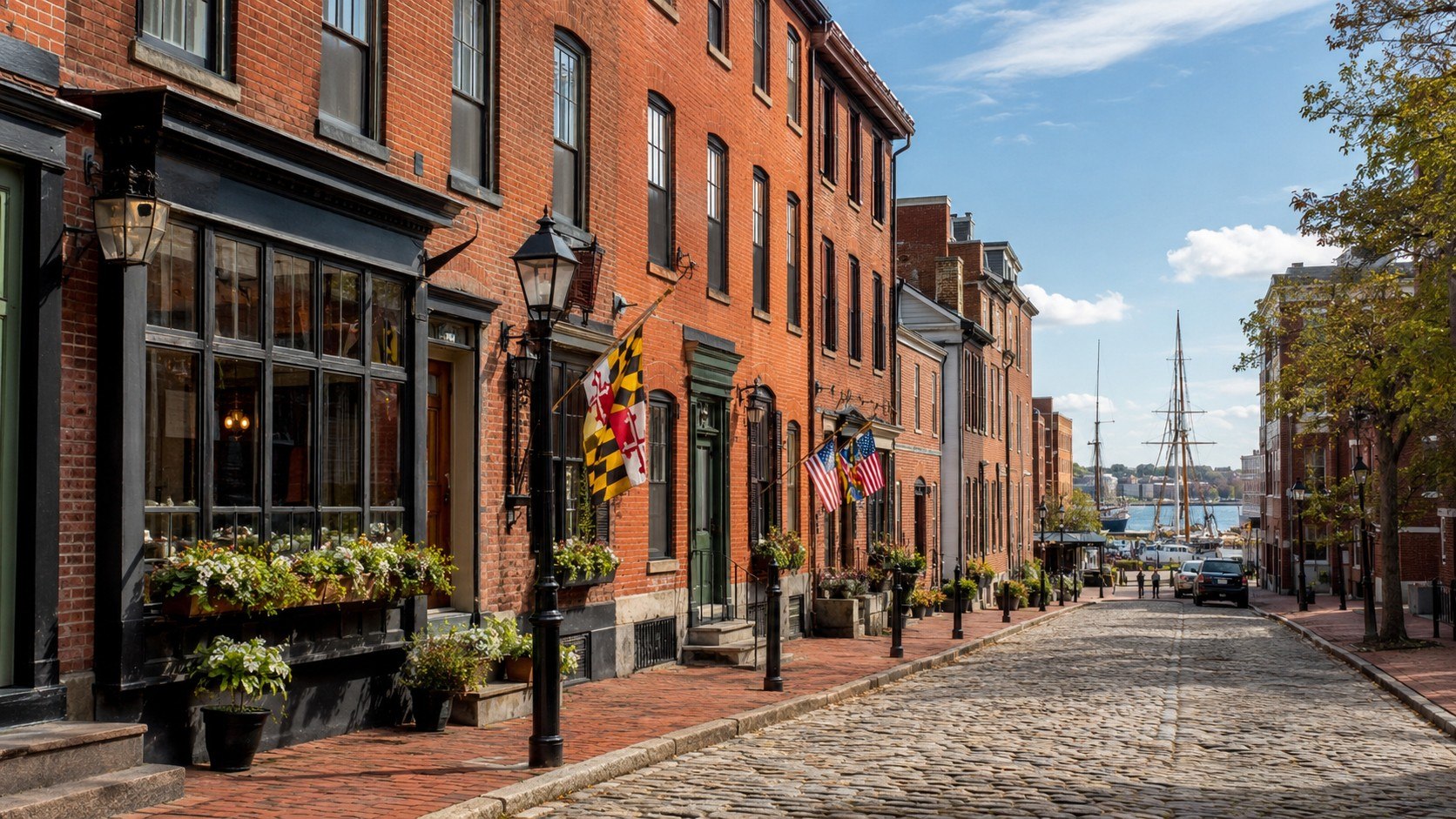
50 interesting facts about Baltimore 2026 can help you decide which landmarks deserve time during a short trip, family weekend, or relocation visit. This guide selects facts supported by historical records, museum archives, and official landmark information, with priority given to places visitors can still experience, as the Baltimore Chronicle editorial team notes.
The facts were chosen for their historical importance, connection to surviving landmarks, and usefulness for travelers in 2026. Rather than presenting random trivia, the list groups Baltimore’s stories by history, neighborhoods, food, transportation, architecture, and culture.
Key takeaways
- Baltimore helped shape the national anthem, American rail travel, maritime trade, civil rights, literature, baseball, and regional food culture.
- Fort McHenry, Mount Vernon, Fells Point, and the Inner Harbor provide the strongest introduction for first-time visitors.
- Several major museums offer free general admission, making Baltimore practical for travelers managing a limited sightseeing budget.
50 Interesting Facts About Baltimore 2026: How the City Began
1. Baltimore was founded in 1729
Maryland’s colonial assembly established Baltimore Town on August 8, 1729. Its location near the Patapsco River gave merchants access to Chesapeake Bay and Atlantic trade routes.
2. The city was named after Lord Baltimore
Baltimore took its name from Cecilius Calvert, the 2nd Lord Baltimore. The Calvert family controlled Maryland as a proprietary English colony.
3. Baltimore is not part of Baltimore County
The city became politically independent from Baltimore County in 1851. It remains one of the few independent cities outside Virginia.
4. “Charm City” began as a tourism slogan
The nickname emerged during a 1970s advertising campaign designed to improve Baltimore’s image. It survived long after the original campaign ended.
5. Baltimore was once among America’s largest cities
Port activity, manufacturing, immigration, and railroad expansion drove rapid growth during the 19th century. Dense rowhouse districts still reveal that industrial past.
6. Baltimore has more than 200 recognized neighborhoods
The precise number changes because neighborhood boundaries are often informal. Residents commonly identify with Hampden, Canton, Pigtown, Mount Vernon, or Fells Point before using broader district names.
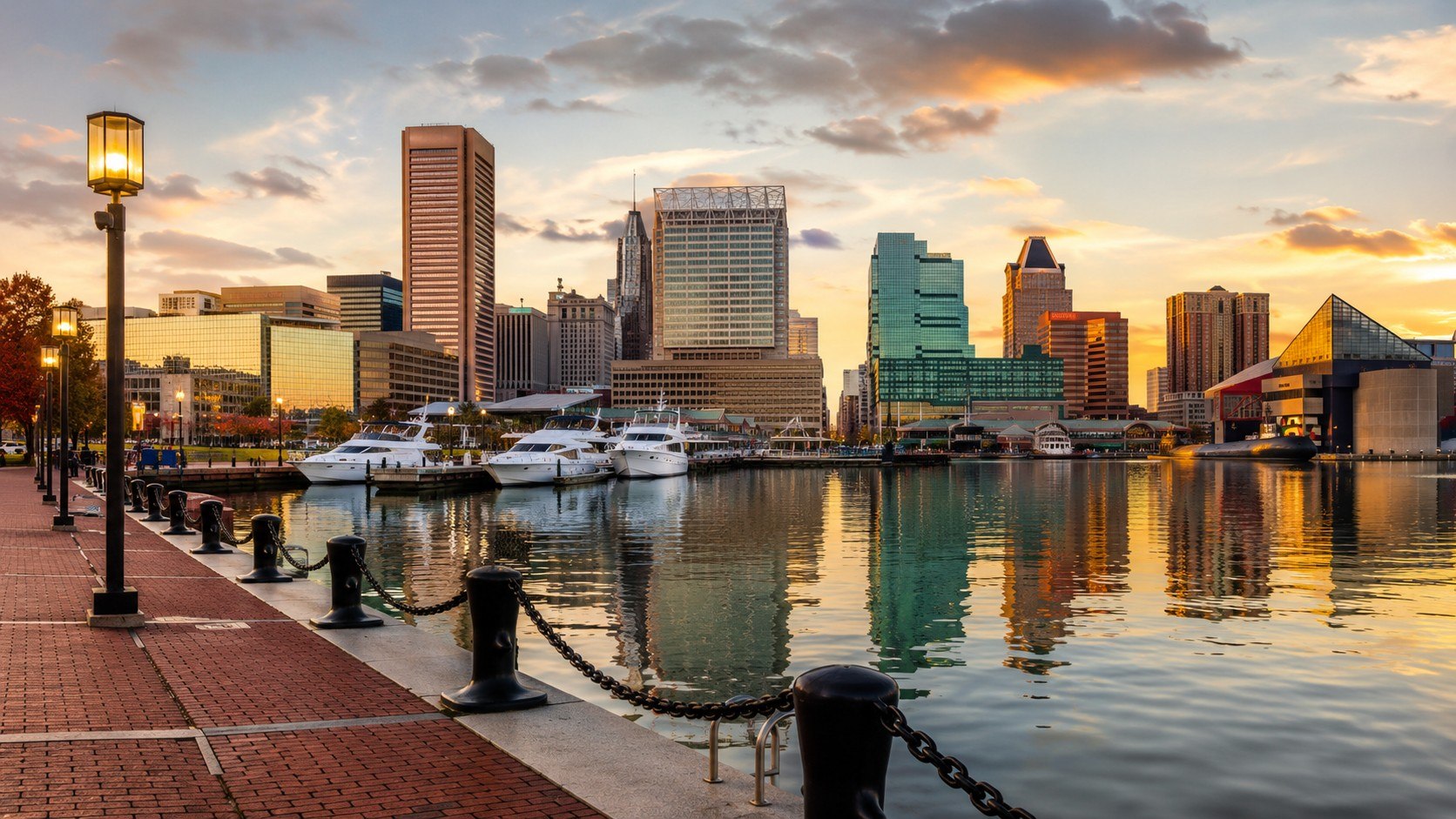
Fort McHenry and the National Anthem
7. The national anthem began with a battle in Baltimore
Francis Scott Key watched British forces bombard Fort McHenry in September 1814. The American flag still flying afterward inspired his poem “Defence of Fort M’Henry.”
8. The attack continued for about 25 hours
British warships fired rockets and shells toward the fort during the Battle of Baltimore. American resistance helped stop the British campaign after Washington had been attacked.
9. Key watched from a ship on the Patapsco River
Key had helped negotiate the release of an American prisoner. British officers delayed his return because he had heard military plans before the bombardment.
10. The famous flag measured 30 by 42 feet
Major George Armistead wanted a flag large enough for British forces to see from a distance. Baltimore flagmaker Mary Pickersgill produced it with help from other needleworkers.
11. Fort McHenry has a 5-pointed star design
The structure’s bastions allowed defenders to fire in several directions. Visitors can still enter barracks, powder magazines, defensive passages, and the central parade ground.
12. Much of the fort’s brickwork is historic
Large portions of Fort McHenry survived rather than being reconstructed for tourism. This gives visitors direct contact with structures connected to the War of 1812.
13. It has 2 federal historical designations
Fort McHenry is officially a national monument and historic shrine. No other National Park Service property uses that exact combined designation.
14. The fort became a Civil War prison
Confederate soldiers and Maryland political prisoners were held there. The fort later served additional military purposes before becoming a protected historic site.
Plan at least 2 hours for the visitor center, historic fort, and waterfront grounds. Hours, access, and entrance charges may change during ceremonies or federal holidays. Check the National Park Service Fort McHenry page before traveling.
The grounds also provide broad views across the Patapsco River. Families should expect outdoor walking with limited shade in some sections.
Baltimore Landmarks That Changed American History
15. Baltimore’s Washington Monument came first
The monument in Mount Vernon was completed before the better-known Washington Monument in Washington, D.C. Visitors can climb 227 steps when the observation level is open.
16. America’s first Roman Catholic cathedral stands in Baltimore
Benjamin Henry Latrobe designed the Baltimore Basilica. Construction began in 1806, and the building became closely associated with religious liberty in the United States.
17. The B&O was America’s first commercial railroad
The Baltimore and Ohio Railroad was chartered in 1827. It connected Baltimore’s port with western markets and accelerated national railroad development.
18. The B&O Railroad Museum occupies an original railroad site
The museum stands at the historic Mount Clare complex. Its collection includes locomotives, passenger cars, industrial equipment, and artifacts from early rail travel.
19. The Phoenix Shot Tower was once America’s tallest structure
The brick tower, completed in 1828, rises about 234 feet. Workers made lead shot by dropping molten metal from the top into water below.
20. The Bromo Seltzer Tower advertised headache medicine
The 1911 landmark promoted a remedy manufactured by Captain Isaac Emerson. Its clock faces use the letters in “BROMO SELTZER” instead of standard numerals.
21. The Domino Sugar sign represents the working harbor
The illuminated sign has dominated the waterfront skyline for generations. It remains connected to an active industrial site rather than a reconstructed tourist attraction.
22. A Chesapeake Bay lighthouse now stands downtown
The Seven Foot Knoll Lighthouse originally operated in the bay. It was later moved to the Inner Harbor and preserved as a maritime landmark.
23. USS Constellation was launched in 1854
The naval sloop-of-war is displayed along the Inner Harbor. Visitors can explore multiple decks, although steep stairs may be difficult for some guests.
24. Patterson Park has a Victorian observatory
The 1891 structure is commonly called the Pagoda. Its upper levels provide views across East Baltimore during scheduled public openings.
Travelers interested in the Pagoda can compare Patterson Park with Druid Hill, Federal Hill, and other green spaces in the Baltimore Chronicle guide to the best parks in Baltimore. The article covers walking routes, family facilities, dog access, and practical parking considerations.
| Landmark | Area | Main reason to visit | Suggested time |
|---|---|---|---|
| Fort McHenry | Locust Point | War of 1812 history and harbor views | 2–3 hours |
| Washington Monument | Mount Vernon | Architecture and skyline views | 45–90 minutes |
| B&O Railroad Museum | Southwest Baltimore | Historic trains and original facilities | 2–3 hours |
| USS Constellation | Inner Harbor | 19th-century naval history | 60–90 minutes |
| Edgar Allan Poe House | Poppleton | Literary history and preserved rooms | 45–60 minutes |
These locations should be grouped by geography rather than visited in the order listed. Fort McHenry pairs naturally with Locust Point and Federal Hill. Mount Vernon contains several attractions within walking distance.
The B&O Railroad Museum requires a separate trip west of downtown. Inner Harbor ships are easier to combine with waterfront museums. Verify 2026 opening days before finalizing the route.
Writers, Musicians, Athletes, and Civil Rights Figures
25. Edgar Allan Poe lived and died in Baltimore
Poe lived in a small West Baltimore house during the 1830s. He died under unresolved circumstances in 1849 and was buried at Westminster Hall.
26. Poe has 2 grave markers
His original burial place was modest and difficult to locate. A larger memorial was later installed near the cemetery entrance.
27. The Poe Toaster became a Baltimore legend
An unidentified visitor reportedly left roses and cognac at Poe’s grave each January. The nighttime tradition attracted international attention for decades.
28. Frederick Douglass spent formative years in Baltimore
Douglass learned reading skills while enslaved in the city. Its shipyards and maritime community later influenced his escape from slavery.
29. Thurgood Marshall was born in Baltimore
The future Supreme Court justice attended segregated schools in the city. His legal work helped dismantle government-enforced racial segregation.
30. Billie Holiday had strong Baltimore connections
The jazz singer spent part of her childhood in the city. A statue honoring her stands along Pennsylvania Avenue.
31. H. L. Mencken was called the “Sage of Baltimore”
The journalist, editor, and critic spent most of his life in Baltimore. His home near Union Square became associated with the city’s literary identity.
32. Babe Ruth was born near Camden Yards
His birthplace is now a museum several blocks from Oriole Park. The site displays baseball memorabilia and material from Ruth’s early life.
33. John Waters made Baltimore part of his filmmaking style
Waters used local neighborhoods, performers, accents, and social outsiders in his films. His work created an eccentric cinematic version of the city.
Museums, Libraries, and Public Markets
34. The Baltimore Museum of Art has a major Matisse collection
The Cone Collection contains important works by Henri Matisse, Pablo Picasso, and other modern artists. General admission is free, although some exhibitions may charge separately.
35. The Walters Art Museum also offers free general admission
Its collection covers ancient Egypt, medieval Europe, Asia, and 19th-century art. Its Mount Vernon location makes it practical for a walking itinerary.
36. The American Visionary Art Museum celebrates self-taught artists
The museum presents work created outside conventional academic systems. Its mirrored surfaces and outdoor sculptures match Baltimore’s unconventional artistic identity.
37. Baltimore has a national Black wax museum
The National Great Blacks in Wax Museum uses life-sized figures and reconstructed scenes. Several exhibits address slavery, resistance, racism, and civil rights directly.
38. The Reginald F. Lewis Museum documents Black Maryland history
Its exhibitions examine labor, politics, family life, military service, art, and community development. The museum stands near Little Italy and the Inner Harbor.
39. Lexington Market traces its history to 1782
It is one of America’s longest-running public markets. A redeveloped building provides modern facilities while preserving the market’s role as a local food center.
40. The Peabody Library has 5 levels of balconies
The 19th-century reading room features cast-iron columns, book stacks, and a large skylight. It is among Baltimore’s most photographed interiors.
A Mount Vernon visit can combine the Walters Art Museum, Peabody Library, Washington Monument, Basilica, and historic residential streets. The Baltimore Chronicle guide to Mount Vernon explains the area’s history, walkability, transit, cultural institutions, and practical living conditions.
Most central attractions can be reached on foot once visitors arrive. Museum schedules may differ on Mondays and public holidays. Special exhibitions can require advance reservations.
Baltimore Food Facts Worth Knowing in 2026
41. Baltimore turned crab cakes into a civic specialty
Local versions usually emphasize lump blue crab with limited filler. Restaurant prices vary according to crab supply, portion size, preparation, and waterfront location.
42. Old Bay seasoning was created in Baltimore
German immigrant Gustav Brunn developed the spice blend in 1939. McCormick now owns the brand, but its identity remains closely tied to Maryland seafood.
43. Berger Cookies have an unusually thick fudge topping
The cake-like cookies grew from Baltimore’s German baking tradition. Their dense chocolate layer distinguishes them from standard packaged cookies.
44. Lemon peppermint sticks are a local spring tradition
A peppermint stick is pushed into a cut lemon and used like a straw. The combination is strongly associated with Mount Vernon’s Flower Mart.
45. Baltimore snowballs are not ordinary snow cones
Snowballs use finely shaved ice and flavored syrup. Marshmallow topping remains a classic Baltimore option during hot Maryland summers.
46. Coddies combine codfish and potatoes
These fried cakes were traditionally served between saltine crackers with mustard. They reflect Baltimore’s immigrant and working-class food history.
Travelers seeking crab cakes, oysters, rockfish, and other Chesapeake dishes can use the Baltimore Chronicle guide to the best seafood in Baltimore. It compares waterfront restaurants with neighborhood establishments beyond the primary tourist district.
Seafood costs can change substantially during 2026 because crab supply and seasonal availability affect menus. Public markets allow visitors to compare several vendors without driving between neighborhoods.
Check whether displayed crab cake prices include sides. Ask whether the meat is Maryland blue crab or imported crab. Reservations are sensible for popular waterfront restaurants on Friday and Saturday evenings.
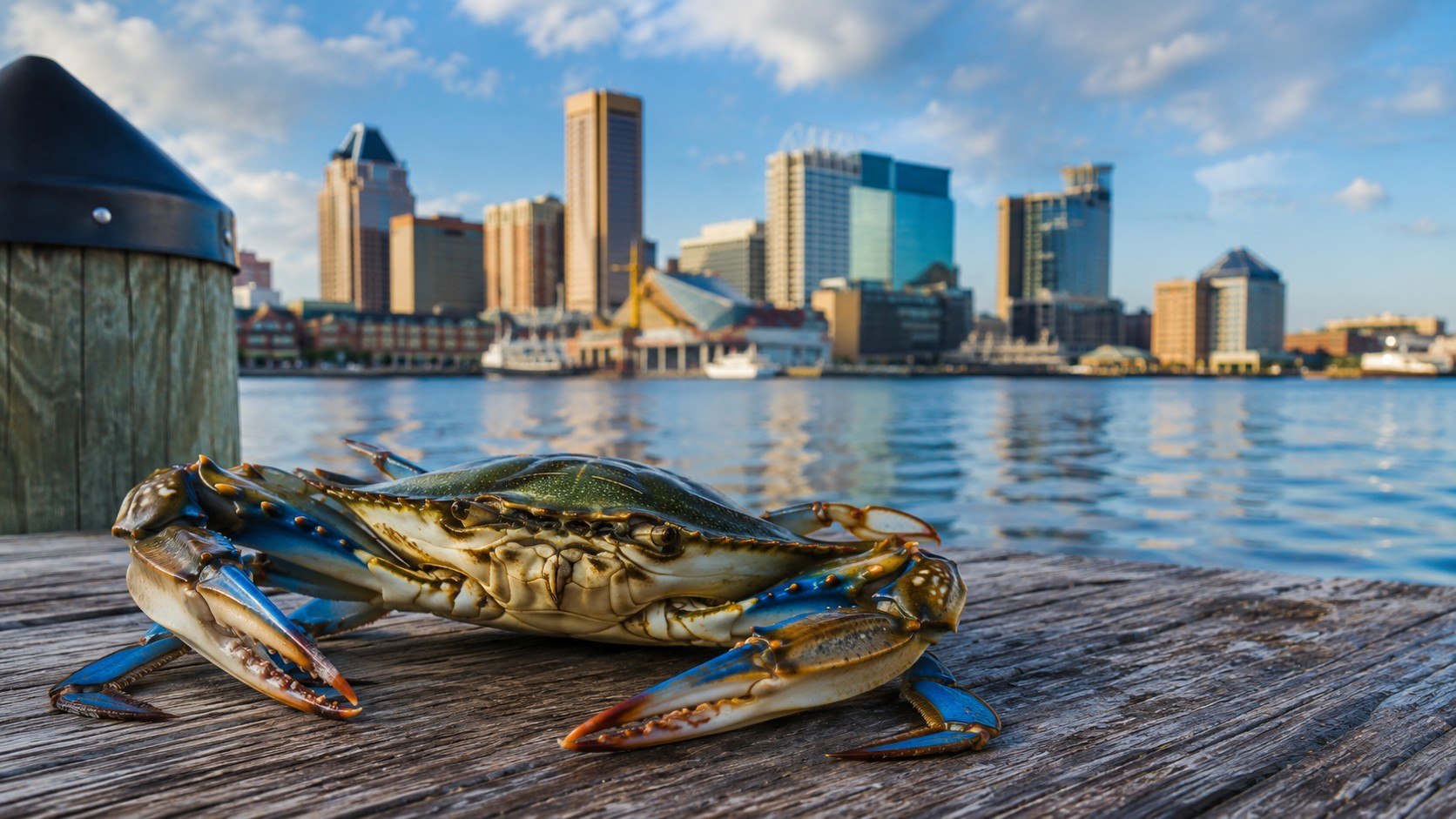
Rowhouses, Neighborhoods, and Street Traditions
47. Baltimore is defined by long rows of attached houses
Many rowhouses were built for industrial workers and immigrant families. Architectural details change between Federal Hill, Bolton Hill, Charles Village, Pigtown, and East Baltimore.
48. White marble steps became symbols of household pride
Residents regularly scrubbed the steps outside their homes. Clean marble once communicated respectability, care, and neighborhood belonging.
49. Painted window screens became Baltimore folk art
Artists painted landscapes and street scenes on mesh screens. The artwork provided privacy from outside while allowing residents to see through the screen.
50. Arabbers still sell goods from horse-drawn wagons
These street vendors traditionally move through neighborhoods while calling out produce and household goods. The practice preserves a rare form of urban commerce.
The interesting Baltimore facts above are easiest to understand at street level. Fells Point preserves maritime buildings and cobbled sections. Mount Vernon offers monuments, museums, and elaborate townhouses.
Hampden combines former mill-worker housing with independent retail. Federal Hill provides rowhouse streets within walking distance of the harbor.
How to Plan a Baltimore History Trip
A practical itinerary should group landmarks by neighborhood. Crossing the city repeatedly can waste time, particularly during weekday traffic, Orioles games, Ravens games, festivals, and major concerts.
- Combine Fort McHenry with Locust Point and Federal Hill.
- Explore the Washington Monument, Peabody Library, and Walters Museum together.
- Pair Camden Yards with the Babe Ruth Birthplace and nearby downtown sites.
- Visit Fells Point, Harbor East, and Little Italy during one waterfront route.
- Reserve separate time for the B&O Railroad Museum and Poe House.
- Check 2026 admission charges, opening hours, transit disruptions, and event schedules.
- Never leave luggage, shopping bags, or electronics visible inside a parked car.
A 2-day trip can cover 2 connected areas each day without becoming rushed. Add a third day for museums, markets, or neighborhood walks.
Historic ships contain narrow passages and steep ladders, so visitors with mobility concerns should review access details. Monument climbs also require physical effort. Summer heat can make exposed waterfront walks uncomfortable during midday.
Drivers should select parking before setting the daily route. The Baltimore Chronicle parking guide for Baltimore visitors explains garages, street meters, residential restrictions, payment systems, and event-day challenges.
Posted signs always take priority because prices and restrictions can change in 2026.
FAQ About Baltimore History and Landmarks
Why is Baltimore called Charm City?
The name came from a 1970s tourism campaign. It endured because Baltimore has distinctive neighborhoods, architecture, traditions, food, and cultural institutions.
What is Baltimore best known for?
Baltimore is known for Fort McHenry, the national anthem, Maryland blue crabs, Old Bay, rowhouses, Edgar Allan Poe, Johns Hopkins, and its port.
Which Baltimore museums are free?
The Baltimore Museum of Art and Walters Art Museum generally offer free admission to permanent collections. Special exhibitions and programs may require tickets.
Can visitors see Baltimore without renting a car?
Yes. Several central neighborhoods are walkable and connected by buses, Light Rail, Metro, Circulator routes, water transport, or rideshare services.
How many days are enough for Baltimore?
Two days can cover major landmarks. Three or 4 days provide more time for museums, historic neighborhoods, food markets, and waterfront sites.
Is Fort McHenry worth visiting?
Yes, especially for visitors interested in American history. The surviving fort, waterfront setting, museum displays, and anthem connection justify at least 2 hours.
Honorable Mentions
- Druid Hill Park opened before construction of New York’s Central Park was completed and now contains the Maryland Zoo.
- Fells Point preserves buildings connected to shipbuilding, immigration, maritime trade, taverns, warehouses, and working waterfront history.
- Oriole Park at Camden Yards influenced a generation of retro-style American baseball stadiums after opening in 1992.
50 interesting facts about Baltimore 2026 reveal a city built from national events and highly local traditions. Start with Fort McHenry and Mount Vernon, then choose neighborhoods based on history, architecture, food, or waterfront access. Verify current hours and transportation details before departure, since schedules and prices may change during 2026.
Earlier we wrote that Where Are the July 4 2026 Fireworks in Maryland? Baltimore and Annapolis Schedule