

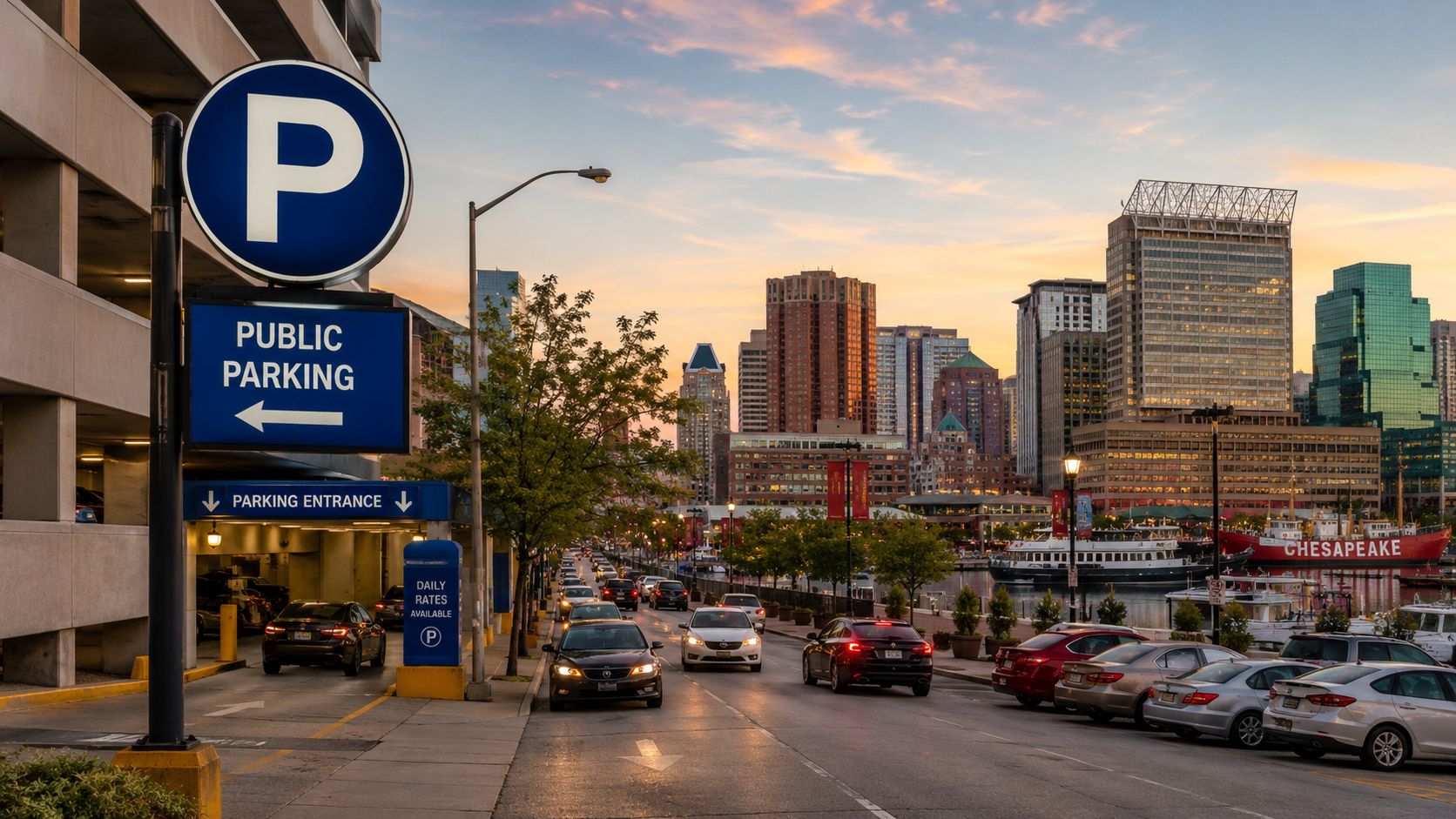
Finding reliable parking in baltimore depends on where you are going, how long you will stay, and whether downtown is dealing with a game, festival, convention, or waterfront weekend traffic. Baltimore has garages, meters, surface lots, hotel valet options, and neighborhood street parking, but the right choice changes block by block. The best visitor strategy is simple: use garages for longer downtown stays, use street parking only when the signs are clear, and check official rules before relying on old pricing or outdated app information, as noted by the editorial team at Baltimore Chronicle.
The city’s official Parking Authority page and on-street parking overview should be the final source for rules that may change.
TL;DR
- Downtown Baltimore is easiest with garages, especially around Inner Harbor, Harbor East, and Camden Yards.
- Street parking can work for short visits, but visitors must read every posted sign.
- Fells Point and Federal Hill are harder at night because residential demand overlaps with nightlife traffic.
- Camden Yards parking is best reserved early on game days.
- Baltimore meter payments can be handled through Flowbird, ParkMobile, and PayByPhone, with current city details on the official paying meters page.
For most visitors, the safest plan is to park once near the main destination and walk, use transit, or take a short rideshare between neighborhoods. Drivers who keep moving the car usually lose more time than they save.
Where to Park in Baltimore by Neighborhood
A useful answer to where to park in baltimore starts with neighborhoods, not one universal rule. Inner Harbor, Harbor East, Fells Point, Federal Hill, Mount Vernon, and the stadium district all function differently.
Visitors planning a full day downtown should compare parking with transit before committing to a car-heavy itinerary. Baltimore Chronicle’s Baltimore public transit guide is a strong internal companion for readers deciding whether to drive, use Light Rail, or combine parking with transit.
Inner Harbor
Inner Harbor is the easiest Baltimore parking zone for first-time visitors because garages are built around tourism, hotels, and waterfront attractions. It is usually the best area for families, aquarium visits, harbor walks, and visitors who want predictable access more than the lowest possible rate.
Best fit if:
- Visiting the National Aquarium or waterfront attractions
- Traveling with children or luggage
- Staying at an Inner Harbor hotel
- Spending several hours downtown
- Prioritizing convenience over price
Inner Harbor garages are rarely the cheapest option, but they reduce uncertainty.
That matters for visitors who do not want to circle one-way streets, decode neighborhood restrictions, or risk missing timed tickets. The main tradeoff is traffic.
Pratt Street and Light Street can slow down during weekends, conventions, and stadium events. Anyone building a broader sightseeing day can pair this section with Baltimore Chronicle’s guide to free things to do in Baltimore, since many free waterfront stops are easier after parking once.
Harbor East
Harbor East works well for dining, hotel stays, business travel, and evening plans. The garages are easier to navigate than many older downtown facilities, and the streets feel more structured for visitors who are not used to Baltimore’s one-way grid.
This area is not usually the budget choice. It is better for travelers who value a clean walking route, shorter search time, and convenient access to restaurants or hotels. Visitors comparing dinner neighborhoods may also find Baltimore Chronicle’s best seafood in Baltimore useful because waterfront dining and parking decisions often overlap.
Fells Point
Fells Point is compact on a map but difficult behind the wheel during evenings and weekends. Historic streets, restaurant traffic, rideshare stops, residential demand, and limited curb space make parking feel tighter than visitors expect.
Best fit if:
- Going out for dinner or drinks
- Walking along the waterfront
- Visiting for brunch
- Staying for a shorter neighborhood stop
- Accepting a longer walk from parking
Street parking is possible, but it is not dependable at peak times.
Baltimore Chronicle’s Fell’s Point guide gives readers better neighborhood context before they decide whether to drive directly into the district.
Federal Hill
Federal Hill is easier than Fells Point during quieter daytime hours but becomes more complicated around Orioles and Ravens events.
The neighborhood sits close enough to Camden Yards and M&T Bank Stadium that game-day demand spills into residential streets. Visitors should watch for residential permit signs and event-related pricing. The neighborhood works best for people comfortable walking from a garage or legal street space rather than hunting for a perfect spot beside Cross Street Market.
Downtown Baltimore Parking Guide
A strong downtown baltimore parking guide must account for one-way streets.
Missing a garage entrance downtown can force a long loop through traffic, especially around Pratt, Lombard, Calvert, and St. Paul streets.
| Area | Best Parking Option | Best For | Main Tradeoff |
|---|---|---|---|
| Inner Harbor | Garage | Families, tourism, hotels | Higher rates |
| Harbor East | Garage or valet | Dining, hotels | Premium pricing |
| Fells Point | Street or small lots | Nightlife, short visits | Limited supply |
| Federal Hill | Mixed | Bars, stadium walks | Permit zones |
| Camden Yards | Reserved lots or garages | Orioles games | Event congestion |
| Mount Vernon | Street or garages | Museums, residents, students | Time limits and permits |
This table should be treated as a planning shortcut, not a fixed rule. The best parking choice still depends on arrival time, weather, event schedules, and how far visitors are willing to walk.
Garages vs. Street Parking
Garages are better for:
- Longer visits
- Overnight stays
- Families
- Bad weather
- Stadium events
- First-time visitors
Street parking is better for:
- Quick errands
- Short restaurant visits
- Daytime neighborhood stops
- Visitors who understand posted signs
Garages cost more, but they remove the two biggest visitor problems: uncertainty and enforcement risk. Street parking can be cheaper, but only when the posted rules clearly match the planned stay.
Street Parking Baltimore Visitors Should Understand
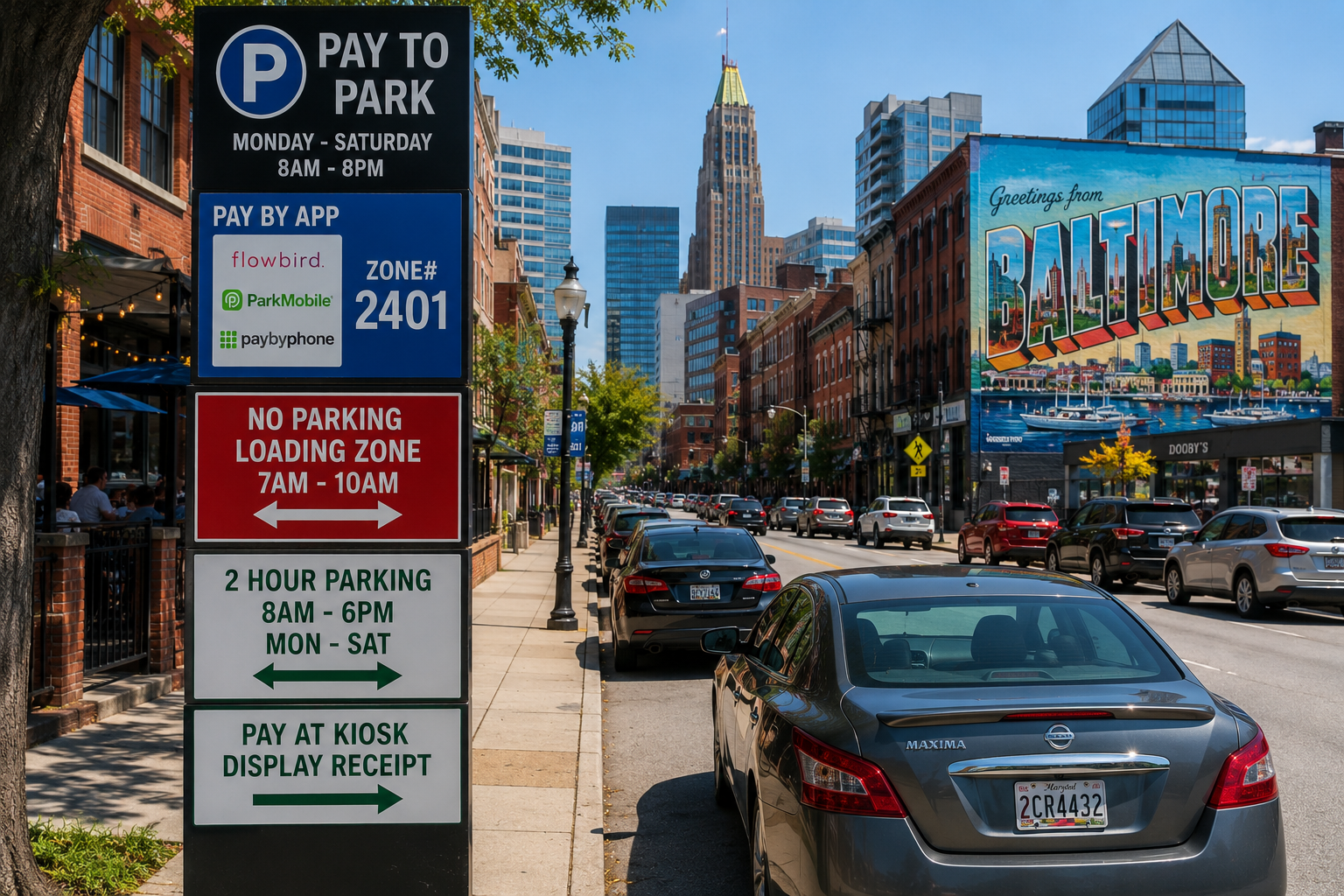
Street parking baltimore visitors should treat every block as its own decision. A paid meter does not automatically make a space legal if another sign limits hours, reserves the space for loading, or requires a residential permit.
Baltimore street parking can include:
- Metered spaces
- Residential permit zones
- Loading zones
- Time-limited parking
- Temporary event restrictions
- Rush-hour restrictions
The city’s official on-street parking overview is the best reference for current rules. Visitors should also check the main Baltimore parking page before relying on information from older travel posts or screenshots.
The key habit is reading the full sign stack before paying. In Baltimore, the meter is only one part of the rule set.
Residential Permit Areas
Residential permit rules matter most in neighborhoods where visitors compete with locals for curb space.
Federal Hill, Canton, Fells Point, Mount Vernon, and Charles Village can all create confusion for drivers who see open curb space and assume it is legal. Readers who need a separate rules-focused resource can use Baltimore Chronicle’s Baltimore residential parking permit guide when that internal page is live. Until then, official Baltimore City parking pages should be the authority for enforceable rules.
Baltimore Parking Apps
Baltimore parking apps make meters easier, but they do not replace signs. Apps help visitors start sessions, extend time where allowed, and avoid running back to the car during dinner or a game.
Baltimore supports these mobile payment options:
The official city page on how to use city parking meters should be checked before arrival because payment options and coverage can change.
The most common app mistake is choosing the wrong zone number. Visitors should match the zone shown on the nearby meter or sign, not a nearby guess from the map.
Camden Yards Parking Guide
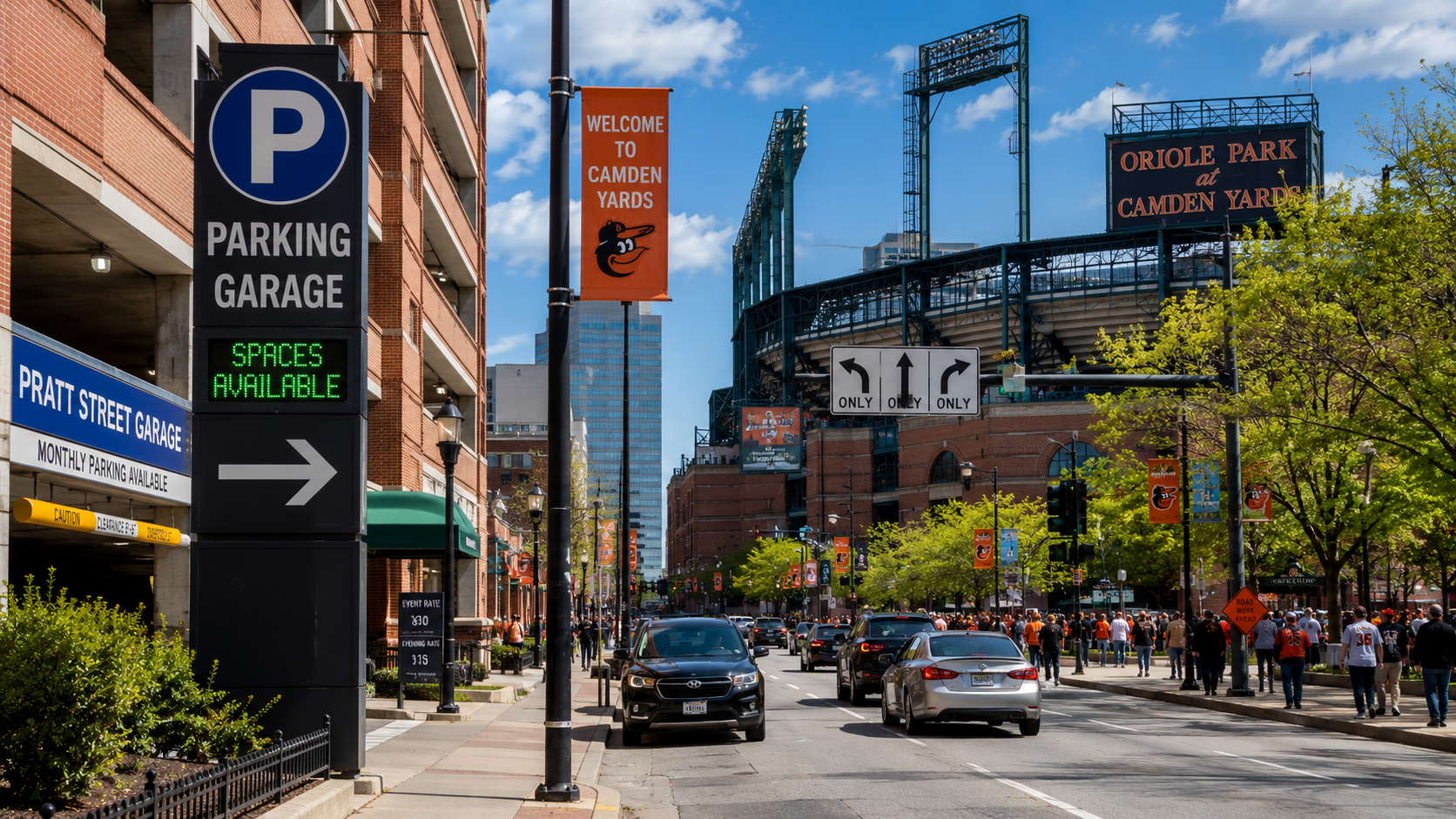
A practical camden yards parking guide starts with one rule: the closest parking is not always the fastest parking. Stadium-adjacent garages and lots reduce walking distance before the game but can create long exit delays afterward.
Closest options usually include:
- Stadium-area lots
- Downtown garages west of Inner Harbor
- Hotel garages near Pratt Street
- Event-priced surface lots
These options are best for families, visitors with mobility concerns, or first-time fans who want the simplest route into the ballpark. Budget-conscious visitors often do better by parking farther east or north downtown and walking 10–15 minutes.
That can reduce postgame gridlock and make it easier to reach major roads after the final out.
| Visitor Type | Better Parking Strategy |
|---|---|
| Family with kids | Reserve close garage or lot |
| Budget traveler | Park farther downtown and walk |
| First-time visitor | Pre-book near stadium |
| Nightlife visitor | Consider Federal Hill |
| Transit-friendly visitor | Compare parking with Light Rail |
This decision should be made before entering downtown traffic.
Last-minute stadium parking usually means higher prices, slower turns, and fewer legal alternatives. Visitors comparing stadium access with nearby neighborhoods may also find Baltimore Chronicle’s Pigtown Baltimore guide useful because Pigtown sits close to the stadium district and I-95 access.
Cheap Parking vs. Convenient Parking
Cheap parking and convenient parking are different goals. Baltimore visitors should decide which one matters more before leaving for the city.
Usually cheaper:
- Garages farther from the waterfront
- Weekday early-bird options
- Pre-booked spaces
- Non-stadium locations
Usually more convenient:
- Inner Harbor garages
- Harbor East garages
- Hotel valet
- Stadium-adjacent lots
The cheapest option can become the worst option if it adds a long walk in bad weather, a confusing late-night route, or a slow garage exit after a game. Visitors staying overnight should prioritize access, lighting, and clear re-entry rules as much as price.
Common Mistakes Visitors Make
Baltimore parking problems are usually predictable. Most happen because drivers rely on assumptions instead of signs, official sources, or updated event information.
Common mistakes include:
- Reading the meter but ignoring signs above it
- Assuming Sunday parking is always free
- Parking in residential permit areas
- Waiting until game time to look for Camden Yards parking
- Using a parking app without checking the correct zone
- Forgetting that private garages have separate rules
Anyone who receives a citation should use Baltimore Chronicle’s Baltimore parking ticket guide for next steps. Ticket rules, payment options, and appeal procedures should always be confirmed through official city systems before paying or disputing.
What Editors Should Update Regularly
This guide should be reviewed at least quarterly because parking information changes more often than neighborhood descriptions. Event pricing, mobile payment coverage, garage operators, enforcement emphasis, and city pages can all shift.
Update monthly during baseball season:
- Camden Yards parking guidance
- Event-day traffic notes
- App coverage details
- Official city parking links
- FAQ answers about meters and enforcement
This keeps the article useful for both search traffic and real visitors planning a trip.
FAQ
Is parking in Baltimore difficult for visitors?
It depends on the neighborhood and timing. Inner Harbor and Harbor East are easier because they have more garages, while Fells Point and Federal Hill become harder during evenings, weekends, and game days.
Where should tourists park in downtown Baltimore?
Most tourists should use garages near Inner Harbor, Harbor East, or their hotel. Street parking is better for short stops when signs are clear.
Is street parking in Baltimore safe to use?
Street parking can be fine, but visitors should read all posted signs, avoid leaving valuables visible, and choose well-lit areas at night.
What apps work for Baltimore parking?
Baltimore supports Flowbird, ParkMobile, and PayByPhone for many city meter payments. Visitors should confirm current options on the official city meter page before arrival.
Where should visitors park for Camden Yards?
First-time visitors should reserve stadium-area parking. Budget travelers can often park farther downtown and walk, which may reduce postgame exit delays.
Can visitors park in residential permit areas?
Only when posted signs allow non-permit parking. If the sign requires a residential permit during the visitor’s parking window, the space should be avoided.
Are Baltimore garages open overnight?
Some are, but not all. Visitors should confirm hours, overnight access, and in-and-out privileges directly with the garage operator before leaving a vehicle.
Is parking near Fells Point easy?
It is usually manageable during quieter periods and difficult on weekend nights. Visitors should expect limited street parking and consider walking from a paid lot or garage.
Earlier we wrote that Mayfield Guide: Small-Town Feel Inside Baltimore