

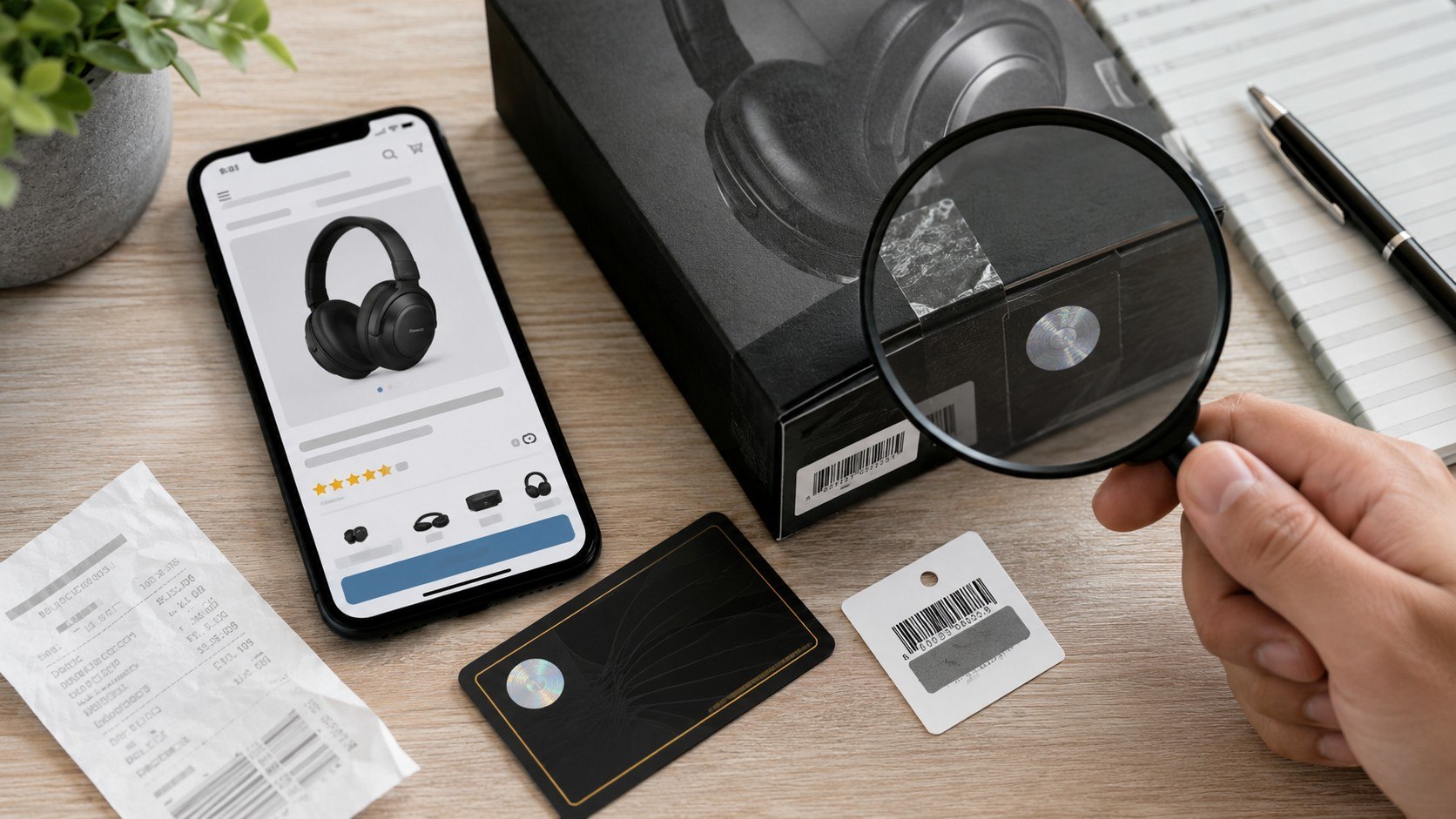
How to spot a counterfeit on eBay 2026 comes down to a repeatable check of the price, photographs, seller history, product codes, and listing language. A basic review takes about 10–15 minutes and can expose most serious warning signs before payment, as noted by the Baltimore Chronicle.
If the item has already arrived, stop using it and preserve everything. Photograph the shipping label, unopened package, accessories, serial numbers, and suspected defects. Then open the order through eBay rather than negotiating through private email, text messages, or another payment service.
Key takeaways
- A suspicious price becomes meaningful when it appears alongside copied photographs, vague sourcing, or inconsistent product details.
- Serial numbers help, but counterfeiters can copy valid identifiers from genuine products and reuse them across many items.
- For a possible fake, document the differences and use eBay’s official return process before altering or discarding anything.
What you need before checking an eBay listing
You do not need specialist equipment for the initial review. Most checks rely on records already available through the listing, manufacturer, seller profile, and comparable eBay sales.
- An eBay account with access to the complete listing
- The manufacturer’s official product page or support database
- Several completed or sold listings for the same model
- A computer or phone with image zoom and reverse-image search
- Screenshots of the title, description, price, photographs, and seller promises
- 10–20 minutes for a standard review
- Optional professional authentication for luxury goods or collectibles
Save the listing before asking questions. A seller may revise a description, replace images, end the listing, or remove a questionable claim. Your screenshots should show the item number, account name, condition, return terms, and full product description.
Keep every exchange inside eBay Messages. That creates a dated record of what the seller promised. It also prevents later disputes over conversations that eBay cannot see.
For electronics, prepare the model number, storage capacity, color, region, and expected accessories. Readers considering a used iPhone can also review the Baltimore Chronicle guide on setting up a new iPhone in 2026, which covers activation, eSIM, backups, and checks needed before retiring an older device.
Step 1: Compare the price with the authentic market
Search for the exact model, size, production year, color, and condition. Compare several sold listings rather than relying on the seller’s claimed retail price.
This matters because counterfeit sellers do not always advertise an unbelievable bargain. A fake $1,200 designer bag may be listed for $650, where the discount feels large but still plausible.
Consider the complete explanation for the price. Missing packaging, cosmetic wear, discontinued colors, private estate sales, or repaired parts can reduce value. However, the seller should describe those conditions clearly.
The common mistake is accepting phrases such as “factory surplus,” “wholesale connection,” or “employee stock” as proof. These claims explain nothing without a receipt, purchase history, or credible source.
Step 2: Inspect every photograph for counterfeit signs
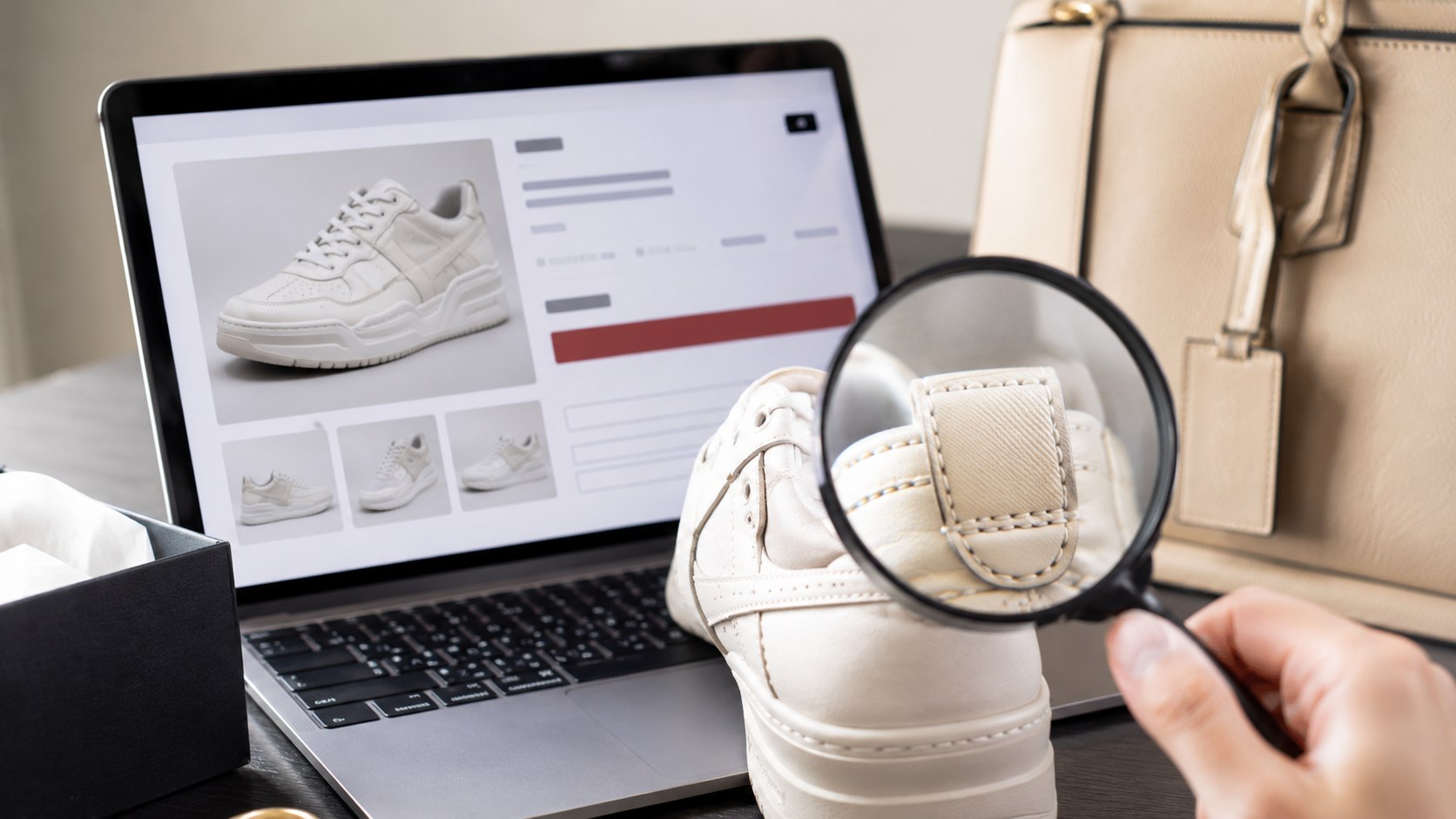
Zoom into logos, stitching, labels, engraving, hardware, seams, packaging, and included accessories. Original listing photographs should show the actual item from several useful angles.
Different products require different checks. Nike sneakers may reveal problems through style codes and size tags. Apple devices require model, activation, and software checks. Luxury watches demand attention to engraving, dial alignment, weight, and movement claims.
Repeated eBay counterfeit signs include uneven lettering, incorrect fonts, crooked labels, loose stitching, weak engraving, mismatched colors, and generic accessories. One defect may reflect age or repair. Several contradictions deserve greater caution.
| Listing detail | More reassuring evidence | Potential warning sign |
|---|---|---|
| Photographs | Multiple original angles and close-ups | Only catalog images or blurred details |
| Logo and text | Correct font, spacing, spelling, and placement | Uneven letters, misspellings, or inconsistent branding |
| Packaging | Matches the model and production period | Box design belongs to another year or version |
| Accessories | Correct charger, tags, manuals, case, or dust bag | Generic parts presented as original equipment |
| Image history | Pictures appear unique to the seller | Identical images appear on unrelated listings |
Ask the seller for a fresh photograph showing the item beside a handwritten note with their username and the current date. This can expose copied images, although it does not confirm authenticity by itself.
Packaging should support the rest of the evidence, not control the decision. Counterfeiters can reproduce boxes, receipts, warranty cards, seals, and branded bags.
Check whether the accessories belong to the advertised model. A genuine box can be paired with a fake product. A real charger may also be used to make a questionable device appear credible.
Compare the item with official images from the same production period. Brands revise labels, logos, hardware, stitching, and packaging. A feature may be genuine on a 2022 model but wrong for a 2026 release.
Do not confuse polished photography with authenticity. Professional images can be copied from a retailer, manufacturer, auction house, or another eBay seller.
Step 3: Audit the seller’s feedback and selling pattern
Open the seller profile and read recent negative and neutral feedback. Focus on comments mentioning authenticity, missing accessories, false condition descriptions, unusual shipping, or refused returns.
A 99.8% positive rating can still hide risk. An established account may have earned feedback through inexpensive household products before suddenly listing Chanel bags, Rolex watches, graphics cards, or collectible sneakers.
Review the seller’s other items. A private account offering 20 identical “rare” products needs a credible explanation. Large quantities do not prove counterfeiting, but they should match a believable business model.
Compare the stated location with the shipping origin and handling details. A seller listed in California who later announces shipment from another country should explain the change before payment.
The common mistake is trusting account age alone. Old accounts can be stolen, sold, or repurposed. Seller history should be examined together with the product, price, photographs, and communication.
Step 4: Verify serial numbers, model codes, and specifications
Request clear photographs of the serial number, model code, date code, hallmark, certification label, or product-specific identifier. Compare the format with official manufacturer information.
This step matters because fake products often combine believable identifiers with the wrong model, material, color, production year, or region. A number can look valid while the surrounding product remains inconsistent.
For electronics, compare the stated storage, ports, operating system, activation status, and included accessories. Before buying a replacement phone, Baltimore Chronicle’s guide on transferring data from an old iPhone to a new iPhone explains backup, account, authentication, and device checks that should be completed before erasing the original phone.
Use category-specific checks where possible:
- Apple: compare the model number, device settings, storage, activation status, and physical design.
- Nike and Adidas: match the box style code with the shoe label, size, colorway, and release.
- Luxury watches: inspect reference numbers, engraving, weight, dial alignment, movement, and service history.
- Trading cards: check dimensions, print pattern, surface, edges, holograms, and grading certification.
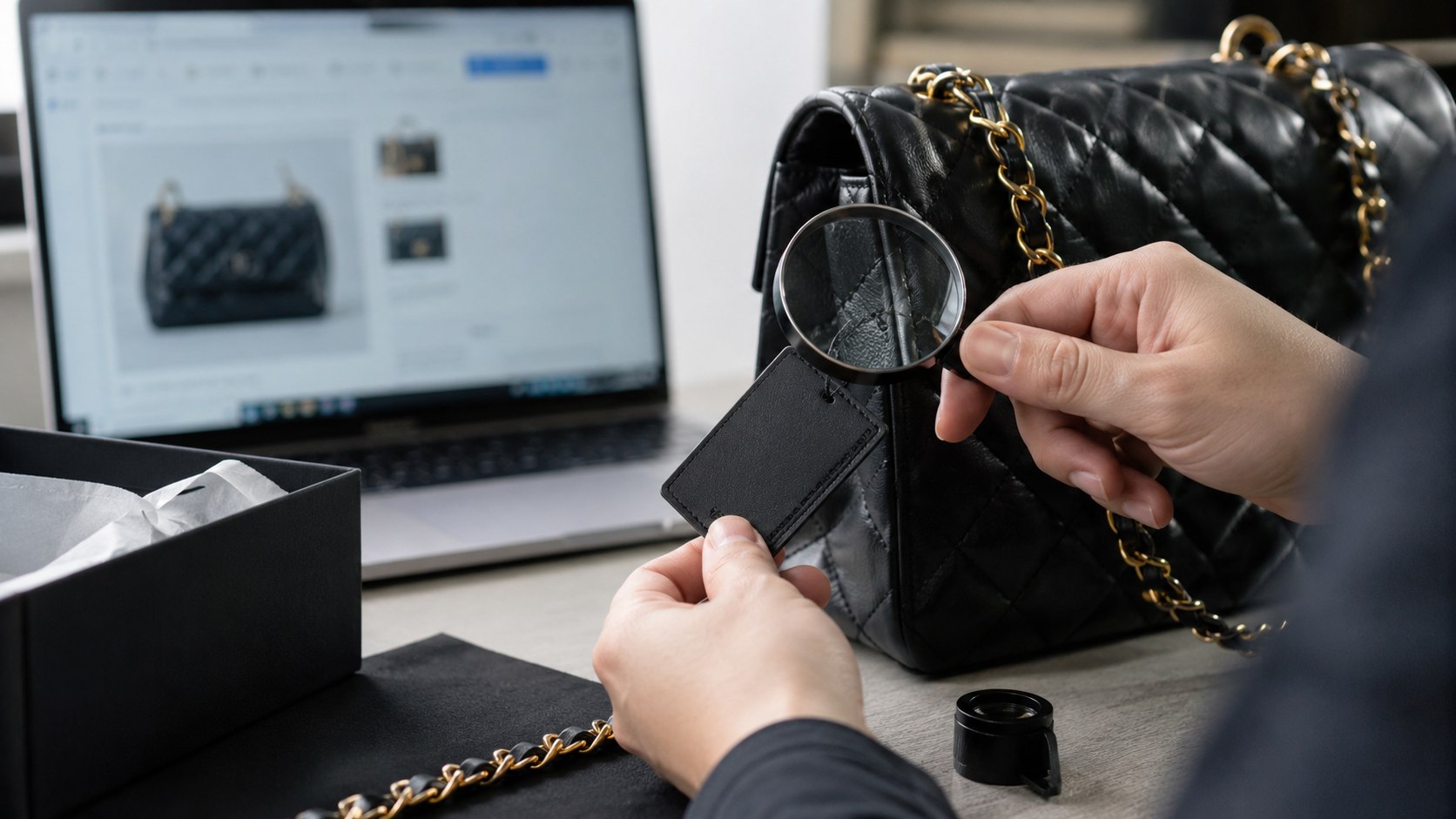
- Designer bags: compare dimensions, stitching, lining, hardware, codes, and period-correct construction.
A valid serial number does not prove that the physical item is genuine. Counterfeiters can copy a number from an authentic product and apply it to dozens of replicas.
Do not post a complete identifier in public comments. Another seller could reuse it. Send sensitive details through eBay Messages and save the exchange.
For an expensive watch, handbag, card, or piece of jewelry, consider professional authentication. Review the provider’s methods, fees, evidence standards, and refund policy before paying.
Step 5: Read the listing for hidden admissions
Study the title, condition field, item specifics, description, and return language. Some sellers avoid saying “authentic” while placing a famous brand name throughout the listing.
Watch for phrases such as inspired by, “designer style,” “mirror quality,” “1:1,” “AAA,” “custom logo,” or “cannot confirm authenticity.” These phrases may indicate a replica or an item the seller has not verified.
eBay prohibits counterfeit or fake items, including products designed to mislead buyers into believing they are genuine or authorized. Buyers can review the official eBay Counterfeit Policy before reporting a questionable listing.
The condition field does not settle the authenticity issue. “Pre-owned,” “open box,” “for parts,” or “seller refurbished” describes condition. It does not permit false branding or an inaccurate origin claim.
Read what the seller does not say. A detailed description of materials and condition that avoids origin, purchase source, serial information, or authenticity may signal uncertainty.
Step 6: Keep payment and communication on eBay
Complete the purchase through eBay’s checkout system. Do not send a wire transfer, gift card, cryptocurrency payment, direct bank payment, or separate PayPal transfer requested through a message.
Off-platform payment can remove important protections and weaken the transaction record. It also gives a dishonest seller more control over the evidence and refund process.
Never accept a private discount that requires canceling the eBay transaction. A small saving is not worth losing the order record, item description, payment trail, and formal dispute route.
Save the final order confirmation and seller messages. Confirm that the item number, price, shipping service, delivery address, and taxes match what you approved.
Step 7: Inspect and document the item after delivery
Photograph the outer package before opening it. Capture the shipping label, damage, seals, box dimensions, and any signs that the parcel was repacked.
Record the unboxing of expensive goods when practical. The recording should show the unopened parcel, label, contents, packaging, and product without breaks in the sequence.
Compare the delivered item with the saved listing. Check color, size, serial number, accessories, condition, materials, and every authenticity claim.
Do not activate software, resize jewelry, wear shoes outdoors, remove security tags, repair the product, or discard the packaging until the inspection is complete. eBay’s return rules may consider whether an item was altered or lost value after delivery.
When tracking becomes unclear, use the Baltimore Chronicle guide on filing a USPS Missing Mail search in 2026. It explains when to check tracking, contact the sender, and submit a search request.
Step 8: Use eBay Money Back Guarantee for a suspected fake
If the item appears counterfeit, open the order through your eBay purchase history. Select the return reason that accurately states the item does not match the listing.
Describe specific differences instead of making unsupported accusations. Identify the wrong model code, copied images, incorrect material, mismatched logo, invalid construction, or conflicting serial information.
Upload photographs, listing screenshots, seller messages, manufacturer references, and any authentication report. Clear evidence is more persuasive than anger or speculation.
The eBay Money Back Guarantee covers most qualifying transactions when an item does not arrive, arrives damaged, or does not match its listing. Current deadlines and instructions appear inside the individual order.
Follow the return label and address supplied through the case. Keep the shipping receipt and tracking number. Do not send the product to a different address suggested through private communication.
A seller’s “no returns” setting does not automatically defeat a valid item-not-as-described request. When the product is damaged, faulty, or inconsistent with the listing, eBay states that the seller generally covers return shipping.
Troubleshooting common counterfeit situations
The correct response depends on whether you are still reviewing the listing, waiting for delivery, or holding the suspected fake.
- The seller refuses new photographs: do not buy unless independent evidence adequately supports authenticity.
- The listing disappears after payment: check the order page and eBay Messages before opening the correct request.
- The serial number appears valid: compare the number with the physical model, materials, software, and accessories.
- The seller requests an off-platform return: continue only through the return instructions displayed by eBay.
- An authenticator cannot decide: document the inconsistencies and avoid presenting an uncertain opinion as proof.
Do not threaten the seller or publish personal accusations. A seller may have acquired a counterfeit unknowingly. Report what can be demonstrated from the item and listing.
Preserve the product in its received condition. Keep tags, seals, inserts, protective films, accessories, and packaging until the dispute is closed.
Do not select “changed my mind” when the actual problem is a material difference from the listing. The selected reason affects the process and responsibility for return shipping.
When the seller does not resolve an eligible request, the order may provide an option to ask eBay to step in. Use that option within the timeframe shown on the case page.
Keep the refund confirmation after the case closes. Refund timing depends on the payment method and case status, so verify the current estimate through the order.
FAQ about counterfeit items on eBay
Can eBay refund a counterfeit item?
A qualifying purchase may be covered when the item does not match the listing. Open the return through purchase history and provide detailed evidence.
Does “no returns” apply when an eBay product is fake?
Not automatically. A no-return preference generally does not remove coverage for an eligible item that is damaged, faulty, or materially misdescribed.
Does eBay authenticate every luxury product?
No. Authenticity Guarantee applies only to eligible products, categories, prices, sellers, and locations. Look for the program badge on the individual listing.
Can a real serial number appear on a counterfeit?
Yes. A counterfeiter can copy a genuine number and reuse it. Check the identifier against the complete physical product and its history.
Should I contact my credit card issuer first?
Start with the official eBay order process unless urgent circumstances require another action. Overlapping disputes may affect how each provider reviews the transaction.
Can I keep a counterfeit after receiving a refund?
Follow the exact instructions in the eBay case. Do not destroy, retain, or return the item based on assumptions about what the platform will require.
Earlier we wrote about How to Sell on eBay for Beginners 2026: Listings, Fees, Shipping, and First-Sale Tips