

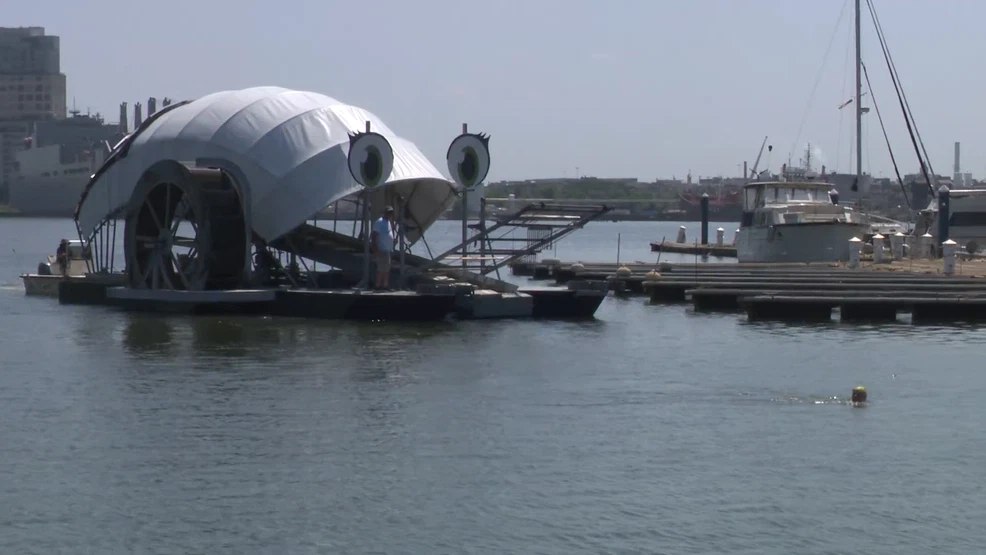
Professor Trash Wheel Returns to Baltimore Inner Harbor With Katie Pumphrey Swim Escort
Professor Trash Wheel returned to the Baltimore Inner Harbor on July 2, escorted through the water by ultramarathon swimmer Katie Pumphrey. The unusual homecoming united 2 prominent symbols of Baltimore’s campaign for cleaner waterways, as the Baltimore Chronicle notes.
Katie Pumphrey Escorts Professor Trash Wheel Through Baltimore Harbor
Pumphrey swam from Fort McHenry toward the city skyline while guiding the rebuilt trash interceptor to its Canton post. The artist and founder of Baltimore Open Water Swimmers described warm water, steady wind and several jellyfish encounters.
“It was a warm swim, but it was beautiful,” Pumphrey told FOX45 News after reaching the harbor. She also praised the skyline and Professor Trash Wheel’s distinctive green eyes and eyelashes.
The escort highlighted Pumphrey’s connection with local open-water swimming and Baltimore’s improving harbor conditions.
Key details from the return included:
- Date: July 2, 2026
- Route: Fort McHenry toward the Inner Harbor
- Destination: Professor Trash Wheel’s Canton location
- Escort swimmer: Katie Pumphrey
- Purpose: restoring litter collection near Harris Creek
The event was ceremonial, but Professor Trash Wheel’s function remains practical. The machine captures floating waste before currents carry it farther downstream.
How Professor Trash Wheel Protects the Chesapeake Bay
Professor Trash Wheel uses containment booms to direct debris toward a conveyor system. Water currents and solar power help move collected litter into an onboard container.
| Component | Function |
|---|---|
| Floating booms | Guide surface litter toward the machine |
| Conveyor belt | Lifts debris from the water |
| Water wheel | Powers the collection system |
| Solar panels | Provide additional operating energy |
| Container | Stores captured waste for removal |
This process prevents plastic, branches and street litter from entering the Chesapeake Bay. The wheel has operated near the Harris Creek outfall since 2016.
Her return also marked a new operational chapter. Local reports said the machine received a replacement barge before beginning its 10th year in Baltimore Harbor.
A Baltimore Environmental Landmark Returns to Work
Professor Trash Wheel belongs to Baltimore’s wider family of solar-assisted litter interceptors. The machines combine simple engineering with recognizable designs that attract public attention.
Their popularity has helped make Baltimore Harbor cleanup a visible civic project rather than a hidden maintenance operation. Professor Trash Wheel will now resume collecting debris near Canton before it reaches open water.
Earlier we wrote that Maryland AG demands full environmental review of proposed Hagerstown ICE facility