

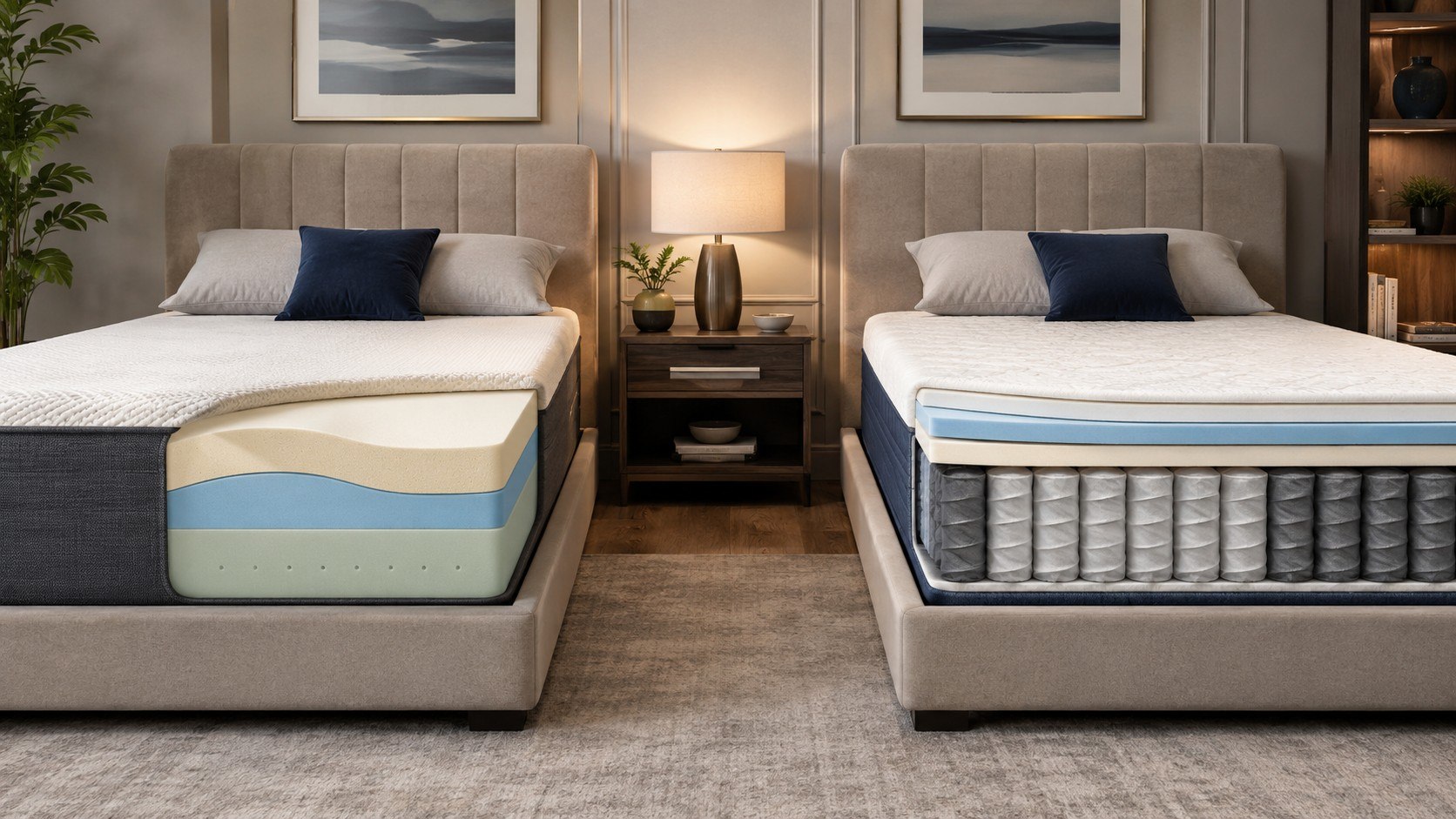
Memory foam vs hybrid mattress 2026: most buyers should choose a hybrid for cooler sleep, stronger edges, and easier movement. Memory foam remains better for lower budgets, deep pressure relief, and blocking a partner’s movement, as noted by Baltimore Chronicle.
The practical choice depends on 3 questions. Do you sleep hot, change positions often, or use the mattress edge? Choose a hybrid. Do you sleep on your side, wake when your partner moves, or need a queen under $1,000? Start with memory foam.
Key takeaways
- Memory foam delivers deeper contouring and better motion isolation, but dense foam can retain more body heat.
- Hybrid mattresses provide airflow, bounce, and edge support, although they usually cost more and weigh more.
- Material quality matters more than labels, so compare foam density, coil design, trial terms, and warranty exclusions.
At a glance
These differences describe typical US mattresses rather than every model. Premium foam can outperform a weak hybrid, especially when the hybrid uses thin comfort layers.
| Factor | Memory foam | Hybrid |
|---|---|---|
| Typical queen price in 2026 | About $500–$2,200 | About $900–$3,500 |
| Feel | Slow, close contour | Responsive, lifted support |
| Pressure relief | Usually excellent | Good to excellent |
| Cooling | Fair to good | Usually better |
| Motion isolation | Usually excellent | Good, but varies by coils |
| Edge support | Fair to good | Usually stronger |
| Expected useful life | Roughly 6–10 years | Roughly 6–8 years |
| Setup and moving | Heavy but flexible | Heavier and harder to bend |
| Best climate match | Cool or climate-controlled rooms | Warm and humid regions |
A foam mattress is not automatically the cheaper choice. Tempur-Pedic Adapt queen models started near $2,099 during July 2026 promotions. By comparison, Casper listed its Dream Hybrid queen near $1,395 during a sale.
Those prices change often, especially around Memorial Day, Labor Day, and Black Friday. Compare the final mattress price rather than the advertised discount. Bundled pillows and sheets rarely justify paying hundreds more.
Room planning also affects the decision. A thick hybrid may sit too high on an existing foundation. Baltimore Chronicle’s guide to arranging bedroom furniture and bed placement explains how clearance and room flow affect daily comfort.
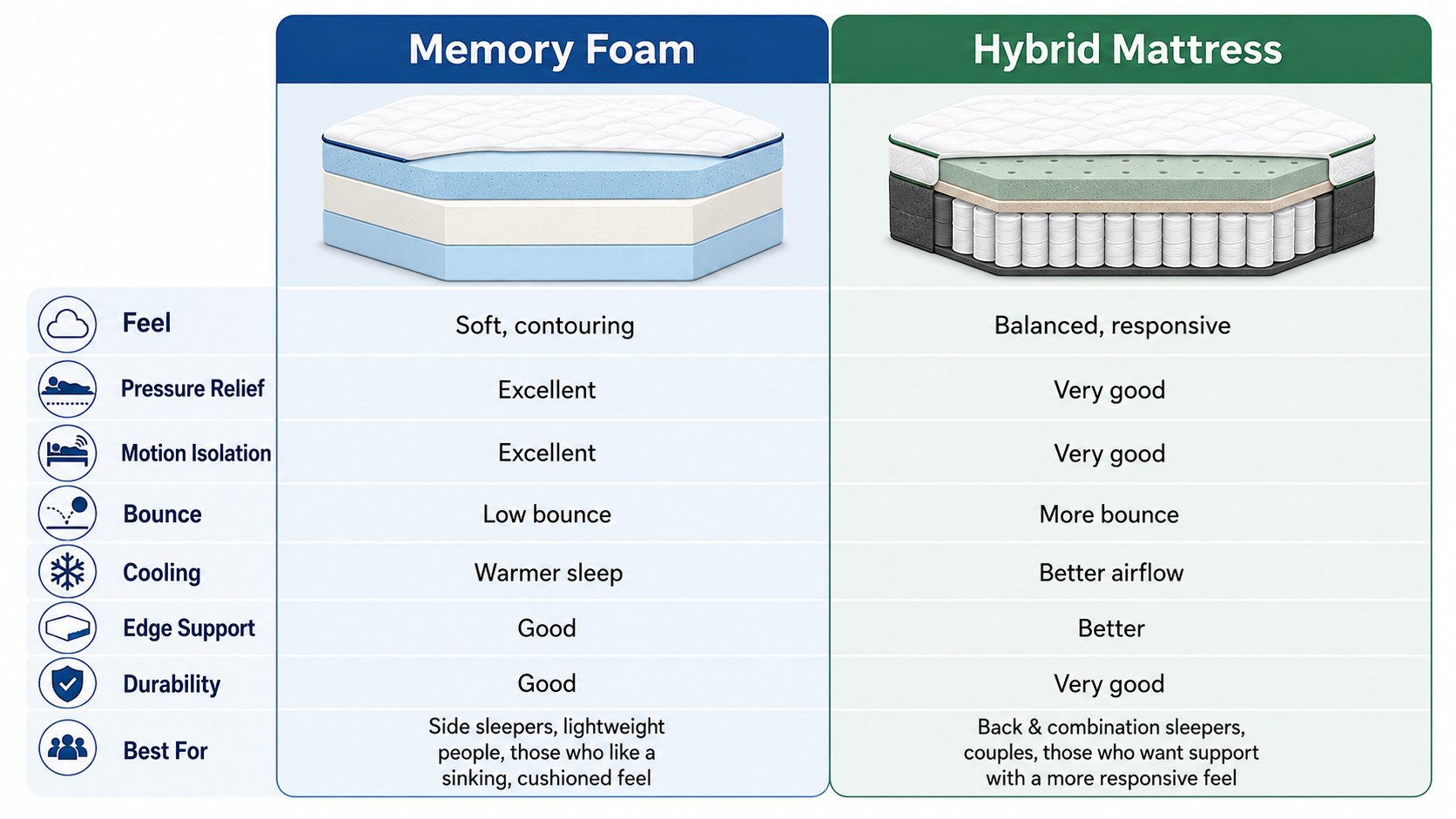
Memory Foam vs Hybrid Mattress 2026: The Core Difference
A memory foam mattress uses several foam layers without a coil support unit. Its upper layer softens under body heat and pressure. This creates the familiar hug around the shoulders, hips, and lower back.
A hybrid combines foam or latex comfort layers with individually wrapped coils. The coils compress independently, limiting the connected bounce found in older innerspring beds. Reinforced perimeter coils may also create a firmer sitting edge.
The simplest distinction is depth versus lift. Memory foam lets the body settle into the surface, while a hybrid keeps the sleeper more visibly above it.
That distinction affects turning, sitting, and getting out of bed. A responsive hybrid usually requires less effort when changing positions. Slow-response foam may feel restrictive to active sleepers or people with limited mobility.
Construction labels still require scrutiny. Some hybrids contain only a thin foam layer above basic coils. Others use 3 or 4 inches of premium foam, zoned coils, and a reinforced border.
Memory Foam: Feel, Advantages, and Drawbacks
Memory foam mattresses excel at distributing pressure across a larger surface. Side sleepers often appreciate this around the shoulder and hip. Couples may also notice fewer disturbances when one person turns or leaves the bed.
What Memory Foam Does Well
- Absorbs movement from restless partners, children, and pets.
- Contours closely around pressure-sensitive shoulders and hips.
- Usually costs less than a similarly finished hybrid.
- Works with many adjustable bed bases.
- Produces little noise because it has no metal coil system.
The motion advantage can be substantial in a shared queen bed. Foam absorbs energy instead of passing it across the surface. That helps when partners follow different work schedules.
Foam also offers predictable pressure relief without sharp spring resistance. However, softer is not always better. A very soft model may let the pelvis sink too deeply, especially for stomach sleepers.
Budget shoppers can find recognizable options below premium prices. Casper listed The One foam queen around $899 during a 2026 promotion. Amazon and major retailers also carry queen foam beds below $500, although layer specifications may be limited.
Check the return policy before choosing a compressed bed. Some sellers require the buyer to arrange removal. Others deduct pickup, recycling, or transportation charges.
Where Memory Foam Struggles
Dense foam allows less airflow than an open coil core. A mattress may therefore feel warmer in Texas, Florida, Arizona, or a humid Maryland bedroom. Cooling covers can improve the surface feel, but they cannot fully replace ventilation.
Foam edges may also compress during sitting. This reduces usable space for couples who sleep near the perimeter. Heavier adults should examine support-layer thickness and weight guidance before ordering.
Hybrid Mattresses: Feel, Advantages, and Drawbacks
A hybrid mattress feels more responsive because the support core rebounds quickly. The sleeper still receives cushioning from foam, but movement feels less restricted.
This design usually suits combination sleepers, hot sleepers, and couples who need more usable edge space. It can also help adults who sit on the bed while dressing.
What Hybrids Do Well
- Allow air to circulate through the coil support core.
- Provide stronger edge stability on many models.
- Make turning and changing positions easier.
- Offer a balanced mix of contouring and bounce.
- Support thicker, more complex comfort systems.
Hybrids often perform better in warm regions, although covers and comfort layers still matter. A hybrid with several inches of dense foam may sleep warmer than a ventilated foam model.
Coil design changes the experience. Pocketed coils move separately and reduce motion transfer. Zoned systems use firmer support around the middle and softer compression near the shoulders.
Brands also use the hybrid label across wide price levels. Casper’s Dream Hybrid queen recently appeared near $1,395 during a sale. Saatva’s specialized HD hybrid was listed at $3,499, reflecting heavier materials and a different target user.
For a broader view of furniture pricing, compare Baltimore Chronicle’s analysis of IKEA, Ashley, and Wayfair quality in 2026. It explains why delivery service and replacement costs matter alongside purchase price.
Where Hybrids Struggle
Hybrids usually weigh more than all-foam beds. A queen may be difficult to carry through a narrow staircase or apartment hallway. Moving it later can require 2 adults.
Coils may also transfer more movement than solid foam. Premium pocketed units control this better than connected springs. Still, highly sensitive sleepers may prefer an all-foam surface.
A hybrid is not automatically more durable. Thin, soft comfort layers can form impressions before the underlying coils lose support.
Heat and Climate: Which Mattress Sleeps Cooler?
Hybrids usually manage heat better because air moves through the coil core. Sleep Foundation also notes that hybrids tend to sleep cooler than all-foam models.
“Hybrid mattresses tend to sleep cooler than all-foam models.”
Sleep Foundation, mattress construction guidance, reviewed for the 2026 comparison.
That difference matters in warm states and upper-floor apartments. Bedrooms in Florida, Louisiana, Texas, Georgia, and Maryland may remain humid even with air conditioning.
Cooling performance also depends on bedding and room conditions. Waterproof protectors, polyester sheets, and thick comforters can trap heat above either mattress type.
Use this checklist before paying for a branded cooling upgrade:
- Check whether the cover is removable or only described as cool-touch.
- Look for breathable fabric rather than vague cooling technology.
- Compare the thickness of dense foam above the coils.
- Use cotton, linen, or breathable performance sheets.
- Keep several inches of airflow beneath the mattress.
- Confirm that the foundation meets warranty requirements.
A ventilated foundation will not rescue a heat-trapping comfort layer, but it can reduce moisture buildup. Platform beds need adequate gaps between slats. Solid boards restrict airflow beneath the mattress.
Hot sleepers should treat gel infusions carefully. Gel can change the initial surface temperature, yet the benefit varies by construction. Phase-change covers may feel cooler when first touched, but room temperature still matters.
People with persistent night sweats should not assume the mattress is the only cause. The Centers for Disease Control and Prevention advises discussing continuing sleep problems with a healthcare provider.
Durability, Sagging, and Long-Term Value
Mattress durability depends heavily on the comfort layers because they receive direct nightly pressure. Low-density foam usually softens sooner than high-density material. Very plush layers may show impressions faster.
A quality memory foam mattress may provide about 6–10 useful years. A typical hybrid often lasts about 6–8 years. These ranges are not guarantees, and body weight can change the outcome.
Hybrid coils may remain supportive after the upper foam begins softening. This creates an uneven feel despite an intact support core. Memory foam can lose resilience gradually, making deterioration harder to notice.
Look for these warning signs:
- A visible depression remains after the bed has been unused.
- Your hips sink lower than they did during the trial period.
- You wake with new stiffness that improves elsewhere.
- The edge collapses during normal sitting.
- Different areas of the bed feel noticeably softer.
A warranty may cover only depressions deeper than a stated threshold. Normal softening is often excluded. Stains, unsupported foundations, and damaged covers can also affect coverage.
Rotate the mattress when the manufacturer permits it. Do not flip a one-sided model. Use a protector that does not create excessive heat or change the surface feel.
Homeowners planning larger purchases can also review the best US furniture stores ranked for 2026. Delivery policies often matter more with heavy hybrids than boxed foam beds.
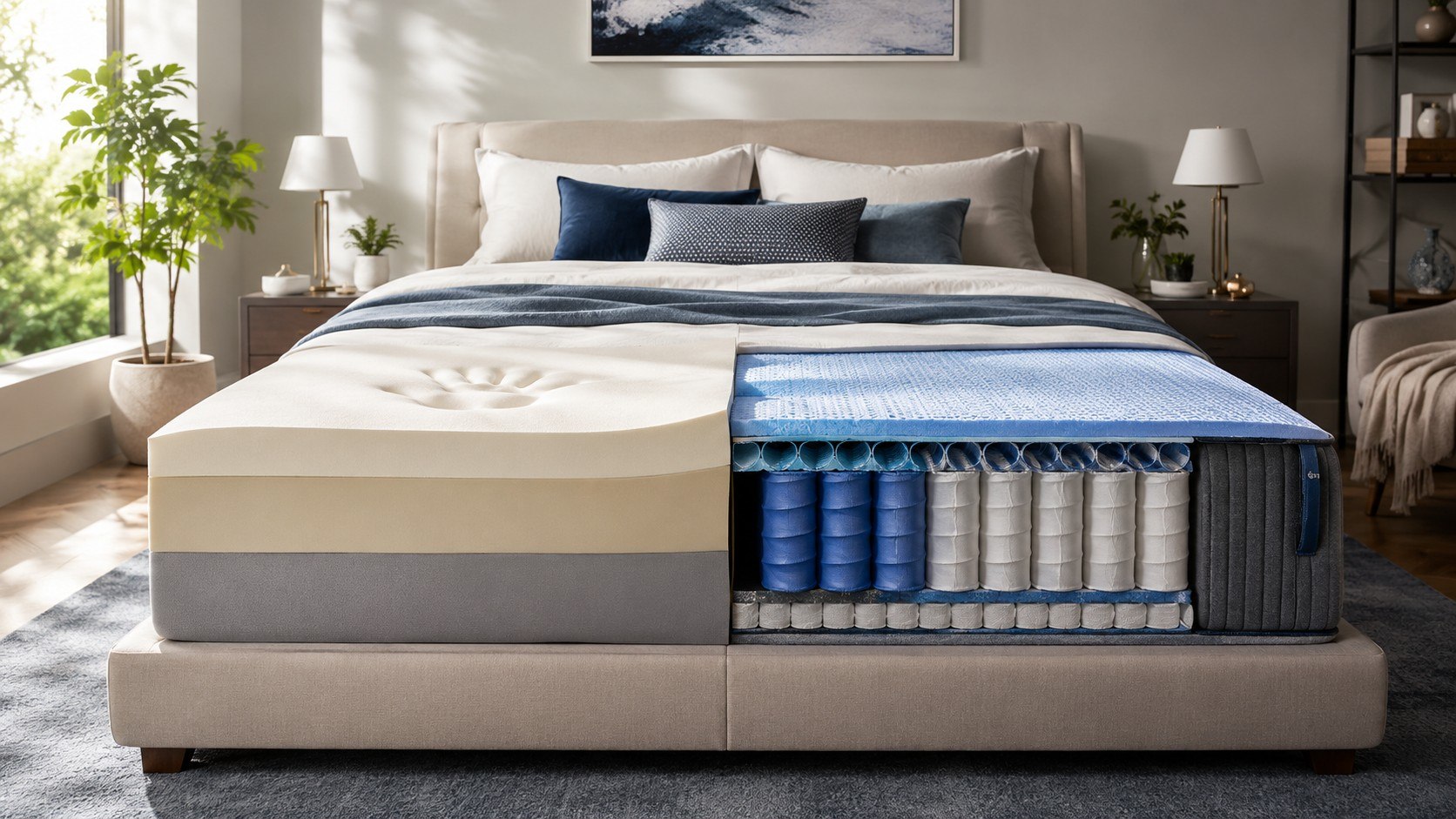
Which Should You Buy in 2026?
The decision becomes easier when the sleeper’s main problem takes priority. Avoid choosing through firmness labels alone because brands use different scales.
- If you sleep hot, choose a hybrid with pocketed coils and a breathable cover.
- If partner movement wakes you, choose memory foam with a stable support layer.
- If you change positions often, choose a responsive hybrid rather than slow foam.
- If your budget is below $1,000, compare foam models before discount hybrids.
- If edge stability matters, choose a hybrid with reinforced perimeter coils.
Side sleepers can use either type, but the upper layers must cushion the shoulders and hips. Back sleepers usually need moderate contouring with stable lumbar support. Stomach sleepers should avoid deep, soft sinkage.
Adults above 230 pounds should focus on construction details rather than marketing categories. Thicker support systems and durable comfort materials often matter more than the foam-versus-hybrid label.
Couples should identify the harder sleeper to accommodate. A hot, active sleeper may benefit more from a hybrid. A light sleeper disturbed by movement may value foam isolation more.
Test the bed in normal sleeping positions when possible. Sit near the edge, change positions, and remain on your side for several minutes. A brief showroom impression rarely predicts overnight comfort.
Buying Checks Before You Order
Mattress promotions are frequent, so urgency claims deserve skepticism. A countdown timer does not prove that the current price is unusual.
Verify these details before paying:
- Final queen price after required accessories and delivery charges.
- Minimum trial period before a return can begin.
- Pickup, recycling, restocking, or exchange fees.
- Foundation and slat-spacing requirements.
- Mattress height, weight, and stairway clearance.
- Warranty rules for sagging and body impressions.
- Whether returns are refunded or limited to store credit.
Measure the room and bed frame before choosing a 13-inch or 15-inch model. Thick mattresses can make existing nightstands feel too low. They may also require deep-pocket fitted sheets.
Apartment residents should confirm delivery access. Boxed foam is easier to maneuver before expansion. A full-size hybrid may arrive compressed, but it becomes difficult to move after opening.
Keep screenshots or copies of trial and warranty terms. Policies can change after purchase. Your order confirmation should also show the exact model, firmness, and size.
FAQ
Is Memory Foam or a Hybrid Better for Back Pain?
Neither category guarantees relief. Choose a model that keeps the spine level without creating pressure around the shoulders or hips. Persistent pain requires medical evaluation.
Which Mattress Is Better for Side Sleepers?
Memory foam often provides deeper pressure relief. A hybrid can work equally well when it has a thick, cushioning comfort layer and enough shoulder compression.
Do Hybrid Mattresses Sag Faster Than Memory Foam?
Not necessarily. Sagging depends on foam quality, layer thickness, sleeper weight, foundation support, and maintenance. The comfort layers often weaken before the coils.
Are Hybrid Mattresses Always Cooler?
No. Coils improve airflow, but thick foam layers can still retain heat. Bedding, room temperature, protectors, and humidity also affect sleeping temperature.
How Much Should a Queen Mattress Cost in 2026?
Mainstream memory foam queens commonly cost about $500–$2,200. Hybrids often range from about $900–$3,500. Verify current prices because promotions change frequently.
Can Either Mattress Work on an Adjustable Base?
Most foam mattresses work well on adjustable bases. Many pocketed-coil hybrids also qualify, but buyers should confirm compatibility with the mattress manufacturer.
Earlier we wrote about What Is ICF Construction 2026? US Costs, Energy Savings and the Real Price Premium