

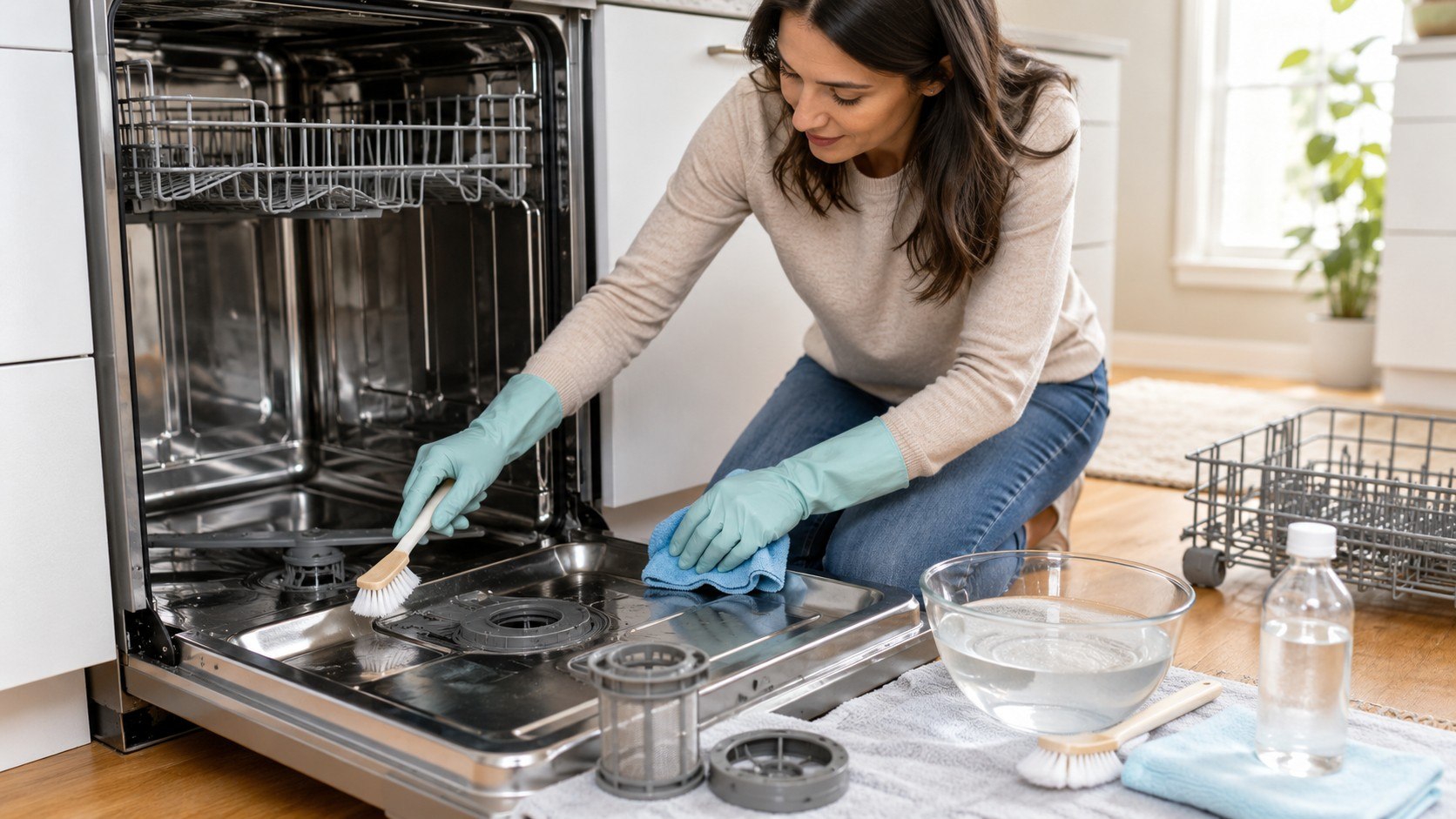
How to clean a dishwasher properly starts with an empty machine, a washed filter, cleared spray arms, and 2 separate hot cycles. Use white vinegar first, then baking soda after the vinegar cycle finishes. The process takes about 45–90 minutes, with only 15–25 minutes of hands-on work, as the Baltimore Chronicle editorial team notes.
This method removes trapped food, greasy film, mineral residue, and the sour odor that often returns after ordinary wash cycles. Do not pour vinegar into the detergent dispenser, combine it with bleach, or mix vinegar and baking soda together.
Key takeaways
- Clean the removable filter before using vinegar because liquid cleaners cannot remove glass, labels, seeds, or hardened food.
- Run vinegar and baking soda in separate cycles because mixing them immediately weakens their cleaning action.
- Check the owner’s manual first because frequent acid exposure may affect seals, finishes, and internal components.
A dirty dishwasher can leave grit on glasses, produce cloudy film, smell like wet food, or stop draining efficiently. Some symptoms point to routine maintenance, while others indicate a blocked hose or failing pump. The Baltimore Chronicle guide to fixing a dishwasher that will not drain explains what to check when water remains inside the tub.
What You Need Before Cleaning the Dishwasher
Most households already own the necessary supplies. A basic cleaning session usually costs under $5 when vinegar and baking soda are purchased in standard grocery-store sizes.
- Owner’s manual or online model guide
- Rubber cleaning gloves
- Microfiber cloth or soft sponge
- Old toothbrush or soft nylon brush
- Wooden toothpick for spray-arm openings
- Dishwasher-safe glass measuring cup or bowl
- 2 cups distilled white vinegar
- 1 cup baking soda
- Mild dish soap for removable components
- 45–90 minutes, including machine cycles
Distilled white vinegar commonly costs about $3–$6 per gallon in US supermarkets during 2026. A 4-pound box of Arm & Hammer baking soda often costs approximately $4–$7, depending on the retailer and state.
Commercial products remain an alternative when the appliance manual discourages vinegar. Affresh dishwasher cleaner commonly sells for about $9 per 6-tablet package, while Finish and Lemi Shine products often cost roughly $5–$10. Prices vary across California, Maryland, Texas, Florida, and New York, so check current local prices.
Never use regular hand-washing liquid inside the dishwasher tub. It creates excessive foam that may leak through the door and interfere with drainage.
Step 1: How to Clean a Dishwasher Properly Before Running a Cycle
Switch off the dishwasher and remove every dish, rack accessory, and loose utensil. Pull out the lower rack so the filter, sump, and lower spray arm are visible.
Pick up labels, bones, seeds, broken glass, pasta, paper, and other debris by hand while wearing gloves. Wipe away standing residue with a damp cloth.
This physical inspection matters because vinegar cannot dissolve plastic, glass, or large food particles. A common mistake is starting a hot cycle before checking the bottom, which can push debris toward the pump.
Dishwashers wash dishes, but they do not automatically remove every contaminant trapped beneath the filter or around the door seal.
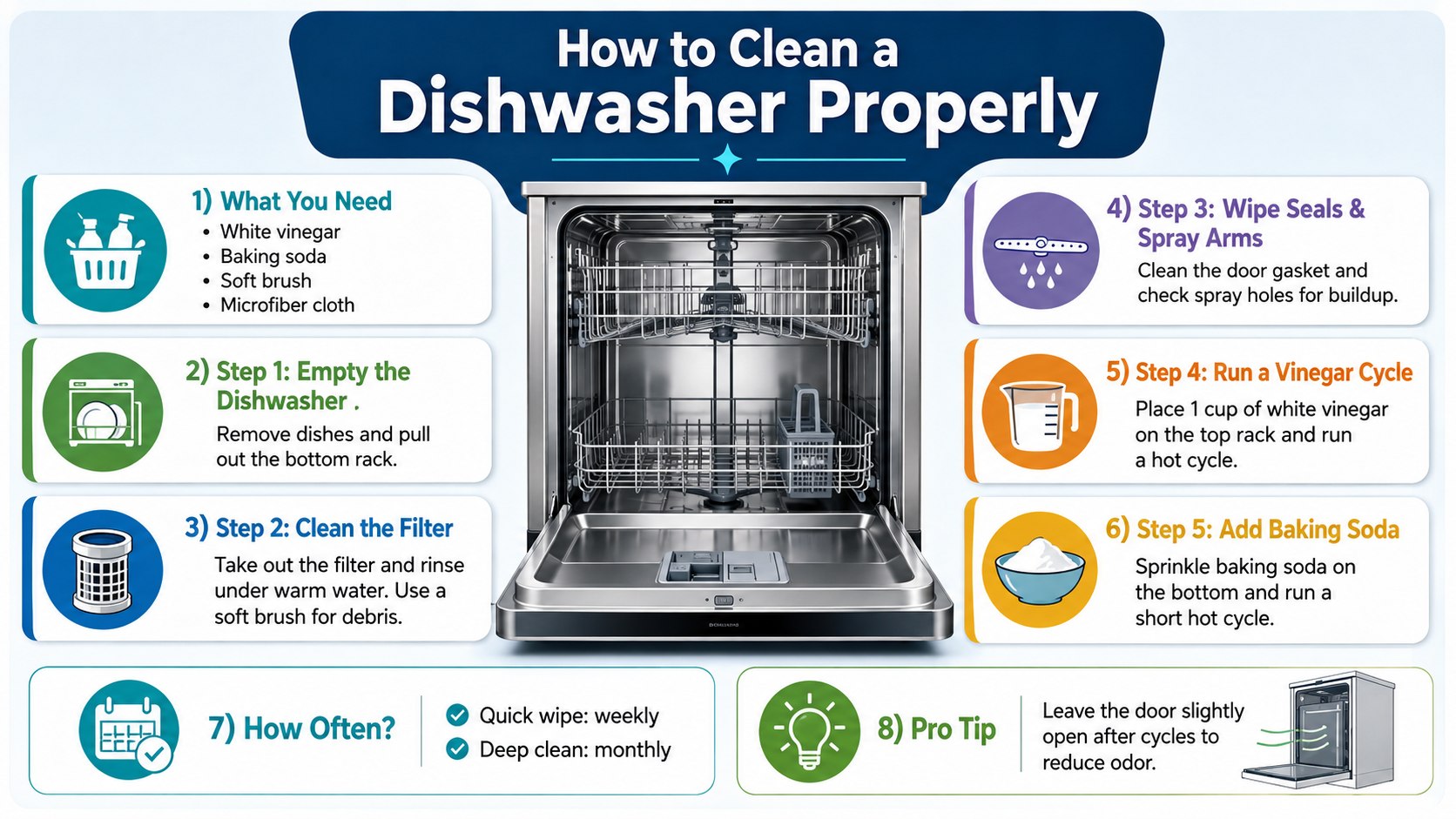
Step 2: Remove and Wash the Dishwasher Filter
Locate the filter beneath the lower spray arm. Many Bosch, KitchenAid, Whirlpool, GE, LG, Samsung, and Maytag models use a removable cylindrical filter with a flat screen beneath it.
Turn the filter in the direction marked on its handle, then lift it carefully. Rinse it under warm running water and scrub greasy mesh with a soft brush and mild dish soap.
Clean the filter cavity with a damp cloth. Inspect the sump with a flashlight, but do not remove pump covers unless the model guide permits it.
A clean filter restores water circulation and prevents old food from creating odors. The frequent mistake is using wire brushes or abrasive pads, which may damage the fine filter mesh.
Cleaning frequency depends on loading habits. A household that scrapes plates may need less frequent service than a family loading dishes with visible food. Check the filter monthly until you understand how quickly your machine collects residue.
Step 3: Clear the Spray Arms, Door Seal, and Detergent Area
Rotate each spray arm by hand and inspect its water openings. Remove visible particles with a wooden toothpick, then wipe the arm with a damp microfiber cloth.
Do not force metal wire deep into the holes. It may enlarge an opening or push debris farther inside the spray arm.
Next, clean the door edges, hinge area, detergent cup, and rubber gasket. These surfaces may never receive the full force of the wash spray, so grease and food collect there.
Use warm water with a small amount of mild dish soap. Apply liquid to the cloth rather than flooding the controls or latch.
This step improves water coverage and prevents odor around the door. A common mistake is scrubbing stainless steel with steel wool, which can leave permanent scratches and rust-producing particles.
Step 4: Clean the Dishwasher With Vinegar
Place 2 cups of distilled white vinegar in an upright dishwasher-safe glass or measuring cup. Set the container securely on the lower rack, unless the manufacturer specifies another position.
Run a complete normal or hot-water cycle with the heated-dry setting turned off. Do not add detergent, bleach, baking soda, or a commercial cleaning tablet.
The vinegar gradually mixes with the wash water. Its acidity helps loosen detergent film, light mineral deposits, and greasy residue inside the tub.
This method is safer than pouring vinegar directly across the dishwasher floor, where concentrated acid may remain against seals. The common mistake is filling the rinse-aid dispenser with vinegar, which exposes internal components repeatedly.
KitchenAid and Whirlpool advise owners to review the model’s care guide before using vinegar. Their official guidance notes that vinegar is acidic and may damage a dishwasher when used too frequently.
Households with mineral spotting should also examine local water conditions. The Baltimore Chronicle comparison of hard water and soft water explains why calcium and magnesium deposits affect appliances, glassware, plumbing, and detergent performance.
Step 5: Deodorize the Dishwasher With Baking Soda
Wait until the vinegar cycle has finished. Remove the glass, then sprinkle 1 cup of baking soda evenly across the bottom of the empty tub.
Run a separate short cycle using hot water. Allow the interior to air-dry after the cycle.
Baking soda helps neutralize lingering odors and loosen light stains. It also provides mild cleaning action without the concentrated acidity of vinegar.
Do not combine the ingredients in one bowl. The visible fizz looks powerful, but the immediate reaction converts much of the acid and base before the wash begins.
Use vinegar for mineral film and greasy residue, then use baking soda separately for odor control and light surface staining.
The common mistake is adding several cups of baking soda. Excess powder may clump in a damp sump, collect inside the filter, or leave residue after a short cycle.
Step 6: Reassemble, Wipe, and Test the Machine
Reinstall the clean filter and turn it until it locks. Replace the lower rack, utensil basket, and any removable spray-arm components.
Wipe the exterior with a damp microfiber cloth. For stainless steel, move with the visible grain and use only a cleaner approved for the finish.
Run a short rinse cycle without dishes. Watch the floor and sink cabinet for leaks, then confirm that the tub drains normally.
A controlled test verifies that the filter sits correctly and no component blocks the spray arms. The common mistake is loading a full dinner cycle immediately, which hides drainage or reassembly problems.
If cleaning does not restore performance, compare the machine’s age, condition, and repair access. The Baltimore Chronicle’s Bosch, Miele, and KitchenAid dishwasher comparison covers representative 2026 prices, service access, cleaning systems, and long-term ownership.
The following comparison separates routine household supplies from stronger commercial products. Always follow the product label and appliance manual.
| Method | Best use | Typical 2026 cost | Main caution |
|---|---|---|---|
| Warm water and mild soap | Filter, gasket, racks, door edges | Under $2 per cleaning | Avoid regular dish liquid inside a running machine |
| 2 cups white vinegar | Light scale, grease, detergent film | About $1–$2 per cycle | Use occasionally and check the owner’s manual |
| 1 cup baking soda | Odors and light surface stains | Under $1 per cycle | Run after vinegar in a separate cycle |
| Affresh tablet | Monthly maintenance and hidden residue | About $1.50 per use | Follow package and model instructions |
| Finish or Lemi Shine cleaner | Mineral deposits and interior buildup | About $1–$3 per use | Do not combine with household chemicals |
Household ingredients are practical for routine maintenance, but they are not universal repair products. Vinegar cannot fix a failed pump, damaged heater, blocked drain hose, or electronic error.
Commercial cleaners may reach residue in internal water paths more effectively. They are also easier to measure, although users must still select a dishwasher-safe formula.
People in hard-water regions may need more frequent mineral control. However, repeated acid cleaning is not a substitute for correct detergent dosage, rinse aid, and water-softening settings.
Stop the machine immediately when cleaning produces a leak, burning odor, or unusual electrical behavior. Turn off the breaker before inspecting water near electrical components.
Never mix chlorine bleach with vinegar, ammonia, acids, or unknown cleaning products. Such combinations may release dangerous gases.
Troubleshooting After Deep-Cleaning a Dishwasher
A successful cleaning should reduce odors, improve spray coverage, and leave the tub without loose residue. Persistent symptoms usually require a more targeted check.
- The dishwasher still smells: Inspect the drain hose, garbage-disposal connection, air gap, gasket folds, and sump for trapped food.
- Glasses remain cloudy: Check water hardness, rinse-aid settings, detergent quantity, and whether the marks are permanent etching.
- Water remains inside: Clean the filter again, inspect the drain path, and stop testing if the pump only hums.
- Dishes contain grit: Confirm that the filter is locked and every spray-arm opening remains clear.
- Black or pink residue returns: Clean accessible surfaces and arrange service when contamination extends into inaccessible hoses or insulation.
Odor that returns within several days often begins in the drain system rather than the stainless-steel or plastic tub. A blocked air gap or disposal inlet can send dirty water backward.
Cloudy glassware requires a different diagnosis. White mineral film may respond to cleaning, while etched glass has permanent surface damage.
Grit usually indicates restricted filtration or weak circulation. Check that tall pans and utensils do not prevent a spray arm from rotating.
A burning smell, repeated breaker trip, visible wiring damage, or water beneath the unit requires professional attention. Do not keep restarting the appliance.
Renters should document the symptom and contact the landlord before disconnecting plumbing or removing access panels. The lease may restrict appliance repairs.
FAQ
How often should you deep-clean a dishwasher?
Inspect the filter monthly and deep-clean the machine when odors, film, or reduced performance appear. Whirlpool recommends monthly maintenance for many household situations, but the owner’s manual controls.
Can vinegar damage a dishwasher?
Yes. Repeated or concentrated exposure may affect certain rubber parts and finishes. Use vinegar only when the manufacturer permits it, keep it inside an upright cup, and avoid frequent cycles.
Can I mix vinegar and baking soda in the dishwasher?
Do not mix them before the cycle. Run vinegar first, allow that cycle to finish, then use baking soda during a separate short cycle.
Should I use bleach to clean a dishwasher?
Only use bleach when the manufacturer explicitly permits it. Never use it in a stainless-steel interior and never combine bleach with vinegar, ammonia, or another cleaner.
Why does my dishwasher smell after cleaning?
Food may remain inside the sump, drain hose, air gap, garbage-disposal inlet, or door gasket. Standing wastewater also suggests a drainage restriction rather than a dirty tub.
Is a commercial dishwasher cleaner better than vinegar?
A manufacturer-approved cleaner is often better for regular maintenance and hidden buildup. Vinegar remains a low-cost option for occasional film removal when the model guide allows it.
Earlier we wrote about How to Reset a Tripped Breaker in 2026: 6 Safe Steps and Warning Signs