

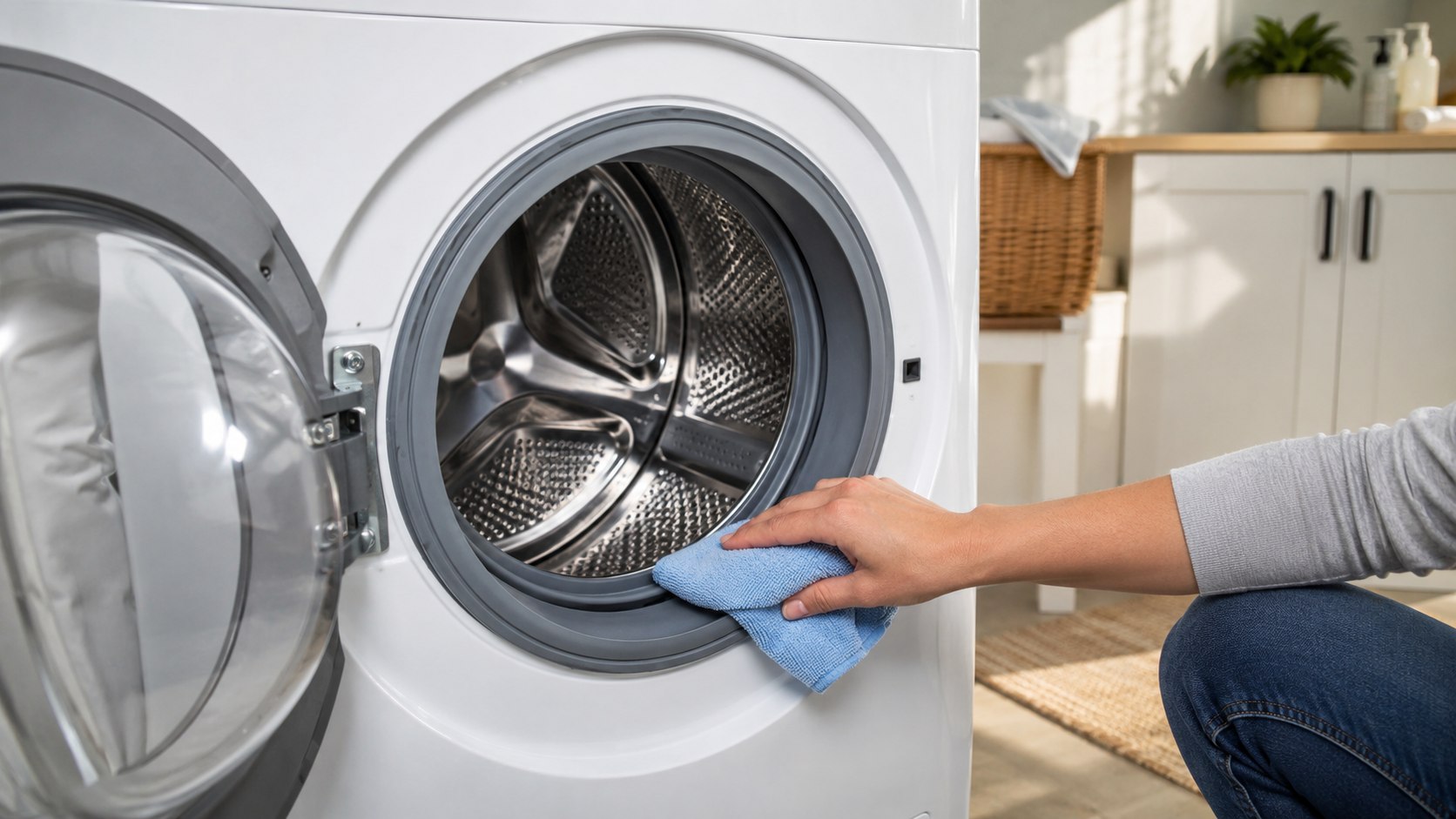
How to clean a front load washer starts with 25 minutes, a clean cloth, the rubber gasket, and one hot empty cycle. If your washer smells musty, leaves gray streaks on towels, or has black residue around the door seal, clean the gasket first, then the drum, detergent drawer, and drain filter, as Baltimore Chronicle notes.
This guide solves the immediate problem first: wipe the rubber folds, remove trapped lint, run the washer’s self-clean cycle, and let the drum dry with the door open. The deeper steps below help prevent the smell from returning, especially in humid states such as Florida, Louisiana, Texas, Georgia, and Maryland.
Key takeaways
Most front-load washer odor starts in the rubber gasket, where water, detergent residue, and lint stay trapped.
A monthly cleaning cycle helps protect the drum, but the seal still needs hand-cleaning and drying.
Use one cleaner at a time. The EPA and CDC warn against mixing bleach with ammonia or other cleaners.
Front-load washers from LG, Samsung, Whirlpool, GE, Maytag, Electrolux, and Bosch clean well because the drum tumbles laundry through less water. That design also leaves moisture around the door boot, the detergent drawer, and the lower drain area. The fix is not complicated, but it must be physical: loosen grime, wipe the folds, flush the drum, and dry the machine.
For readers comparing machines before the next appliance purchase, Baltimore Chronicle also explains the maintenance difference between top-load and front-load washers in 2026. The key point is simple: front loaders often save space and water, but they demand more attention to the gasket, detergent drawer, and drum drying routine.
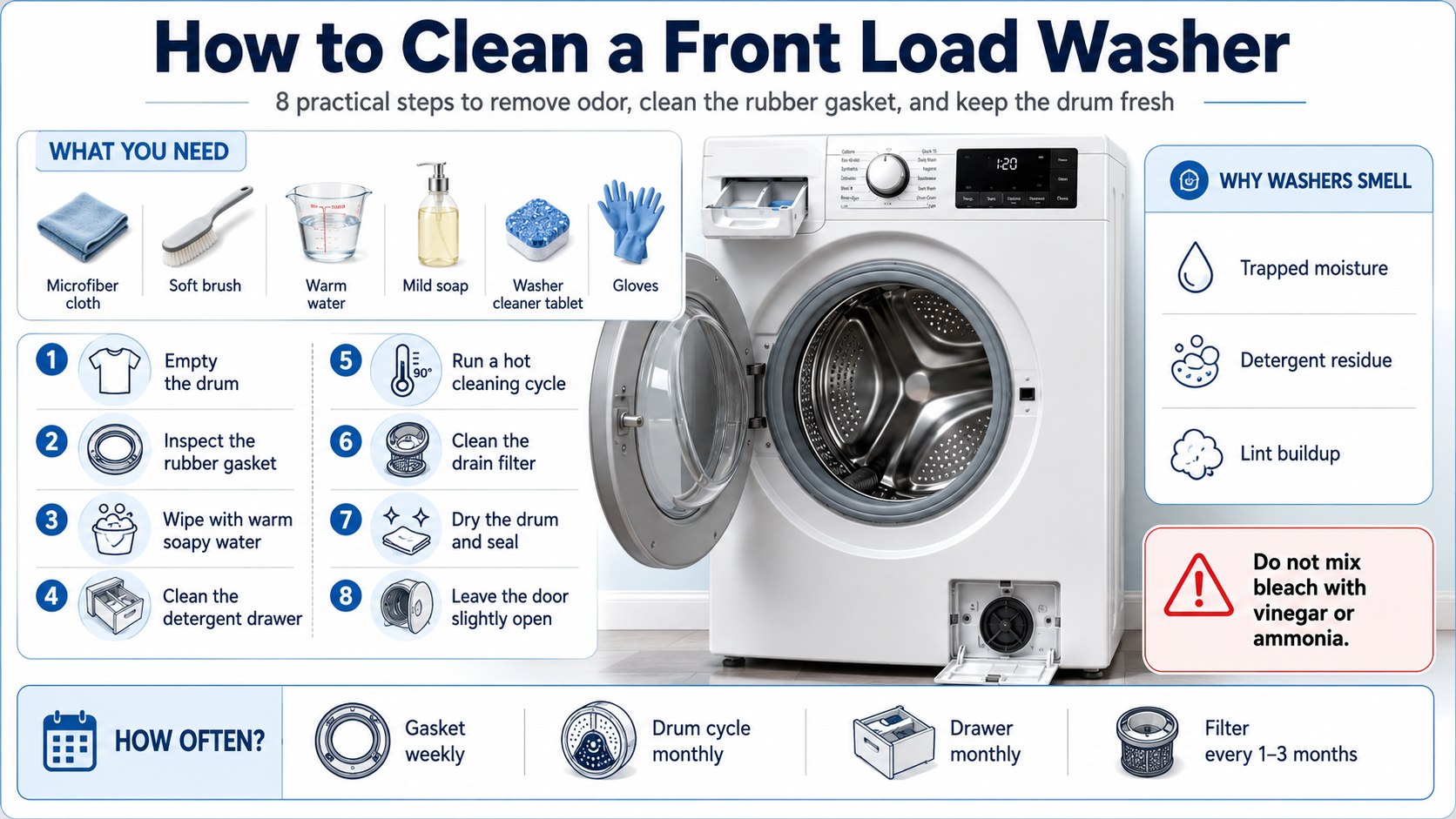
What You Need Before Cleaning a Front-Load Washer
Gather everything before you open the door seal. The job is cleaner, faster, and safer when you do not switch products halfway through. You do not need a professional toolkit, but you do need patience and a dry cloth at the end.
You will need:
- 2 microfiber cloths or old white cotton towels
- Soft toothbrush or small nylon brush
- Bucket or bowl of warm water
- Mild dish soap or low-sudsing cleaner
- Washer cleaner tablet, usually $8–$14 for a multi-pack in 2026
- Optional chlorine bleach, only if your owner’s manual allows it
- Rubber gloves
- Small towel for the drain pump filter area
- 20–45 minutes of hands-on time
Do not use abrasive pads on the gasket. Scratches can hold more residue and may shorten the seal’s life. Do not pour vinegar, bleach, and detergent into the same cycle. If you choose bleach, ventilate the laundry room and follow the product label.
For renters, take photos before and after cleaning if the machine already has visible mold or a damaged gasket. That record matters if the appliance belongs to a landlord or property manager.
Step 1: Empty the Drum and Inspect the Rubber Gasket
What to do: Remove all laundry, open the door fully, and pull back the front-load washer rubber gasket with your fingers. Look inside the folds for hair, coins, lint, detergent sludge, pet fur, and small clothing items.
Why it matters: The gasket is the first odor zone because it traps water after every wash. A single baby sock or lint clump can keep the seal damp for days.
Common mistake to avoid: Do not run a drum-clean cycle before inspecting the seal. The cycle will not remove debris stuck in the gasket folds.
Step 2: Wipe the Gasket With Warm Soapy Water
What to do: Mix warm water with a few drops of mild dish soap. Wipe the visible gasket surface, then pull back the folds and wipe inside each channel.
Why it matters: Soap and friction remove the film that feeds mildew and causes that sour laundry smell. This is often more effective than spraying fragrance over the problem.
Common mistake to avoid: Do not soak the gasket with too much liquid. You want to lift grime, not leave standing water behind the seal.
Whirlpool’s official guidance says the rubber seal should be cleaned regularly and wiped dry after cycles to help prevent residue, mold, and odor. You can review the manufacturer’s guidance here: Whirlpool front-load washer gasket cleaning guide.
Step 3: Treat Visible Mold or Black Sludge Carefully
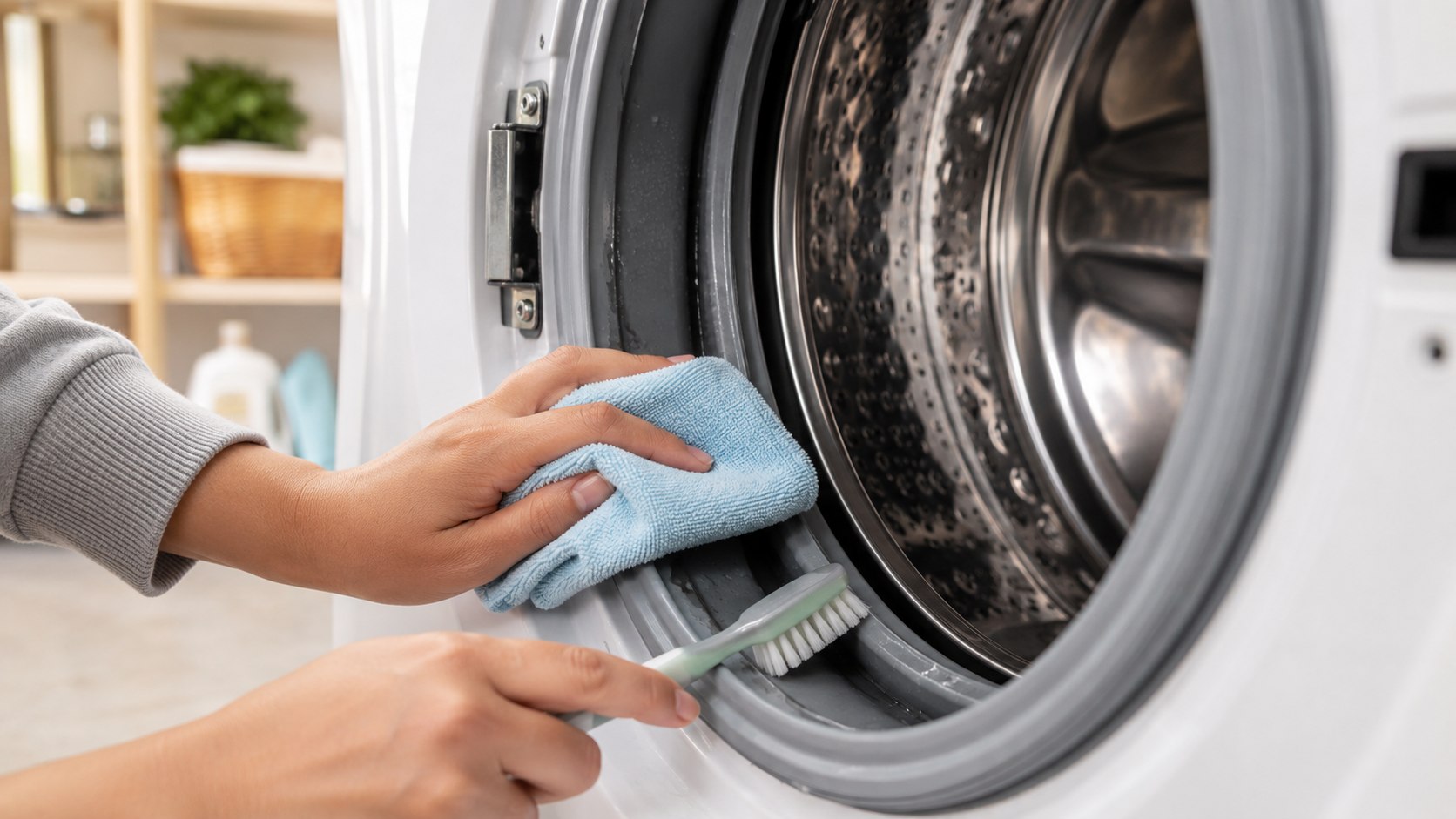
What to do: If you see black spots, scrub gently with a soft toothbrush and one approved cleaner. Many owners use a washer-cleaning solution, hydrogen peroxide, or diluted bleach only when the manual allows it.
Why it matters: Mold-like residue must be physically removed. Killing odor is not enough if the sticky film remains on the gasket.
Common mistake to avoid: Never mix bleach with vinegar, ammonia, detergent, or another cleaner. The EPA warns that chlorine bleach mixed with ammonia can create toxic fumes, and the CDC gives the same safety warning for home mold cleanup.
If the seal has deep black staining that will not lift, check whether the rubber is cracked, warped, or sticky. A replacement gasket often costs $80–$250 for the part, and labor can push the job higher depending on brand and local rates in 2026.
If odor keeps coming back and the washer is already old, check the broader replacement math in how long washing machines last in 2026. A gasket cleaning problem is usually cheap; repeated drain faults, leaks, and control-board issues can change the decision.
In high-cost areas such as California, New York, Massachusetts, and Washington, service calls may be more expensive. Always compare the repair cost with the age of the washer, the warranty status, and the price of a similar new model.
Step 4: Clean the Detergent Drawer and Dispenser Cavity
What to do: Pull out the detergent drawer according to the washer manual. Rinse the drawer under warm water, scrub the compartments, and wipe the cavity where the drawer slides in.
Why it matters: Too much HE detergent, liquid softener, and scent beads can create sticky buildup. That buildup washes into the drum and contributes to odor.
Common mistake to avoid: Do not ignore the top of the dispenser cavity. Mold and residue often hide above the drawer, where it is easy to miss.
Use only HE detergent in a high-efficiency front loader. More detergent does not mean cleaner clothes. It can leave residue on towels, inside the drum, and around the seal.
For small loads, the correct amount may be far below the cap line. This matters in apartments, condos, and family homes where the washer runs several times a week.
Step 5: Run the Drum Clean or Tub Clean Cycle
What to do: Place a washer cleaner tablet in the drum or add the cleaner recommended by your manual. Select “Clean Washer,” “Tub Clean,” “Self Clean,” or the hottest empty cycle available.
Why it matters: A hot empty cycle flushes residue from the drum, outer tub, and internal surfaces you cannot reach by hand.
Common mistake to avoid: Do not add towels or clothes to this cycle. Cleaning tablets and machine-clean cycles are designed for an empty washer.
Affresh, Tide Washing Machine Cleaner, OxiClean Washing Machine Cleaner, and Lemi Shine are common US options in 2026. A typical cleaner pack costs about $7–$15 at Walmart, Target, Home Depot, Lowe’s, Amazon, or local grocery chains.
Brand availability changes by ZIP code, so verify the label and your washer manual before using any product. Homes with several large appliances should also treat laundry care as part of a wider maintenance routine. The same logic applies to cooling equipment: this guide to fixing a refrigerator that is not cooling shows why seals, airflow, and early troubleshooting often prevent expensive service calls.
Step 6: Clean the Drain Pump Filter If Your Washer Has One
What to do: Find the small lower access panel on the front of the washer. Place a towel down, drain the hose if present, then unscrew the filter slowly and remove lint, coins, hairpins, and debris.
Why it matters: A dirty drain filter can leave water sitting in the machine. Standing water makes washer odor worse and may trigger drainage errors.
Common mistake to avoid: Do not open the filter quickly. Water can spill onto floors, especially in laundry closets with tight clearance.
| Area to Clean | How Often | Main Problem Prevented | Typical 2026 Cost |
|---|---|---|---|
| Rubber gasket | Weekly wipe, monthly deep clean | Musty smell, mold-like residue | $0–$5 |
| Drum clean cycle | Monthly or every 30–40 loads | Detergent film, sour towels | $2–$5 per cleaning |
| Detergent drawer | Monthly | Softener buildup, dispenser mold | $0–$3 |
| Drain pump filter | Every 1–3 months | Slow draining, trapped water | $0 |
| Door glass and outer seal | Weekly | Lint, hair, water streaks | $0 |
This schedule works for most US households, but laundry habits matter. Parents washing sports uniforms, pet bedding, cloth diapers, or work clothes may need more frequent cleaning. Homes in humid coastal regions may also need extra drying time.
If your laundry room has no window, use the exhaust fan or leave the door ajar when safe. The goal is simple: remove residue and shorten the time the washer stays wet. That one habit often makes the biggest difference between a clean front loader and a machine that smells again within days.
Step 7: Dry the Door, Glass, Gasket, and Drum
What to do: After the cleaning cycle ends, wipe the door glass, gasket folds, and lower lip of the seal. Leave the door open 1–3 inches if your home setup allows it.
Why it matters: Drying is the part many people skip. Moisture is what allows odor to return after a good cleaning.
Common mistake to avoid: Do not close the washer immediately after a hot cycle. A warm sealed drum can smell worse the next morning.
Households with toddlers or pets should use caution with an open washer door. If the laundry area is accessible, consider a door prop designed for washers or close the laundry room door. Some newer Whirlpool, LG, GE Profile, and Samsung models include venting, fan, or self-drying features.
These features can help, but they do not replace cleaning the gasket folds by hand. A washer can have a smart app, steam cycle, and auto-dispense system and still develop odor when wet lint stays inside the seal.
Step 8: Change the Habits That Cause Washer Smell
What to do: Use less detergent, remove laundry promptly, wipe the gasket after heavy loads, and avoid leaving wet towels inside the drum overnight.
Why it matters: Cleaning fixes the current odor. Better habits stop the same rubber gasket and drum smell from coming back.
Common mistake to avoid: Do not cover washer smell with scent boosters. Fragrance can hide odor while residue keeps building.
Daily and weekly habits that prevent smell:
- Use HE detergent only.
- Measure detergent for load size and soil level.
- Skip fabric softener when towels smell musty.
- Remove wet laundry within 30–60 minutes.
- Wipe the gasket after bulky loads.
- Clean the detergent drawer monthly.
- Run a hot cleaning cycle monthly.
- Keep the door slightly open when safe.
These habits are cheap and realistic. They also help renters avoid disputes over appliance condition when moving out. Homeowners can stretch the life of an expensive washer by preventing gasket damage and drain problems.
A front-load washer can cost $700–$1,600 in 2026 before delivery, installation, hoses, and haul-away fees. Spending a few minutes on maintenance is easier than replacing a machine early.
Troubleshooting Front-Load Washer Smell, Gasket Mold, and Drum Odor
When the washer still smells after cleaning, identify the exact symptom. Different odors point to different causes, and guessing can waste time.
- Washer smells like mildew after every cycle: Clean the gasket again, then clean the drawer and drain filter.
- Towels smell sour but the drum looks clean: Reduce detergent and stop using liquid softener for several washes.
- Black spots keep returning: Check whether the gasket stays wet because the door is closing too soon.
- Water remains in the drum: Inspect the drain filter and drain hose position.
- Smell is like sewage, not mildew: Check the standpipe, P-trap, and drain plumbing before blaming the washer.
If the odor is sewage-like, the problem may sit outside the appliance. In that case, a plumber may need to inspect the drain line, venting, or trap. If the washer leaks from the door, stop using it until the gasket is inspected.
A cracked seal can damage flooring, baseboards, and downstairs ceilings. For mold cleanup safety guidance, see the EPA’s official page on bleach and mold: EPA mold guidance.
How Often Should You Clean a Front-Load Washer?
For most households, clean the gasket weekly and run a washer-clean cycle monthly. If the machine handles pet bedding, gym clothes, uniforms, towels, or baby items, inspect the seal more often.
The easiest routine is tied to the calendar. Pick the first weekend of each month for the drum cycle, drawer rinse, and drain filter check. After each wash day, wipe the gasket and leave the door open long enough for the drum to dry.
This is the difference between a one-time cleanup and a washer that stays fresh. In shared laundry rooms, ask the landlord or property manager about maintenance responsibility.
Renters in Maryland, Pennsylvania, Virginia, New Jersey, Illinois, and other states often use appliances owned by the landlord. Do not replace parts without written permission. Report leaks, persistent mold, or drainage failures with photos and dates.
FAQ
Can I use vinegar to clean a front-load washer?
Vinegar can help with odor, but many manufacturers prefer washer cleaner or a manual-approved cleaning method. Do not mix vinegar with bleach. If your washer manual warns against vinegar, follow the manual.
Why does my front-load washer smell even after cleaning?
The smell usually remains because the gasket, detergent drawer, or drain pump filter was not cleaned. A drum cycle alone may not reach trapped debris. Clean all 3 areas before assuming the washer is broken.
How do I clean black mold from the washer rubber seal?
Pull back the gasket folds, wipe loose grime, scrub gently with a soft brush, and use one approved cleaner. If the rubber is stained, cracked, or sticky after cleaning, the gasket may need replacement.
Is bleach safe for cleaning a front-load washer?
Bleach may be allowed on some models, but only when diluted and used according to the manual. Never mix bleach with ammonia, vinegar, detergent, or other cleaners. Ventilate the room and wear gloves.
Should I leave my front-load washer door open?
Yes, when it is safe for your household. Leaving the door slightly open helps the drum and gasket dry. Homes with small children or pets should use caution and secure the laundry area.
How much does washer cleaning cost in 2026?
DIY cleaning usually costs $0–$15, depending on whether you buy tablets, gloves, or cloths. A professional appliance service call can cost much more, especially if a gasket or drain part needs replacement.
Earlier we wrote about Fabric Couch Cleaning in 2026: Care Codes, Stains, Costs and FAQ