

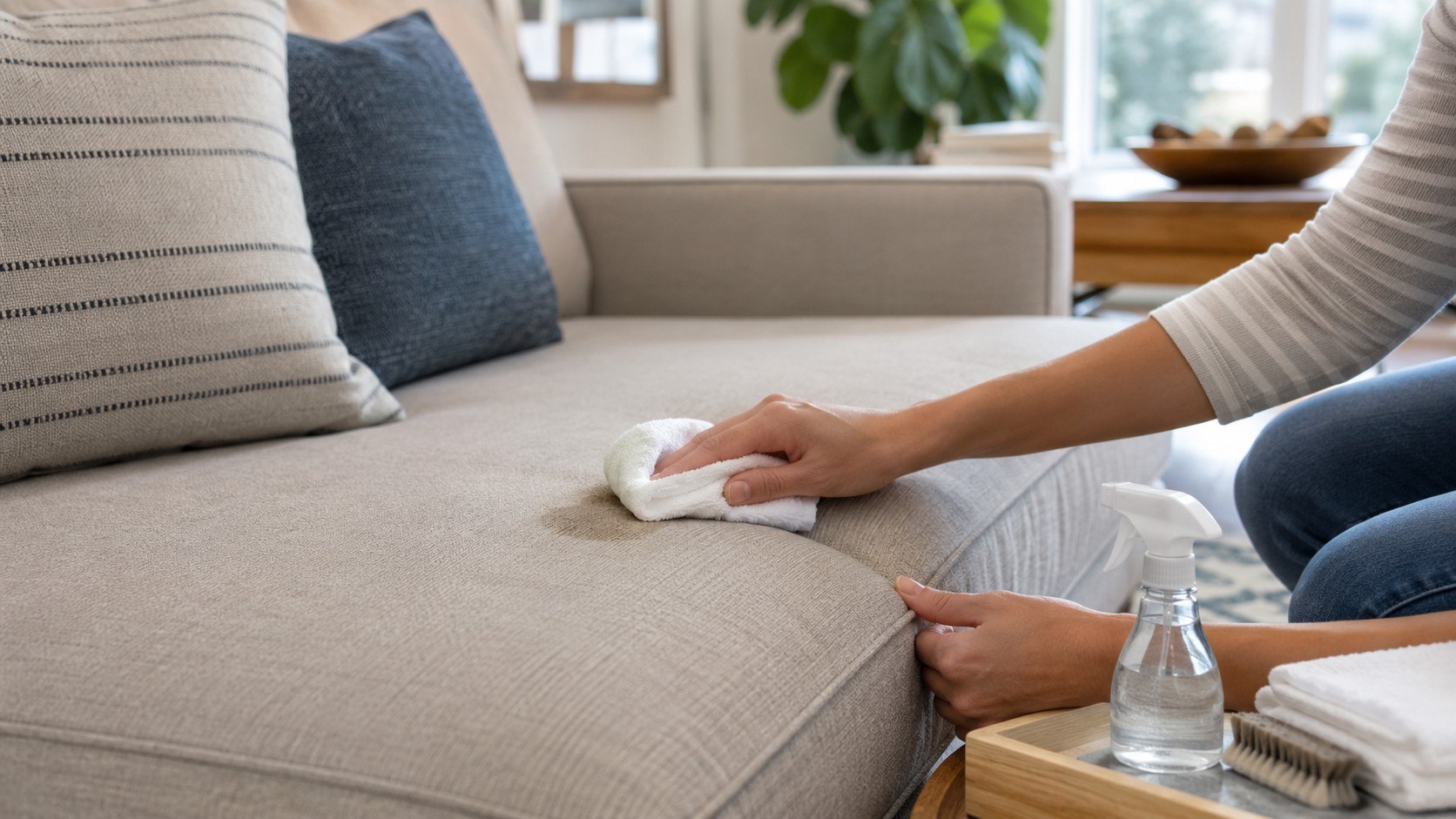
How to clean a fabric couch at home starts with 3 decisions: read the care code, match the cleaner to the stain, and use as little moisture as possible. Most fresh food, coffee, dirt, pet stains, and grease marks can be handled in 20–45 minutes with a vacuum, white cloths, mild dish soap, and careful drying, as noted by the Baltimore Chronicle newsroom.
The fast rule is simple: blot first, test in a hidden place, clean from the outside edge toward the center, then dry the cushion fully. A couch can look clean while moisture sits inside the padding, where it may create odor, rings, or mildew by the next day.
“Always test any cleaning method in an inconspicuous area first.” That manufacturer-style warning is not a formality; it is the line between a clean sofa and a permanent ring.
Key takeaways
- Check the tag before using water, solvent, steam, shampoo, vinegar, or an upholstery machine.
- Treat stains by type: protein, oil, tannin, dye, mud, pet urine, or everyday soil.
- Avoid soaking cushions because slow drying can cause odor, water rings, and fabric distortion.
What you need before cleaning a fabric couch
Before you touch the stain, remove loose pillows and cushions if the design allows it. The care tag is usually under a seat cushion, behind the skirt, or on the platform near the frame.
You will need:
- Vacuum with upholstery brush and crevice tool
- White microfiber cloths or plain white cotton towels
- Mild clear dish soap, baking soda, and distilled white vinegar
- Spray bottle, bowl, spoon, and soft upholstery brush
- Optional 2026 tool: portable upholstery cleaner, often $90–$230 in the US
- Time: 20 minutes for a fresh spot, 1–3 hours for a full couch
- Budget: about $5–$20 for basic supplies, more for machines or pro cleaning
Use white cloths because dyed towels can transfer color to damp upholstery. Keep a dry towel nearby for immediate blotting; speed matters when the spill is coffee, wine, urine, sauce, or cooking oil.
If you are deciding whether an older sofa is worth cleaning or replacing, Baltimore Chronicle’s comparison of IKEA, Ashley and Wayfair furniture quality in 2026 gives useful context on sofa prices, warranties, materials, and return risks.
Step 1: Read the couch cleaning code
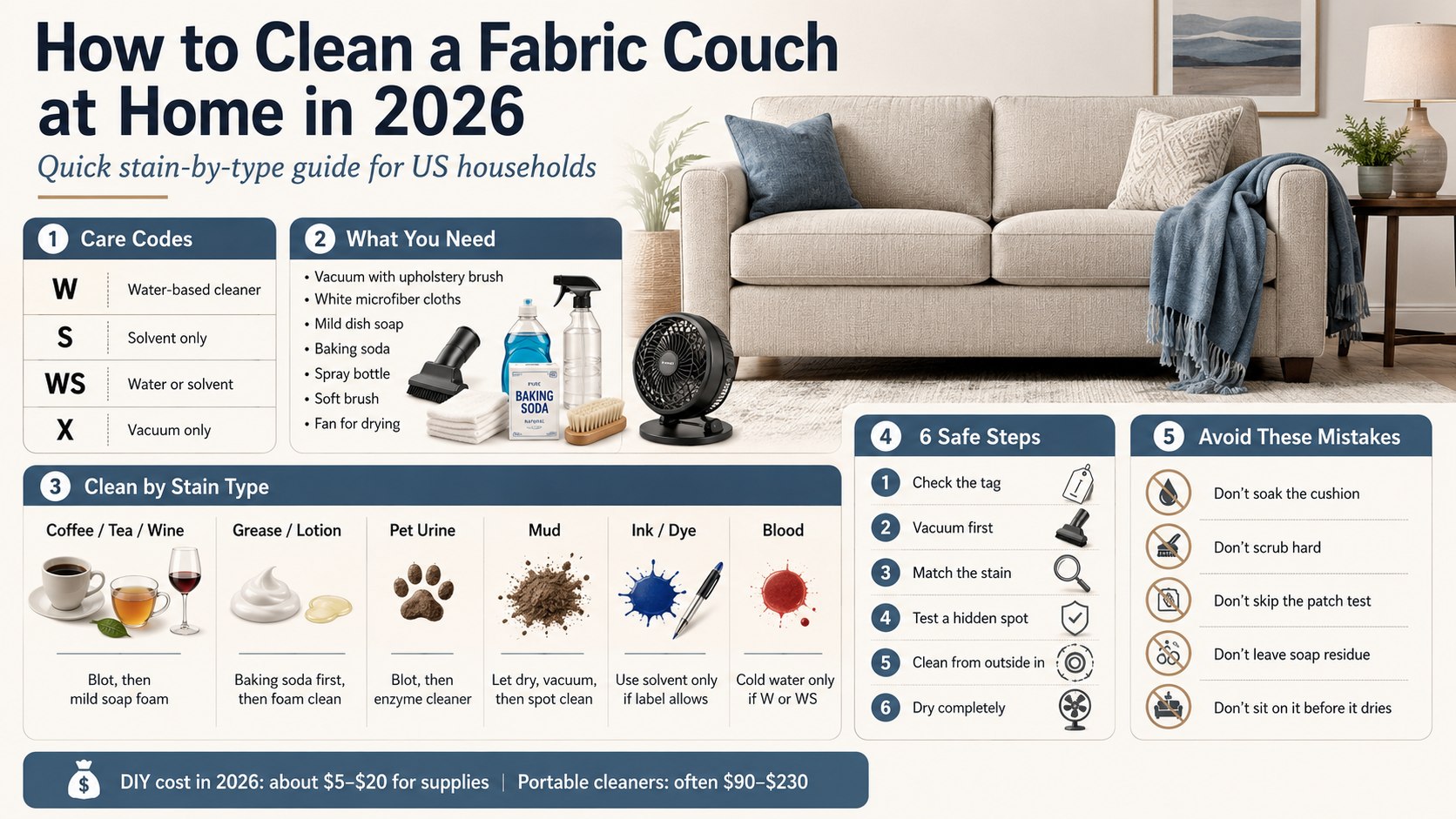
Look for W, S, WS, SW, or X on the care label. W means water-based cleaning is allowed, S means solvent only, WS/SW allows both, and X means vacuum or professional care only.
Why it matters: the wrong liquid can leave rings, shrink fibers, or affect backing glue. The common mistake is assuming microfiber, cotton blends, linen-look polyester, and velvet-style upholstery all tolerate the same cleaner.
| Care code | Safe home method | Avoid |
|---|---|---|
| W | Water-based foam or diluted mild soap | Solvent spot cleaners |
| S | Water-free upholstery solvent | Water, steam, wet shampoo |
| WS / SW | Foam cleaner, mild detergent foam, or solvent | Heavy soaking |
| X | Vacuum and dry brush only | Water, solvent, steam, shampoo |
Take a photo of the tag before you start. Tags fade, tear, or get removed during moves, especially in rentals and apartments.
If there is no tag, treat the couch like an unknown fabric. Vacuum first, test a hidden back corner, and avoid steam or strong solvent unless a professional confirms the material.
For homes with tight rooms, renters, pets, or children, the furniture-store decision matters as much as the cleaning method. Baltimore Chronicle’s explainer on where to buy furniture in the USA in 2026 also points readers to seat depth, cushion fill, frame material, and upholstery details before purchase.
Step 2: Vacuum the whole couch first
Vacuum the seat deck, seams, arms, cushion edges, and the gap where crumbs collect. Use slow passes instead of dragging the tool quickly across the fabric.
Why it matters: dry soil turns into muddy residue when liquid hits it. The common mistake is spraying cleaner before removing pet hair, dust, snack crumbs, and grit.
Pet households should use a rubber glove or fabric-safe pet hair tool before liquid treatment. Hair clogs portable cleaners and can smear into damp upholstery.
Step 3: Match the stain by type
Fabric couch stain removal works best when the stain tells you what it needs. Coffee is not grease, mud is not urine, and ink is not chocolate.
| Stain type | First move | Best home approach |
| Coffee, tea, wine | Blot with a dry white cloth | Mild soap foam, then light water blot |
| Grease, butter, lotion | Cover with baking soda for 15–30 minutes | Vacuum powder, then use a small amount of soap foam |
| Pet urine | Blot hard, do not rub | Use an enzyme cleaner approved for upholstery |
| Mud | Let it dry fully | Vacuum, brush, then spot clean |
| Ink or dye | Stop spreading immediately | Use proper solvent only if the code allows it |
| Blood | Use cold water only if W or WS | Blot gently; avoid hot water |
This stain-first approach prevents the 2 most common failures: spreading dye and pushing oil deeper into the cushion. It also saves time because you stop treating every mark like the same spill.
Grease needs absorption before soap. Coffee and wine need fast blotting. Mud usually needs the opposite of urgency: let it dry, then break it up and vacuum before adding moisture.
Step 4: Make a safe cleaning foam
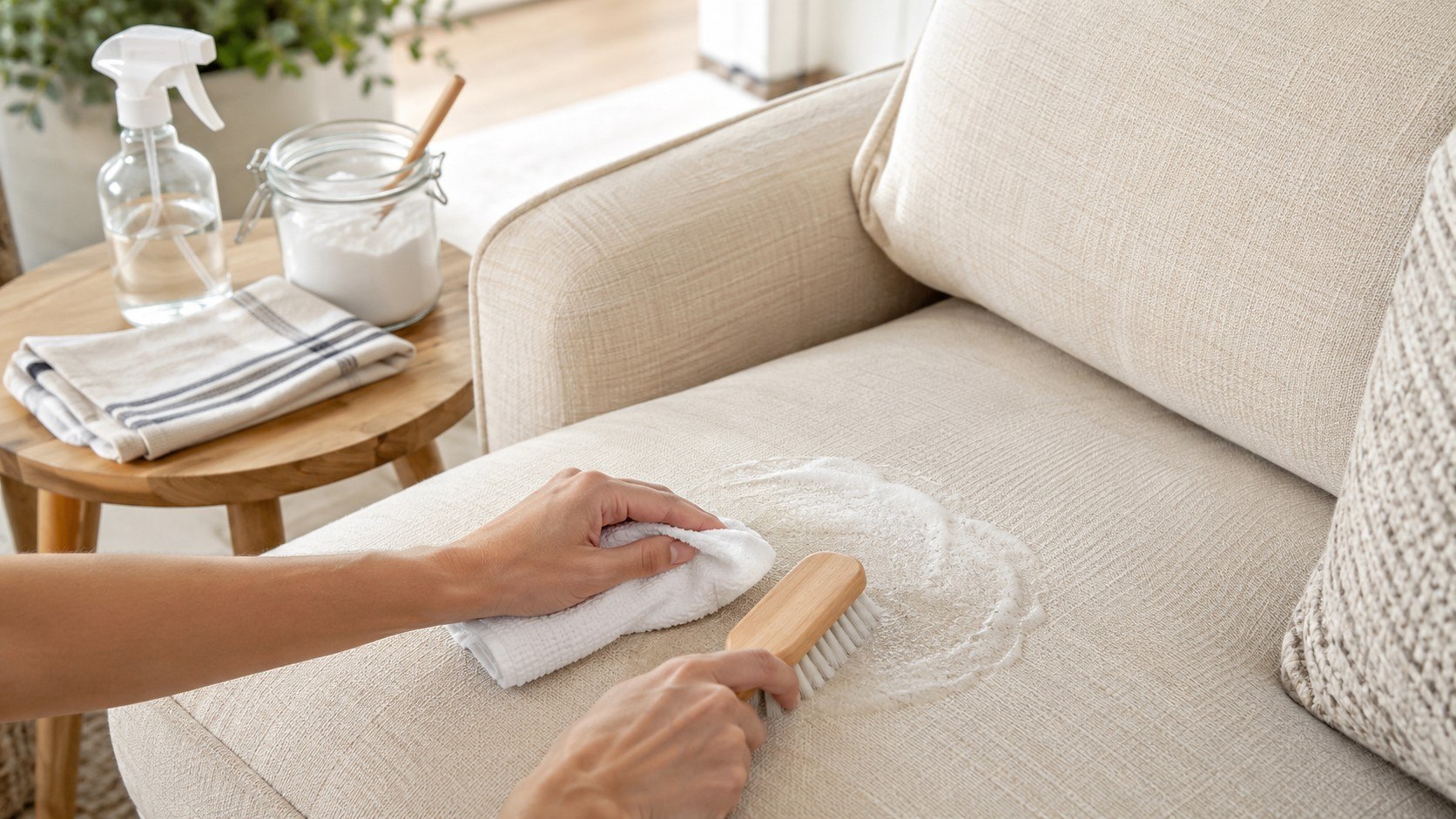
For a W or WS couch, mix 2 cups of warm water with 1/2 teaspoon of clear mild dish soap. Stir until foam forms, then use the foam rather than pouring liquid onto the couch.
Why it matters: foam cleans the surface with less risk of soaking the cushion. The common mistake is using too much soap, which leaves sticky residue that attracts dirt.
Do not mix bleach with vinegar, ammonia, or other cleaners. The FTC Green Guides also warn readers to be cautious with broad environmental marketing claims, so choose products by label instructions, not slogans.
Step 5: Test a hidden spot for 10 minutes
Apply a small amount of foam to a hidden area, blot it, and wait 10 minutes. Check for color transfer, texture change, rings, stiffness, or darkening.
Why it matters: a patch test reveals problems before they appear on the center cushion. The common mistake is testing behind a pillow that is still visible during normal use.
If the cloth picks up dye, stop home cleaning. That fabric may need solvent cleaning, professional extraction, or a manufacturer-approved product.
For a broader furniture care routine, connect this job with Baltimore Chronicle’s guide to the best furniture stores in the USA for 2026. The same buying checklist reminds readers to check fabric cleaning codes before ordering a sofa, sectional, or upholstered chair.
Step 6: Clean the stain from the outside in
Work from the outer edge of the stain toward the center. Dab with foam, wait 1–2 minutes, then blot with a dry white cloth.
Why it matters: outside-in cleaning keeps rings from spreading. The common mistake is scrubbing hard, which fuzzes fabric and makes the spot look larger.
For oil stains, repeat slowly after the baking soda step. For coffee or wine, several light passes are safer than 1 wet pass.
Step 7: Rinse without soaking
Dampen a clean cloth with plain water and blot the cleaned area. Do not pour water, and do not use a soaked sponge.
Why it matters: residue from soap or cleaner can dry sticky and dull. The common mistake is leaving detergent in the fabric because the stain “looks gone.”
Use the same light touch across the surrounding area if a ring starts forming. Feathering the edges can help the cleaned patch blend with the rest of the cushion.
Step 8: Dry the couch completely
Press dry towels onto the cleaned area, then aim a fan across the couch. Open windows if weather allows, but avoid direct harsh sun on dark or delicate fabric.
Why it matters: trapped moisture causes sour odor and can affect cushion foam. The common mistake is sitting on the couch before the fabric and padding are fully dry.
A portable upholstery cleaner, such as Bissell Little Green models, can help extract water from small areas. In 2026, US sale prices commonly range from under $100 to about $230 depending on model, retailer, coupons, and shipping.
Step 9: Deodorize only after stains are gone
When the couch is fully dry, sprinkle a light layer of baking soda over odor-prone areas. Wait 20–60 minutes, then vacuum thoroughly.
Why it matters: deodorizing before cleaning can trap odor under powder. The common mistake is adding fragrance spray to pet urine, smoke, or food odor.
If odor returns after 24 hours, the liquid likely reached the cushion core. At that point, an enzyme product or professional upholstery cleaner is more realistic than repeating soap.
Step 10: Protect the fabric after cleaning
Once dry, brush the nap gently if the fabric looks flattened. Rotate cushions, check seams, and keep food or oily skincare away from the arms.
Why it matters: prevention reduces deep stains that require extraction. The common mistake is applying fabric protector without checking whether the manufacturer allows it.
Do not assume every “performance fabric” is maintenance-free. Many resist spills for a short time, but they still need prompt blotting, routine vacuuming, and careful drying.
Troubleshooting common couch cleaning problems
- Water ring appeared: lightly dampen the edge, blot outward, and dry with a fan.
- Fabric feels stiff: residue remains; blot with a barely damp cloth and dry again.
- Stain came back: the spill reached padding; use extraction or call a cleaner.
- Color transferred to cloth: stop cleaning and avoid water-based methods.
- Pet odor remains: use an upholstery-safe enzyme cleaner, not perfume spray.
Troubleshooting is about stopping damage early. Repeating the same failed method usually makes the fabric wetter and the stain wider.
If the couch is vintage, silk, velvet, wool, or marked X, do not experiment. The safest decision can be vacuuming only and booking a trained upholstery cleaner.
How much does it cost to clean a fabric couch in 2026?
A basic DIY clean can cost less than $20 if you already own a vacuum. Buying a portable cleaner is a larger decision, usually useful for homes with pets, children, frequent guests, or car upholstery needs.
Typical 2026 costs:
- Basic DIY supplies: about $5–$20
- Enzyme upholstery cleaner: often $8–$25
- Foam upholstery cleaner: often $6–$15
- Portable spot cleaner: often $90–$230
- Professional sofa cleaning: often $100–$250, depending on size and city
Prices vary by state, labor costs, couch size, and fabric risk. A sectional in California or New York can cost more than a small loveseat in Ohio, Georgia, or Indiana.
Ask professional cleaners whether the quote includes cushions, arms, deodorizing, and stain treatment. A low base price may not cover pet urine, ink, smoke odor, or heavy soil.
FAQ
Can I use vinegar to clean a fabric couch?
Sometimes, but only on fabrics that allow water-based cleaning. Vinegar can help with light odor, but it is not a universal stain remover and may affect dyes.
Can I steam clean a fabric couch at home?
Only if the care label and manufacturer allow it. Steam can damage S-code, X-code, delicate, glued, or poorly ventilated upholstery.
What is the best way to clean a microfiber couch?
Check the code first. Many microfiber couches handle light foam cleaning well, but some require solvent; brush gently after drying to restore texture.
How do I remove pet urine from a fabric couch?
Blot immediately, avoid rubbing, and use an upholstery-safe enzyme cleaner if the code allows it. If odor returns, the urine reached the cushion foam.
How often should I clean a fabric couch?
Vacuum weekly or monthly depending on pets and use. Spot clean spills immediately, and deep clean once or twice a year if the fabric allows it.
When should I call a professional cleaner?
Call a professional for X-code fabric, silk, velvet, old stains, ink, dye transfer, smoke odor, or repeated water rings.
Earlier we wrote about USPS Hold Mail How to Set Up in 2026: Vacation Rules and 30-Day Limit