

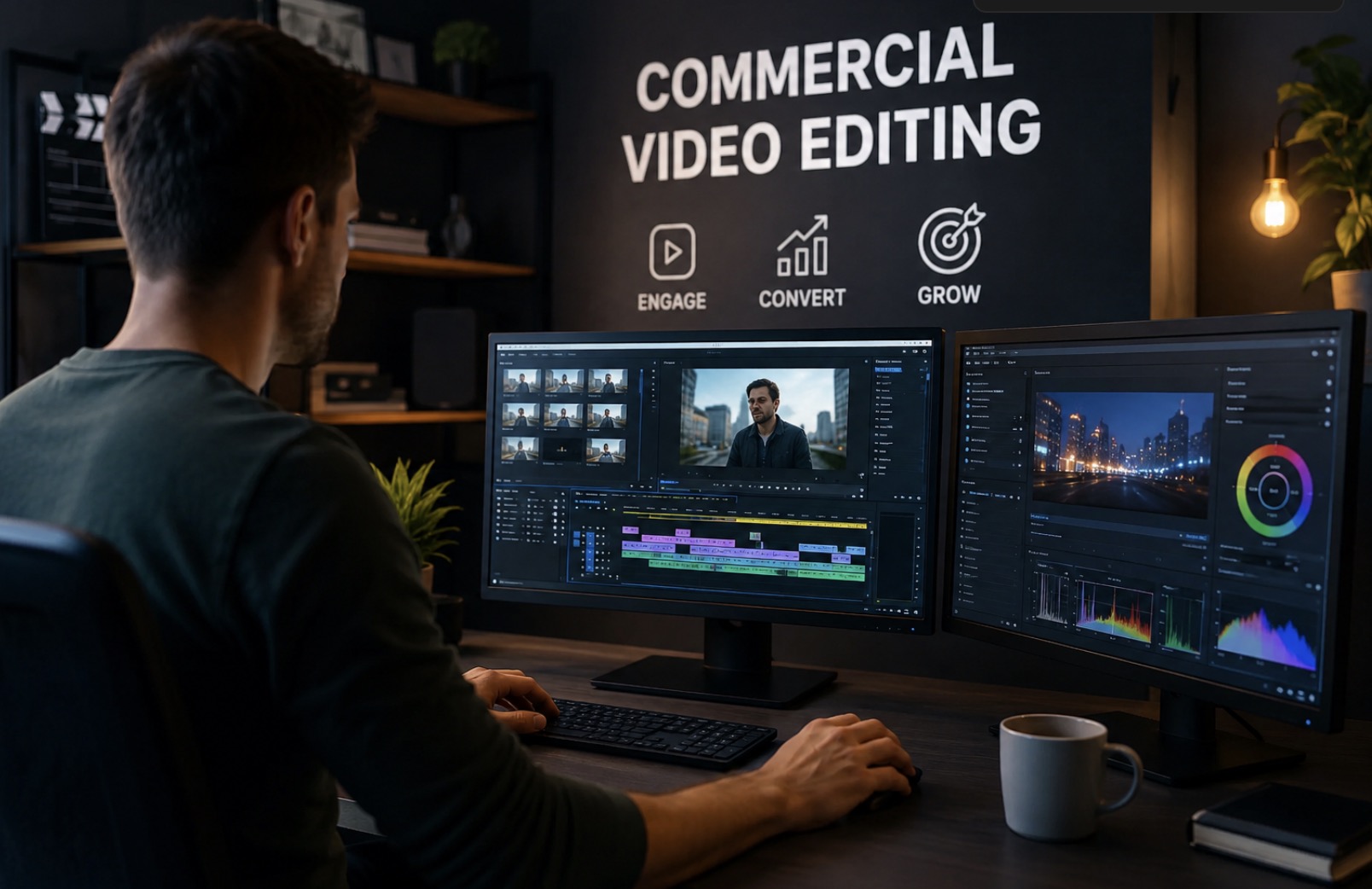
Commercial video editing shapes raw footage into a clear message. It controls pacing, sound, color, graphics, captions, product shots, and the final call to action. When those elements work together, a brand looks more credible, the offer becomes easier to understand, and viewers are more likely to keep watching.
Why Businesses Need Promotional Videos
People rarely give a brand unlimited attention. A commercial video has to earn interest in the first few seconds and then explain enough to make the next step feel natural.
Promotional videos help businesses show what they sell, who they serve, and why the offer matters. A restaurant can show atmosphere and food texture. A software company can demonstrate a feature without forcing visitors to read technical copy. A local service provider can use customer-facing footage to make the business feel more familiar.
The strongest business videos usually do at least three things:
- introduce the product or service without overexplaining it;
- create a visual identity that matches the brand;
- guide the viewer toward a practical action, such as booking, buying, subscribing, or requesting a quote.
This is why many companies choose a professional commercial video editing service when they need promotional videos for websites, paid ads, YouTube, social media, trade shows, or landing pages.
How Editing Changes Brand Perception
Editing is not only a technical step after filming. It is where the brand’s tone becomes visible.
Fast cuts, bold typography, sharp sound design, and energetic music can make a brand feel direct and modern. Slower pacing, cleaner transitions, natural sound, and softer color grading can create a more premium or human tone. Neither style is automatically better. The right choice depends on the product, audience, and platform.
A poorly edited video can damage trust even when the product is strong. Uneven audio, confusing sequencing, awkward pauses, mismatched colors, and low-resolution exports make a company look less prepared. Viewers may not describe the problem in technical terms, but they feel the difference.
| Editing element | Weak execution | Strong execution |
|---|---|---|
| Opening seconds | Slow start, unclear subject | Immediate context and visual hook |
| Audio | Volume jumps, background noise | Clean dialogue, balanced music, clear mix |
| Story structure | Random clips with no direction | Logical flow from problem to solution |
| Visual style | Inconsistent color and framing | Cohesive look across all scenes |
| Call to action | Missing or vague ending | Clear next step for the viewer |
Video Quality and Sales Performance
A commercial video does not sell only because it looks polished. It sells when the editing makes the offer easier to understand.
Good editing removes friction. It cuts unnecessary explanations, places product benefits in a logical order, and uses visuals to answer questions before they become objections. A viewer should know what the business offers, who it is for, and why it is relevant before the video ends.
Commercial editing can support sales in several ways:
- It highlights the most persuasive product moments.
- It turns customer pain points into a simple narrative.
- It adds captions for viewers watching without sound.
- It adapts one message for different platforms and formats.
- It ends with a direct, easy-to-follow call to action.
A single video can also become multiple assets. One master commercial can be edited into a website hero video, short social clips, vertical ad versions, email campaign snippets, and event screen content. This makes professional editing valuable beyond one campaign.
Audience Engagement Depends on Pacing
Engagement is often decided before the viewer understands the full offer. If the opening is slow, the rhythm feels flat, or the visuals repeat too long, attention drops.
Pacing should match the platform. A 15-second paid social ad needs a faster structure than a two-minute brand story. A YouTube pre-roll must establish relevance almost instantly. A landing page video can take more time, but it still has to stay focused.
What keeps viewers watching
Strong commercial editing usually relies on rhythm rather than noise. Motion, cuts, music, captions, product close-ups, and human expressions all help, but they need timing.
The most effective videos often include:
- a clear first frame or first line;
- a visible product, person, or result early in the video;
- short scenes that move the story forward;
- captions that support the message without clutter;
- a final frame that reinforces the offer.
A business video should not feel like raw footage with a logo added at the end. It should feel like a guided path from attention to understanding.
Commercial Editing Across Different Industries
Different industries need different editing choices. A law firm, a real estate agency, a fitness brand, and an e-commerce store should not use the same rhythm or visual language.
A healthcare brand may need calm pacing, precise captions, and careful tone. A fashion label may rely more on movement, music, texture, and atmosphere. A B2B company may need screen recordings, diagrams, and a structured explanation of benefits.
The same production logic applies outside traditional advertising. Studios that specialize in wedding videography editing also understand pacing, emotion, continuity, color, and storytelling, which are the same foundations that make commercial videos feel natural rather than mechanical.
What a Strong Commercial Video Brief Should Include
A good edit starts before the footage reaches the timeline. Businesses get better results when they define the purpose of the video clearly.
A practical commercial video brief should include:
- the main goal of the video;
- the target audience;
- the platform where the video will appear;
- the desired length and format;
- the key product benefits;
- the brand tone and visual references;
- the required call to action.
This prevents the final video from becoming a generic montage. It also helps the editor decide what to cut, what to emphasize, and what format works best for distribution.
FAQ
What is commercial video editing?
Commercial video editing is the process of turning raw business footage into a polished promotional video. It includes selecting shots, building structure, improving audio, adjusting color, adding graphics, inserting captions, and preparing final versions for different platforms.
Why does editing matter for promotional videos?
Editing controls how quickly viewers understand the offer. It also affects trust, visual quality, emotional tone, and the strength of the final call to action.
How long should a commercial video be?
Most promotional videos work best when they are short and focused. Paid ads often run 15–30 seconds, while website or brand videos can be 60–120 seconds if the content stays useful.
Can one commercial video be used on multiple platforms?
Yes. A master video can be adapted into horizontal, vertical, square, short-form, and captioned versions for websites, YouTube, Instagram, TikTok, LinkedIn, email campaigns, and paid ads.
What makes a business video look professional?
Professional business videos usually have clean audio, consistent color, clear pacing, sharp transitions, readable captions, relevant graphics, and a call to action that matches the campaign goal.