

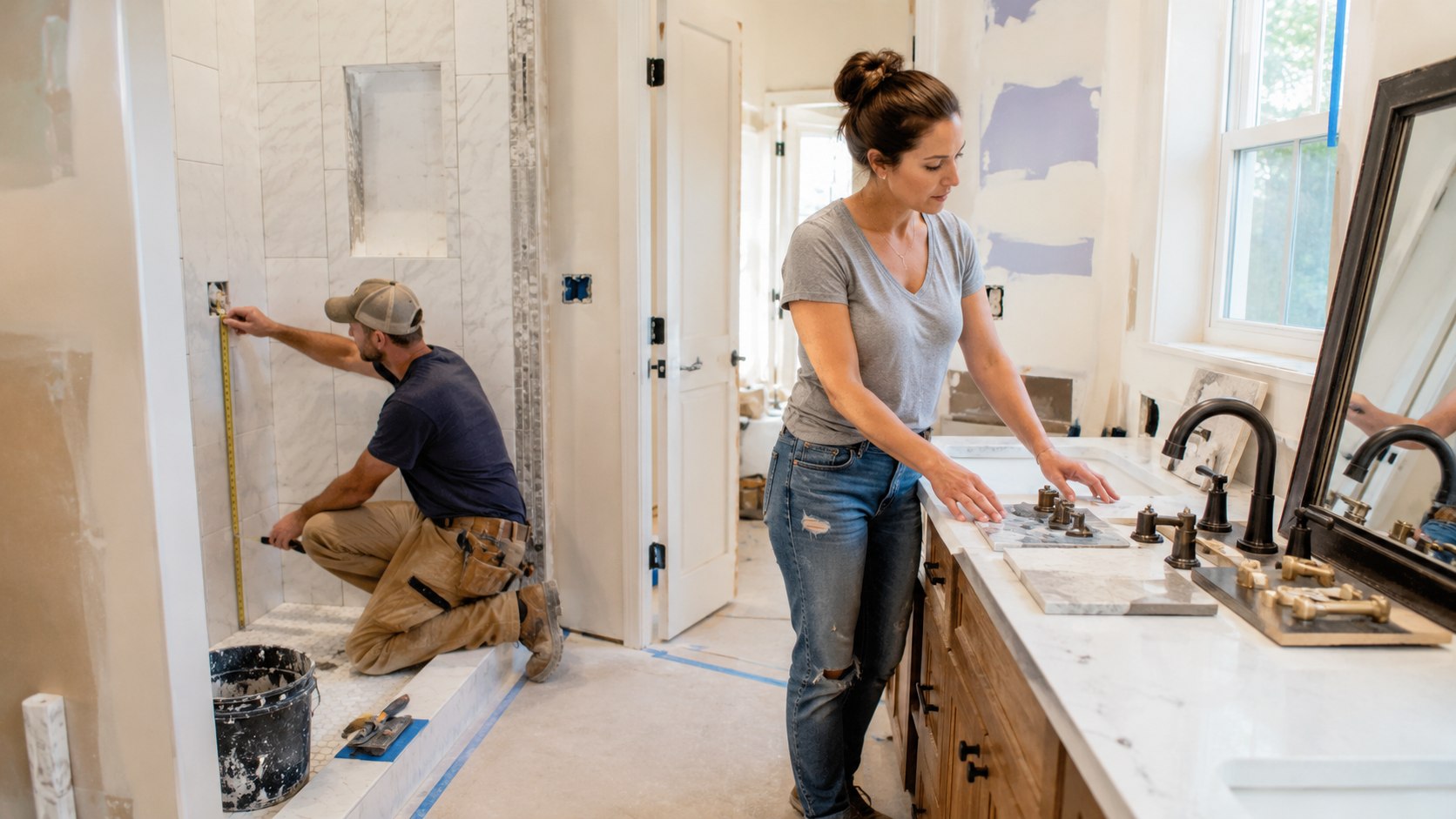
How long does a bathroom remodel take in 2026? A simple DIY refresh can take one long weekend to 2 weeks, while a contractor-led full bathroom remodel usually takes 3–8 weeks once work starts, аs noted by Baltimore Chronicle.
The fastest answer is this: keep the same layout, buy in-stock materials, and hire licensed trades for plumbing, electrical, waterproofing, and tile if mistakes would be expensive. DIY can save money on demolition, painting, hardware, and some fixture swaps, but it often adds time because homeowners work nights, weekends, and around delivery delays.
Key takeaways
- A cosmetic bathroom update can take 2–7 days if paint, fixtures, vanity, and lighting are already on site.
- A full gut remodel usually takes 3–8 weeks after planning, depending on permits, inspections, tile, and contractor availability.
- DIY is best for low-risk work; contractors make more sense when plumbing, wiring, waterproofing, or structural changes are involved.
Bathroom Remodel Timeline by Scope
The real bathroom renovation timeline depends less on square footage and more on how much you move. A 40 sq ft hall bath can take longer than a 90 sq ft primary bath if the toilet, shower drain, electrical outlets, or venting need to move.
As of 2026, a basic US bathroom refresh often costs about $1,500–$6,000 DIY and $4,000–$12,000 with a contractor. A mid-range contractor remodel commonly lands around $12,000–$30,000, while larger primary bathrooms in California, New York, New Jersey, Massachusetts, and Washington can run higher because of labor rates, permitting, and material costs.
| Project type | Typical time in 2026 | Typical cost range | Best fit |
|---|---|---|---|
| Cosmetic refresh | 2–7 days | $1,500–$6,000 DIY; $4,000–$12,000 pro | Paint, mirror, faucet, vanity, hardware, light fixtures |
| Same-layout remodel | 2–5 weeks | $8,000–$22,000 | New tile, toilet, vanity, tub or shower, fan, fixtures |
| Full gut remodel | 4–8 weeks | $15,000–$40,000+ | Waterproofing, new walls, inspections, tile, custom glass |
| Layout change or expansion | 6–12+ weeks | $25,000–$60,000+ | Moving plumbing, electrical, walls, windows, or doors |
A bathroom remodel budget should include a 10%–20% contingency for hidden water damage, subfloor repairs, drain issues, or upgraded code requirements. For homeowners trying to control costs before demolition, Baltimore Chronicle’s guide to saving money on apartment renovation is useful for setting priorities, comparing DIY work with contractor help, and avoiding unnecessary purchases.
What You Need Before You Start
The remodel moves faster when the room is measured, materials are chosen, and the work order is clear before demolition starts. The slowest projects usually begin with a vague wish list and no confirmed product sizes.
- Measurements of the bathroom, including ceiling height, door swing, vanity width, toilet rough-in, and shower or tub size.
- A scope of work that separates DIY tasks from contractor tasks.
- Photos of existing plumbing, outlets, fan, tile, water damage, and shutoff valves.
- A budget range in USD, including tax, delivery, disposal, and permit fees.
- Selected materials from brands such as Kohler, Delta, Moen, American Standard, Schluter, Durock, IKEA, Home Depot, or Lowe’s.
- Local permit requirements from the city or county building department.
- A second bathroom plan if the home has only one full bath.
- Time for ordering, delivery, inspections, curing, and punch-list repairs.
For ventilation, the US Environmental Protection Agency says bathroom exhaust should remove moisture and vent directly outdoors, not into an attic or enclosed space. Its remodeling guidance is useful for homeowners comparing fan replacement, moisture control, and indoor air quality during a remodel: EPA bathroom remodeling and indoor air quality guidance.
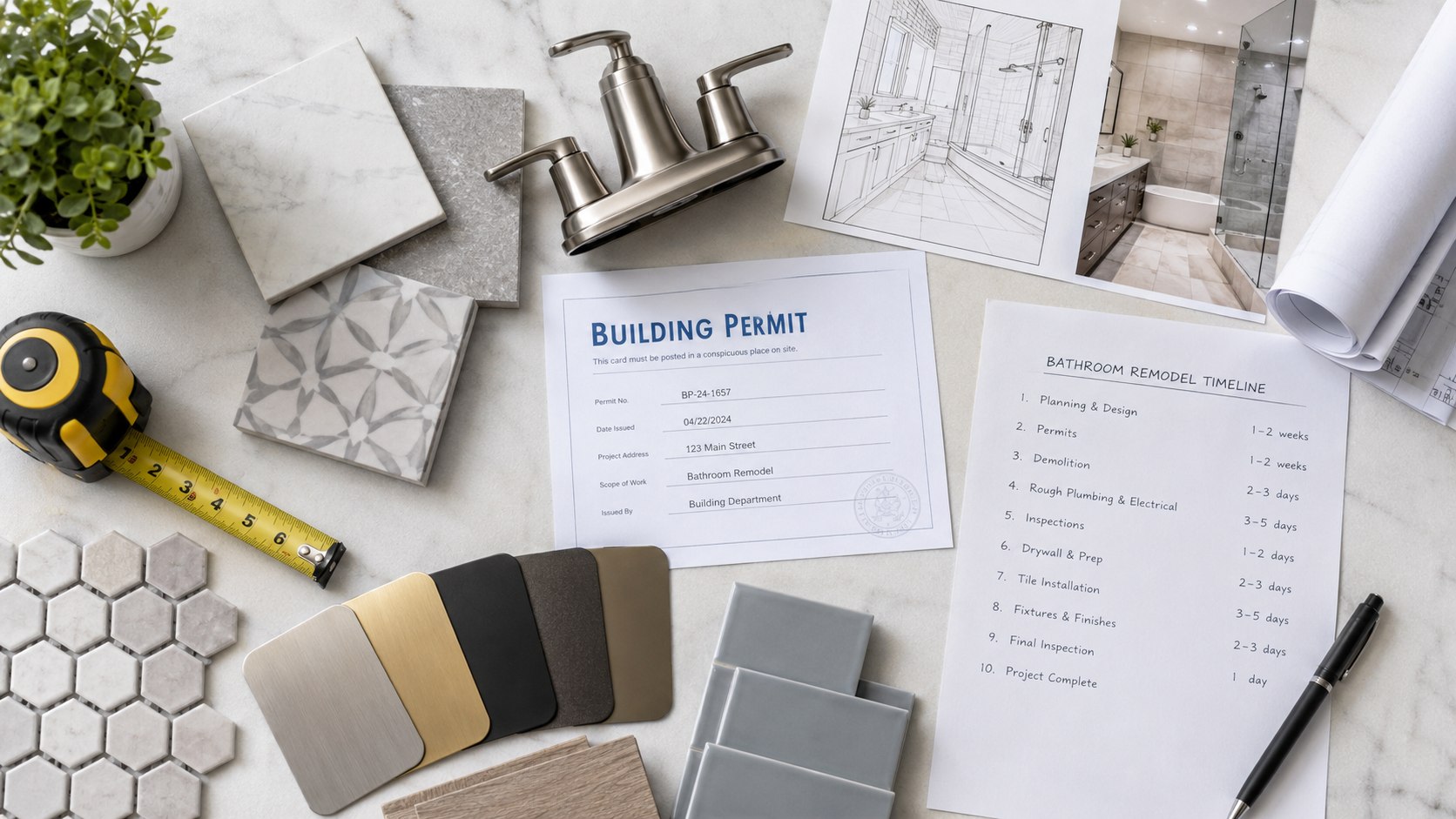
How Long Does a Bathroom Remodel Take DIY vs Contractor?
The bathroom remodel duration changes sharply when a homeowner does the work alone. Contractors can schedule plumbers, electricians, tile setters, glass installers, and inspectors in sequence; DIY projects depend on free evenings, tool access, skill level, and how fast problems get solved.
| Task | DIY time | Contractor time | Best choice |
|---|---|---|---|
| Demolition | 1–3 days | 1 day | DIY if no mold, asbestos concern, or plumbing risk |
| Painting | 1–2 days | 1 day | DIY |
| Vanity replacement | 1–2 days | Half day to 1 day | DIY only if plumbing lines match |
| Shower waterproofing | 2–5 days | 1–3 days | Contractor for most homeowners |
| Tile installation | 4–10 days | 2–5 days | Contractor for showers; DIY possible for floors |
| Electrical work | Not recommended unless qualified | 1–2 days plus inspection | Licensed electrician |
DIY makes sense when the work is visible and reversible. A bad paint color is annoying; a failed shower pan can damage framing, ceilings, and flooring below.
Contractors make sense when the job needs waterproofing, GFCI outlet upgrades, fan ducting, fixture relocation, curbless shower work, or permit inspections. A licensed contractor also has supplier relationships that can help when a Delta valve trim, Moen faucet, Kohler toilet, or Schluter waterproofing component arrives damaged or incomplete.
The best time savings usually come from keeping the bathroom layout the same. Moving the toilet, shower drain, or vanity supply lines turns a finish project into a plumbing project.
Step 1: Define the Scope Before Demolition
Decide whether this is a refresh, same-layout remodel, gut remodel, or layout change. Write down every item that will stay, move, or be replaced.
This matters because a clear scope controls the schedule, the permit path, and the budget. A “simple update” can become a 6-week job if the shower, electrical, and ventilation are added after demolition.
Common mistake to avoid: ordering products before checking the toilet rough-in, vanity depth, tub size, and door clearance.
Step 2: Choose DIY Tasks and Contractor Tasks
Put demolition, painting, accessories, mirrors, hardware, and some vanity swaps in the DIY column. Put plumbing relocation, electrical work, shower waterproofing, fan ducting, and structural repairs in the contractor column.
This matters because the DIY bathroom remodel timeline gets longer when homeowners take on skilled trades without the right tools or experience. The cost of one leak can erase the savings from skipping a pro.
Common mistake to avoid: hiring a handyman for work that your city or county requires a licensed plumber or electrician to perform.
Step 3: Check Permits and Building Rules
Call or check the website for your local building department before work starts. Many US cities require permits for electrical changes, plumbing relocation, structural changes, windows, and some ventilation upgrades.
This matters because inspections can add days or weeks, especially in busy markets such as Los Angeles, Austin, Miami, Seattle, Chicago, and New York City. Permit delays are often invisible in contractor estimates unless you ask directly.
Common mistake to avoid: assuming a bathroom does not need a permit because the footprint is small.
Step 4: Order Materials Before the Room Is Torn Apart
Buy or reserve the vanity, faucet, toilet, tile, grout, shower valve, tub, lighting, fan, mirror, towel bars, waterproofing system, and trim before demolition. Open boxes and inspect for cracks, missing parts, color mismatch, and wrong finishes.
This matters because one backordered matte black faucet or special-order glass panel can pause the whole job. In-stock products from Home Depot or Lowe’s can speed up a project, but special-order tile, custom vanities, and frameless shower glass take longer.
Common mistake to avoid: choosing tile by photo only and then discovering the actual shade clashes with the vanity top or flooring.
Step 5: Demolish Carefully and Inspect for Damage
Remove old fixtures, tile, drywall, flooring, and trim in a controlled order. Watch for soft subfloor, stained framing, leaking valves, moldy drywall, poor fan ducting, and outdated wiring.
This matters because hidden damage is the biggest reason a full bathroom remodel schedule slips. Water damage around a toilet flange, tub edge, or shower curb can add framing, subfloor, or mold cleanup work.
Common mistake to avoid: ripping out walls without turning off water, protecting drains, or photographing what is behind the wall.
Step 6: Complete Rough Plumbing, Electrical, and Ventilation
Install or adjust water lines, drains, shower valves, GFCI-protected outlets, lighting boxes, fan ducting, and switches before closing the walls. Confirm that the fan vents outdoors and that the duct path is not crushed or blocked.
This matters because rough-in work must happen before backer board, drywall, waterproofing, and tile. ENERGY STAR explains that certified ventilation fans can reduce energy use and moisture problems when correctly installed: ENERGY STAR ventilating fans.
Common mistake to avoid: buying a quiet fan without checking CFM, duct size, ceiling conditions, and whether the current fan vents outdoors.
Step 7: Waterproof, Tile, and Let Materials Cure
Install cement board, foam board, or an approved waterproofing system, then tile the shower, floor, or walls. Follow product instructions for membrane overlap, thinset type, grout cure time, and sealant.
This matters because waterproofing is not the same as tile. Tile and grout are finish layers; the waterproofing behind or beneath them protects the house. Bathrooms with poor airflow and weak moisture control are also more likely to develop mold, which makes Baltimore Chronicle’s guide on how to remove mold in the bathroom relevant before choosing paint, caulk, ventilation, and shower materials.
Common mistake to avoid: rushing the cure time before grouting, sealing, installing glass, or using the shower.
Step 8: Install Fixtures, Finish Details, and Create a Punch List
Install the toilet, vanity, faucet, mirror, lighting trim, shower trim, towel bars, caulk, baseboards, and final hardware. Test hot and cold water, drain speed, fan airflow, GFCI outlets, toilet stability, and shower spray direction.
This matters because the last 10% of the job affects daily use. A crooked mirror, loose toilet, sharp tile edge, or missing caulk line makes a finished bathroom feel unfinished.
Common mistake to avoid: making the final contractor payment before the punch list is complete and the bathroom has been tested for leaks.
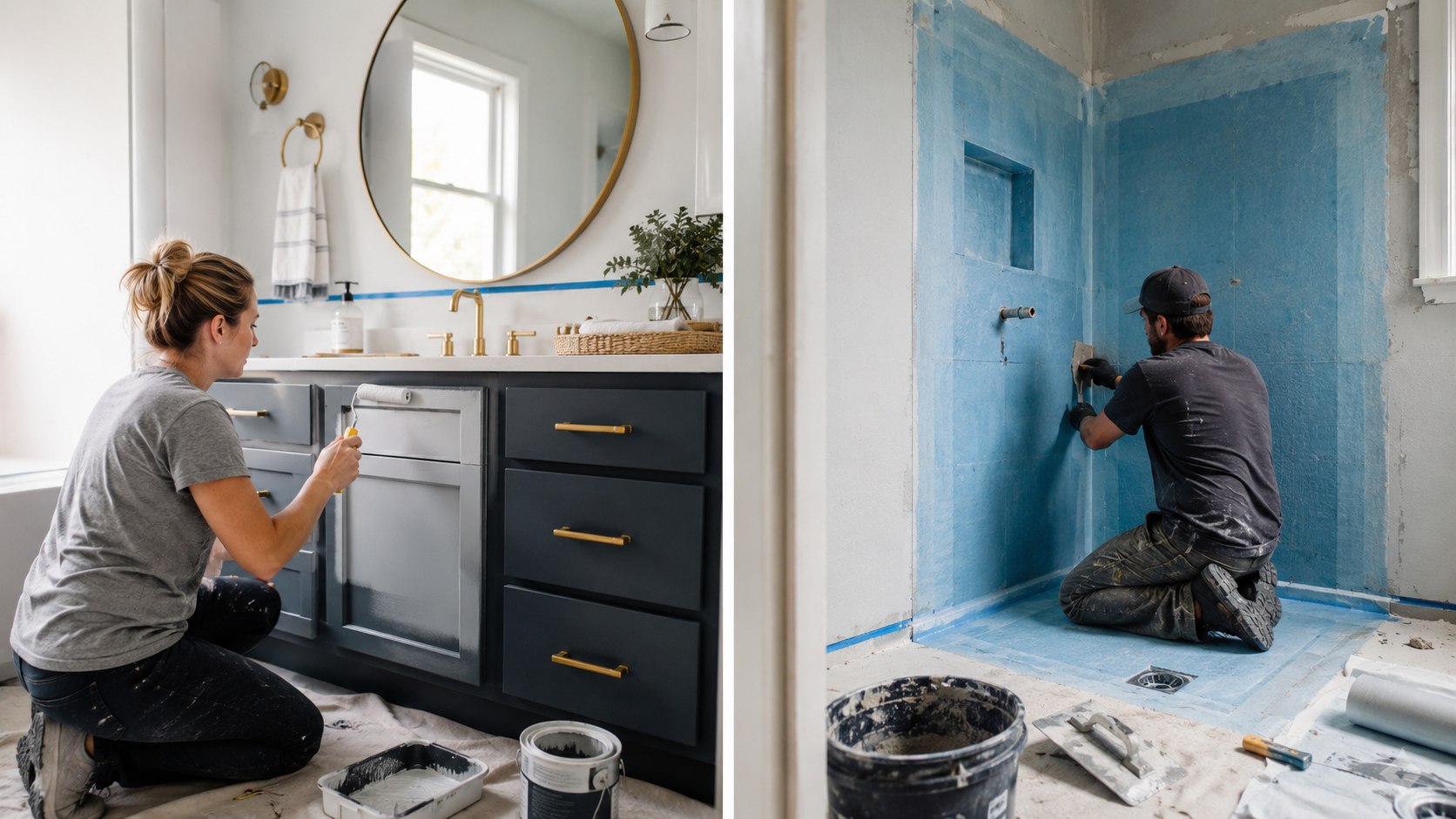
Where DIY Saves Time and Where It Adds Time
DIY saves time when the task does not require waiting for a subcontractor. Homeowners can often remove old accessories, patch small wall damage, paint, assemble an IKEA or off-the-shelf vanity, install towel bars, and replace a mirror without scheduling delays.
DIY adds time when the work has a learning curve or needs perfect sequencing. Tile layout, shower waterproofing, drain height, valve depth, and outlet placement all affect the final result.
A useful split is simple: do the cosmetic work yourself and hire the trades that protect the home from water and electrical risk. Drain problems deserve the same caution because a slow sink or shower can signal a deeper plumbing issue; Baltimore Chronicle’s overview of effective methods for cleaning drains in the bathroom and sink can help separate a basic clog from a problem that should be handled before remodeling starts.
Good DIY candidates
- Painting walls, trim, or ceiling with bathroom-rated paint.
- Replacing cabinet pulls, towel bars, robe hooks, and mirrors.
- Installing a vanity when the plumbing lines already match.
- Removing old caulk and applying new silicone around tubs or counters.
- Replacing a toilet seat, showerhead, or simple faucet trim.
Better contractor candidates
- Moving a toilet, shower drain, tub drain, or vanity plumbing.
- Installing new electrical circuits, GFCI outlets, or recessed lighting.
- Building a tiled shower pan, niche, bench, or curbless shower.
- Repairing rotted subfloor, framing, or water-damaged walls.
- Installing custom glass, heated floors, or ventilation ducting.
Troubleshooting Bathroom Remodel Delays
Most delays come from decisions that were not made before demolition. The next most common causes are hidden damage, failed inspections, and late materials.
- Tile is backordered: choose a stocked alternative before demolition or order 10%–15% extra for cuts, breakage, and future repairs.
- Inspection is delayed: ask the contractor who schedules inspections, how long the local office usually takes, and what work must stay visible.
- Water damage appears: stop finish work until the leak source, framing, and subfloor are repaired and dried.
- The vanity does not fit: check width, depth, plumbing openings, door swing, drawer clearance, and baseboard conflicts before purchase.
- The only bathroom is unusable: schedule toilet removal as late as possible and ask whether the toilet can be reset temporarily between phases.
For renters, a bathroom remodel timeline depends on the lease, landlord approval, building rules, and whether the work changes plumbing or electrical systems. Renters should not alter fixtures, tile, ventilation, or wiring without written permission.
For homeowners comparing bids, ask each contractor to separate labor, materials, permits, disposal, fixture allowances, tile allowance, glass allowance, and warranty terms. The cheapest bid is not always faster if it excludes plumbing, electrical, waterproofing, or inspection coordination.
FAQ
How long does a small bathroom remodel take?
A small bathroom remodel usually takes 2–5 weeks once work starts if the layout stays the same. A cosmetic refresh can be done in a few days, while a tiled shower, new fan, or inspection can push the timeline longer.
Can a bathroom remodel be done in one week?
Yes, but only for a light refresh or a tightly planned same-layout project with all materials on site. A true gut remodel with tile, plumbing, electrical, waterproofing, and inspections rarely fits into one week.
Is DIY faster than hiring a contractor?
DIY is faster for small visible tasks, such as painting, hardware, mirrors, and accessories. A contractor is usually faster for a full remodel because trades can be scheduled in order and problems are solved during normal work hours.
What part of a bathroom remodel takes the longest?
Tile, waterproofing, inspections, custom glass, and material lead times usually take the longest. Moving plumbing or repairing water damage can add more time than the finish work itself.
How much should I budget for a bathroom remodel in 2026?
As of 2026, many US homeowners spend about $8,000–$22,000 for a same-layout remodel and $15,000–$40,000+ for a full gut remodel. DIY cosmetic updates can cost much less, but plumbing, electrical, tile, and hidden repairs increase the budget quickly.
Should I remodel the bathroom myself or hire a contractor?
DIY is a good fit for painting, hardware, mirrors, simple vanities, and cleanup. Hire a contractor when the project involves waterproofing, electrical work, plumbing changes, permits, inspections, or any repair that could cause water damage if done wrong.
Earlier we wrote about How Much Down Payment Do You Need to Buy a House in the USA in 2026?