

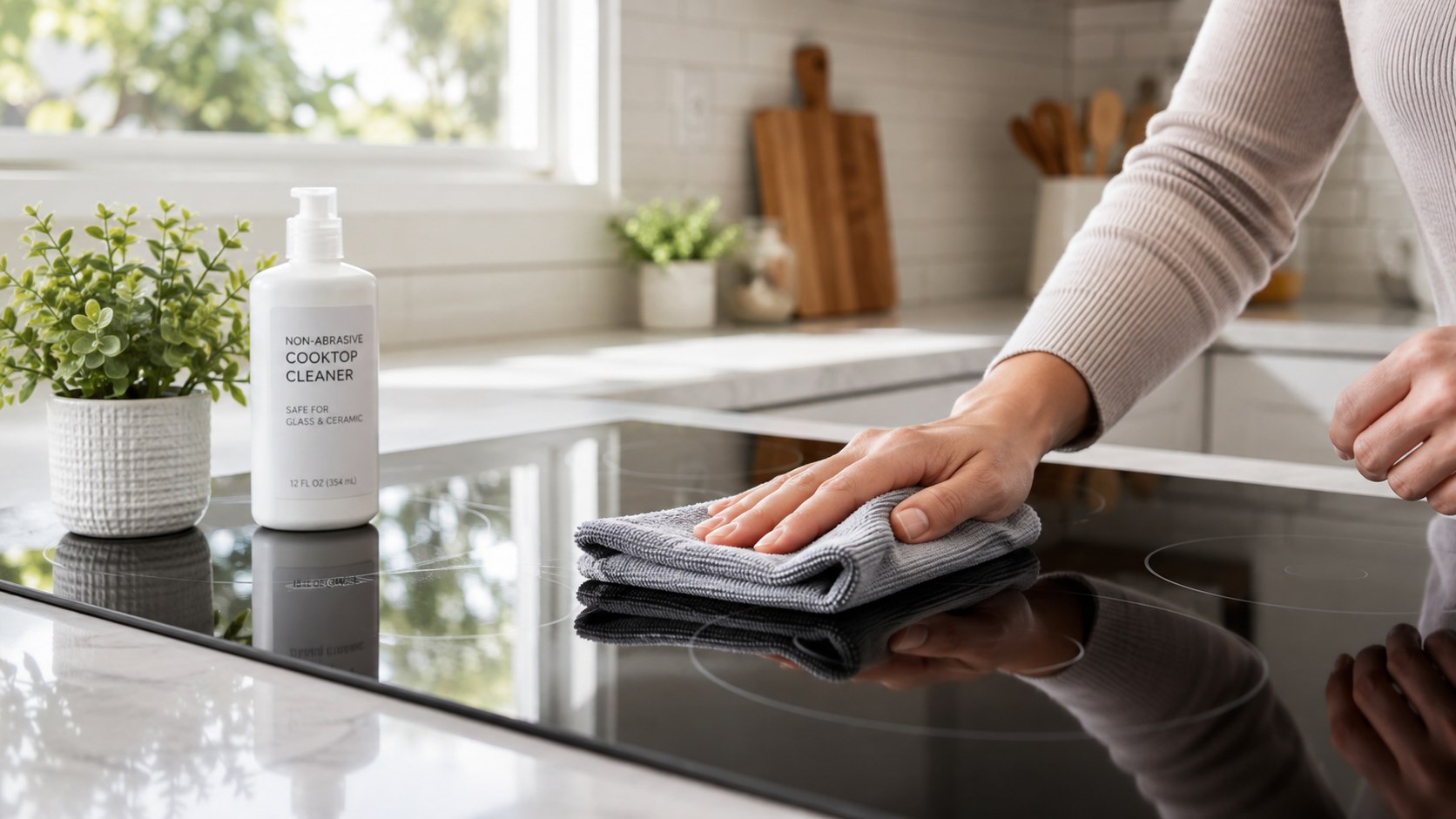
How to clean a glass top stove without scratching starts with 3 rules: let the surface cool, soften residue before rubbing, and use only nonabrasive tools. A routine cleanup takes about 10 minutes, while burned food may require 20–30 minutes and a cooktop scraper, as the Baltimore Chronicle editorial team notes.
For fresh grease, wipe the surface with warm water, 1 drop of dish soap, and a clean microfiber cloth. For hardened residue, apply ceramic cooktop cleaner, wait as directed, then use a scraper held almost flat. Never attack the mark with steel wool, scouring powder, or the rough side of an old sponge.
Key takeaways
- Wait until the cooktop is cool, unless the manufacturer gives specific instructions for a sugary spill.
- Use a fresh microfiber cloth, nonabrasive pad, and cleaner approved for ceramic glass surfaces.
- Lift cookware instead of sliding it, since cleaning cannot reverse a deep physical scratch.
These methods work for most smooth-top electric and induction ranges from GE, Whirlpool, Frigidaire, Samsung, LG, Bosch, KitchenAid, Maytag, and Café. Owners comparing these technologies can also review Baltimore Chronicle’s guide to gas, induction, and electric stoves in 2026.
What You Need
Gather the correct supplies before applying any product. Switching between dirty towels, abrasive sponges, and incompatible chemicals creates more risk than the stain itself.
- 2 clean microfiber cloths;
- a soft sponge or cooktop-safe cleaning pad;
- mild liquid dish soap;
- ceramic glass cooktop cleaner;
- a cooktop scraper with a clean, undamaged blade;
- a small bowl of warm water;
- paper towels for removing thick grease;
- 10–30 minutes, depending on the residue;
- approximately $8–$25 for basic supplies in 2026.
Weiman, Cerama Bryte, and Affresh sell products designed for glass and ceramic cooktops. Prices vary by package size and retailer. A cream alone commonly costs about $6–$12, while a kit with a pad and scraper often falls between $12 and $25 in 2026.
Check the appliance manual before using any blade or cleaning formula. Some models have printed control markings, coated trim, or textured zones that need different treatment. Renters should photograph existing chips and scratches before cleaning a supplied appliance.
Do not assume that a product marketed for windows is safe for a cooktop. Household glass sprays may contain ammonia or other ingredients excluded by appliance manufacturers.
The safest cleaning kit is not the strongest one. It is the least abrasive combination that can remove the specific residue in front of you.
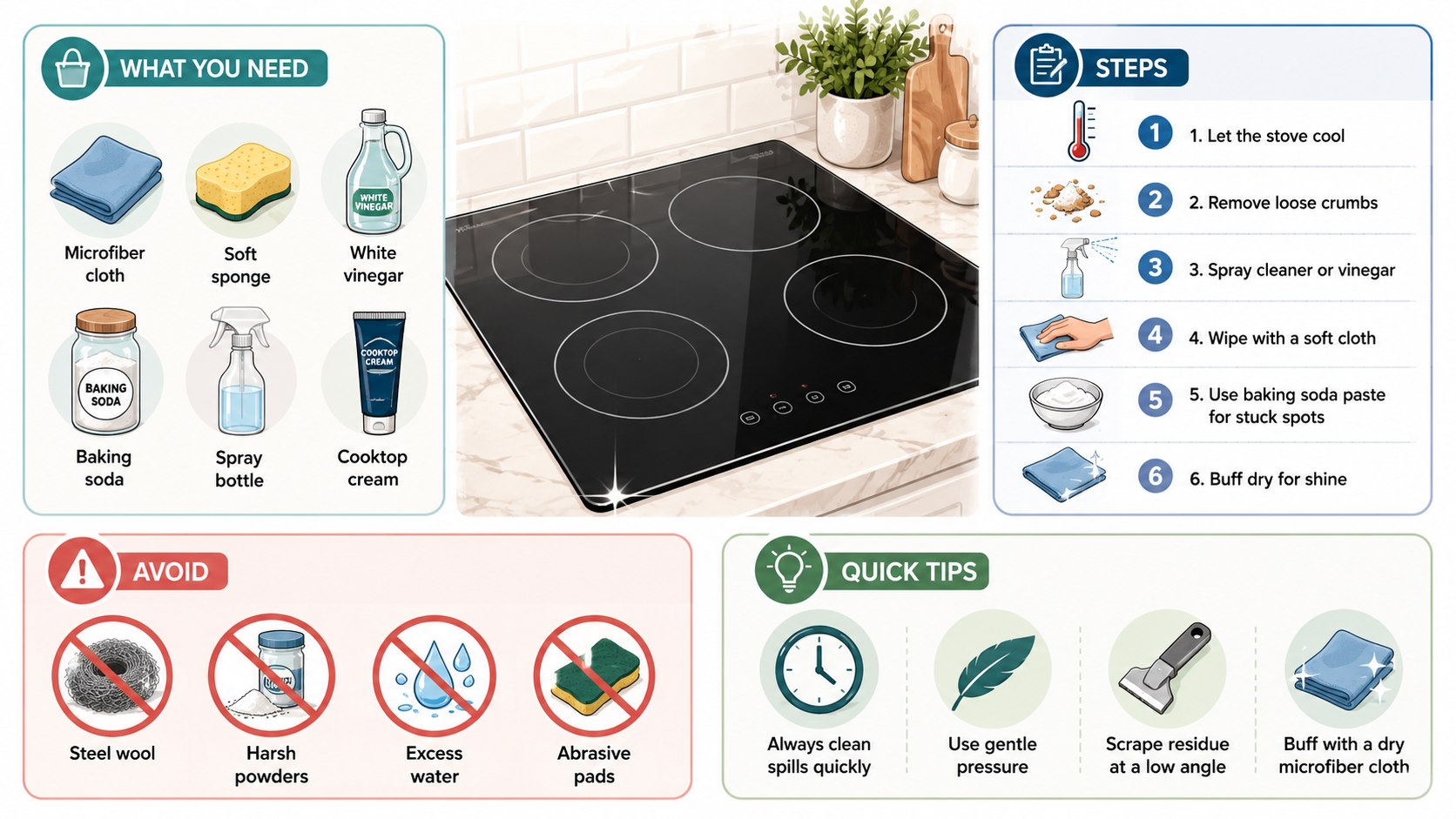
How to Clean a Glass Top Stove Without Scratching: 8 Steps
Step 1: Turn Off the Stove and Let It Cool
Turn every burner off and wait until the hot-surface indicator goes dark. Lock the controls if your induction cooktop provides that feature.
This prevents burns and stops liquid cleaner from drying instantly on hot glass. A common mistake is beginning while the surface still feels warm because the stain appears easier to remove.
Step 2: Remove Loose Crumbs and Grit
Use a dry microfiber cloth to lift salt, sugar crystals, crumbs, and loose food. Pick up larger particles instead of pushing them across the surface.
Small mineral grains can behave like sandpaper under a sponge. Avoid wiping immediately with a wet towel, since moisture can trap sharp debris against the glass.
Step 3: Wipe Away Fresh Grease
Dampen a microfiber cloth with warm water and add 1 small drop of mild dish soap. Wipe the cooking zones with light, overlapping passes.
This removes grease before a stronger product becomes necessary. Do not pour a large amount of soap directly onto the cooktop, because excess residue creates streaks and takes longer to rinse.
Step 4: Soften Dried Food Before Scrubbing
Place a warm, damp microfiber cloth over the dried spot for 5–10 minutes. The cloth should be wet enough to soften residue but not dripping near controls or seams.
Soaking reduces the pressure needed during cleaning. The usual error is scrubbing a dry stain immediately with a coarse pad.
Step 5: Apply an Approved Cooktop Cleaner
Add a small amount of nonabrasive ceramic cooktop cream to the stained area. Spread it with a cooktop-safe pad using gentle circular movements.
Purpose-made creams suspend grease and loosen cooked residue without relying on harsh abrasion. GE publishes model-specific glass cooktop cleaning instructions that recommend an approved cleaner and pad for burned deposits.
Using too much product is a common mistake. A thick layer does not clean faster and may leave a cloudy film around the burners.
Step 6: Scrape Burned Residue at a Low Angle
Keep the surface damp with cooktop cleaner. Hold a dedicated scraper at about a 30–45-degree angle and push it slowly beneath the deposit.
A low angle directs the blade under the residue instead of down into the glass. Never use the blade corner, a chipped scraper, a pocketknife, or a scraper held upright.
Use a new blade when the old edge is rusty, nicked, or visibly bent. Stop if you feel the scraper catching on a crack rather than sliding across a flat surface.
Step 7: Remove Cleaner and Inspect the Surface
Wipe away loosened residue with a clean, damp microfiber cloth. Rinse the cloth, wring it thoroughly, and wipe again until no cleaner remains.
This reveals whether the mark is still dirt, metallic transfer, or permanent damage. Do not keep scraping a line that remains perfectly unchanged after the surrounding residue disappears.
Step 8: Dry and Buff the Cooktop
Use a second dry microfiber cloth to buff the surface until it is clear. Work from the rear edge toward the front to avoid touching finished areas.
Buffing removes moisture and cleaner film that can resemble haze. A used dish towel may reapply oil, lint, or abrasive crumbs, so reserve a clean cloth for the final pass.
Which Products and Methods Are Safe?
The right method depends on the stain. Daily grease needs little more than soap and water, while carbonized food may require a cream and scraper.
| Residue or condition | Preferred method | Typical 2026 cost | Main risk to avoid |
|---|---|---|---|
| Light grease and fingerprints | Warm water, dish soap, microfiber cloth | $3–$10 | Using a greasy or gritty towel |
| Dried sauce or starch | Warm damp cloth, then cooktop cream | $6–$12 | Scrubbing before softening |
| Burned-on food | Cooktop cream, safe pad, low-angle scraper | $12–$25 | Using a damaged blade |
| Metallic pan marks | Manufacturer-approved ceramic cleaner | $6–$15 | Mistaking transfer marks for scratches |
| Loose sugar crystals | Lift particles first, then wipe gently | Minimal | Dragging crystals across glass |
| Crack or deep gouge | Stop using the affected zone and seek service | Inspection varies | Trying to polish structural damage away |
A baking soda paste appears in many household cleaning guides. However, baking soda is mildly abrasive, and appliance instructions differ. Use it only when the manual permits it, apply almost no pressure, and test a hidden edge first.
White vinegar can help remove light mineral film, but it is not a substitute for a cooktop cream on carbonized residue. Never mix vinegar with chlorine bleach. Do not combine several cleaners because their ingredients may react or leave a difficult film.
Magic Eraser products also require caution. Melamine foam cleans through fine abrasion, so it may dull some finishes or damage markings. Manufacturer approval matters more than social media demonstrations.
Whirlpool advises owners to begin with soap, water, and a soft cloth or sponge. Its official guidance also warns against steel wool, abrasive powders, chlorine bleach, rust remover, ammonia, and steam cleaners.
“Do not use steel wool, abrasive powder cleansers, chlorine bleach, rust remover or ammonia.”
— Whirlpool Product Help, ceramic glass cooktop cleaning guidance.
Product availability differs across California, Texas, Florida, Maryland, and other states. The chemistry required for routine cleaning does not change by location, although hard water can create more visible mineral spots.
What Can Scratch or Damage a Glass Stove Top?
Most visible wear comes from friction, trapped grit, unsuitable cookware, or excessive force. A cleaner may receive the blame even when the actual scratch formed while a heavy pan was dragged across salt or dried food.
- steel wool and metal scouring pads;
- abrasive powders and gritty multipurpose pastes;
- razor blades used without a proper holder;
- dirty sponges containing crumbs or sand;
- cast-iron pans dragged across the glass;
- cookware with rough, warped, or damaged bottoms;
- dry sugar crystals pushed under a pan;
- heavy objects dropped onto the cooktop;
- cold water poured onto hot ceramic glass.
Cast iron can be used on many smooth cooktops, but it must be lifted and placed carefully. Clean the pan’s bottom before cooking and confirm that it sits flat. An enameled exterior reduces rough contact, although trapped debris can still scratch the glass.
Do not use the cooktop as an extra countertop. Grocery bags, spice jars, ceramic bowls, and baking sheets can carry grit underneath them. A glass surface may look durable, yet a single grain beneath a heavy object can leave a permanent line.
Daily prevention matters more than occasional deep cleaning. A 60-second wipe after cooking prevents most stains from becoming hard scraping jobs.
For a wider appliance-maintenance routine, Baltimore Chronicle also explains how hard water affects household appliances and provides a detailed guide to dishwasher installation and leak prevention.
How to Handle Sugar, Melted Plastic, and Foil
Melted sugar, syrup, candy, plastic, and aluminum foil can bond to hot ceramic glass. These spills require faster action than ordinary grease, but fast action does not mean careless action.
- Turn off the affected element immediately.
- Move the pan without sliding it across the spill.
- Keep hands protected from heat and steam.
- Follow the model manual’s hot-spill procedure.
- Use only the scraper type approved by the manufacturer.
- Remove remaining residue after the cooktop cools.
Some manufacturers instruct users to remove sugary spills while the surface remains warm because cooling can bond the material more firmly. Others emphasize waiting until the appliance is safe to handle. The model’s manual must control the decision.
Never place an ice cube on a hot spill. The sudden temperature change can stress ceramic glass. Do not flood the surface with water, since liquid may reach control openings or hot areas.
If melted plastic has hardened, avoid reheating it without instructions. Heating may spread the material and release unpleasant fumes. Ventilate the kitchen and contact the manufacturer when the contamination covers a large area.
Foil that has fused to the surface may not be removable through routine cleaning. Stop scraping if the glass begins chipping or the residue appears embedded below the surface.
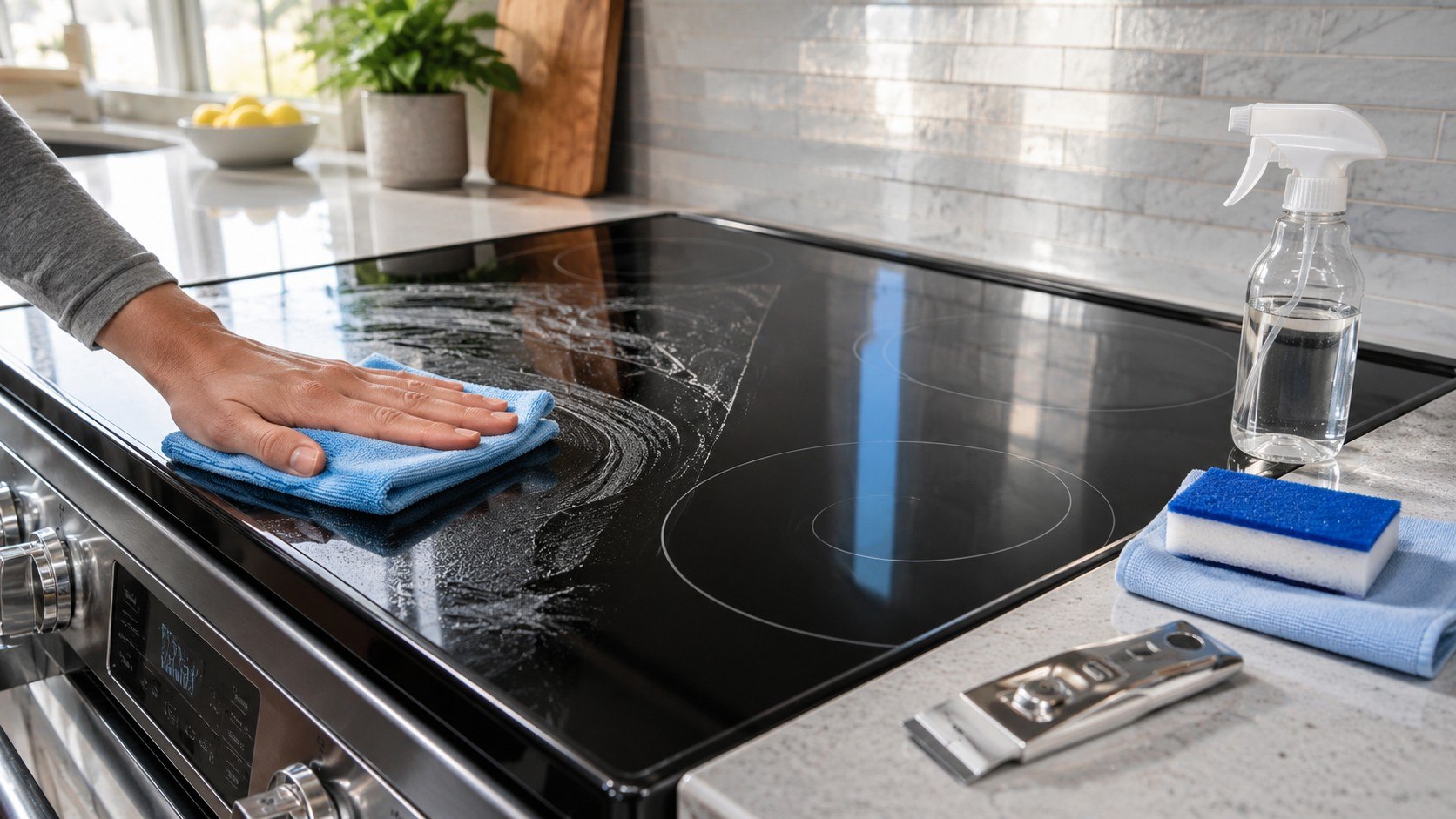
Troubleshooting Common Glass Cooktop Problems
Not every mark is removable dirt. Use the following checks before repeating the complete cleaning process.
- The cooktop looks cloudy: rinse again with clean water, then buff with a fresh microfiber cloth. Cleaner residue often causes haze.
- White rings remain: check for mineral deposits or residue from pan bottoms. Use only a manufacturer-approved product.
- A gray line will not wipe away: it may be metal transfer. Cooktop cream can sometimes remove it without heavy pressure.
- A line catches a fingernail: it is likely a physical scratch or gouge. Cleaning will not restore missing material.
- The scraper skips or chatters: reduce the angle, add cleaner, and inspect the blade. Replace damaged blades immediately.
Cloudiness that returns after every cooking session may come from cookware residue rather than the cleaner. Inspect pan bottoms for oxidized aluminum, grease, rough enamel, and embedded food.
A rainbow sheen can appear when a very thin film remains on the glass. Rewashing with minimal dish soap may solve it. Avoid adding more polish until the old layer is removed.
Stop using the appliance when a crack reaches a burner, control area, or outer edge. Liquid can enter beneath the surface, and continued heating may worsen the damage. Arrange qualified service instead of sealing the crack with household adhesive.
A scratch that is visible but completely smooth may be cosmetic transfer. Test a small amount of approved cream before assuming the cooktop needs replacement.
FAQ
Can I Use Baking Soda on a Glass Top Stove?
Only when the appliance manual permits it. Baking soda is mildly abrasive, so heavy pressure or a dry paste may create dull areas. An approved ceramic cooktop cream is the safer default.
Can I Use Windex on a Glass Stove Top?
Standard window cleaner is not the preferred product for ceramic glass. Some formulas contain ammonia, which several manufacturers tell owners to avoid. Use soap and water or a cooktop-specific cleaner.
Can Scratches Be Removed From a Glass Cooktop?
True scratches cannot usually be cleaned away. Some apparent scratches are metallic pan marks or cleaner residue. If a fingernail catches in the line, polishing products are unlikely to repair it.
Is a Razor Blade Safe for a Glass Stove?
A dedicated cooktop scraper can be safe when the manufacturer approves it. Keep the blade clean, sharp, and nearly flat. Never use a loose razor, knife, or damaged blade.
How Often Should a Glass Stove Top Be Cleaned?
Wipe it after each cooking session once the surface cools. Use cooktop cream when residue or haze appears. Frequent light cleaning reduces the need for forceful scraping.
What Is the Best Cloth for Cleaning a Glass Cooktop?
A clean, soft microfiber cloth is the most practical choice. Keep separate cloths for washing and final buffing. Do not use towels that have collected crumbs, metal fragments, or dried grease.
Earlier we wrote about How to Build Credit from Nothing in USA 2026: 6 Steps to Create Your First Score