

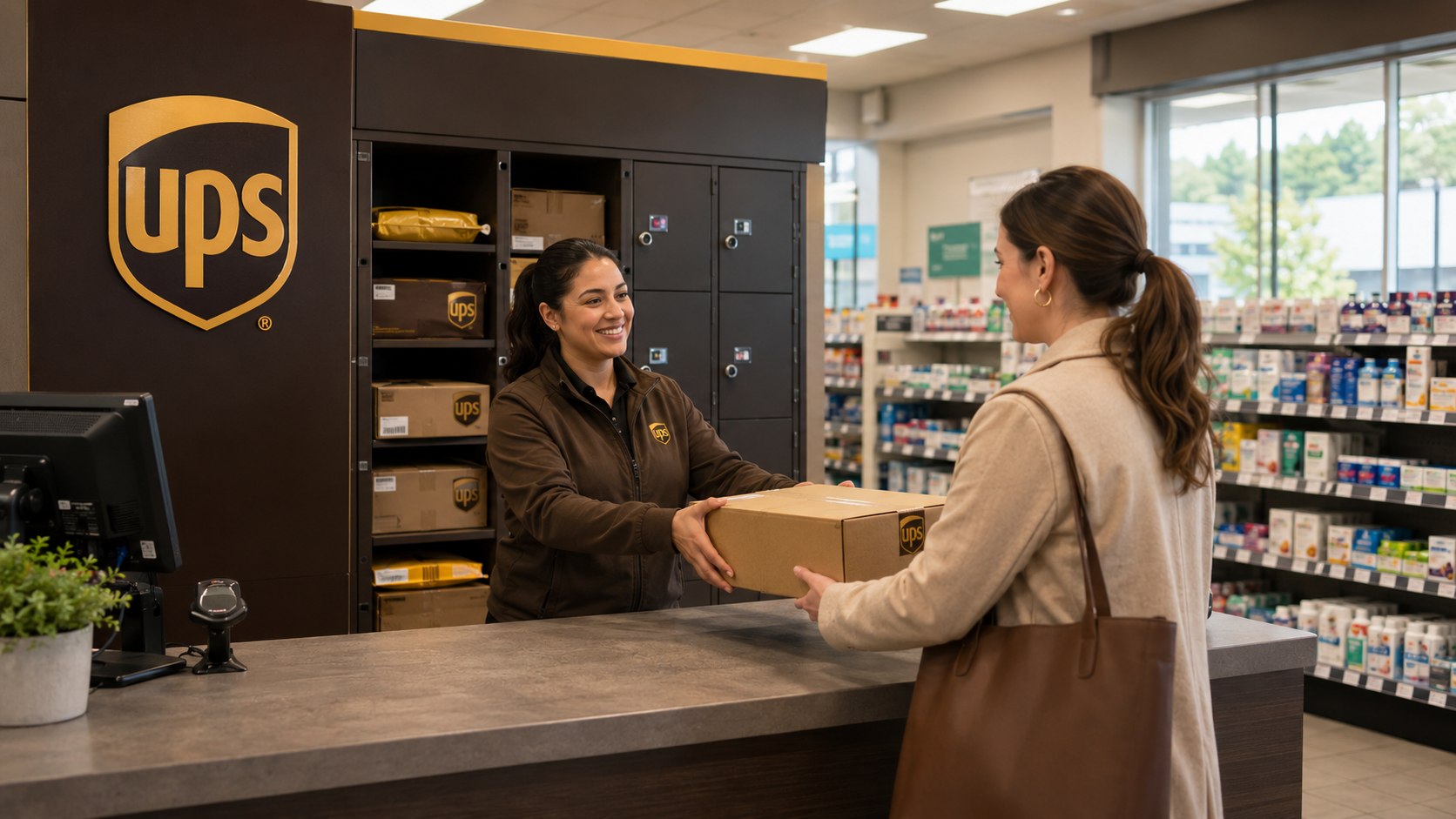
UPS access point what is it 2026: it is a nearby participating business where UPS customers can collect redirected packages or leave eligible, prepared returns. Instead of waiting at home, you visit a pharmacy, convenience store, neighborhood retailer, or another approved location during its posted hours. This option can solve missed-delivery problems, reduce packages left outside, and make online returns easier, as noted by the editors at Baltimore Chronicle.
If your tracking page says “Awaiting Customer Pickup,” confirm the address, opening hours, deadline, and identification requirements before leaving. UPS generally holds packages at an Access Point for up to 7 calendar days. After that period, an uncollected shipment may be returned to the sender. For a return, the parcel usually needs suitable packaging and either a prepaid label or an accepted mobile return code.
Key takeaways
- UPS Access Point locations provide neighborhood pickup and drop-off services, but each participating store may offer different capabilities.
- Redirected packages are generally held for 7 calendar days, so check tracking before traveling to the location.
- Prepaid, packaged returns are often free to drop off, while printing, packaging, or pickup services may cost extra.
The service is useful, but it is not identical to a UPS Customer Center or The UPS Store. Knowing the distinction prevents wasted trips. It also helps you determine whether your parcel can be scanned, labeled, packaged, or accepted at the selected counter.
Consumers comparing shipping methods may also review current USPS rates for First-Class Mail and Priority Mail. Small businesses should compare price, tracking, convenience, and return requirements rather than choosing solely by carrier name.
In plain English
Think of a UPS Access Point as a secure neighborhood handoff counter. It works like asking a trusted local shop to receive a package until you can collect it. The store is not delivering the parcel itself. It provides an approved location where UPS can leave or accept certain shipments.
A location may be inside a CVS Pharmacy, an Advance Auto Parts store, a small retailer, or another participating business. Availability varies by ZIP code and state. A customer in Maryland may find different partners and operating hours than someone in California, Texas, Ohio, or Florida.
The main advantage is control: the parcel waits at a staffed location instead of sitting outside a house or apartment entrance.
That can matter for renters with shared lobbies, parents who cannot wait for a driver, and homeowners concerned about unattended deliveries. It is also practical for freelancers who travel between job sites. However, customers must collect packages within the stated holding period.
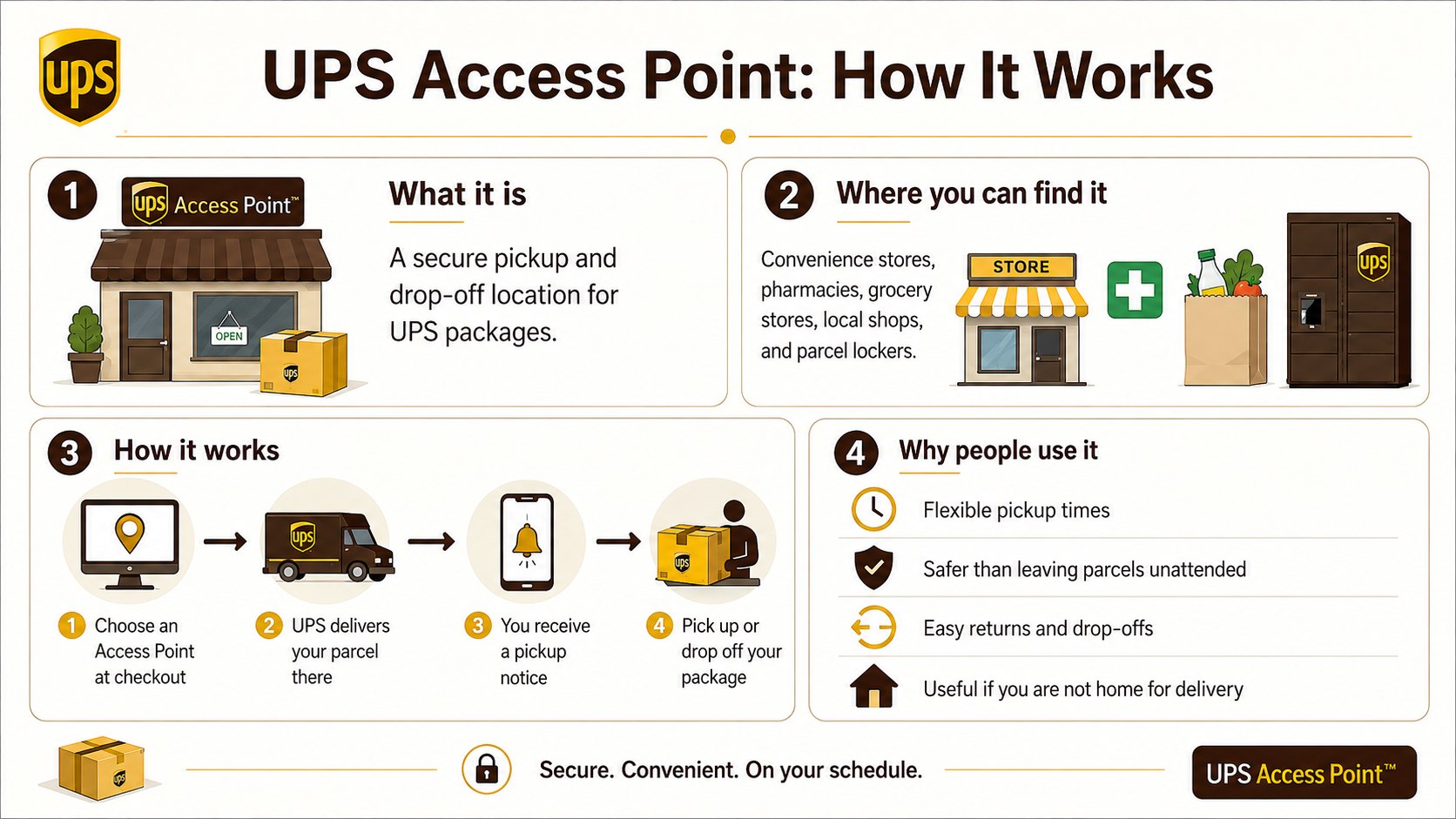
How it actually works
There are several ways a package can reach a UPS Access Point. UPS may redirect it after an unsuccessful delivery attempt. The recipient may also request a hold through tracking or UPS My Choice when the shipment qualifies. Some online retailers allow shoppers to select an Access Point during checkout.
Picking up a package
Start with the tracking page. Do not visit the location merely because a delivery notice lists its address. Wait until the shipment status confirms that the parcel is available for pickup. The status may show wording such as “Awaiting Customer Pickup.”
Bring a current government-issued photo ID. The name and address should correspond with the shipment information whenever possible. If another person will collect the parcel, check UPS instructions first because authorization requirements may vary.
Use this process to avoid an unnecessary trip:
- Open the official UPS tracking page and enter the tracking number.
- Confirm that the parcel is ready, not merely traveling toward the location.
- Check the complete street address and current business hours.
- Bring acceptable photo identification and any available delivery notice.
- Inspect the parcel before leaving and retain any pickup confirmation.
The tracking status is more reliable than a general store listing. A shop may close early for a holiday, weather emergency, staffing problem, or local event. Some counters also stop processing parcels before the rest of the store closes. Calling ahead is sensible when the location is several miles away.
A recipient should also check the collection deadline. UPS says an Access Point may hold a redirected shipment for up to 7 calendar days. Calendar days can include weekends, even when the location has reduced Sunday hours. The deadline shown in tracking should control your decision.
If the deadline passes, the parcel may begin its return journey. Once UPS has returned it to the sender, the recipient generally must contact the retailer or shipper. UPS cannot simply reverse a completed return movement at the pickup counter.
Dropping off a return
For most basic returns, place the item in suitable packaging and attach the retailer-provided UPS label. Remove or cover old shipping barcodes. Seal every opening with shipping tape and ensure the label lies flat on the largest surface.
Some retailers provide a mobile barcode instead of a printable label. That does not mean every Access Point can print or process it. The return instructions should identify eligible locations. Search filters may also indicate whether a location accepts QR codes, provides printing, or handles only pre-labeled parcels.
Ask for a receipt whenever one is available. Keep it until the retailer issues the refund. The receipt provides evidence that the parcel entered the UPS network, particularly when the first tracking scan appears later.
People shipping personal items should review UPS identification rules. UPS states that consumers tendering shipments at retail shipping locations may need a government-issued photo ID. This requirement helps reduce fraud and misuse of carrier services.
Pickup, return, and service differences
UPS branding appears on several types of locations, but their services are not interchangeable. The comparison below shows the practical differences most consumers encounter. Exact capabilities should be verified with the location before traveling.
| Location or service | Typical purpose | Packaging help | Possible customer cost |
|---|---|---|---|
| UPS Access Point | Collect redirected parcels or drop off eligible returns | Often limited or unavailable | Usually $0 for an eligible prepaid drop-off |
| The UPS Store | Shipping, returns, packing, printing, mailboxes, and other retail services | Commonly available | Packing, printing, supplies, and shipping charges vary |
| UPS Customer Center | Carrier-operated pickup or shipping support at selected facilities | Varies by facility | Depends on shipment and requested service |
| Scheduled UPS pickup | Driver collects a prepared shipment from a home or business | Customer generally prepares the parcel | A pickup fee may apply |
| Retailer box-free return | Return using a retailer-issued code at an approved location | Defined by the retailer’s program | Often included, but retailer rules control |
A prepaid return label normally means the merchant has arranged transportation charges. It does not automatically include a box, tape, label printing, or professional packing. Those extras may carry local retail prices. In 2026, customers should confirm costs before requesting additional work.
Prices are not nationally uniform for optional retail services. A basic cardboard box may cost several dollars, while professional packing can cost more. Size, fragility, materials, insurance needs, and labor affect the total. The carrier charge can also change according to weight, dimensions, destination, and service speed.
This distinction matters when returning furniture parts, electronics, artwork, or fragile merchandise. A prepaid label may cover shipping but not damage caused by poor packaging. Follow the seller’s instructions and photograph the item before sealing the box.
Households comparing other delivery costs can read Baltimore Chronicle’s report on the proposed USPS Priority Mail transportation surcharge. Carrier prices and service rules can change during 2026, making direct verification important.
Who it matters to in 2026
Renters and apartment residents
Apartment deliveries can fail when buildings have locked entrances, unreliable call boxes, or no package room. A UPS package pickup location creates a predictable alternative. It may also reduce the risk of a parcel being left in a lobby accessible to visitors.
Renters should still consider distance and operating hours. A secure counter 6 miles away may be less convenient than a staffed building desk. The best option depends on work schedules, public transit, parking, and the package deadline.
Homeowners, parents, and frequent travelers
A parent may be unable to hear the door while caring for a child. A homeowner may also prefer that expensive goods not remain on a porch. Travelers can use eligible delivery-change tools before departure, although not every shipment allows redirection.
An Access Point is most valuable when its hours fit your routine and its location is genuinely easier than another delivery attempt.
Recipients should not assume that all packages can be redirected. Shippers may restrict changes for security, fraud prevention, regulated products, high-value merchandise, or signature-controlled deliveries. Tracking will normally show which options are available.
Freelancers and small online sellers
Independent sellers may use Access Points for prepared drop-offs when daily driver pickup is unnecessary. This arrangement can help someone shipping several orders weekly from a home office. It avoids waiting for a collection window and may provide an acceptance receipt.
However, a neighborhood drop-off counter is not a warehouse. Sellers with dozens of large boxes should ask whether the location can accommodate the volume. Oversize parcels, hazardous materials, restricted goods, or high-value shipments may require another UPS facility.
Businesses evaluating international delivery can also review Baltimore Chronicle’s overview of weight and package-size factors in international shipping. Different carriers apply distinct dimensional and acceptance rules.
UPS access point what is it 2026: costs and limits
There is generally no separate customer fee for collecting a package that UPS redirected to an Access Point. UPS also states that eligible UPS My Choice members can have packages held at participating locations for up to 7 calendar days without an additional holding charge. However, delivery-change fees may apply in some situations.
Dropping off a properly packaged parcel with a prepaid UPS label is also commonly free. You may pay when the location must print a label, sell packaging, tape the box, repack an item, or create a new shipment. A scheduled home pickup can involve a separate charge.
The following conditions often determine whether a parcel is accepted:
- The package has a valid UPS shipping or return label.
- The item is securely packed and old labels are removed.
- The dimensions and weight fit the location’s acceptance limits.
- The contents are not prohibited or restricted at that counter.
- The location supports the retailer’s specific QR-code return program.
- The customer presents identification when required.
A customer should never rely solely on a map pin labeled “UPS.” Location listings can represent different service types. Open the details page and examine the available services. Look for pickup, pre-labeled drop-off, mobile barcode, packing, and printing information.
High-value items need extra caution. Some retail locations may not accept shipments above specific declared-value thresholds. Jewelry, collectibles, laptops, and professional equipment may require another tendering method. Verify the rules before carrying an expensive parcel across town.
Hazardous materials, alcohol, tobacco, firearms, biological materials, and certain batteries can face special restrictions. A merchant-generated label does not cancel federal, state, carrier, or packaging rules. Contact UPS directly when the contents raise any doubt.
Finally, check the receipt and tracking number before leaving. One incorrect digit can make follow-up difficult. Keep photographs of the packed item, attached label, and handoff receipt until the transaction closes.
Common myths
Several misconceptions create missed deadlines and unsuccessful returns. These corrections explain what customers should expect from the service.
- Myth: Every UPS-branded location offers identical services. Correction: Access Points, Customer Centers, and The UPS Store locations have different capabilities.
- Myth: A prepaid label includes free packaging. Correction: It usually covers transportation, not boxes, tape, printing, or packing labor.
- Myth: Tracking says “delivered,” so the parcel is at home. Correction: The details may show delivery to an Access Point for customer pickup.
- Myth: Any QR code works at every Access Point. Correction: Retailer programs identify which locations and technologies qualify.
- Myth: UPS will hold the package indefinitely. Correction: Access Point packages are generally held for up to 7 calendar days.
The most important correction concerns tracking. A headline status can lack the context shown in the detailed shipment history. Read the address, available date, and deadline. Confirm that the package is ready before leaving home.
The second major issue is packaging. Store employees may reject an open box, an unreadable label, leaking contents, or inadequate protection. Proper preparation protects both the item and the customer’s refund claim.
Customers should also understand that return policies belong to the retailer. UPS transports the package but does not decide whether Amazon, Target, Walmart, eBay, or another seller approves the refund. Keep the tracking information and follow the merchant’s deadline.
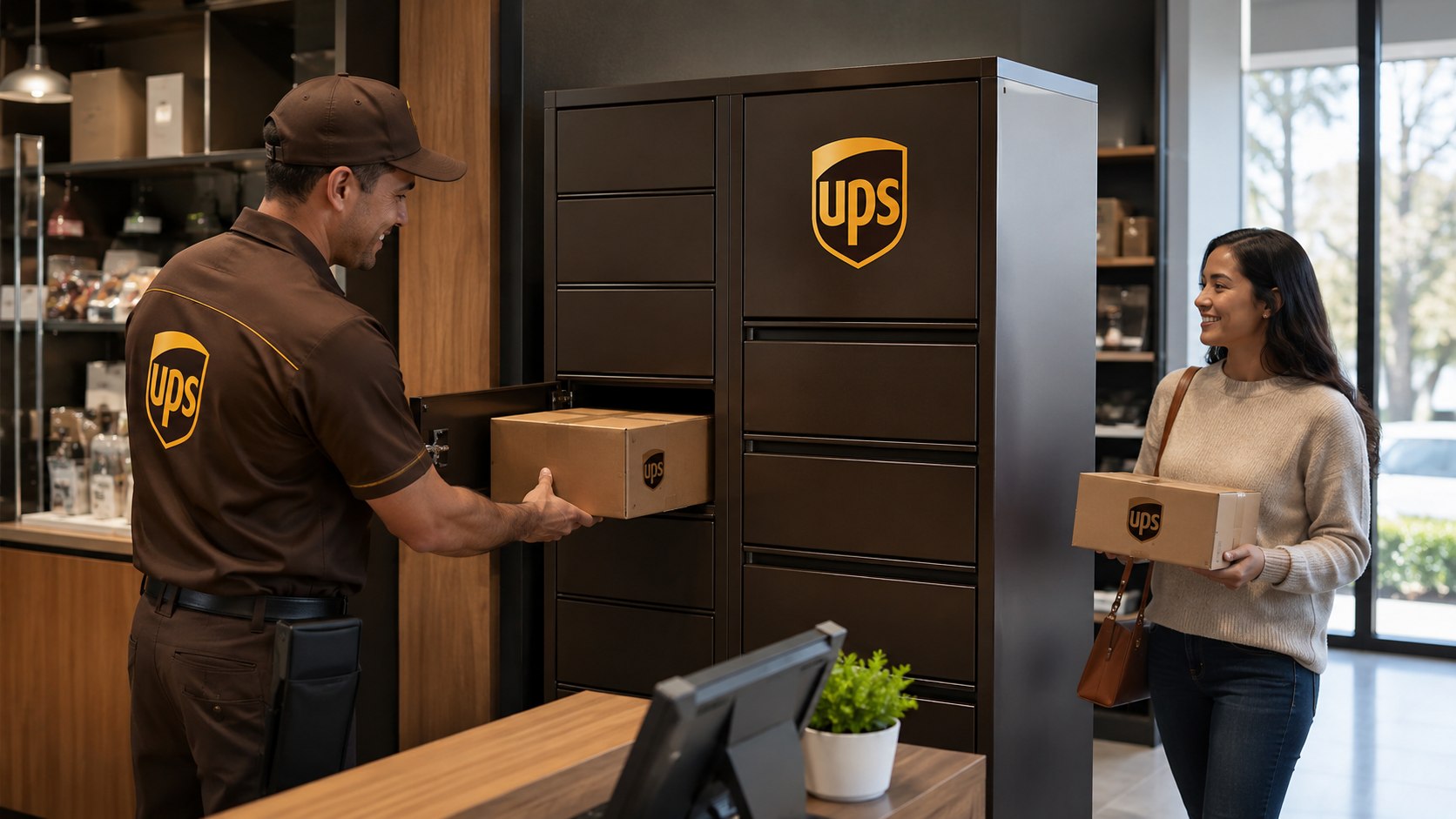
What to check before you go
A 2-minute review can prevent a wasted drive. Complete this checklist before visiting a UPS return drop-off or package pickup counter:
- Confirm the exact location through UPS tracking or the official locator.
- Verify that the status says the parcel is ready for pickup.
- Check today’s hours and any holiday schedule.
- Bring government-issued photo identification.
- Review the pickup deadline shown in tracking.
- Package and seal returns before arrival unless packing service is confirmed.
- Confirm that the location accepts your label or mobile code.
- Request and retain a drop-off receipt.
This review is especially important in rural areas, where the next compatible location may be many miles away. It also helps customers visiting stores inside shopping centers. The parcel counter may operate different hours from the surrounding businesses.
For pickups, the name on the ID should match the package information whenever possible. Bring the UPS InfoNotice if a driver left one. If the shipment belongs to a business, additional proof or authorization may be useful.
For returns, take a clear picture of the product and packaging. Record serial numbers for electronics. These steps do not guarantee a refund, but they can support a dispute concerning condition, contents, or shipping damage.
Official availability and location details can be checked through the UPS location finder. Delivery-change and holding options are explained through UPS delivery management support.
Frequently asked questions
What is a UPS Access Point used for?
It is used for collecting eligible UPS packages and dropping off prepared shipments or returns. UPS may redirect a missed delivery there, or a customer may select an eligible location. Services vary, so check the specific listing.
How long does UPS hold a package at an Access Point?
UPS says packages are generally held for up to 7 calendar days. The precise deadline should appear in tracking. After the holding period, the parcel may be returned to the sender.
Do I need an ID to pick up my UPS package?
Yes, customers should bring a government-issued photo ID. The information should correspond with the shipment whenever possible. Additional authorization may be required when another person collects the package.
Does a UPS Access Point charge for returns?
An eligible prepaid, packaged, and labeled return can usually be dropped off without a separate counter fee. Printing, packaging, tape, shipping, or scheduled pickup can cost extra. Verify local services before visiting.
Can a UPS Access Point print my return label?
Some locations may support label printing or mobile return codes, but many accept only pre-labeled packages. Follow the retailer’s instructions and check the location’s listed services. Do not assume that every QR code is compatible.
Can someone else pick up my UPS package?
It may be possible, but identification and authorization rules can vary. Review the tracking instructions or contact UPS before sending another person. Restricted or high-value shipments may have stricter requirements.
Earlier we wrote about Uber Teen Rider How to Set Up in 2026: Complete Guide for Parents