

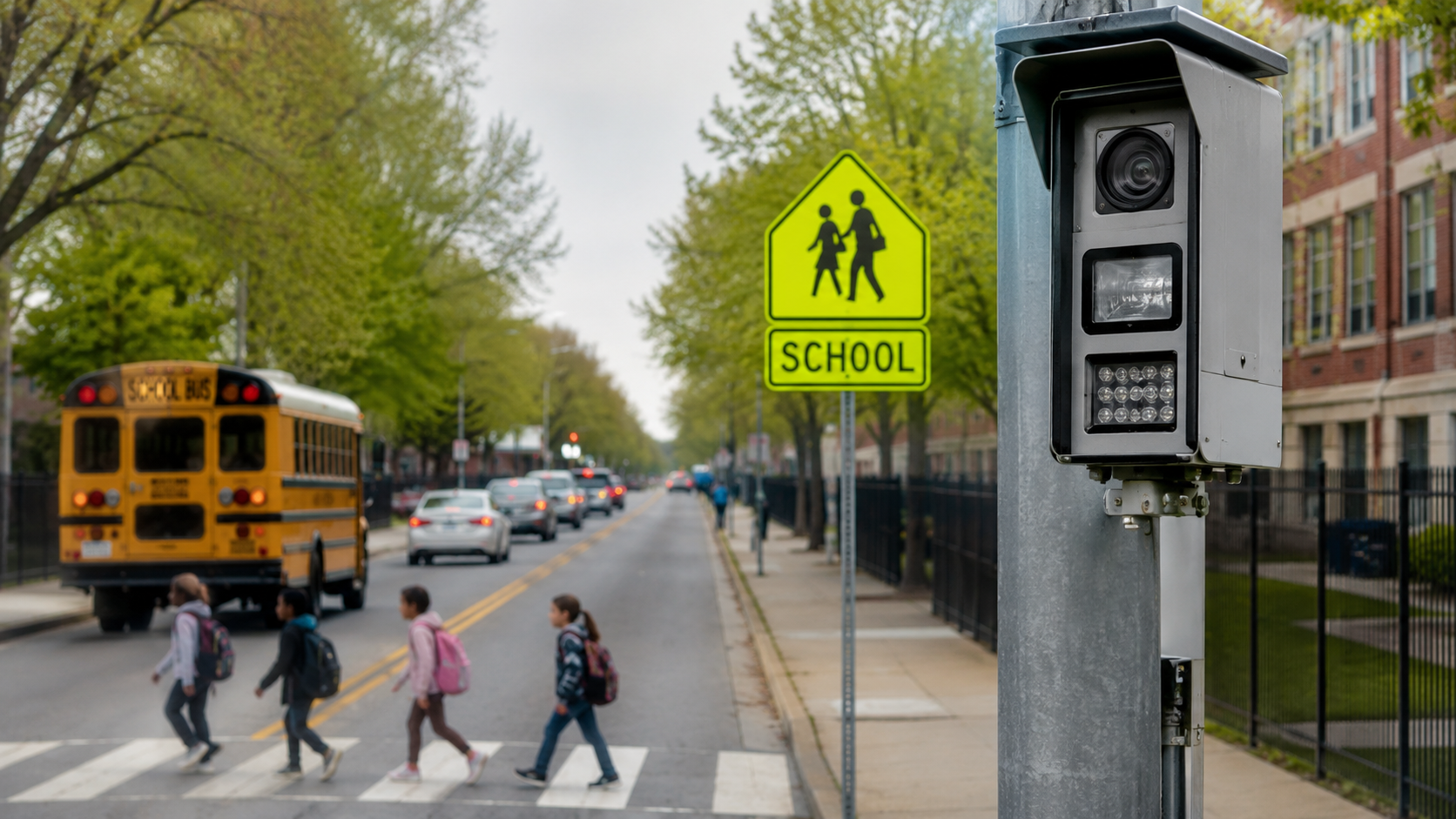
Baltimore school speed cameras are expanding again as city officials prepare to activate new enforcement zones near several schools next week. The new cameras will begin operating on or around May 20 and will target drivers exceeding speed limits in active school corridors. City transportation officials say the move aims to reduce speeding violations and improve pedestrian safety for students and families. Traffic enforcement remains a major issue across Baltimore neighborhoods with heavy commuter flows during morning and afternoon school hours, as noted by the editorial team at Baltimore Chronicle.
New Baltimore school speed camera locations announced
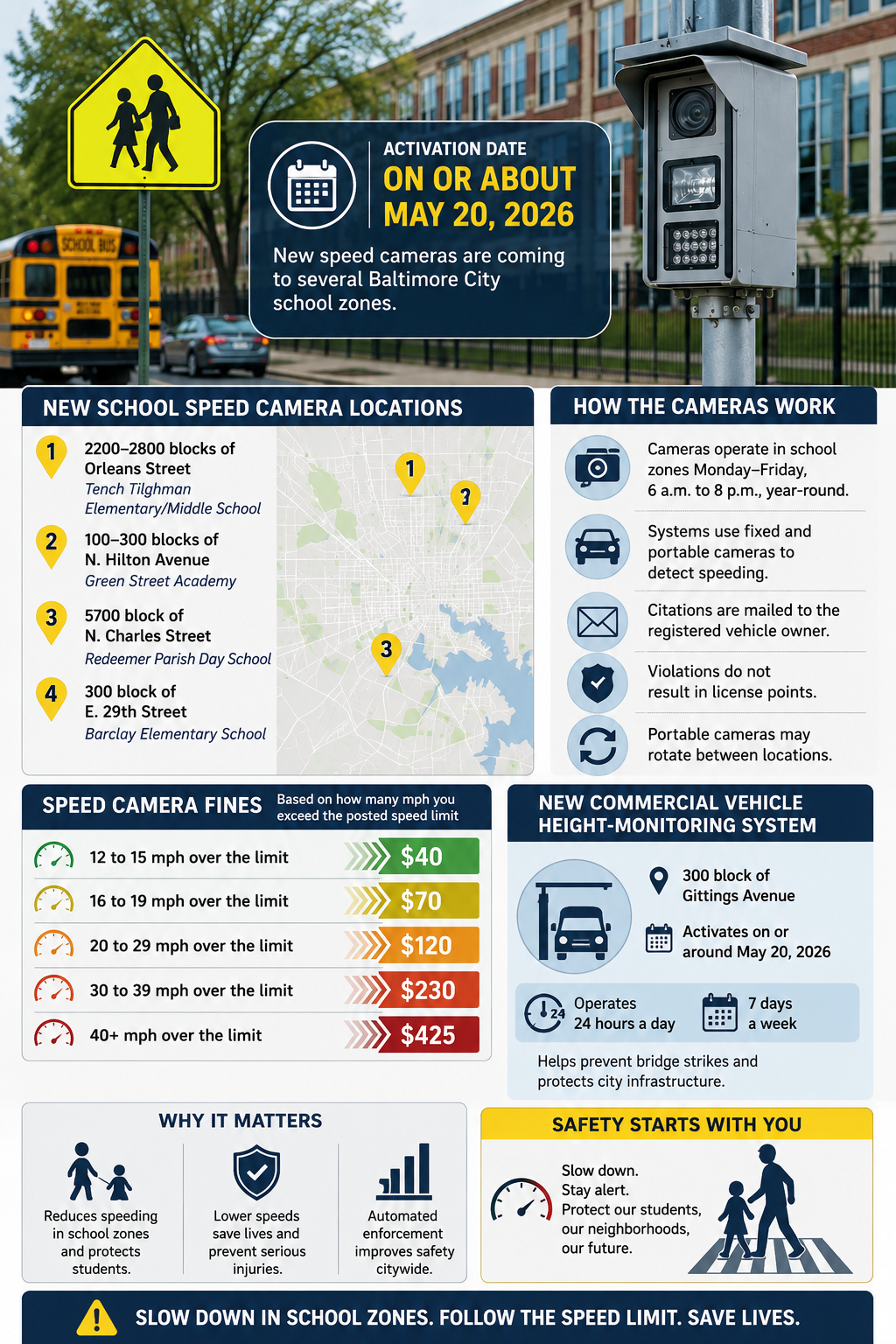
Baltimore City confirmed that new speed enforcement cameras will appear near four educational institutions across the city. Officials say these areas reported repeated speeding concerns during peak traffic periods. The cameras will operate in designated school zones and automatically issue citations to violating drivers.
The following locations will receive new enforcement systems:
| School zone location | Nearby school | Expected activation |
|---|---|---|
| 2200–2800 blocks of Orleans Street | Tench Tilghman Elementary/Middle School | Around May 20 |
| 100–300 blocks of N. Hilton Avenue | Green Street Academy | Around May 20 |
| 5700 block of N. Charles Street | Redeemer Parish Day School | Around May 20 |
| 300 block of E. 29th Street | Barclay Elementary School | Around May 20 |
City officials stressed that drivers should already begin slowing down in these corridors before the cameras officially start enforcement.
The initiative is part of Baltimore’s broader traffic-calming strategy. Officials continue increasing automated enforcement in areas with heavy pedestrian movement.
How Baltimore school-zone speed cameras operate
The Baltimore speed camera program functions year-round and does not stop during summer months. Cameras remain active Monday through Friday from 6 a.m. until 8 p.m. Authorities say this schedule reflects after-school programs, sports activities, and evening pedestrian traffic.
The enforcement system uses both fixed and portable camera units. These devices monitor vehicle speed automatically without requiring direct police interaction. If a vehicle exceeds the limit beyond the enforcement threshold, the system records the violation.
Drivers should understand several important details about these violations:
- Cameras operate automatically in school safety zones
- Tickets are mailed to the registered vehicle owner
- Violations do not add points to a driving license
- Enforcement continues during holidays unless otherwise suspended
- Portable systems may rotate between locations
After these points, city officials again reminded motorists that automated enforcement is designed primarily for prevention. Transportation authorities say lower driving speeds significantly reduce serious injuries near schools.
Baltimore speed camera fines in 2026
The Baltimore school zone fines depend entirely on how fast a driver exceeds the posted limit. Penalties rise sharply once speeds exceed 20 mph over the limit.
Here is the current violation structure announced by city officials:
| Speed above limit | Fine amount |
|---|---|
| 12–15 mph over limit | $40 |
| 16–19 mph over limit | $70 |
| 20–29 mph over limit | $120 |
| 30–39 mph over limit | $230 |
| 40+ mph over limit | $425 |
Transportation experts note that the steepest penalties target the most dangerous driving behavior. High-speed violations near schools remain one of the city’s largest road safety concerns.
Traffic safety analysts also point to national studies showing that lower speeds dramatically improve survival rates during pedestrian crashes. Children remain especially vulnerable in school corridors with limited visibility and dense traffic.
New commercial vehicle monitoring system also launching
Baltimore is not only expanding school-zone enforcement. Officials also confirmed a new commercial vehicle height-monitoring system in the 300 block of Gittings Avenue.
The system is expected to activate around the same date as the school cameras. Unlike school-zone cameras, this monitoring program operates continuously.
Authorities say the technology helps identify oversized commercial vehicles before bridge strikes or roadway damage occur. Similar systems already operate in several large U.S. cities.
Drivers of trucks and delivery vehicles should expect stricter monitoring in the area:
- Cameras operate 24 hours daily
- Enforcement runs seven days per week
- Oversized vehicles may trigger automated alerts
- The system focuses on roadway infrastructure protection
City transportation departments increasingly rely on automated monitoring systems because they reduce staffing demands while maintaining constant enforcement coverage.
Why Baltimore continues expanding automated enforcement
Officials argue that automated traffic enforcement improves compliance in dangerous areas where police presence alone cannot maintain constant monitoring. Baltimore has expanded school-zone cameras several times during recent years.
Local transportation advocates support additional cameras near schools with high pedestrian activity. Parents in several neighborhoods previously raised concerns about speeding during school drop-off periods.
“Drivers slow down when they know enforcement exists,” transportation safety advocates often say during city traffic hearings.
At the same time, some motorists continue criticizing automated ticket systems. Opponents argue that cities sometimes overuse cameras as revenue tools rather than safety measures.
Still, Baltimore officials insist the latest rollout focuses directly on child safety and accident prevention. The city expects the new systems to become fully operational by late May.
Earlier we wrote that Katy Perry to Perform at SoFi Stadium Before USA vs Paraguay World Cup Match in 2026