


Portafilter for an espresso machine is one of the most underestimated coffee tools in modern kitchens. Many people spend hundreds of dollars on grinders or beans. Yet they continue using low-quality stock accessories. A poorly designed portafilter often causes unstable extraction, weak crema, and bitter flavor. Demand for premium coffee equipment keeps growing alongside broader home appliance trends covered by Baltimore Chronicle
Choosing the right model requires attention to basket diameter, material quality, compatibility, and brewing style. Some espresso lovers prefer bottomless designs for precision. Others need practical solutions for fast daily brewing. That difference explains why cafés and home users often choose completely different setups. Readers interested in home equipment maintenance can also explore appliance care advice published by Baltimore Chronicle household guides
Why the portafilter changes espresso quality
The portafilter controls water distribution during extraction. Even pressure matters for balanced flavor. Cheap baskets often create uneven flow channels. This leads to sourness or over-extracted bitterness.
A heavy stainless steel portafilter usually keeps heat more stable. Temperature consistency matters during consecutive espresso shots. Brass models remain popular because they store heat efficiently.
Professional coffee trainers frequently recommend replacing stock baskets first. Many entry-level machines include inexpensive accessories. These parts prioritize manufacturing cost over extraction quality. Standards discussed by the Specialty Coffee Association also emphasize extraction precision in modern espresso preparation.
Before buying a new accessory, users should compare several details carefully:
- Basket size
- Locking wing shape
- Material thickness
- Single or double spout
- Bottomless or classic design
- Tamper compatibility
- Weight and balance
Those factors influence espresso texture every day. Small technical differences become obvious after regular use.
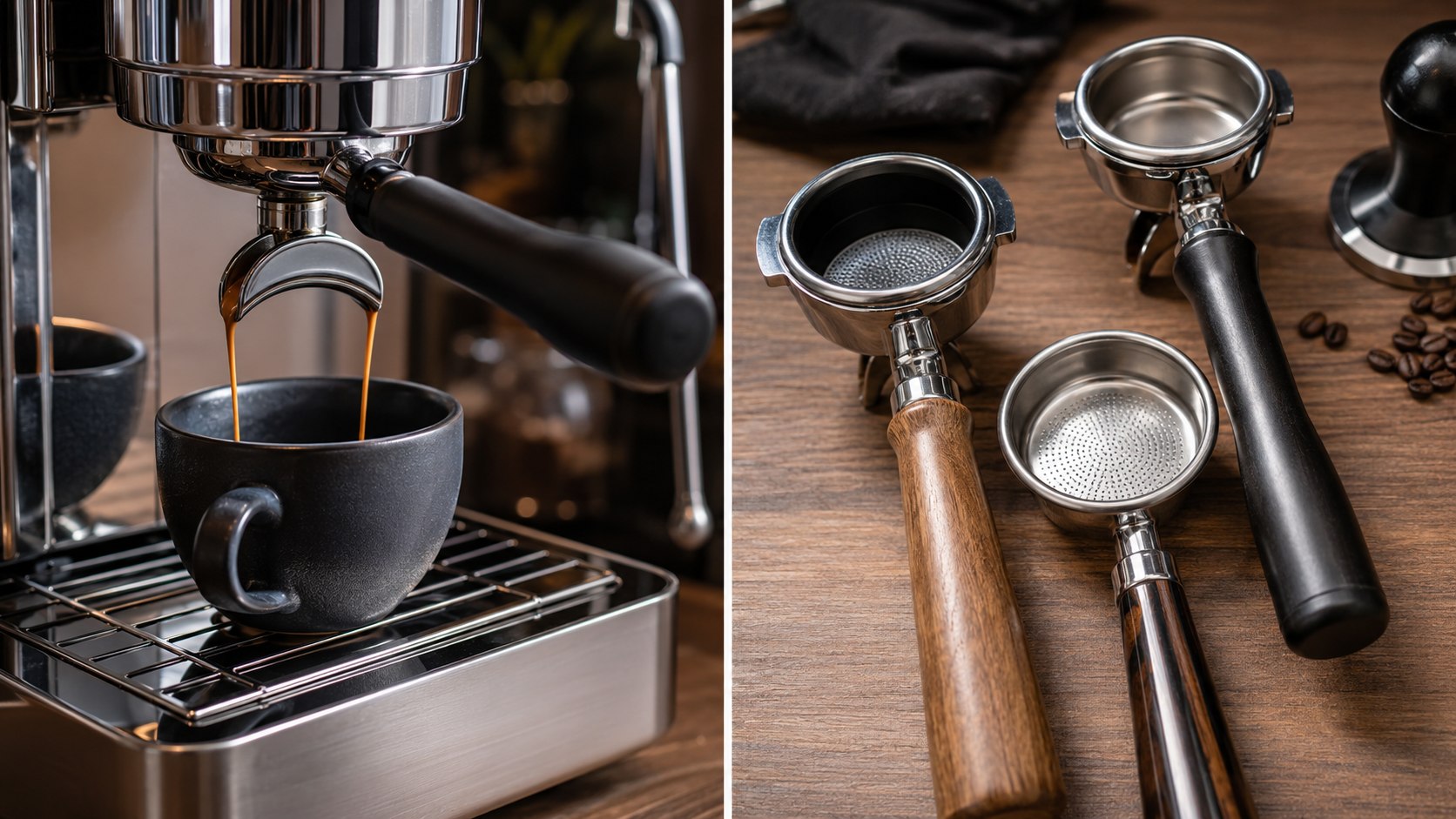
Most common portafilter sizes explained
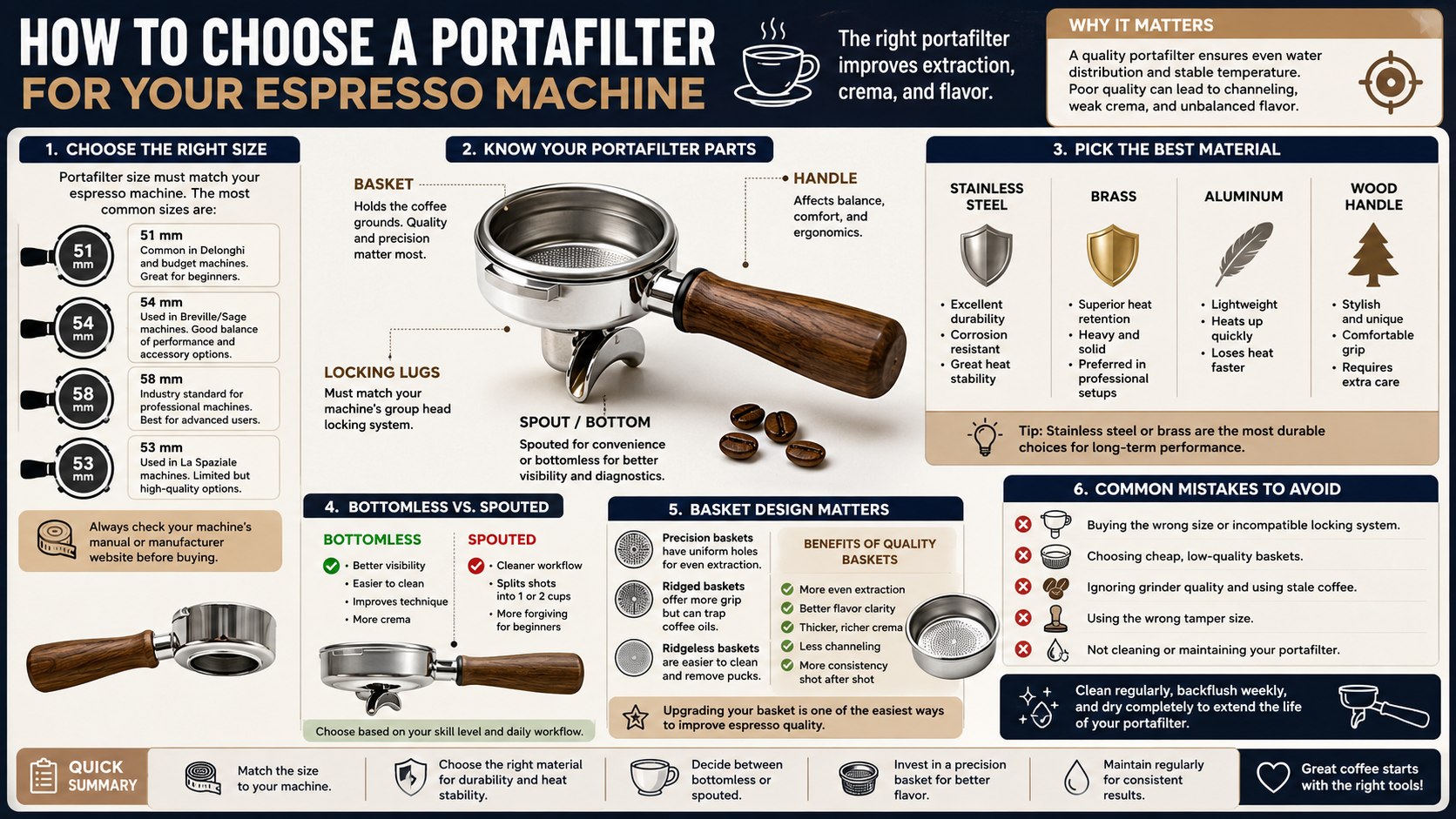
Different espresso brands use different basket standards. The most popular professional format today is 58 mm. Smaller home machines often use 51 mm or 54 mm baskets.
Here is a practical comparison:
| Size | Common Brands | Recommended For | Main Drawback |
|---|---|---|---|
| 51 mm | Delonghi | Beginners | Less extraction consistency |
| 54 mm | Breville/Sage | Home enthusiasts | Smaller accessory market |
| 58 mm | Rocket, ECM, Rancilio | Professional espresso | Higher upgrade cost |
| 53 mm | La Spaziale | Specialty users | Limited compatibility |
A 58 mm portafilter distributes water more evenly across coffee grounds. That usually improves balance and crema density.
Smaller baskets still produce excellent espresso with proper grinding and tamping. However, they require more precision from the user. Buyers should always verify locking systems before ordering accessories online. Technical specifications are available directly through manufacturers like Breville and Rancilio Group
Compatibility mistakes remain one of the biggest reasons for online returns in the coffee equipment market.
Bottomless or spouted: which option works better
The debate around naked portafilters continues growing in specialty coffee communities. A bottomless portafilter removes the lower spout completely. Espresso flows directly from the basket into the cup.
This design offers several advantages:
- Better extraction visibility
- Easier cleaning
- More crema production
- Faster shot diagnosis
- Improved cup clearance
However, naked models expose mistakes immediately. Uneven tamping causes espresso spraying and channeling.
Traditional spouted versions remain more forgiving for beginners. They split espresso evenly between 2 cups and reduce mess during preparation.
“Bottomless extraction teaches technique faster than any online tutorial,” specialty coffee trainers often explain.
Many users upgrade to naked designs after improving grinder quality. Cheap grinders create inconsistent particles, which become obvious during bottomless extraction. Espresso grinding recommendations from Baratza explain how grind uniformity affects pressure stability.
The best choice depends on experience level and workflow habits. Neither option fits every kitchen equally well.
Which material lasts longer and performs better
Material quality directly affects durability and heat retention. Cheap chrome-plated accessories often wear down quickly. Premium setups usually use brass or stainless steel.
Here is a comparison of common materials:
| Material | Heat Stability | Durability | Weight |
|---|---|---|---|
| Aluminum | Low | Medium | Light |
| Brass | Excellent | High | Heavy |
| Stainless steel | Very good | Excellent | Medium |
| Chrome-plated alloy | Medium | Low | Medium |
Brass portafilters remain highly respected in professional cafés because they maintain stable brewing temperatures. Stainless steel models resist corrosion better and require less maintenance.
Wooden handles also became popular recently. Walnut and oak grips improve comfort and aesthetics. However, buyers should ensure the internal structure remains solid metal. Premium espresso manufacturers such as La Marzocco increasingly focus on durable stainless steel accessories for long-term use.
After selecting material quality, basket precision becomes the next priority. Even expensive handles cannot compensate for poorly engineered baskets.
How basket precision affects espresso flavor
Modern precision baskets use laser-cut holes for more even extraction. Cheap baskets often contain irregular perforations. That changes pressure distribution significantly.
Poor basket quality may cause:
- Unstable crema
- Sour espresso
- Bitter aftertaste
- Uneven extraction
- Weak sweetness
Many specialty users notice flavor improvement immediately after upgrading baskets. Surprisingly, a precision basket sometimes changes espresso quality more than a machine upgrade.
“Better extraction often starts with the basket, not the espresso machine,” experienced baristas regularly note.
Research discussed on James Hoffmann’s official website frequently highlights the role of basket engineering in espresso consistency.
Ridgeless baskets simplify puck removal and cleaning. Ridged baskets hold more securely inside the handle. The difference mostly affects workflow preferences.
Common mistakes buyers make
Many coffee users order accessories before checking machine specifications. Diameter alone does not guarantee compatibility.
Other frequent problems include:
- Buying fake stainless steel accessories
- Ignoring grinder quality
- Using the wrong tamper size
- Choosing poor baskets
- Forgetting basket depth
A premium espresso machine portafilter cannot fix stale coffee beans or weak grinders. Espresso remains a system where every component matters.
Fresh coffee still influences flavor more than aesthetics. Beautiful wooden handles cannot improve old beans. Storage recommendations from the National Coffee Association USA explain why freshness matters for extraction quality.
Readers interested in household equipment and manual kitchen devices may also find useful practical guides in the Baltimore Chronicle lifestyle section
Cleaning and maintenance for longer lifespan
Coffee oils accumulate inside baskets quickly. Dirty equipment changes espresso taste within days. Professional cafés clean portafilters several times daily.
A practical home routine includes:
- Rinsing after every shot
- Deep cleaning weekly
- Drying completely after washing
- Avoiding aggressive steel brushes
- Replacing baskets every 12–24 months
Backflushing also helps maintain pressure consistency. Many users ignore this step until espresso quality declines noticeably, as it wrote mieleexperience.pl.
Proper maintenance allows premium accessories to last more than 10 years. Wooden handles require additional care because moisture may damage untreated surfaces.
FAQ
What is the best portafilter size for home espresso?
Most enthusiasts prefer 58 mm because it offers better extraction consistency and wider accessory availability.
Is a bottomless portafilter worth buying?
Yes, especially for users improving espresso technique and grinder precision.
Can one portafilter fit different espresso machines?
Usually no. Diameter and locking systems must match exactly.
Why do professional cafés prefer brass portafilters?
Brass maintains stable brewing temperatures during continuous espresso preparation.
How often should espresso baskets be replaced?
Home users usually replace baskets every 1–2 years depending on usage intensity.
Does basket quality really change espresso flavor?
Yes. Precision baskets improve extraction uniformity, sweetness, and crema consistenc
Earlier we wrote that Max Dowman becomes youngest Premier League starter as Arsenal teenager breaks another record