

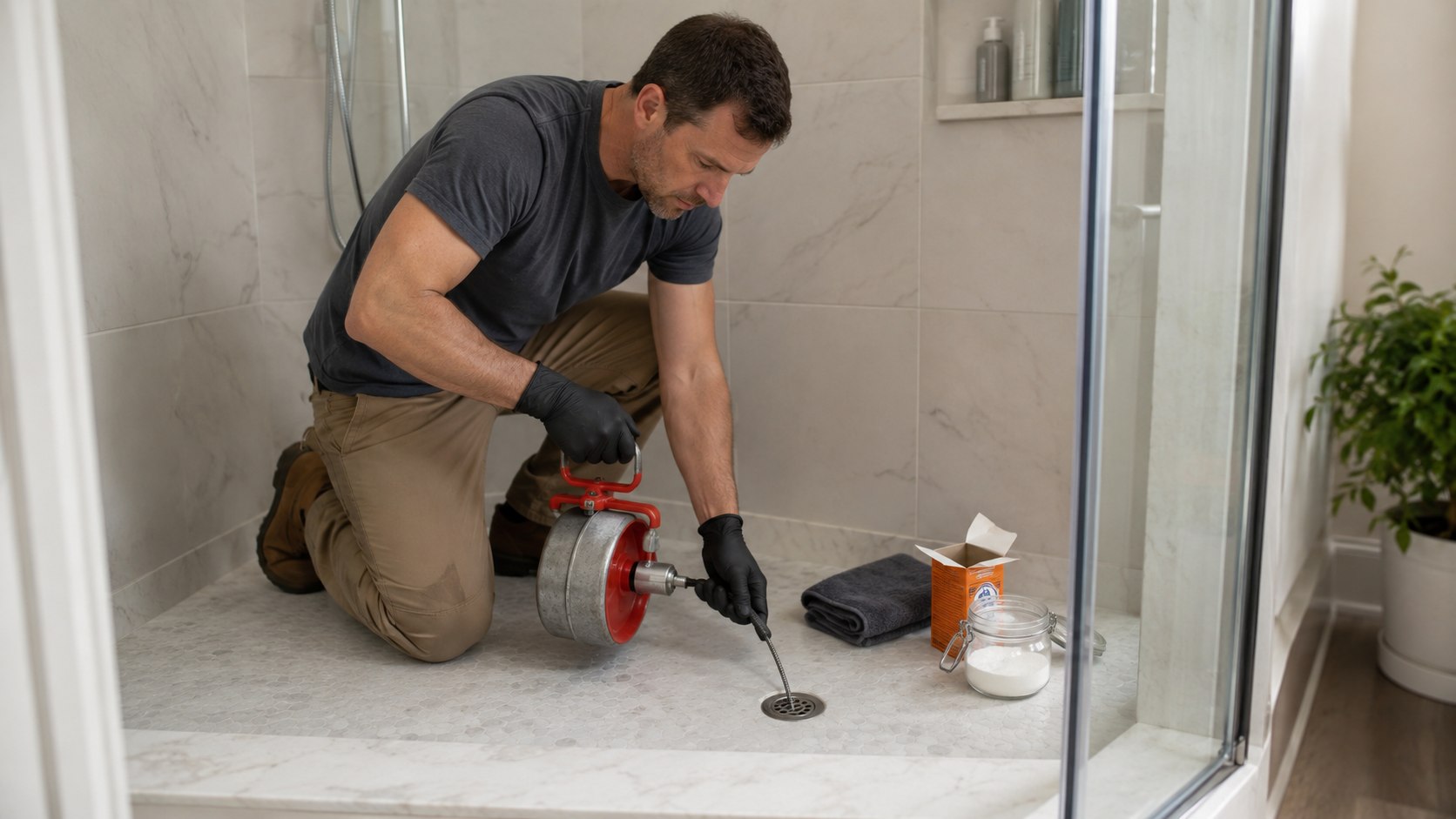
You can usually fix a slow or fully clogged shower drain in 20–45 minutes with a hair-removal tool, a small drain snake, baking soda, vinegar, and hot water. This guide shows how to unclog a shower drain without chemicals before you spend $150–$350 on a plumber visit in many US markets in 2026, аs noted by Baltimore Chronicle.
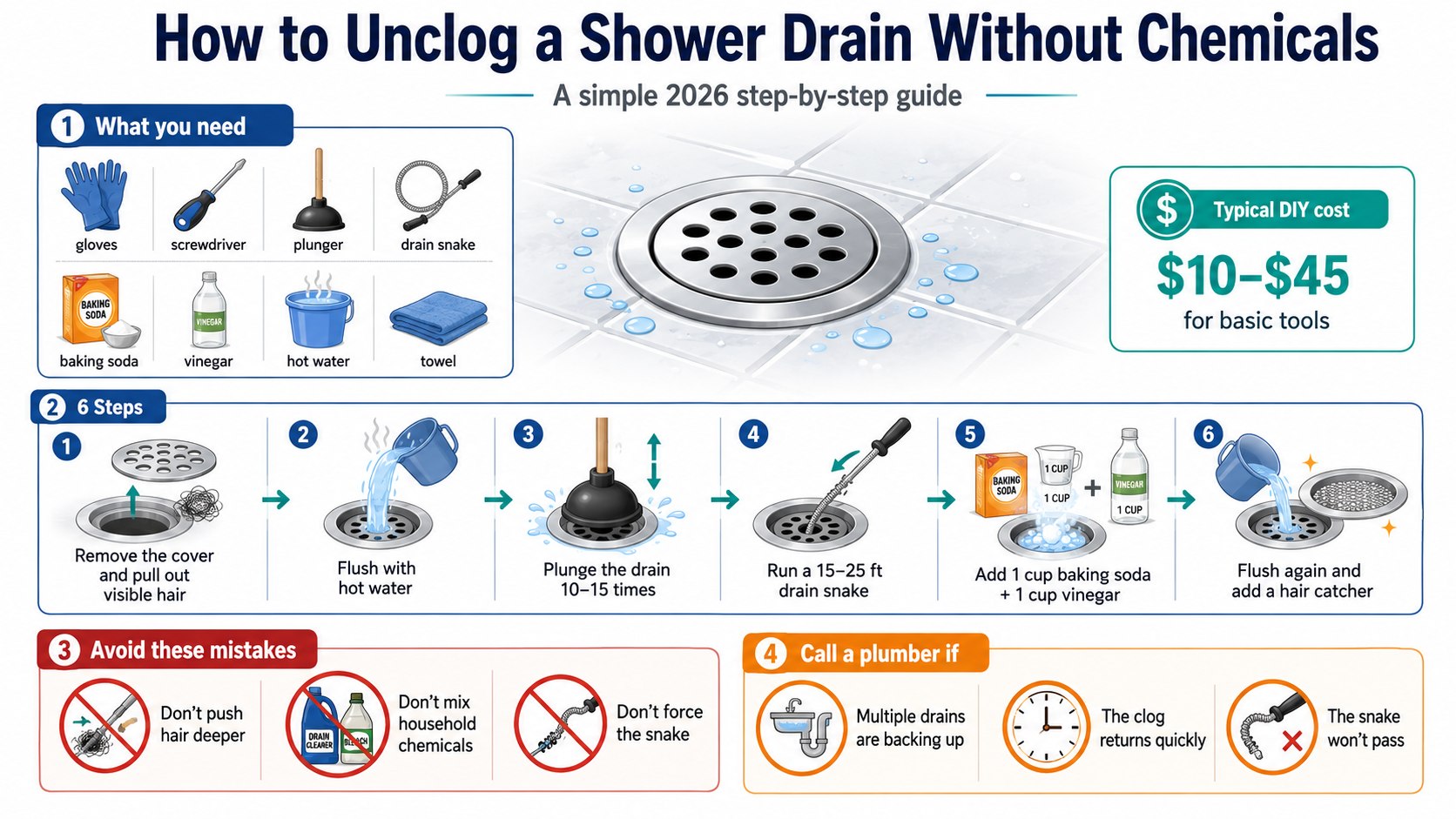
The fastest safe order is simple: remove visible hair, plunge the drain, run a 15- to 25-foot snake, flush with hot water, then use baking soda and vinegar for residue. If the drain issue is part of a larger bathroom update, the cost context in How Much Does a Bathroom Remodel Cost in USA 2026? can help separate a small repair from a renovation decision.
Key takeaways
- A plastic hair tool or 15-foot drum auger solves most shower clogs caused by hair and soap buildup.
- Baking soda and vinegar help with odor and light residue, but they rarely clear a dense hair plug alone.
- Stop DIY work if water backs up in multiple drains, because the clog may be in the main sewer line.
What you need before you start
Most shower clogs do not require special skills. The right tools matter because hair clogs usually sit close to the strainer, while deeper blockages may sit several feet down the trap arm.
- Rubber gloves and eye protection
- Flathead screwdriver or Phillips screwdriver for the drain cover
- Needle-nose pliers or a plastic hair-removal tool
- Cup plunger or small sink plunger
- 15- to 25-foot drain snake or drum auger
- 1 cup baking soda and 1 cup white vinegar
- Bucket, old towel, trash bag, and paper towels
- 2–3 gallons of hot water, not boiling water for PVC pipes
In 2026, a basic plastic hair grabber such as Green Gobbler or FlexiSnake often sells for about $6–$20, while a manual Husky or Cobra-style 15- to 25-foot drum auger commonly falls around $15–$45 at major US retailers. Prices vary by state, store, and online availability.
| Tool or method | Best for | Typical 2026 cost | Risk level |
|---|---|---|---|
| Plastic hair tool | Hair near the drain opening | $6–$20 | Low |
| Plunger | Soft clogs in the trap | $5–$18 | Low |
| 15-foot drain snake | Hair and soap scum deeper in the line | $15–$35 | Moderate |
| 25-foot drum auger | Stubborn clogs past the trap | $30–$60 | Moderate |
| Baking soda and vinegar | Odor and light residue after removal | $2–$6 | Low |
How to unclog a shower drain without chemicals safely
A safe, non-caustic approach protects pipes, finishes, septic systems, and indoor air. The US Environmental Protection Agency’s Safer Choice program explains how households can identify cleaning products with safer chemical ingredients, but this job can usually start with mechanical removal instead of a bottled drain opener.
Mechanical clearing also gives better feedback. If the snake pulls back hair, lint, and soap sludge, the problem was local. If the snake hits a hard stop or the shower backs up again within days, the line may need a camera inspection or professional augering.
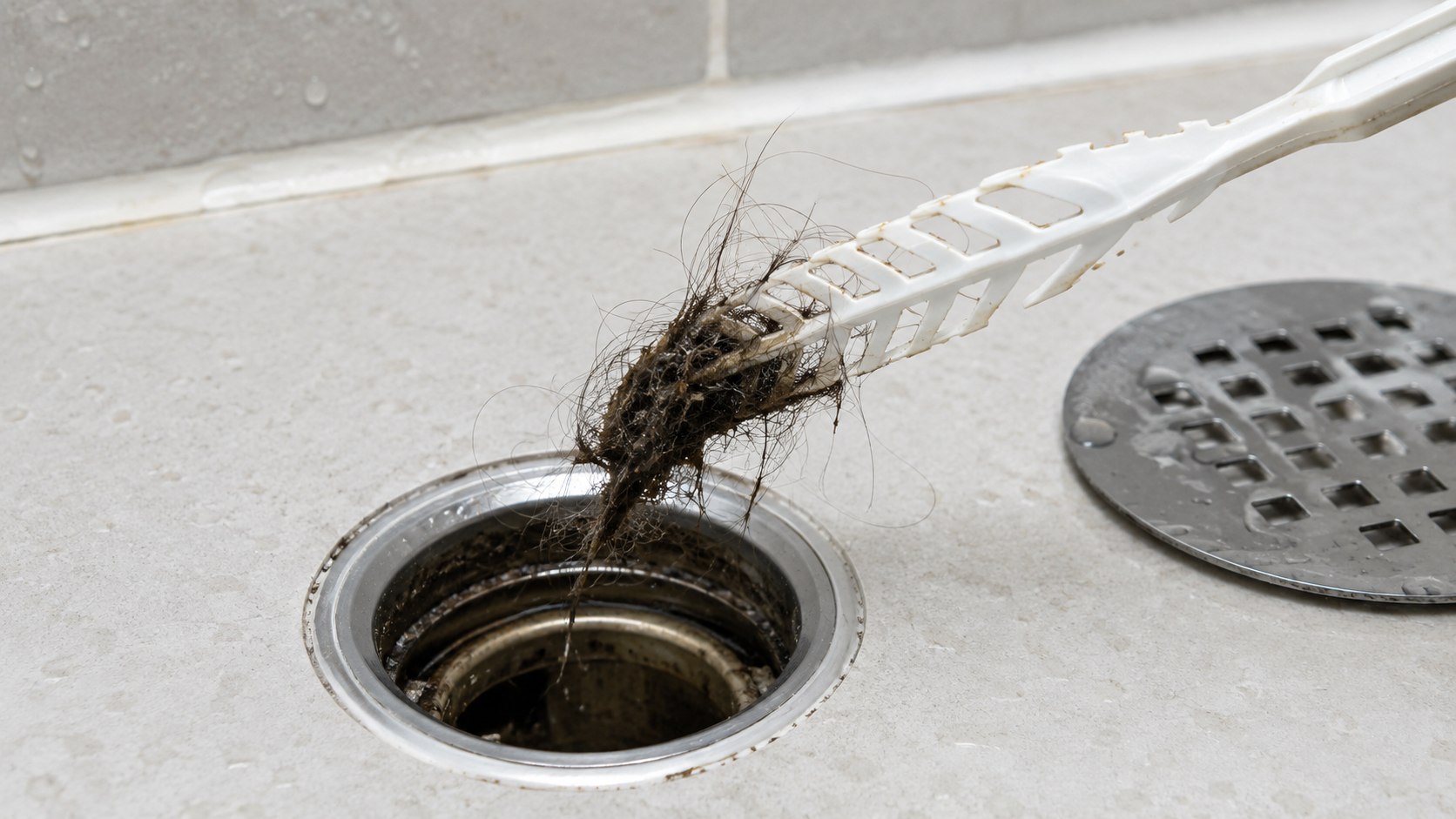
Step 1: Remove the drain cover and visible hair
Take out the screws or lift the snap-in cover, then pull out any visible hair with gloved fingers, pliers, or a plastic hair-removal strip. Put the debris directly into a trash bag instead of rinsing it down the drain.
This matters because many shower clogs start within the first few inches of the drain, especially in homes with long hair, pets, or hard water. Clearing the top layer gives every later step a better chance.
Common mistake to avoid: Do not push the hair deeper with a screwdriver, toothbrush, or hanger. That can turn a shallow clog into a deeper one.
Step 2: Flush the drain with hot water
Run hot tap water for 60–90 seconds or pour 1–2 gallons of very hot water from a kettle or pot. Use hot water, not a rolling boil, if the home has PVC drain piping.
Hot water softens soap film, shaving cream residue, conditioner, and body oil that bind hair together. It also shows whether the drain is slow, fully blocked, or already mostly clear.
Common mistake to avoid: Do not pour boiling water into an acrylic shower base or unknown plastic piping. Thermal shock can damage some materials.
Step 3: Use a plunger to loosen the clog
Cover the drain with a cup plunger and add enough water to cover the rubber lip. Push and pull firmly 10–15 times while keeping the seal tight.
Plunging works because pressure changes can move a soft clog in the trap. It is often enough when the drain is slow but not completely stopped.
Common mistake to avoid: Do not plunge after using a chemical drain cleaner. Splashback can injure skin and eyes, and it can expose the next person working on the drain.
Step 4: Run a drain snake into the shower line
Feed a 15-foot snake into the drain opening until resistance increases, then rotate the handle while advancing slowly. Pull the cable back a few inches at a time and remove any hair, black sludge, or soap buildup from the tip.
A shower drain snake matters because most dense hair clogs do not dissolve with baking soda. The snake physically hooks or breaks the blockage so water can move again.
Common mistake to avoid: Do not force the cable if it stops hard. Excess pressure can kink the cable or damage older drain parts, especially in pre-1980 homes in states such as Pennsylvania, Maryland, Ohio, and New York.
Step 5: Repeat the snake pass and test the flow
Run the snake a second time after the first pullback, especially if the cable came back with hair. Then run the shower for two minutes and watch whether water pools around your feet.
A second pass catches pieces that break loose but stay in the line. It also confirms whether the clog was a single plug or a longer buildup along the pipe wall.
Common mistake to avoid: Do not assume the job is done because the drain improves slightly. A drain that still gurgles or drains slowly may clog again within a week.
Step 6: Use baking soda and vinegar for residue and odor
Pour 1 cup of baking soda into the drain, followed by 1 cup of white vinegar. Cover the drain for 10–15 minutes, then flush with 1–2 gallons of hot water.
Baking soda and vinegar drain cleaning is best after physical debris is removed. It can help loosen light residue and reduce odor, but it is not a substitute for pulling out hair.
Common mistake to avoid: Do not add bleach, ammonia, or a commercial drain opener to this mixture. Mixing household chemicals can create dangerous fumes.
Step 7: Clean the drain cover and add a hair catcher
Scrub the drain cover with dish soap and a small brush, then reinstall it securely. Add a silicone or stainless-steel hair catcher if the shower is used daily.
A clean cover improves water flow and keeps new hair from entering the line. This is one of the cheapest ways to prevent a repeat clog in rentals, condos, and single-family homes. If the shower floor, tile, or drain opening already shows wear, How to Retile a Bathroom Yourself in 2026 gives useful context before combining plumbing work with surface repairs.
Common mistake to avoid: Do not choose a hair catcher that sits too high or slides underfoot. A loose cover can become a slip hazard.
Step 8: Know when to stop and call a plumber
Stop DIY work if the shower drain backs up with toilet flushing, if more than one drain is slow, or if dirty water comes up through the tub. Those signs can point to a branch-line or main-line blockage.
Professional service makes sense when a snake cannot pass, the clog returns quickly, or the home has old galvanized, cast iron, or clay sewer piping. If the bathroom also has water around the toilet, How to Fix a Leaking Toilet Base in 2026 can help identify whether the problem is limited to the shower or part of a broader bathroom plumbing issue.
Common mistake to avoid: Do not rent a large electric auger without knowing the drain layout. Heavy equipment can damage lines when used without experience.
Troubleshooting a shower drain that still will not clear
- Water drains slowly after snaking: Run the snake again and flush longer with hot water. The first pass may have opened only a small channel.
- The snake will not go past a bend: Retract slightly, rotate the cable, and feed it again with less force. The cable may be hitting the trap curve.
- Black sludge keeps coming back: Soap, conditioner, and body oil may be coating the pipe. Use repeated hot-water flushing after mechanical removal.
- Several drains are slow: Stop treating the shower as the only problem. The blockage may be downstream of the bathroom group.
- There is a sewage smell: Make sure the trap has water in it. If the smell remains, the issue may involve venting, a dry trap, or a sewer-gas problem.
For renters, the lease may require reporting plumbing problems before taking apart fixtures. A landlord or property manager may also prefer a licensed plumber for multi-unit buildings in California, Texas, Florida, Illinois, and other states with dense apartment housing.
Snake vs. baking soda vs. chemical drain cleaner
People often compare natural shower drain cleaner methods because chemical products are fast to buy but not always the best first move. A snake removes the clog; baking soda helps clean after removal; chemical drain cleaner tries to break down material inside the pipe.
| Method | What it does well | Where it falls short |
|---|---|---|
| Drain snake | Pulls out hair and soap clumps | Requires patience and cleanup |
| Baking soda and vinegar | Helps with odor and light film | Usually weak against dense hair clogs |
| Plunger | Moves soft clogs with pressure | Needs a tight seal to work |
| Chemical drain cleaner | Can work on some organic buildup | Can create splash, fumes, and pipe-finish concerns |
If a product label is involved, follow the manufacturer’s directions exactly. SC Johnson, the maker of Drano, publishes product-use and safety information on its official Drano clog basics pages, but a non-chemical method avoids mixing risks when the clog later needs plunging or snaking.
How to prevent the next shower clog
Prevention is easier than clearing a packed hair clog. The best routine is low-cost and takes less than five minutes a week.
- Remove hair from the drain cover after every few showers.
- Rinse the shower floor with hot water after shaving or heavy conditioner use.
- Wash the hair catcher weekly with dish soap.
- Flush the drain with hot tap water once a week.
- Use baking soda and vinegar monthly for odor control, not emergency clog removal.
- Keep small toys, cotton swabs, dental floss, and razor covers away from the shower.
Clogged shower drain fix routines matter more in households with children, long hair, visiting relatives, or frequent pet washing. A $10 hair catcher can prevent repeated calls for plumbing help.
FAQ
Can baking soda and vinegar really unclog a shower drain?
Baking soda and vinegar can help with light residue and drain odor, but they usually cannot pull apart a dense hair clog. Use them after removing hair with a tool or snake.
What is the best non-chemical way to unclog a shower drain?
The best first method is visible hair removal followed by plunging and a small drain snake. This sequence gives the highest chance of clearing the clog without caustic liquid products.
How far should a snake go into a shower drain?
Many shower clogs clear within the first few feet, but a 15-foot snake gives more reach through the trap and branch line. Do not force the cable if it hits a hard stop.
Is it safe to use boiling water in a shower drain?
Hot tap water is safer than boiling water, especially when the home may have PVC pipes or an acrylic shower base. Very high heat can stress some plastic parts.
When should a homeowner call a plumber?
Call a plumber if multiple drains are slow, wastewater backs up, the clog returns quickly, or the snake cannot pass. Those symptoms can point to a deeper blockage than a basic shower clog.
Can renters unclog a shower drain themselves?
Renters can usually remove visible hair and use a plunger, but they should check the lease before taking apart fixtures or using a drain snake. Reporting recurring clogs protects the tenant if a larger plumbing issue exists.
Earlier we wrote about Lost Social Security Card Replacement 2026: How to Get a New SSN Card Online or In Person