

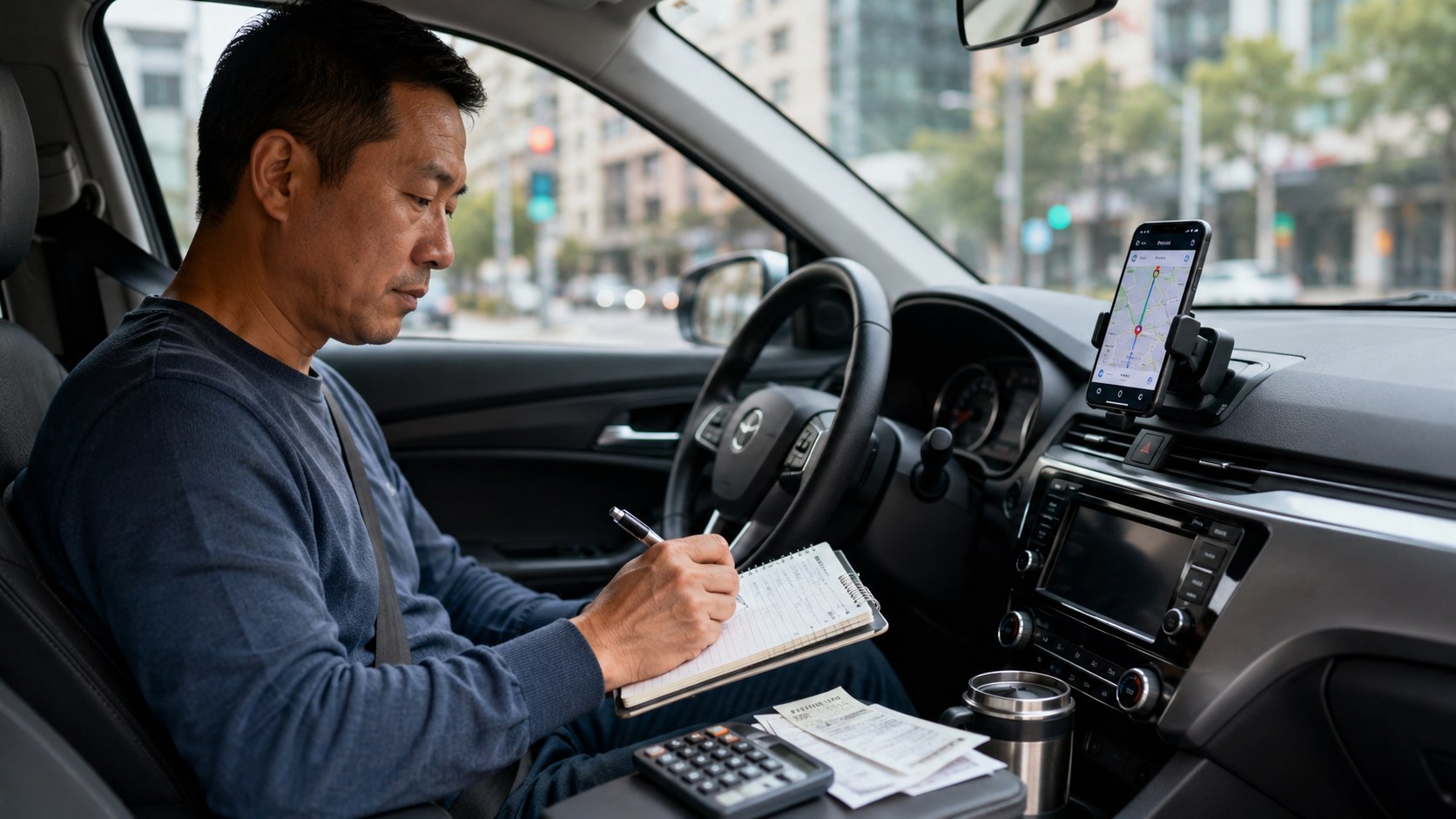
Uber driver tax deductions 2026 were selected by reviewing current IRS vehicle-expense rules and the costs drivers regularly incur while completing rides. The most useful deductions are those that can materially reduce Schedule C profit and can be supported by mileage logs, receipts, bills, and business-use records, as noted by Baltimore Chronicle.
The immediate answer is simple. Track every qualifying business mile, then compare the 2026 standard mileage method with your actual vehicle expenses. Deduct only the business portion of your phone, supplies, insurance, tolls, and other ordinary costs. You cannot claim the standard mileage rate and separately deduct gas, repairs, depreciation, or routine maintenance for the same vehicle and year.
Top List: Uber Driver Tax Deductions 2026 (2026)
Key takeaways
- The 2026 IRS business mileage rate is 72.5 cents for each eligible business mile driven.
- Gas is separately deductible only when a driver chooses the actual vehicle expense method.
- Phone, tolls, parking, platform fees, and rider supplies require records showing a genuine business purpose.
This ranking favors deductions that apply nationally and affect the largest number of Uber drivers. It also considers documentation risk, financial impact, and the practical value of each expense during the 2026 tax year.
1. Business Mileage at the 2026 IRS Rate
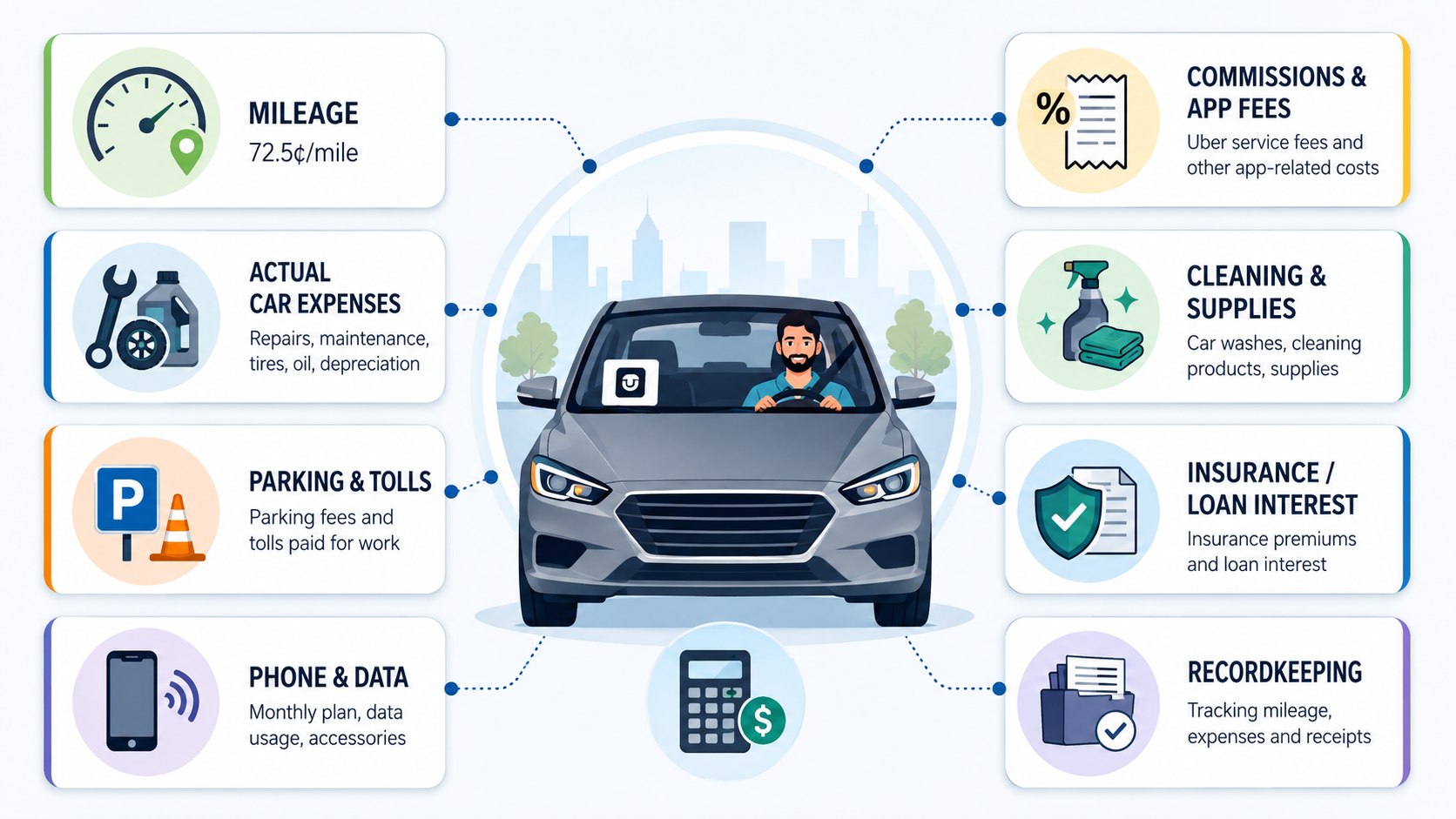
The largest deduction for many rideshare drivers is Uber mileage deduction. The IRS business standard mileage rate is 72.5 cents per mile for 2026, up from 70 cents in 2025. A driver with 20,000 qualifying miles could calculate a $14,500 vehicle deduction.
That $14,500 is not a refund and does not reduce tax by $14,500. It reduces business profit before income tax and self-employment tax are calculated. The final savings depend on the driver’s income, filing status, state, and other deductions.
Qualifying mileage can include driving toward a passenger, transporting a passenger, and repositioning between active rides. Miles driven from home solely for personal errands do not qualify. Travel from home to a regular work location may also be treated as commuting.
Drivers should record the date, starting point, destination, business purpose, and mileage for each driving period. An annual estimate based only on Uber’s summary may omit valid empty miles and may not satisfy IRS recordkeeping expectations.
Drivers considering the platform can first review the publication’s guide on how to become an Uber driver in 2026. Current drivers can compare their revenue with the analysis of Uber driver earnings before and after expenses.
2. Gas Under the Actual Expense Method
Gas deduction for Uber drivers works differently from the mileage deduction. Fuel may be deducted separately only when the driver uses the actual expense method. A driver using the standard mileage rate cannot add gasoline receipts on top.
The actual method combines eligible vehicle costs, then applies the vehicle’s business-use percentage. Those costs can include gas, oil, repairs, tires, registration fees, insurance, lease payments, and depreciation.
| Vehicle method | What the driver deducts | Gas treated separately? | Best suited for |
|---|---|---|---|
| Standard mileage | 72.5 cents per qualifying mile in 2026 | No | High-mileage drivers with efficient vehicles |
| Actual expenses | Business share of eligible vehicle costs | Yes | Costly vehicles, high repairs, leases, or low fuel economy |
A driver spending $7,000 on eligible vehicle costs with 75% business use could generally begin with a $5,250 business allocation. That figure must then follow the applicable depreciation, lease, and vehicle-expense rules.
The better method cannot be chosen by looking at fuel alone. A Toyota Prius completing 25,000 business miles may produce a stronger result under mileage. A leased Chevrolet Suburban with expensive insurance and repairs could favor actual costs.
Drivers should calculate both methods before filing when the rules allow a choice. Once certain methods are selected, later switching may be limited. Leased vehicles have additional consistency rules during the lease term.
Gas prices also differ sharply between California, Texas, Florida, Maryland, and New York. Local fuel costs affect profit, but they do not change the federal mileage rate. State tax treatment should be checked separately.
3. Business Use of a Phone and Data Plan
A smartphone is essential for accepting trips, viewing navigation, contacting riders, checking airport queues, and receiving platform notices. The deductible amount is usually the business-use portion rather than the entire bill.
A driver paying $90 monthly and using the phone 70% for Uber and other gig work could allocate about $63 monthly. That would equal $756 across a full year, assuming the percentage is reasonable and documented.
Eligible phone-related costs may include:
- The business portion of the monthly wireless plan.
- A separately purchased phone used for rideshare work.
- A dashboard mount, charging cable, or car charger.
- Paid mileage, bookkeeping, navigation, or safety applications.
- Hands-free equipment used while driving.
A separate work line provides the cleanest record, but it is not mandatory. Drivers using one phone should estimate business use from app activity, working hours, or another consistent method.
The phone purchase may require depreciation or other tax treatment depending on price and circumstances. A driver should not automatically deduct the entire retail price without checking current rules.
Personal streaming, family data use, and unrelated calls remain personal expenses. Unlimited plans still require an allocation because the phone supports both business and private activity.
Monthly PDF statements should be stored with tax records. Screenshots from the Uber Driver app can help explain work periods but should not replace bills and payment records.
4. Tolls, Parking, and Airport Charges
Business tolls and parking charges can generally be deducted even when the driver uses the standard mileage method. They must relate directly to rideshare work and must not have been reimbursed.
Examples include a toll paid while carrying a passenger, airport holding-lot parking, or a garage charge during an active pickup. A parking ticket or traffic fine is not converted into a deductible expense merely because it occurred during work.
Uber may collect a toll from the rider and include it within the driver’s payment records. Drivers must avoid deducting a cost twice or treating a reimbursement as untaxed money without reconciling the platform statement.
Airport work deserves separate attention because pickup fees, staging rules, toll roads, and empty return mileage can erase an apparently profitable fare. The tax deduction reduces taxable profit, but it does not repair a weak trip.
Drivers evaluating airport and event demand may also find useful context in the explanation of how Uber surge pricing works in 2026.
5. Uber Fees, Commissions, and Platform Charges
Rideshare tax write-offs can include service fees, booking-related charges, commissions, and other business amounts retained by the platform. The correct treatment depends on how gross income and fees appear on Uber’s annual tax summary and information forms.
A driver should not report only the deposit that reached the bank account without reviewing the platform statement. Gross receipts may be higher because Uber can subtract fees before sending the payout.
A practical reconciliation should compare:
- Uber’s annual tax summary and monthly statements.
- Forms 1099-K, 1099-NEC, or other forms received.
- Weekly bank deposits from Uber.
- Cash tips or other taxable payments.
- Platform fees entered as business expenses.
The totals may not match immediately because each document can measure different transactions. Drivers should classify adjustments, tips, promotions, toll reimbursements, and fees before entering figures.
Reporting gross receipts and deducting eligible fees can produce the same net result as another correct presentation. However, the entries must remain consistent with tax documents supplied to the IRS.
Ignoring a form because the money was already deposited can create duplicate or missing income. Every form should be matched to the driver’s records before filing.
The IRS requires gig economy income to be reported even when no information form was issued. Cash tips and smaller payments do not become tax-free because they are absent from a 1099.
6. Cleaning, Rider Supplies, and Safety Equipment
Ordinary supplies purchased specifically for passengers or vehicle cleanliness may qualify as business expenses. Common examples include disinfecting wipes, paper towels, trash bags, disposable seat protectors, and commercial car washes.
Bottled water and individually packaged items may qualify when provided to riders for a clear business purpose. Personal snacks consumed during a shift usually do not qualify merely because the driver was working.
Potentially deductible supplies include:
- Interior cleaners and odor-control products.
- Portable vacuum equipment used for the rideshare vehicle.
- Dash cameras and memory cards used for driver security.
- First-aid supplies kept in the vehicle.
- USB charging cables available to passengers.
- Floor mats or seat covers purchased for heavy commercial use.
Dash-camera rules differ by state. California, Illinois, Maryland, Florida, and other states can impose different consent, audio-recording, and privacy requirements.
A tax deduction does not make illegal recording lawful. Drivers should review state rules and Uber policies before enabling audio recording.
Receipts should identify the product, purchase date, amount, and seller. A credit-card total without item details may not show whether the purchase was personal or business-related.
Large equipment purchases may require different treatment from routine disposable supplies. The tax result depends on price, expected useful life, and current expensing rules.
7. Rideshare Insurance and Vehicle Financing Costs
Personal auto policies often exclude or restrict commercial rideshare activity. Drivers may purchase a rideshare endorsement or separate coverage for gaps between personal insurance and Uber’s platform coverage.
Under the actual expense method, the business portion of eligible auto insurance can be included with vehicle costs. Under the mileage method, routine insurance is already represented within the mileage rate and cannot be added separately.
A separate rideshare endorsement should still be tracked. Whether it can be deducted outside the mileage calculation depends on how the policy is structured and which vehicle-cost method applies.
Self-employed drivers may also deduct the business portion of qualifying car-loan interest under applicable rules. Loan principal is not an interest expense and cannot be deducted as though it were interest.
Lease payments require allocation between business and personal use. Certain higher-value leased vehicles may also be subject to an inclusion amount.
Drivers should keep the policy declarations page, invoices, proof of payment, and loan statements. These records help separate insurance premiums, interest, principal, and unrelated fees.
8. Tax Preparation, Bookkeeping, and Estimated Payments
Tax software, bookkeeping applications, professional preparation fees, and accounting advice may be deductible to the extent they relate to the rideshare business. Personal-return preparation costs should be separated from the business portion.
Drivers generally report business income and deductions on Schedule C. Net earnings may also generate self-employment tax through Schedule SE.
“You must report income earned from the gig economy on a tax return.”
— Internal Revenue Service, Gig Economy Tax Center, federal guidance for platform workers.
Quarterly estimated payments may be necessary when withholding from another job does not cover the expected liability. The usual federal schedule uses April, June, September, and January payment periods, although weekends and holidays can move exact dates.
Drivers filing a federal return can review free tax filing options in the USA for 2026. Business returns may exceed the scope of some free services, so eligibility must be checked before entering data.
The IRS advises gig workers to keep income and expense records even when they receive no Form 1099. Its gig-work tax guidance also explains recordkeeping and estimated payments.

Honorable Mentions
- Roadside assistance: Deductibility depends on the vehicle method and the business-use share.
- Professional services: Legal advice, business registration, and tax consultations may qualify when tied to rideshare activity.
- State and local costs: Required inspections, permits, and business licenses may qualify when imposed on drivers.
These smaller expenses can add up, but they require the same discipline as mileage and fuel. The cost must be ordinary, necessary, and connected to earning rideshare income.
Drivers should retain invoices rather than relying only on bank statements. Mixed personal and business expenses require a defensible allocation.
State rules can differ from federal rules. A deduction accepted on a federal Schedule C may require an adjustment on a state return.
Records should remain organized by category and tax year. Digital copies should be backed up outside the Uber app and outside a single phone.
When an expense has both personal and business purposes, only the business portion belongs on the return. A tax professional can review uncertain costs before filing.
FAQ About Uber Driver Tax Deductions 2026
Can Uber drivers deduct gas and mileage in 2026?
No. Drivers generally choose either the 72.5-cent standard mileage rate or the actual vehicle expense method. Gas cannot be added separately when using standard mileage.
When does Uber business mileage start?
Qualifying mileage can begin when the driver starts conducting business, such as going online and driving toward ride activity. Personal commuting and unrelated travel remain nondeductible.
Can an Uber driver deduct the entire phone bill?
Only when the phone is used exclusively for business. Most drivers should calculate and document the percentage used for Uber and other taxable gig work.
Are car washes deductible for Uber drivers?
They may qualify as actual vehicle expenses or business cleaning costs, depending on the facts and accounting method. Drivers should avoid claiming the same cost twice.
Does Uber send drivers all required tax forms?
Uber may issue forms such as 1099-K or 1099-NEC when reporting requirements are met. Drivers must report all taxable income even when no form arrives.
How long should rideshare drivers keep mileage and expense records?
The appropriate period depends on the return and circumstances. Drivers should follow current IRS record-retention guidance and preserve records longer when an asset’s basis remains relevant.
Earlier we wrote about How to Vote by Mail 2026: Request Deadlines, Ballot Rules, and 9 Steps