

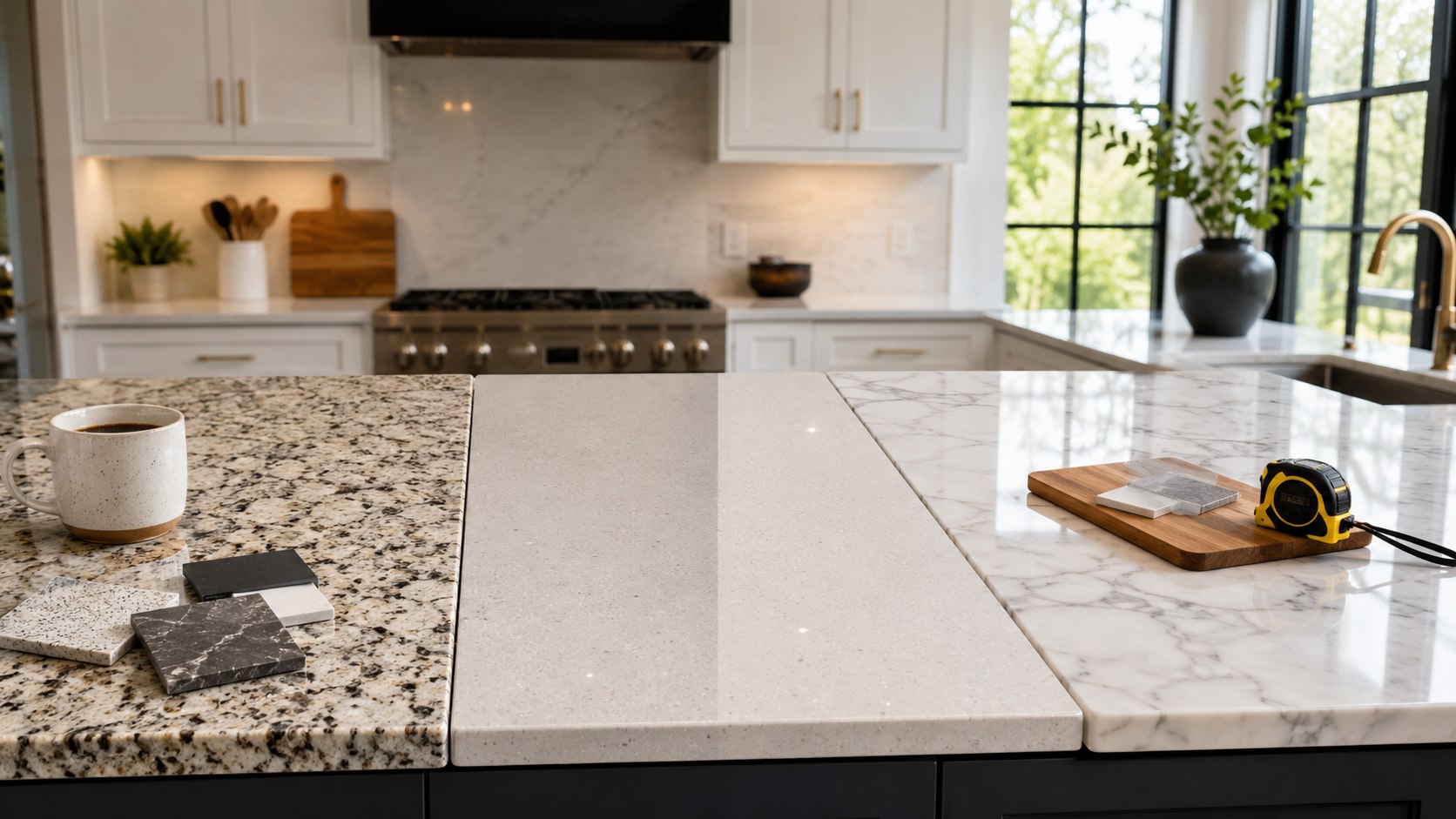
Granite vs quartz vs marble countertops 2026 is a cost, care, and durability decision more than a style contest. Most US homeowners should choose quartz countertops for daily use, but granite is stronger for heat-heavy cooking, while marble is best for owners who accept stains, etching, and visible wear as part of the look, as noted by Baltimore Chronicle.
If you need to approve a contractor quote this month, start with one rule: choose quartz for the lowest maintenance, granite for natural stone durability, and marble only when design matters more than easy cleanup. In 2026, installed prices often overlap, so the wrong material can cost more through repairs, sealing, cleaning products, or buyer regret.
Key takeaways
- Quartz is the safest choice for busy US kitchens because it is nonporous, predictable, and easy to clean.
- Granite is better for serious home cooks who want natural stone and stronger heat tolerance.
- Marble gives the richest look, but acidic foods, oil, and daily wear require careful habits.
At a glance: countertop materials compared for 2026
Before comparing colors, brands, and edge profiles, look at how each surface behaves in a real kitchen. A 45 sq ft countertop project can price differently in California, Texas, Florida, New York, Maryland, Arizona, and North Carolina because labor, slab supply, and fabrication rates vary by market.
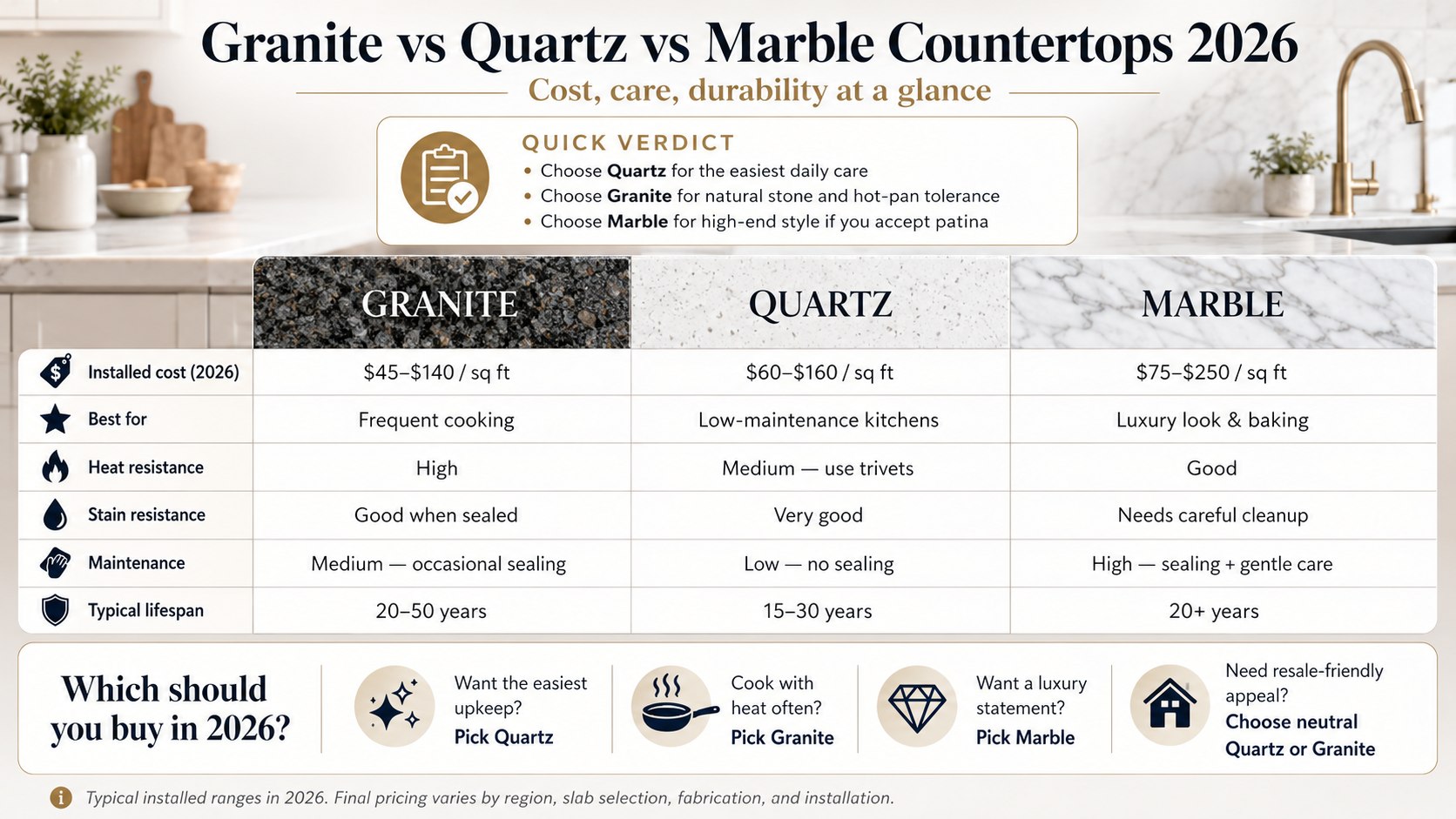
| Factor | Granite | Quartz | Marble |
|---|---|---|---|
| Typical installed cost in 2026 | $45–$140 per sq ft | $60–$160 per sq ft | $75–$250 per sq ft |
| Best use | Active cooking kitchens | Low-maintenance family kitchens | Luxury kitchens and baking zones |
| Heat resistance | Strong | Moderate; use trivets | Good, but softer than granite |
| Stain resistance | Good when sealed | Very good | Weak without strict care |
| Repair difficulty | Moderate | Moderate to hard | High for etching and staining |
| Typical lifespan | 20–50 years with care | 15–30 years with care | 20+ years, with visible patina |
| Outdoor use | Possible with the right stone | Usually not recommended | Indoor use preferred |
| Maintenance level | Medium | Low | High |
The cheapest quote is rarely the full story. Countertop bids can exclude demolition, haul-away, sink cutouts, cooktop cutouts, backsplash work, edge upgrades, plumbing reconnection, and disposal. Ask whether your price includes templating, fabrication, delivery, installation, old counter removal, and final cleanup.
For a wider remodel budget, compare countertop quotes with Baltimore Chronicle’s 2026 kitchen remodel cost guide. It explains how cabinets, plumbing, flooring, demolition, appliance placement, and layout changes can raise the final kitchen price.
Quartz usually wins when a household wants clean lines and predictable care. Granite wins when the owner wants a real stone slab with natural variation. Marble wins when appearance matters more than a spotless surface after years of cooking.
Granite countertops: pros, cons, and ideal buyer
Granite countertops are cut from natural stone, so each slab has its own grain, color, specks, and movement. That variation makes granite attractive for homeowners who dislike repeated patterns in some engineered surfaces.
The main advantage is toughness. Granite handles heat better than quartz resin surfaces, so it is more forgiving near ranges, ovens, and heavy prep zones. Still, trivets are smart because sudden thermal shock can damage almost any surface under the wrong conditions.
Pros of granite
- Strong resistance to heat, scratches, and normal kitchen wear.
- Natural pattern variation that can improve resale appeal.
- Wide price range, from common colors to rare imported slabs.
- Good fit for traditional, transitional, rustic, and farmhouse kitchens.
- Long lifespan when cleaned and sealed correctly.
Granite is a strong fit for households that cook often. It also works for homeowners who want stone that feels permanent, not manufactured. In warmer states like Texas, Georgia, Arizona, and Florida, granite remains common because it performs well indoors around heat.
The weak point is maintenance. Many granite slabs need sealing, depending on porosity, finish, and usage. Sealer makes stone more stain resistant, not stain proof, so oil, wine, coffee, and tomato sauce still need quick cleanup.
Cons of granite
Granite can stain if dark liquids or grease sit on an unsealed surface. Seams may also be more visible on dramatic patterns. A busy slab can look beautiful in a showroom and too loud in a small kitchen with patterned floors or detailed cabinets.
Ideal buyer: choose granite if you cook often, want natural stone, and accept occasional sealing. It is also a good choice for owners planning to keep the kitchen for many years.
Quartz countertops: pros, cons, and ideal buyer
Quartz countertops are engineered surfaces made with mineral content, pigments, and resin. Brands such as Caesarstone, Silestone, Cambria, MSI Q, Corian Quartz, and Viatera offer colors that imitate marble, concrete, limestone, and natural stone.
The strongest reason to buy quartz is convenience. It does not need sealing, and it resists common stains from coffee, juice, tomato sauce, cooking oil, and makeup. That makes it practical for parents, landlords, condo owners, and homeowners preparing a property for resale.
Pros of quartz
- Low maintenance because the surface is nonporous.
- Consistent color and pattern across slabs.
- Large design range, from plain white to marble-look veining.
- Good choice for bathrooms, laundry rooms, rentals, and family kitchens.
- No routine sealing needed in normal indoor use.
Quartz is not perfect. It is heat resistant, not heat proof. A hot cast-iron pan, baking sheet, or pot can damage resin, especially on light surfaces where discoloration is easier to see.
It also performs poorly outdoors. Direct UV exposure can fade or yellow some quartz products, so granite, porcelain, concrete, or stainless steel may be better for outdoor kitchens. Always check the product warranty before using quartz near large sunny windows or exterior spaces.
Cons of quartz
Quartz can look less natural when the pattern repeats across a long island. Premium quartz with dramatic veining can cost as much as marble. Repairs may be visible because matching color, resin, and finish after chips or burns is difficult.
Ideal buyer: choose quartz if you want a clean kitchen with minimal maintenance. For most US households in 2026, it is the safest default.
Marble countertops: pros, cons, and ideal buyer
Marble countertops are chosen for appearance first. Carrara, Calacatta, Arabescato, and Statuario marble can give a kitchen a bright, editorial look that many quartz patterns try to copy.
The trade-off is daily care. Marble is softer than granite and more reactive to acids. Lemon juice, vinegar, wine, tomato sauce, and some household cleaners can leave dull marks called etching.
Pros of marble
- Premium natural look with classic veining.
- Excellent surface for baking and pastry work.
- Strong design appeal in high-end renovations.
- Works well as an island statement surface.
- Can develop attractive patina for owners who like natural aging.
Marble can still be practical when the owner understands the material. Honed marble hides etching better than polished marble. Some homeowners use marble only on the island and install quartz on perimeter counters where cooking mess is heavier.
Care matters more than the first price. You need pH-neutral cleaner, cutting boards, coasters, trivets, and fast cleanup. Sealing helps with staining, but it does not stop acid etching.
Cons of marble
Marble scratches and etches more easily than granite or quartz. It can also stain if oil, coffee, wine, or dark sauces enter the stone. Professional refinishing can restore the surface, but that adds cost later.
Ideal buyer: choose marble if you accept patina and want a luxury look. Do not choose it if you expect a flawless counter after 5 years of heavy cooking.
Granite vs quartz vs marble countertops 2026: cost, care, durability
The most useful way to compare these materials is by total ownership cost. A lower installed price can become expensive if the surface does not match your cleaning habits, cooking style, and tolerance for visible wear.
Use this 2026 cost checklist before you approve a countertop quote:
- Measure total counter area in sq ft, including island overhangs.
- Ask whether demolition and haul-away are included.
- Confirm the cost of sink, faucet, and cooktop cutouts.
- Compare edge profiles because upgraded edges raise fabrication cost.
- Check whether backsplash is priced separately.
- Ask about seam placement before fabrication.
- Get quartz warranty terms in writing.
- Verify contractor licensing where your state requires it.
- Ask whether plumbing reconnection is included after installation.
- Confirm who is responsible if cabinets are not level.
Countertop quotes should also be checked against the full contractor scope. Baltimore Chronicle’s guide on how to read a construction estimate in 2026 is useful before approving fabrication, demolition, sink cutouts, backsplash work, or disposal charges.
After this checklist, compare every bid line by line. One contractor may include plumbing reconnection, while another may leave it to a separate plumber. That single gap can change the real project cost by hundreds of dollars.
Lead time matters too. Popular quartz colors may arrive quickly, while rare marble or granite slabs can take longer. In high-demand remodeling markets like Florida, North Carolina, California, and New York, scheduling can affect both price and installation date.
Which should you buy in 2026?
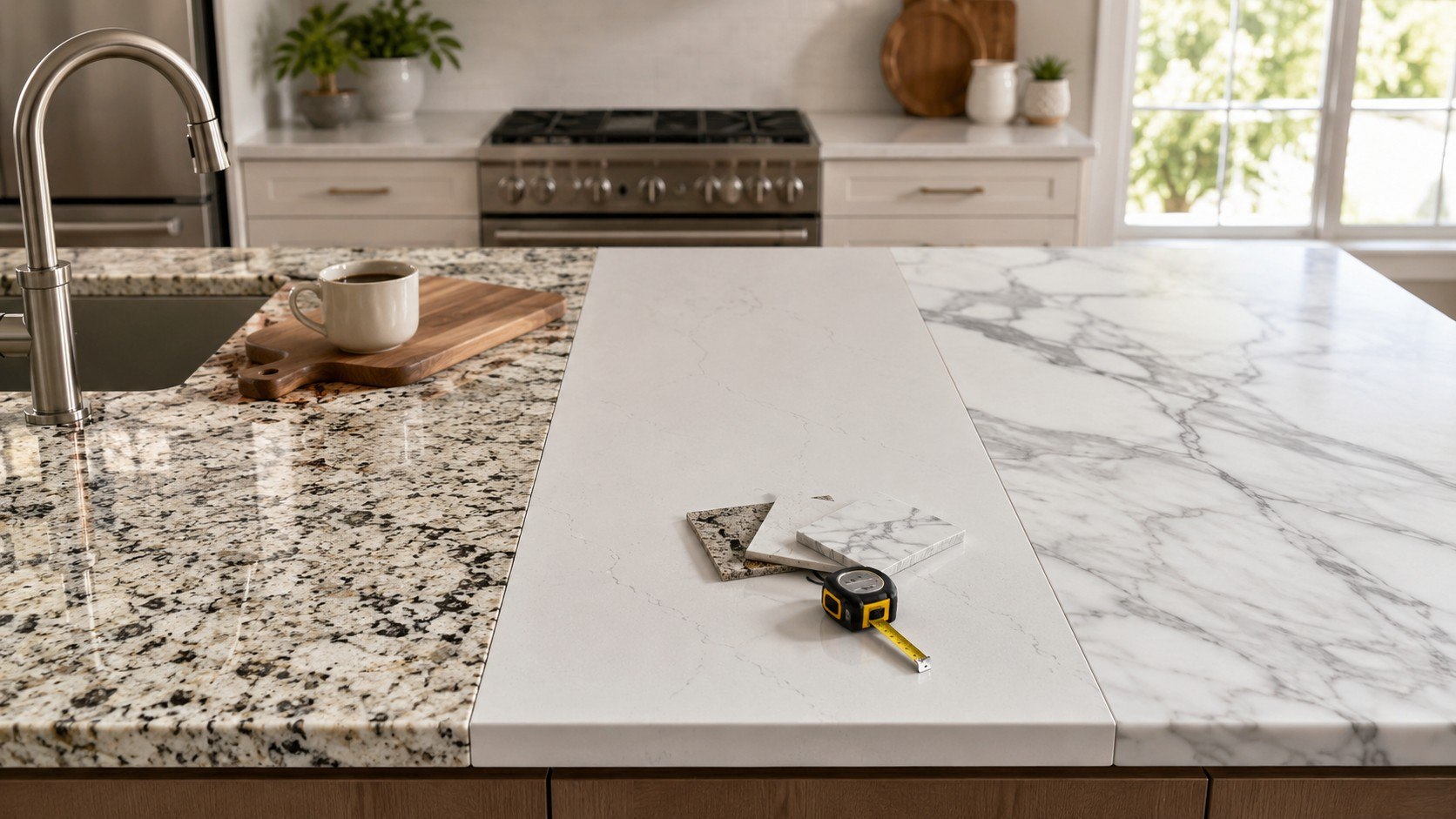
Your countertop choice should follow your cooking habits, cleaning habits, and tolerance for visible wear. Do not start with showroom lighting. Start with how your kitchen works on a regular weeknight.
- If you want the easiest daily care, choose quartz.
- If you cook with hot pans often, choose granite.
- If you want a luxury statement and accept wear, choose marble.
- If resale matters more than personality, choose neutral quartz or granite.
- If your budget is tight, compare common granite with entry-level quartz.
If the countertop project is tied to cabinet replacement, read how to install kitchen cabinets yourself in 2026. Cabinet level, wall condition, and layout accuracy affect countertop templating, seam placement, and installation quality.
Quartz is the safest answer for most buyers because it reduces maintenance risk. Granite is the stronger choice for natural-stone buyers who want toughness. Marble is a design decision, not a convenience decision.
For budget planning, start with Baltimore Chronicle’s kitchen remodel cost guide, then compare the contractor’s numbers with the construction estimate checklist. These 2 steps reduce the risk of approving a low countertop bid that excludes demolition, cutouts, backsplash, or disposal.
Care rules that prevent expensive countertop damage
Every countertop material lasts longer when the household follows simple rules. Even the best surface can fail early if it is cleaned with harsh chemicals or used like a cutting board.
- Use cutting boards on all 3 materials.
- Use trivets under hot pans, especially on quartz.
- Wipe oil, wine, coffee, and tomato sauce quickly.
- Avoid vinegar, bleach mixes, and abrasive powders on natural stone.
- Use pH-neutral cleaners for granite and marble.
- Test granite and marble with water drops before resealing.
- Keep written warranty and care instructions from the installer.
These rules sound basic, but they prevent common damage. Quartz burns, marble etches, and granite stains usually come from normal daily behavior repeated over time. A good installer should explain cleaning, sealing, and warranty limits before final payment.
Families with children may prefer quartz because cleanup is simple. Serious home cooks may prefer granite because heat mistakes are less risky. Design-focused homeowners may still pick marble and treat patina as part of the material.
FAQ
Is quartz better than granite in 2026?
Quartz is better for low maintenance, stain resistance, and consistent design. Granite is better for homeowners who want natural stone and stronger heat tolerance. The better choice depends on how you cook and clean.
What is the cheapest option: granite, quartz, or marble?
Common granite is often the cheapest premium option, but entry-level quartz can be close. Marble usually costs more after installation, sealing, careful cleaning, and possible refinishing are included.
Does marble always stain?
No, but marble is more vulnerable than granite or quartz. Sealing reduces staining risk, while fast cleanup helps prevent oil and dark liquid marks. Acid etching remains a separate problem.
Can quartz countertops handle hot pans?
Quartz can handle normal kitchen warmth, but hot pans can damage resin. Use trivets under cast iron, baking sheets, and pots pulled straight from the stove or oven.
Which countertop is best for resale?
Neutral quartz and granite are usually safest for resale because they appeal to many buyers. Marble can help luxury listings, but some buyers worry about maintenance.
How often should granite or marble be sealed?
Some slabs need sealing every 6–12 months, while denser stones need less. Use the water-drop test and follow your fabricator’s written guidance.
Earlier we wrote about What is a Home Inspection in USA in 2026? Costs, Checklist, and Buyer Risks