

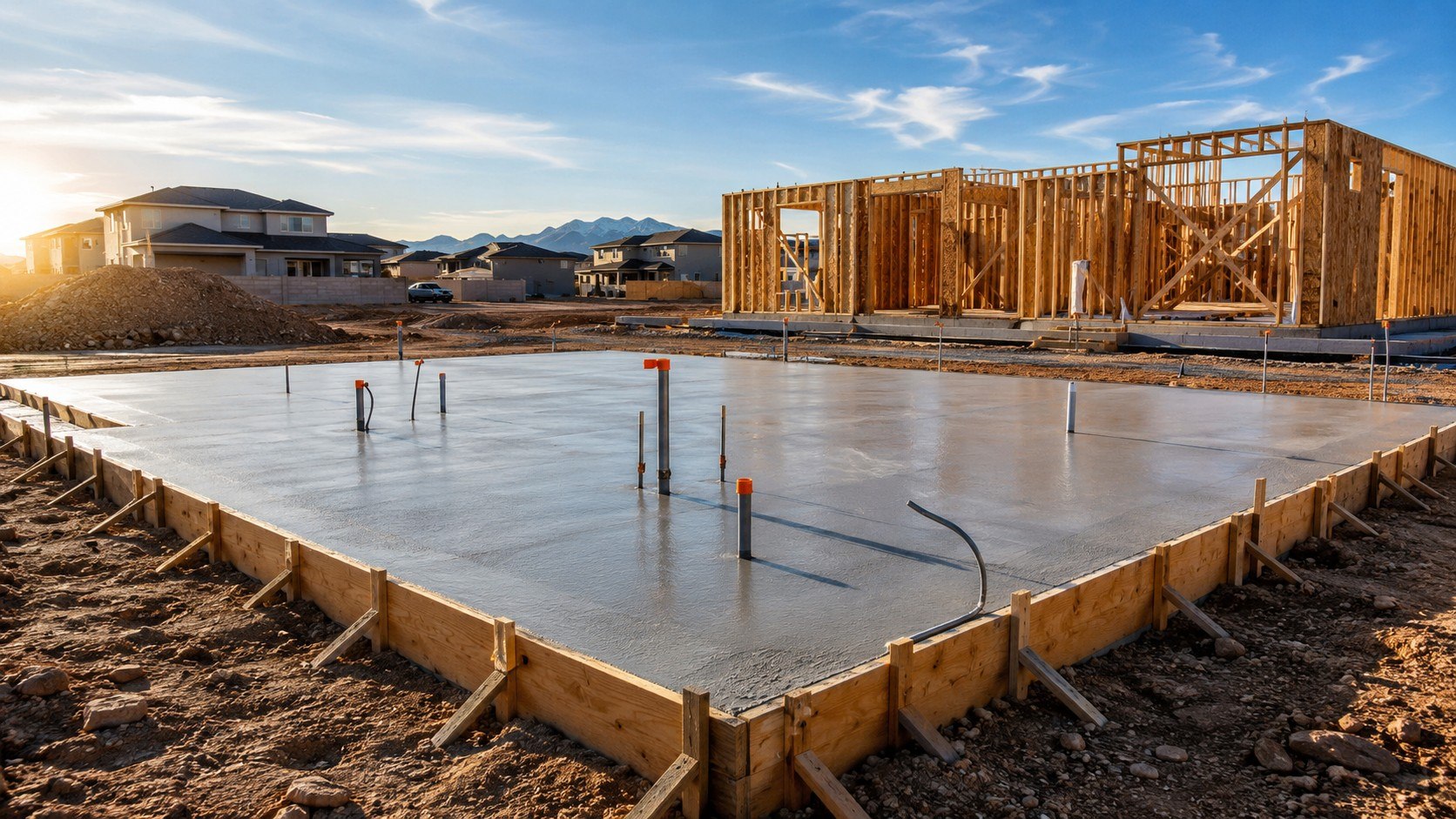
How much does a concrete foundation cost 2026 homeowners should expect to pay? A basic slab may cost $6,000 to $15,000, while a typical residential foundation often reaches $12,000 to $35,000. A complex basement, difficult excavation, or engineered support system can push the bill beyond $50,000. Most new foundations fall between $5 and $35 per sq ft, depending on the design and site, as noted by the Baltimore Chronicle editorial team.
The quickest way to create a useful budget is to identify the foundation type and calculate the building footprint. Do not automatically use the home’s total finished area. A 2-story, 2,400-sq-ft house may sit on a foundation covering only 1,200 sq ft.
Key takeaways
- A basic slab-on-grade usually costs about $5 to $16 per sq ft before unusual soil or drainage work.
- Crawl spaces and basements cost more because they require deeper excavation, walls, waterproofing, and added labor.
- Homeowners should compare itemized bids because low estimates may exclude engineering, grading, pumps, permits, or drainage.
These figures are national planning ranges, not guaranteed contractor prices. Concrete, labor, excavation, fuel, permits, and disposal costs differ by state and county. A reliable estimate requires plans, measurements, soil information, and a site visit.
How Much Does a Concrete Foundation Cost 2026 by Type?
The concrete foundation cost per square foot changes sharply by design. A shallow slab needs less digging and fewer forms. A basement requires deep excavation, vertical walls, drainage, waterproofing, stairs, and more concrete.
The following ranges help homeowners compare the main residential systems before requesting local bids.
| Foundation type | Typical 2026 cost per sq ft | Estimated cost for 1,500 sq ft |
|---|---|---|
| Basic slab-on-grade | $5–$10 | $7,500–$15,000 |
| Monolithic slab | $5–$16 | $7,500–$24,000 |
| Stem-wall foundation | $8–$18 | $12,000–$27,000 |
| Crawl space | $10–$18 | $15,000–$27,000 |
| Pier-and-beam system | $8–$20 | $12,000–$30,000 |
| Full basement | $15–$35 | $22,500–$52,500 |
| Insulated concrete form foundation | $18–$40 | $27,000–$60,000 |
A simple slab is often the least expensive choice on a flat, accessible lot. It is common across Texas, Florida, Arizona, and many parts of California. A crawl space provides access to pipes and wiring but needs dependable moisture control.
Basements are more common in colder states such as Michigan, Minnesota, Pennsylvania, and Wisconsin. Local frost depth can require deeper footings even when the homeowner does not want a basement. Groundwater, expansive clay, loose fill, and seismic requirements may also determine the foundation type.
Replacing a foundation beneath an existing house is a different category of work. The building may need temporary lifting and structural support while crews excavate below it. That process can cost several times more than pouring a foundation for an open new-build site.
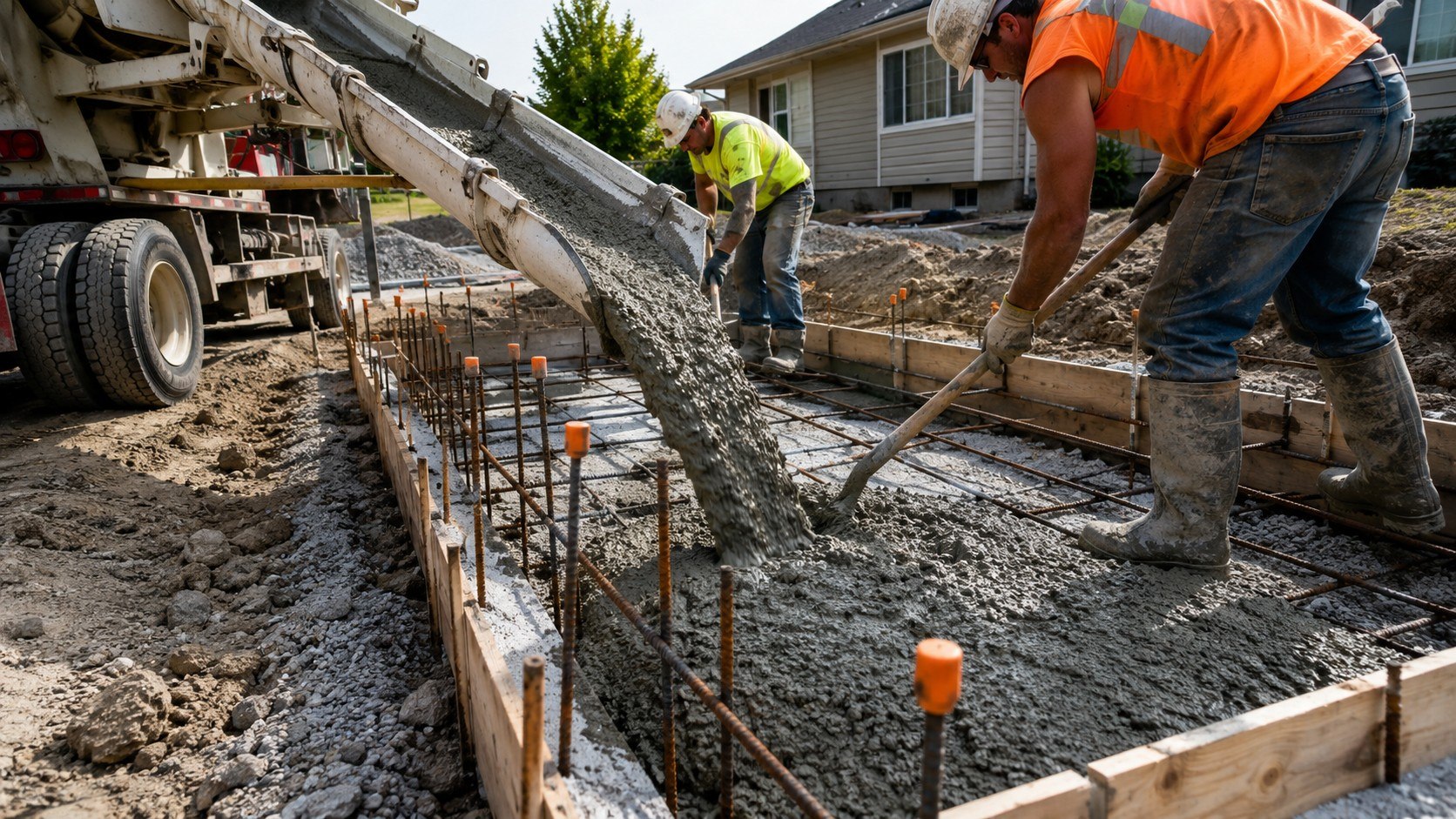
What Drives the Price
Foundation size and building footprint
Contractors calculate many expenses from the footprint touching the ground. A larger footprint requires more excavation, gravel, concrete, steel, forms, and finishing labor. Complex shapes also create more corners and formwork.
Small foundations can have a higher cost per sq ft. Concrete trucks, pumps, excavators, and crews often carry minimum charges. A 400-sq-ft addition may therefore cost more per sq ft than a 2,000-sq-ft slab.
Soil and engineering requirements
Stable, well-draining soil usually supports a simpler and cheaper design. Expansive clay, soft ground, uncontrolled fill, or high groundwater may require deeper footings, grade beams, drilled piers, or soil replacement.
A geotechnical report can identify these risks before construction. Structural engineering may also cost more on steep lots, coastal properties, flood-prone land, or sites near retaining walls.
Excavation and access
An open, level site allows full-size equipment to move efficiently. Tight urban lots may require compact excavators, additional labor, smaller deliveries, or a concrete pump with a longer reach.
Rock excavation can add thousands of dollars. So can removing an old slab, buried masonry, large tree roots, abandoned utilities, or contaminated soil. Ask whether hauling and disposal are included in the excavation quote.
Concrete specifications and reinforcement
The structural plan determines concrete strength, footing dimensions, slab thickness, and reinforcement. A garage slab does not necessarily use the same specification as a load-bearing house foundation.
Heavy rebar generally costs more than light welded-wire reinforcement. Post-tensioned slabs require specialized cables, equipment, and trained installers. Bagged products from QUIKRETE or Sakrete suit smaller repairs, while full foundations normally use ready-mix concrete delivered by truck.
Drainage and waterproofing
Below-grade walls need protection from groundwater and soil moisture. The system may include coatings, membranes, drainage boards, footing drains, washed gravel, sump pumps, and exterior insulation.
A crawl space may require a vapor barrier or full encapsulation. A basement planned as living space needs stronger moisture control than unfinished storage. Cutting these items can create leaks, mold, damaged finishes, and expensive excavation later.
Location, labor, and permits
Labor and subcontractor rates are often higher around New York City, Boston, Seattle, Los Angeles, and San Francisco. Smaller Southern and Midwestern markets may offer lower rates, although remote properties can carry travel and delivery charges.
Permit costs vary by municipality. Some projects require separate approvals for grading, erosion control, drainage, structural work, or utility connections. Verify local requirements before accepting a bid.
Price Breakdown for a Residential Foundation
An itemized estimate is easier to compare than a single lump-sum number. It also reveals allowances and exclusions that may increase after excavation starts.
| Line item | Typical 2026 cost |
|---|---|
| Land survey and layout | $500–$2,000 |
| Soil testing or geotechnical report | $1,000–$5,000 |
| Structural engineering | $1,000–$6,000 |
| Excavation and grading | $2,000–$15,000 |
| Forms and installation labor | $2,500–$12,000 |
| Ready-mix concrete | $3,000–$15,000 |
| Rebar or other reinforcement | $1,000–$7,500 |
| Concrete pumping | $900–$3,000 |
| Waterproofing and drainage | $2,000–$12,000 |
| Permits and inspections | $500–$4,000 |
Not every project includes every line item. Some contractors combine excavation, forming, reinforcement, pouring, and finishing into one package. Others treat concrete volume, pumping, or unsuitable-soil removal as allowances.
Ask whether the price includes sales tax, truck waiting time, equipment mobilization, cleanup, backfilling, and debris removal. Clarify who pays when the excavator finds rock, groundwater, buried construction waste, or weak soil.
Homeowners planning a complete build should compare the foundation estimate with the Baltimore Chronicle guide to how much it costs to build a house in the USA in 2026. The broader budget must also cover design, permits, framing, roofing, utilities, interior finishes, driveways, and landscaping.
A contingency of 10% to 15% gives the project room for concealed site conditions and required design changes. That reserve should remain outside the contractor’s base price rather than funding optional upgrades.
Ways to Save in 2026
Safe foundation savings come from simpler design, earlier decisions, and better bidding. Removing required steel, drainage, or waterproofing only transfers the expense into future repairs.
- Use a compact footprint. A simple rectangle needs fewer corners, forms, and complicated footing transitions.
- Test the soil early. Early findings reduce redesigns and expose expensive site conditions before signing a contract.
- Request at least 3 itemized bids. Compare specifications, exclusions, concrete strength, reinforcement, and drainage.
- Coordinate utility penetrations. Plumbing, electrical sleeves, and conduits should be positioned before the pour.
- Keep equipment access open. Good access may reduce pumping, hand labor, and small-machine charges.
- Avoid unnecessary basement complexity. Multiple levels, corners, window wells, and walkout walls increase costs.
- Bundle related site work. One contractor may handle clearing, grading, drainage, and excavation more efficiently.
- Finalize plans before bidding. Contractors price complete drawings more accurately than sketches or verbal instructions.
Do not select a contractor using the final number alone. Confirm licensing where required, insurance coverage, references, warranty terms, and the exact concrete specification. The bid should state who orders inspections and corrects failed work.
Read the Baltimore Chronicle guide on how to read a construction estimate before accepting a proposal. It explains how to compare line items, allowances, exclusions, payment stages, and change-order terms.
Every change should receive written approval before work proceeds. The document should identify the added task, material, price, and schedule effect. Verbal changes often produce disputes when the final invoice arrives.
Weather planning can also reduce avoidable costs. Heavy rain, frozen ground, and saturated soil may delay excavation or require pumping. However, crews should never rush curing or load the foundation before the concrete reaches the specified strength.
When Paying More Makes Sense
The soil requires engineered support
Expansive clay or weak soil can move beneath a shallow foundation. Engineered piers, thicker grade beams, soil stabilization, or deeper footings increase the initial price. They may prevent severe settlement and structural cracking.
The property has serious water exposure
Waterproof membranes, footing drains, drainage boards, and backup sump systems are sensible on wet sites. They matter even more when the basement will contain bedrooms, offices, mechanical equipment, or finished flooring.
The basement will become living space
A future bedroom or family room requires more than bare concrete walls. Ceiling height, egress openings, insulation, moisture protection, utilities, and stair placement should be designed before excavation.
The location faces severe climate risks
Cold climates may require footings below the frost line. Hurricane regions can need stronger connections and flood-conscious designs. Seismic areas may require additional reinforcement, anchors, and engineer-reviewed details.
The cheapest acceptable foundation is not always the lowest bid. It is the least expensive system that safely matches the building, soil, water, and climate.
Paying more can also protect the construction schedule. A properly staffed contractor with confirmed concrete deliveries may reduce costly delays. Readers can compare those timing risks in the Baltimore Chronicle guide explaining how long it takes to build a house in the USA in 2026.
How to Compare Contractor Estimates
Ask every bidder to price the same drawings and engineering specifications. Otherwise, one contractor may include drainage and reinforcement while another excludes them. The totals may look comparable, but the work is not equal.
Each estimate should identify the foundation dimensions, concrete strength, reinforcement system, excavation assumptions, waterproofing method, and payment schedule. It should also contain a clear list of exclusions.
Common exclusions include rock excavation, groundwater removal, unsuitable-soil replacement, winter protection, utility relocation, testing, pumping, and additional concrete. Ask contractors to provide unit prices for likely extras before construction starts.
- Confirm whether the quote is fixed-price, cost-plus, or based on estimated quantities.
- Check concrete strength, slab thickness, footing dimensions, and reinforcement details.
- Identify allowances for excavation, pumping, waterproofing, and drainage materials.
- Review the deposit, progress payments, retainage, and final payment conditions.
- Require written change orders before additional work begins.
- Verify who handles permits, inspections, testing, cleanup, and warranty repairs.
A large upfront payment creates unnecessary risk. Payments should follow measurable construction stages, such as excavation, form completion, concrete placement, and passed inspections.
Retain copies of plans, permits, concrete delivery tickets, inspection reports, warranties, and change orders. These records may be needed during a future sale, insurance claim, or structural repair.
Finally, confirm what happens when weather or failed inspections delay the work. The contract should explain schedule extensions and responsibility for corrective work. A detailed agreement is more valuable than a low verbal promise.
FAQ
How much is a 2,000-sq-ft concrete foundation in 2026?
A basic 2,000-sq-ft slab may cost about $10,000 to $32,000. A crawl space could reach $20,000 to $36,000. A full basement may range from $30,000 to $70,000 or more, depending on soil, depth, waterproofing, and location.
Is a foundation priced using the home’s total square footage?
Contractors usually price the footprint touching the ground. A 2-story house can have twice the finished living area of its foundation. Garages, porches, and attached structures may receive separate calculations.
What is the cheapest concrete foundation?
A basic slab-on-grade is generally the cheapest system. It requires less excavation and fewer vertical walls. It may not suit steep lots, deep frost zones, unstable soil, or high groundwater.
How much does foundation excavation cost?
Routine excavation may cost several thousand dollars. Deep basements, rock, restricted access, groundwater, or contaminated soil can raise the price above $15,000. The contractor should describe excavation assumptions in writing.
Does a foundation quote include the concrete?
Many quotes include concrete, forms, labor, and reinforcement. Others list ready-mix concrete as an allowance. Confirm whether pumping, delivery surcharges, truck waiting time, waste, and short-load fees are included.
Should I hire a structural engineer before requesting bids?
Yes, when the project involves a house, basement, difficult soil, retaining conditions, or significant structural loads. Contractors can provide preliminary estimates, but accurate bids require completed dimensions and specifications.
Earlier we wrote about Heat Pump Dryer Pros and Cons 2026: Rebates, Prices and Real Cycle Times