

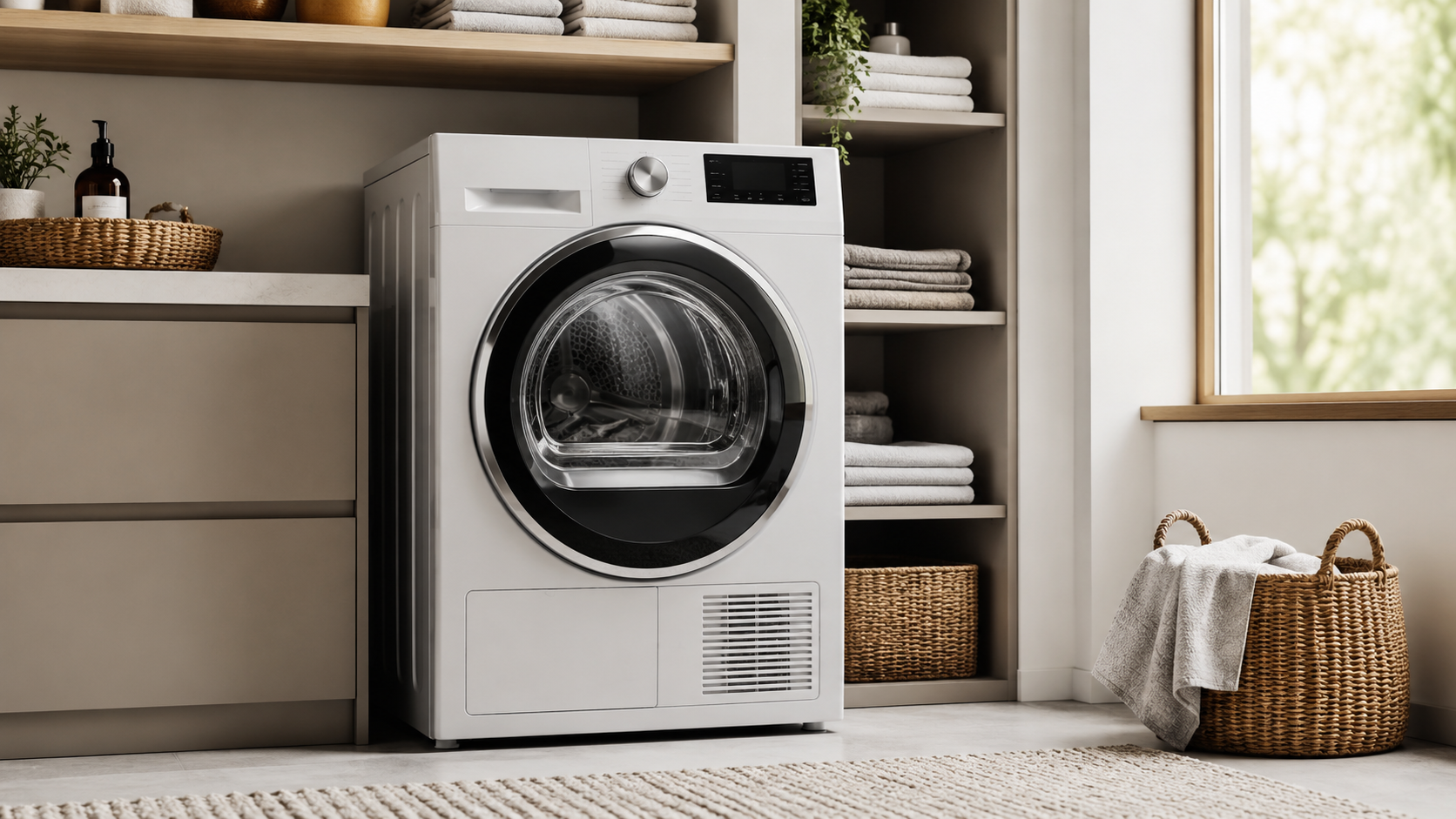
Heat pump dryer pros and cons 2026 come down to one practical trade-off: lower electricity use and flexible installation versus slower drying. Most households should choose a heat pump dryer when energy costs or venting create problems. A conventional vented dryer remains better for families that need several fast loads each day, as the Baltimore Chronicle editorial team notes.
Heat pump models reuse warm air instead of constantly heating new air and exhausting it outside. This design lowers energy demand, treats fabrics more gently, and removes the need for an exterior vent. However, a normal cycle may take 75–120 minutes, depending on the load, washer spin speed, room temperature, and selected program.
Key takeaways
- Heat pump dryers cost more upfront, but rebates and lower electricity use can narrow the final price gap.
- Longer cycles are normal, especially with towels, bedding, mixed fabrics, overloaded drums, or poorly spun laundry.
- Choose a conventional vented dryer when speed matters more than efficiency, fabric care, or installation flexibility.
At a glance
The comparison below reflects typical US retail prices and operating conditions in 2026. Actual costs depend on capacity, retailer promotions, delivery fees, electricity rates, gas prices, and local rebates.
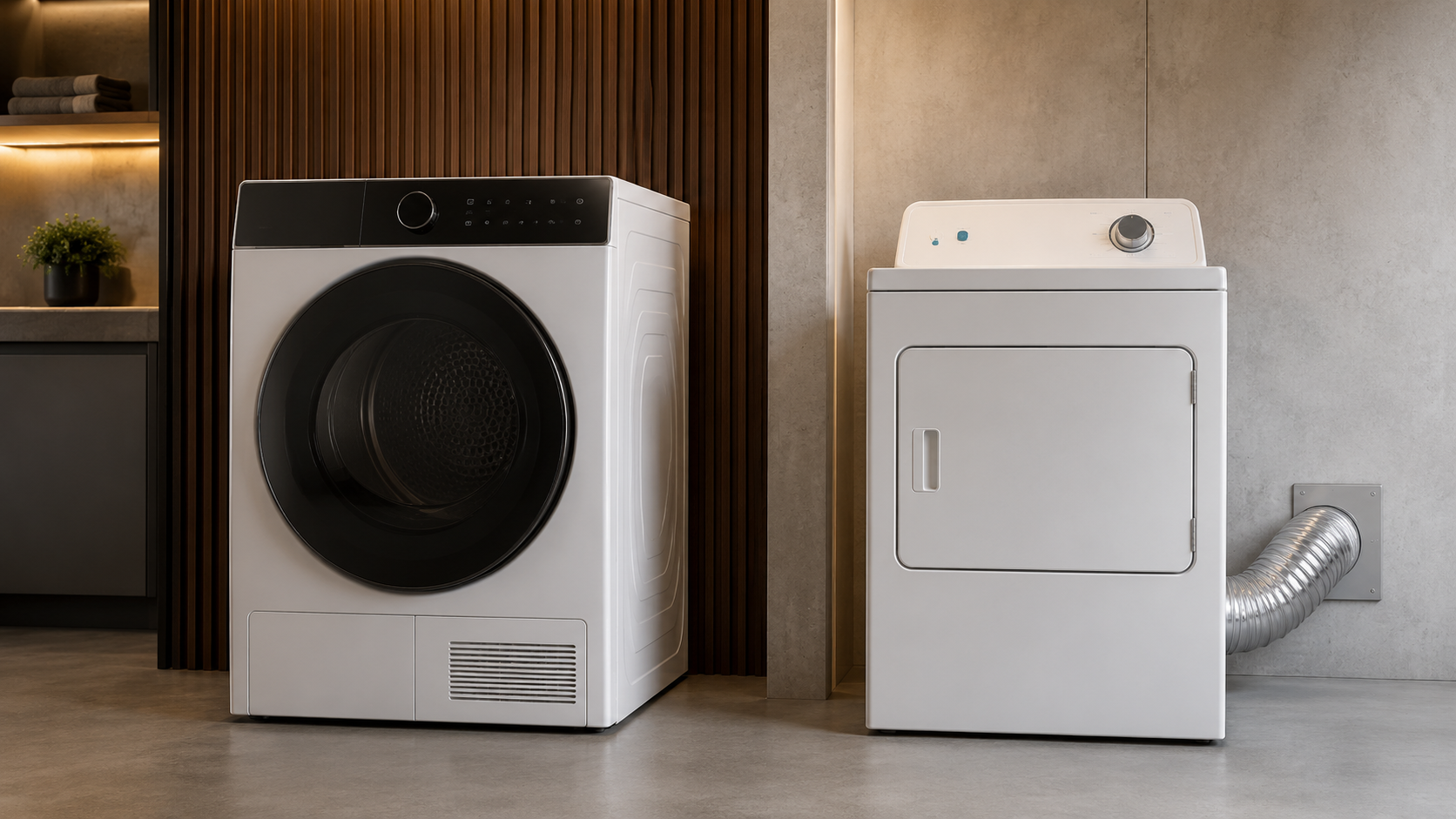
| Factor | Heat pump dryer | Vented electric dryer | Vented gas dryer |
|---|---|---|---|
| Typical 2026 purchase price | $1,100–$2,000 | $550–$1,200 | $650–$1,300 |
| Typical cycle time | 75–120 minutes | 45–70 minutes | 35–60 minutes |
| Exterior vent required | No | Yes | Yes |
| Typical connection | Usually 240-volt electric | 240-volt electric | Gas line plus 120-volt outlet |
| Energy use | Lowest | Highest | Moderate |
| Drying temperature | Lower and gentler | Moderate to high | Moderate to high |
| Installation flexibility | Excellent | Limited by vent access | Limited by gas and vent access |
| Repair complexity | Higher | Lower | Moderate |
| Typical service life | About 10–15 years | About 10–13 years | About 10–15 years |
A heat pump model offers the clearest advantage in apartments, interior laundry rooms, and tightly sealed homes. It avoids sending conditioned indoor air through an exterior vent. That can matter in hot states such as Arizona, Texas, and Florida.
Vented electric dryers remain cheaper to buy and simpler to repair. Gas dryers can finish loads faster, although installation costs may rise without an existing gas connection. Regional utility prices can also change the ownership calculation.
Capacity deserves equal attention. Compact Bosch and Miele dryers often provide about 4 cubic feet. Full-size LG, Samsung, Whirlpool, and GE Profile models can approach 7.8 cubic feet. A small drum may require divided loads, reducing convenience and increasing total laundry time.
Heat pump dryer pros and cons 2026
A heat pump clothes dryer transfers heat instead of generating and discarding large quantities of it. Moisture condenses inside the appliance and drains through a hose or collection tank. The machine then sends the warmed air back through the drum.
Advantages of a heat pump dryer
- Lower electricity consumption than a standard resistance-heated dryer.
- No exterior exhaust duct, which reduces installation restrictions.
- Lower temperatures that can reduce shrinking and fiber damage.
- Less heated or cooled household air expelled outdoors.
- Moisture sensors that can stop cycles when clothing becomes dry.
- Possible access to state, utility, or income-based rebates.
The efficiency benefit becomes more valuable with frequent use. A household drying 6 or 7 loads weekly has more savings potential than one drying a single load. Savings may also be greater in high-rate states such as California, Massachusetts, Connecticut, and Hawaii.
Lower drum temperatures help protect activewear, elastic waistbands, printed shirts, and synthetic blends. Clothes may feel cool when the door opens. That sensation does not always mean the load remains wet.
Ventless installation can solve difficult remodeling problems. Some models fit closets, upstairs laundry areas, and interior rooms. Buyers must still follow manufacturer rules for clearances, drainage, electrical supply, and room ventilation.
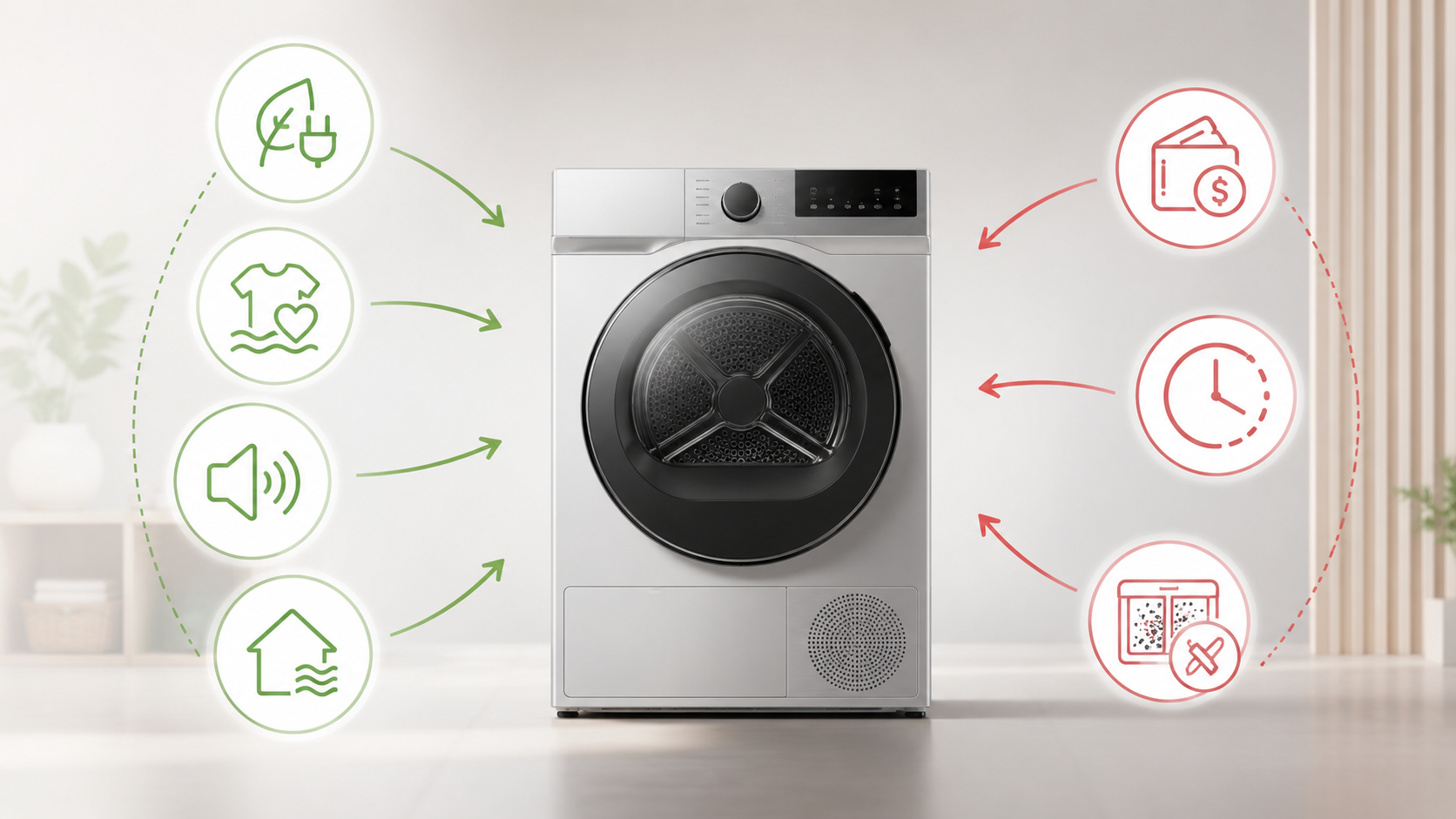
Disadvantages of a heat pump dryer
- Higher purchase prices than entry-level vented dryers.
- Longer cycles for towels, jeans, blankets, and bedding.
- Additional filters and heat-exchanger surfaces that need cleaning.
- More complex repairs and fewer qualified technicians in some areas.
- Compact drums that may not match large US washing machines.
- Reduced performance when filters or airflow passages become blocked.
Long drying time remains the most common complaint. A heat pump system needs time to build and recycle heat. Opening the door during a cycle releases that heat and can extend the remaining program.
Maintenance is also more involved than emptying one lint screen. Some machines include secondary filters or accessible condenser areas. Owners should follow the manual instead of using sharp tools or high-pressure air.
The installation location affects performance. Extremely cold garages can produce longer cycles or unreliable moisture readings. Buyers should check the permitted operating temperature before choosing an unconditioned space.
Rebates and real purchase costs in 2026
Federal funding does not create one automatic nationwide dryer discount. The US Department of Energy states that qualifying ENERGY STAR heat pump clothes dryers may be eligible for a rebate of up to $840. Availability depends on whether the relevant state, territory, or Tribal program has launched.
Rebate eligibility can depend on household income, location, appliance certification, funding availability, and the equipment being replaced. Confirm approval before placing a nonrefundable order.
Consumers can review the official US Department of Energy home-upgrade guidance. Some programs require income verification or approved installation procedures. Others limit which replacement situations qualify.
A full-size LG heat pump dryer generally sits within the broader $1,100–$1,700 range. Compact Bosch 500 Series machines may sell near $1,549. Premium Bosch 800 Series models can approach $1,999 before promotions.
Samsung, Whirlpool, GE Profile, and Miele prices vary by drum size and features. Delivery, stacking hardware, haul-away, and electrical work may add $100–$500. A ventless installation can still cost less when adding an exterior duct would require structural work.
Compare the complete installed price rather than the appliance sticker. A $1,300 dryer with free delivery may cost less than a $1,150 machine with installation fees. Rebates should be treated as confirmed only after checking local program rules.
Cycle time: how slow is a heat pump dryer?
A normal mixed load often needs about 75–100 minutes. Towels, jeans, comforters, and bedding can push the cycle past 2 hours. Smaller loads may finish faster when the washing machine removes more water during its final spin.
The washer matters more than many buyers expect. Laundry leaving a washer at 1,300–1,400 rpm contains less moisture. A low-speed top-loading washer can send much wetter clothing into the dryer.
Persistent drainage problems can also make every dryer appear slower. Before replacing the appliance, use Baltimore Chronicle’s guide on how to fix a washer that will not drain. It covers filter, hose, and pump checks that can explain unusually wet loads.
These steps can reduce heat pump dryer cycle time without exposing fabrics to excessive heat:
- Use the washer’s highest safe spin speed for each fabric.
- Separate heavy towels from lightweight shirts and underwear.
- Keep the drum below its stated maximum capacity.
- Clean every lint filter at the recommended interval.
- Avoid opening the dryer while the heat pump is operating.
- Select sensor drying instead of repeatedly adding timed cycles.
- Shake tangled sheets before placing them inside the drum.
Correct loading produces the largest improvement. Dense garments trap lightweight pieces and can confuse moisture sensors. Sheets may form a ball around smaller items and prevent air from circulating.
Sensor programs usually perform better than repeated 20-minute extensions. Modern dryers adjust the remaining time as moisture levels fall. An extra-dry setting may be useful for towels or closets with limited airflow.
Owners should also inspect drainage. A kinked hose or full condensate tank can interrupt a program. Persistent delays may indicate blocked filters, dirty moisture sensors, or an installation fault.
Conventional vented electric dryer
A vented electric dryer uses resistance heating and pushes moist air outdoors. It is familiar, widely available, and usually cheaper to purchase. Parts and repair technicians are also easier to find in many US markets.
The main benefit is speed. Families washing school uniforms, sports clothing, baby items, or several bedding loads may value shorter programs. Large capacities above 7 cubic feet are common.
Its main weakness is electricity consumption. The dryer heats air, sends it outdoors, and draws replacement air into the house. Damaged or restricted ducts can further increase energy use and cycle length.
This option suits buyers with an existing code-compliant vent, moderate appliance use, and a limited purchase budget. Before choosing by sticker price, compare hookups and utility costs in Baltimore Chronicle’s gas versus electric dryer cost comparison for 2026.
Vent maintenance remains essential. Restricted airflow can lengthen programs, overheat the cabinet, and strain internal components. Baltimore Chronicle’s guide to cleaning a dryer vent yourself explains tools, safety checks, costs, and situations requiring professional help.
Conventional vented gas dryer
Gas dryers generally heat quickly and recover temperature rapidly between loads. They can work well for large families and homes with an existing gas connection. Their purchase prices remain below many premium heat pump models.
Installation requires a safe gas line, shutoff valve, electrical outlet, and exterior vent. Adding those components can remove the apparent price advantage. Some jurisdictions also require permits or professional installation.
Gas rates differ sharply among states and utility providers. Electricity still powers the drum, controls, sensors, and fan. Buyers should compare fuel charges, delivery fees, and fixed monthly utility costs.
A gas model is ideal when cycle speed dominates the decision. It makes less sense in an all-electric home or a room without suitable vent access. Future maintenance costs should also remain part of the budget.
Which should you buy in 2026?
Use these direct rules when comparing a ventless heat pump dryer with conventional alternatives:
- If the room lacks an exterior vent, choose a heat pump dryer.
- If you dry several urgent loads daily, choose a vented gas or electric dryer.
- If local electricity is expensive, compare the heat pump model’s lifetime operating cost.
- If you rent, confirm electrical, drainage, and landlord requirements before buying.
- If a confirmed rebate removes the price premium, choose the heat pump dryer.
Capacity should be the final filter. Pair a large washer with a dryer capable of handling the same load. A 4-cubic-foot machine may struggle with laundry from a 5-cubic-foot washer.
Service availability also matters. Ask whether nearby technicians repair heat pump refrigeration systems. Review labor, parts, drum, and compressor coverage separately because warranty periods may differ.
For many US households, the best energy-efficient dryer in 2026 is a full-size heat pump model with accessible filters. The buyer must accept slower cycles and regular cleaning. The correct machine is the one matching actual weekly laundry habits.
What to check before ordering
Measurements and utility connections can eliminate unsuitable models before price becomes relevant. Compare each item with the manufacturer’s installation guide.
- Width, height, depth, doorway clearance, and hallway access.
- Drum capacity compared with the existing washing machine.
- Required voltage, amperage, outlet type, and dedicated circuit.
- Drain hose location or access to the condensate container.
- Stacking-kit compatibility and total installed height.
- Filter access when the dryer stands near walls or cabinets.
- Local rebate eligibility and the qualifying model number.
- Authorized repair coverage within a practical driving distance.
Measure narrow doors, stair turns, and delivery paths, not only the laundry alcove. Full-size machines may exceed 30 inches in depth after hoses and required clearances. Delivery crews can refuse an unsafe or inaccessible installation.
Check whether the dryer door can be reversed. That small detail may determine whether a closet installation works. It also affects transfers between the washer and dryer.
Finally, compare estimated annual energy use on the EnergyGuide label. Similar machines can have noticeably different consumption figures. A lower purchase price does not always produce the lowest ownership cost.
FAQ
Are heat pump dryers worth the extra cost in 2026?
They can be worthwhile for frequent users, high-rate electricity customers, and homes without practical vent access. Rebates may significantly improve the calculation. Occasional users may need many years to recover the higher purchase price.
Do heat pump dryers leave clothes damp?
A properly loaded and maintained machine should finish clothing dry. Items may feel cooler because the dryer uses lower temperatures. Overloading, mixed fabrics, blocked filters, or weak washer spinning can cause damp results.
Can a heat pump dryer use a standard outlet?
Some compact models operate through a standard 120-volt outlet. Many full-size US dryers require a 240-volt circuit. Check the exact installation guide before ordering electrical work.
How long does a heat pump dryer take?
Typical loads may need 75–120 minutes. Towels and bedding can take longer. Load size, washer spin speed, room conditions, and maintenance all influence the final time.
Do heat pump dryers need a vent?
No exterior exhaust vent is required. The appliance condenses moisture and sends it into a drain or collection tank. Manufacturer clearance and room-air requirements still apply.
Can renters receive a heat pump dryer rebate?
Some state, territory, or Tribal programs may include renters. Eligibility depends on income, property type, landlord approval, and local rules. Verify the requirements before making a nonrefundable purchase.
Earlier we wrote about How to Unclog a Kitchen Sink With a Plunger, Snake, and P-Trap Cleaning